

TL;DR:
- Canadian candy packaging must include bilingual labels, net quantity, ingredients, allergens, nutrition info, and a best-before date. Proper, food-safe barrier materials are crucial to maintain candy freshness and shelf life. Good design enhances sales but must prioritize compliance, clarity, and sustainability to build brand trust.
Your candy might taste incredible, but if the packaging fails a Canadian Food Inspection Agency (CFIA) check, it will never reach your customers’ hands. Retailers across Canada lose sales and face fines not because their product is bad, but because packaging details slip through the cracks: a missing French label, a wrong unit of measurement, or a material that shortens shelf life. Candy packaging is not just a wrapper. It is your compliance certificate, your brand pitch, and your quality guarantee all rolled into one. This guide breaks down every layer of effective candy packaging so you can get it right from day one.
Table of Contents
- Understanding Canadian candy packaging regulations
- Food-safe materials and protective barriers
- Design, transparency, and boosting brand appeal
- Sustainability and practical packaging considerations
- What most Canadian retailers miss about candy packaging
- Enhance your candy business with professional packaging solutions
- Frequently asked questions
Key Takeaways
| Point | Details |
|---|---|
| Follow Canadian regulations | Labeling and metric requirements are strict—bilingual labels and clear quantity displays are non-negotiable for compliance. |
| Prioritize food safety | Always choose food-safe materials and effective barriers to keep candy fresh and uncontaminated. |
| Leverage design for sales | Custom packaging and clear windows boost appeal and brand loyalty when balanced with product protection. |
| Adopt sustainability gradually | Switching to eco-friendly materials can cost more upfront but leads to long-term rewards with Canadian consumers. |
| Focus on basics before trends | Meeting safety, quality, and compliance standards matters more than flashy design alone. |
Understanding Canadian candy packaging regulations
The rules surrounding candy packaging in Canada are more specific than most new retailers expect. Knowing them upfront saves you from costly reprints, recalls, or regulatory penalties that can seriously hurt your bottom line.
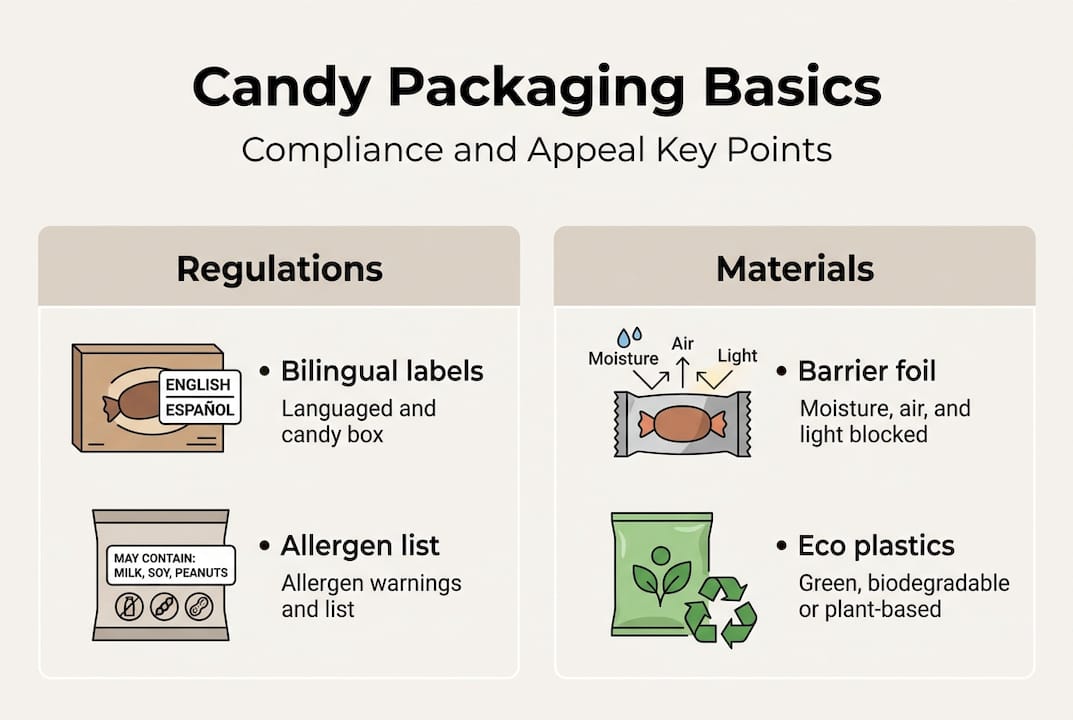
Bilingual labeling is mandatory, not optional. Every prepackaged candy sold in Canada must carry both English and French text on the principal display panel. This is a federal requirement under the Food and Drug Regulations and the Consumer Packaging and Labelling Act. Failing to include French text on the front panel is one of the most common violations that Canadian candy retailers face. The label must also show the net quantity of the product in metric units, either by weight in grams or by count, depending on the product.
Here is what every prepackaged candy label must include, according to CFIA guidelines. Prepackaged candy in Canada requires bilingual labeling on the principal display panel, including net quantity in metric units, an ingredients list in descending order, allergen declarations, a Nutrition Facts table, and a Best Before date.
Essential label elements at a glance:
- Bilingual product name (English and French) on the front panel
- Net quantity displayed in metric units (grams, milliliters, or count)
- Full ingredients list in descending order by weight
- Allergen declaration using plain language (e.g., “Contains: peanuts, milk”)
- Nutrition Facts table in the standard CFIA format
- Best Before date or durable life information
- Manufacturer or distributor name and address
One item that many retailers overlook is the allergen declaration. Canada’s allergen labeling rules require that the 14 priority allergens, including peanuts, tree nuts, milk, wheat, and sesame, be declared in plain language. Buried allergen information written in technical terms is not compliant. The declaration must be easy to read and placed close to the ingredient list.
The 2026 front-of-package changes. Starting January 1, 2026, candy with high sugar, sodium, or saturated fat must display a front-of-package (FOP) nutrition symbol. This magnifying glass icon signals to consumers that a product is high in specific nutrients of concern. Critically, this rule also restricts conflicting marketing claims. You cannot pair a high sugar FOP symbol with a claim like “a healthier choice.” This is a major compliance shift that affects many candy categories, especially products high in added sugars.
Non-compliance with CFIA packaging rules can result in product detentions, mandatory recalls, and financial penalties. Repeat violations can lead to the suspension of import or distribution licenses. For candy shops relying on third-party co-packers, make sure your contracts clearly outline who is responsible for label compliance. Review our compliance guide for Canadian brands and confirm your candy quality control in Canada processes align with current CFIA standards.
Food-safe materials and protective barriers
Understanding the regulations sets the foundation, but equally important is choosing safe and practical packaging materials. Regulations tell you what to print on your package. Material science tells you whether your candy will still taste good by the time it reaches the customer.
Food-safe candy packaging must use materials that do not contaminate the product and that provide protection from moisture, oxygen, light, and physical damage. These four factors are the primary enemies of candy freshness. A bag that fails on even one of these fronts will cost you returns, bad reviews, and lost repeat customers.
Comparing common packaging materials:
| Material | Moisture barrier | Oxygen barrier | Light barrier | Best for |
|---|---|---|---|---|
| Metalized foil pouch | Excellent | Excellent | Excellent | Freeze-dried candy, chocolate |
| Clear plastic (PET/PP) | Good | Moderate | Poor | Gummies, hard candy (short shelf life) |
| Kraft paper | Poor | Poor | Moderate | Artisan display, short-term use |
| Laminated multilayer film | Excellent | Excellent | Good | Most confectionery |
| Compostable PLA film | Moderate | Moderate | Poor | Eco-focused, short shelf life products |
Freeze-dried candy, which is one of the fastest-growing candy segments in Canada right now, has very specific packaging needs. Because freeze-dried products are extremely porous and hygroscopic (meaning they readily absorb moisture from the air), they require high-barrier packaging. A clear PET bag that works fine for gummies will turn freeze-dried candy soft and stale within days. Foil-laminated stand-up pouches with resealable zippers are the gold standard for this product category.
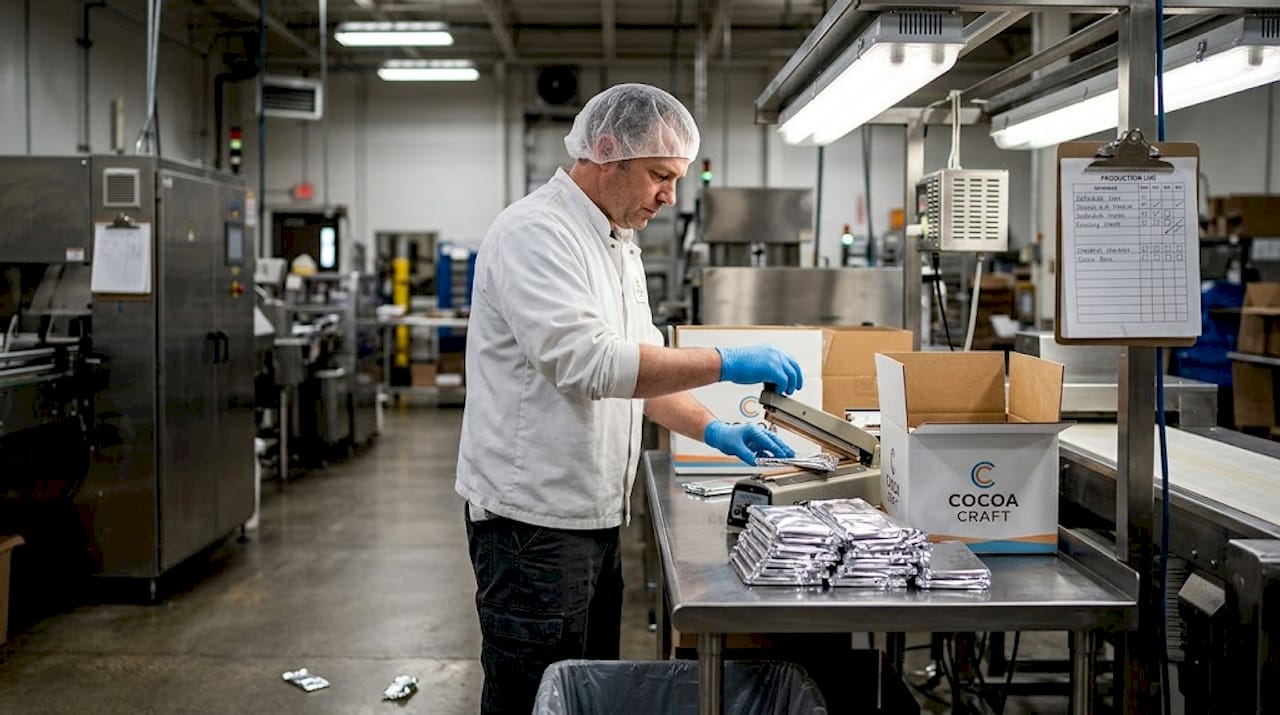
Chocolate is another candy type with demanding packaging requirements. It is sensitive to temperature, light, and odors. Packaging for chocolate should include an oxygen barrier layer and ideally a foil layer to block light. Using the wrong plastic near chocolate can also cause flavor transfer, where chemical compounds from the packaging leach into the product.
Gummies and sour candy fall in the middle. They need decent moisture control but are generally more forgiving than freeze-dried or chocolate products. Standard multilayer laminated pouches work well here, and they give you a large printable surface for branding. You can explore the full range of types of candy packaging pouches for your specific product mix.
Pro Tip: Always test your packaging in real storage conditions before committing to a large production run. Fill sample bags with your actual candy, seal them, and store them at room temperature and at elevated humidity for 30 days. Then taste and inspect the product. This catches compatibility issues before they become customer complaints.
Your packaging material must also pass food contact safety standards. In Canada, food contact materials are regulated under the Food and Drug Regulations. If you are sourcing packaging from overseas suppliers, request a Certificate of Compliance or a food contact safety declaration. This is especially important for candy safety and quality measures that meet Canadian standards.
Design, transparency, and boosting brand appeal
Once compliance and safety are assured, it is time to focus on how your packaging can actively drive appeal and distinguish your candy. Packaging design is not decoration. It is a sales tool, a brand ambassador, and sometimes the only thing standing between your product and a competitor’s on a retail shelf.
Transparent packaging increases product visibility and can significantly boost impulse purchases, but it requires barrier considerations for light-sensitive or moisture-sensitive candies. This is the central tension in candy packaging design: customers want to see what they are buying, but clear film can compromise product integrity for certain candy types.
Design elements that drive candy sales:
- Window pouches let customers see the product without full exposure
- Custom print colors and metallic finishes increase shelf standout
- Resealable closures signal quality and convenience
- Eco-labeling and recycled material badges attract sustainability-aware buyers
- Clear quantity and flavor information reduces purchase hesitation
- Consistent brand colors across product lines build recognition over time
One approach that works well for many Canadian candy retailers is the partial window pouch. This is a foil or laminated bag with a small, shaped clear window that lets customers see the candy while the majority of the package is opaque and protective. You get the visual appeal of transparency without sacrificing your barrier properties. This design works especially well for freeze-dried candy, where the unusual texture and vibrant colors are major selling points.
Custom packaging increases perceived value by approximately 30%, but it must balance aesthetics with compliance and sustainability. A beautifully printed bag that buries the French ingredient list or uses a font too small for the Nutrition Facts table is still a non-compliant product. Many candy shops invest heavily in design and then discover at launch that the label needs to be partially redone because mandatory information was placed incorrectly.
The fix is simple: involve your compliance team or a packaging consultant during the design phase, not after. Allocate the required label real estate first, then build the creative design around those fixed elements.
Impact of key design choices on brand perception:
| Design element | Impact on sales | Compliance risk if misused |
|---|---|---|
| Transparent window | High impulse purchase rate | Low (use appropriate barrier) |
| Eco-friendly messaging | Builds long-term loyalty | Medium (claims must be accurate) |
| Custom die-cut shapes | High brand differentiation | Low |
| Minimalist design | Premium positioning | Low |
| Front-of-pack claims | Can boost trial | High (must align with FOP rules) |
To see what strong custom packaging looks like in practice, visit our guide to amplify your brand with custom packaging and learn how to boost candy sales with branding. We also have a dedicated branded candy box guide covering the 2026 regulatory landscape.
Sustainability and practical packaging considerations
Branding and transparency matter, but more consumers are also prioritizing sustainability. In Canada, shopper behavior is shifting. A growing number of buyers now actively choose products based on packaging ethics, not just product taste or price.
Sustainability in packaging drives customer loyalty, but it comes at a higher cost that must be factored into your pricing and margin strategy. Compostable films, recycled content pouches, and paper-based alternatives all have a price premium over standard plastic. For high-volume candy retailers, this cost difference can be significant. But the long-term brand equity and customer retention benefits are also real.
“Eco-friendly packaging is not just a trend. It is becoming a baseline expectation for a growing segment of Canadian shoppers, particularly in urban markets where environmental awareness is high.”
Steps to transition to more sustainable candy packaging:
- Audit your current packaging and identify which products have the most volume and the most packaging waste per unit
- Research certified compostable or recycled content alternatives for your top sellers
- Request samples and run the same 30-day storage test described in the materials section
- Start with one product line to test customer response before switching your full catalog
- Update your packaging design to clearly communicate the eco-friendly choice using certified logos (e.g., compostable certification marks recognized in Canada)
- Track repeat purchase rates for that product line over 60 and 90 days to measure loyalty impact
Common sustainable material options available for candy packaging in Canada include PLA (polylactic acid) compostable films, recycled PET pouches, paper-based laminate bags, and soy-based inks for printing. Each has different barrier properties, so matching the material to the candy type remains essential.
Pro Tip: Put your sustainability credentials on the front of the package where shoppers can see them at a glance. A small “100% compostable packaging” badge near the top of the bag can increase pick-up rates at retail, especially in health food stores and farmers markets. Don’t hide it on the back panel where only dedicated label-readers will find it.
For a deeper look at material choices and sustainable practices, review our sustainable candy packaging tips and explore eco-friendly take-away packaging options that work for Canadian retailers.
What most Canadian retailers miss about candy packaging
Here is what we see time and again: retailers spend weeks and real money designing gorgeous packaging, then rush the compliance review. They assume that if it looks professional, it must be correct. It is not. Beautiful packaging with a missing French ingredient list, or a health claim that conflicts with the new 2026 FOP symbol rules, is still non-compliant packaging.
The other major blind spot is material investment. Many new candy shop owners treat packaging as a cost to minimize rather than a quality signal to invest in. They choose the cheapest available pouch and then wonder why their freeze-dried candy lost its crunch by week two, or why their chocolate arrived with a faint plastic odor. Material failure is a brand failure, and customers will not give you a second chance to explain it.
The real branding results come from getting the basics right first: food-safe materials, clear and fully compliant labeling, and honest sustainability claims. Aesthetic flourishes built on that solid foundation are powerful. Aesthetic flourishes without that foundation become liability.
There is also a subtler issue with “over-design.” When packaging tries to do too much visually, the regulatory information becomes visually suppressed. Tiny Nutrition Facts tables, low-contrast French text, and ingredient lists crammed into corners are design choices that also create compliance problems. Clarity is both good design and good compliance. Explore private label savings to see how working with an experienced co-packer can remove much of this risk from your plate.
Enhance your candy business with professional packaging solutions
Ready to put these best practices into action? At Space-Man, we work directly with candy retailers and distributors across Canada to deliver packaging that checks every box: compliance, protection, branding, and sustainability. Our private label co-packing services handle the full production and packaging cycle so you can focus on selling.
If you are looking to expand your retail presence without the complexity of custom production, our retail display kits are a turnkey solution designed specifically for Canadian candy shops and distributors. For those ready to scale, explore our wholesale candy solutions and apply to become a wholesale partner. We are here to help you move from confusion to confidence on every packaging decision.
Frequently asked questions
What are the labeling requirements for prepackaged candy in Canada?
Prepackaged candy in Canada must include bilingual labeling, net quantity in metric units, an ingredient list in descending order, allergen declarations, a Nutrition Facts table, and a Best Before date on the principal display panel.
When do the new front-of-package nutrition labeling rules start in Canada?
The new front-of-package nutrition symbol rules for candies high in sugar, sodium, or saturated fat take effect January 1, 2026, and also restrict conflicting health or nutrition claims on packaging.
How does packaging material choice affect candy shelf life?
Proper food-safe materials with barrier protection shield candy from moisture, oxygen, and light, which are the primary causes of quality degradation and shortened shelf life.
Does custom packaging really increase sales for candy brands?
Yes. Custom packaging increases perceived value by approximately 30%, which supports both impulse purchases and long-term brand loyalty, as long as the design also satisfies compliance requirements.
Are sustainable packaging materials worth the higher upfront cost?
Sustainability in packaging does carry a higher upfront cost, but it builds customer loyalty and can drive repeat business, particularly among eco-conscious shoppers in Canadian urban markets.