

Plastic wrappers and wasteful packaging have long created headaches for Canadian candy shop owners who care about their carbon footprint. With more consumers seeking eco-friendly sweets, the pressure to find truly green alternatives is only growing. By embracing sustainable packaging strategies like biodegradable films and compostable materials, you can not only reduce your environmental impact but also inspire eco-minded shoppers to choose your brand with confidence.
Table of Contents
- What Makes Packaging Green and Sustainable
- Types of Green Packaging for Candy Products
- Canadian Legal Standards and Labeling Rules
- Practical Steps for Eco-Friendly Packaging Adoption
- Comparing Costs and Common Mistakes to Avoid
Key Takeaways
| Point | Details |
|---|---|
| Sustainable Packaging Importance | Transitioning to sustainable packaging can significantly reduce ecological impact while attracting environmentally conscious consumers. |
| Material Choices Matter | Utilizing biodegradable and recyclable materials is crucial for effective green packaging solutions. |
| Compliance with Regulations | Adhering to Canadian packaging laws is essential to avoid penalties and ensure consumer trust. |
| Holistic Strategy Implementation | A comprehensive approach, including materials audit and consumer communication, is key to successful sustainable packaging adoption. |
What Makes Packaging Green and Sustainable
Sustainable packaging represents a critical evolution in how businesses approach environmental responsibility. By reimagining product containers, candy brands can dramatically reduce ecological impact while appealing to conscious consumers. Sustainable packaging strategies aim to minimize environmental footprint through innovative material choices and design principles.
Green packaging fundamentally involves selecting materials and processes that reduce waste, lower carbon emissions, and support circular economy principles. Key characteristics include:
- Biodegradability: Materials that naturally decompose without harming ecosystems
- Recyclability: Packaging that can be reprocessed into new products
- Renewable sourcing: Using materials from sustainable, rapidly regenerating resources
- Minimal resource consumption: Reducing overall material and energy requirements during production
Traditional packaging materials like petroleum-based plastics create significant environmental challenges. Biodegradable alternatives such as bioplastics derived from corn starch, hemp, and sugarcane offer promising solutions. These innovative materials can break down naturally, preventing long-term pollution and supporting ecological health.
Modern sustainable packaging goes beyond material selection, encompassing holistic design strategies that minimize waste throughout a product’s lifecycle. This approach considers everything from manufacturing efficiency to end-of-life disposal, creating packaging solutions that are both environmentally responsible and economically viable.
Pro tip: Start by conducting a comprehensive audit of your current packaging materials and identify one strategic area where you can introduce a more sustainable alternative.
Types of Green Packaging for Candy Products
Sustainable packaging for candy products has evolved dramatically, offering innovative solutions that balance environmental responsibility with product protection. Biodegradable plastics and plant-based materials represent the cutting edge of eco-friendly packaging design, providing manufacturers with versatile alternatives to traditional petroleum-based containers.
Modern green packaging for candy products encompasses several key material categories:
- Biopolymer Films: Derived from renewable resources like corn starch and sugarcane
- Recyclable Paper Products: Cardboard and kraft paper with minimal environmental impact
- Natural Fiber Composites: Materials combining plant-based fibers for enhanced sustainability
- Compostable Packaging: Containers that break down completely in industrial composting facilities
Smart packaging technologies are revolutionizing how candy brands approach environmental conservation. These innovative materials not only reduce waste but also maintain critical product qualities like moisture protection and shelf stability. Brands can now select packaging that protects delicate confections while simultaneously supporting ecological goals.
The most advanced green packaging solutions integrate multiple sustainability strategies. This includes selecting materials with lower carbon footprints, designing packages for easy recycling, and implementing production processes that minimize overall environmental impact. By embracing these comprehensive approaches, candy manufacturers can significantly reduce their ecological footprint without compromising product quality.

To clarify the differences among various sustainable packaging materials used for candy, see this comparison table below:
| Material Type | Main Source | Environmental Benefit | Typical Use in Candy Packaging |
|---|---|---|---|
| Biopolymer Films | Corn, sugarcane | Low emissions, renewability | Wrappers, pouches |
| Recyclable Paper | Wood pulp | Easy recycling, compostable | Boxes, sleeves |
| Natural Fiber Composites | Hemp, bamboo | Strong, biodegradable | Molded trays, containers |
| Compostable Packaging | Plant-based blends | Breaks down in compost | Bags, wrappers |
Pro tip: Conduct a comprehensive material audit to identify which packaging components can be most effectively replaced with sustainable alternatives.
Canadian Legal Standards and Labeling Rules
Canadian packaging regulations create a comprehensive framework designed to protect consumers and ensure transparency in product marketing. Consumer Packaging and Labelling Regulations establish strict guidelines that candy manufacturers must follow when presenting their products to the marketplace.
Key legal requirements for packaging and labeling in Canada include:
- Bilingual Labeling: Mandatory English and French product information
- Metric Measurements: Net quantity must be displayed in metric units
- Dealer Information: Complete name and address of the manufacturer or distributor
- Product Identity: Clear and accurate description of the product
- Placement Rules: Labels must be on the principal display surface
Packaging compliance standards go beyond simple information display. They are designed to protect consumers from misleading claims and ensure fair market practices. Candy brands must carefully navigate these regulations, which can vary depending on specific product categories and intended consumer use.
The legal landscape for packaging is complex, with different rules applying to food, drugs, and consumer goods. Some products have additional specialized requirements, making it crucial for candy manufacturers to stay updated on the latest regulatory changes. Failure to comply can result in significant penalties and potential market restrictions.
Pro tip: Consult with a Canadian packaging compliance expert annually to ensure your labeling meets the most current regulatory standards.
Practical Steps for Eco-Friendly Packaging Adoption
Transitioning to sustainable packaging requires a strategic and systematic approach for candy manufacturers seeking meaningful environmental impact. Sustainable packaging implementation involves comprehensive assessment and deliberate transformation of existing packaging practices.
Key steps for eco-friendly packaging adoption include:
- Initial Assessment: Evaluate current packaging’s environmental footprint
- Material Research: Investigate recyclable and biodegradable alternatives
- Supplier Collaboration: Partner with certified sustainable material providers
- Design Optimization: Reduce material volume and improve recyclability
- Performance Testing: Ensure new materials maintain product quality
- Consumer Communication: Transparently share sustainability efforts
Implementing a sustainable packaging strategy demands ongoing commitment and measurable goals. Candy brands must establish clear sustainability targets, regularly monitor progress, and remain adaptable to emerging eco-friendly technologies. This approach not only reduces environmental impact but also attracts environmentally conscious consumers who value responsible business practices.
Successful eco-friendly packaging adoption requires a holistic perspective that balances environmental considerations with practical business needs. By systematically integrating sustainable materials, optimizing design, and maintaining product integrity, candy manufacturers can create packaging solutions that support both ecological responsibility and brand competitiveness.
Pro tip: Create a detailed sustainability roadmap with specific, measurable milestones for packaging transformation.
Comparing Costs and Common Mistakes to Avoid
Navigating the financial landscape of sustainable packaging requires a nuanced understanding of both immediate costs and long-term value. Green packaging cost dynamics reveal a complex ecosystem where initial investments can yield significant strategic advantages for forward-thinking candy manufacturers.
Common financial challenges and mistakes in sustainable packaging adoption include:
- Upfront Cost Misconception: Viewing higher material expenses as prohibitive
- Incomplete Cost Analysis: Neglecting long-term savings and brand value
- Supply Chain Complexity: Underestimating implementation challenges
- Poor Communication: Failing to highlight sustainability efforts to consumers
- Inflexible Strategies: Resisting adaptation to emerging technologies
- Inadequate Performance Testing: Compromising product quality for sustainability
Projected packaging cost trends demonstrate that sustainable solutions are becoming increasingly economically viable. Advanced technologies and increasing scale are driving down production costs, making eco-friendly packaging more accessible for businesses of all sizes. Strategic planning and comprehensive cost-benefit analyses can help candy brands minimize financial risks while embracing environmental responsibility.
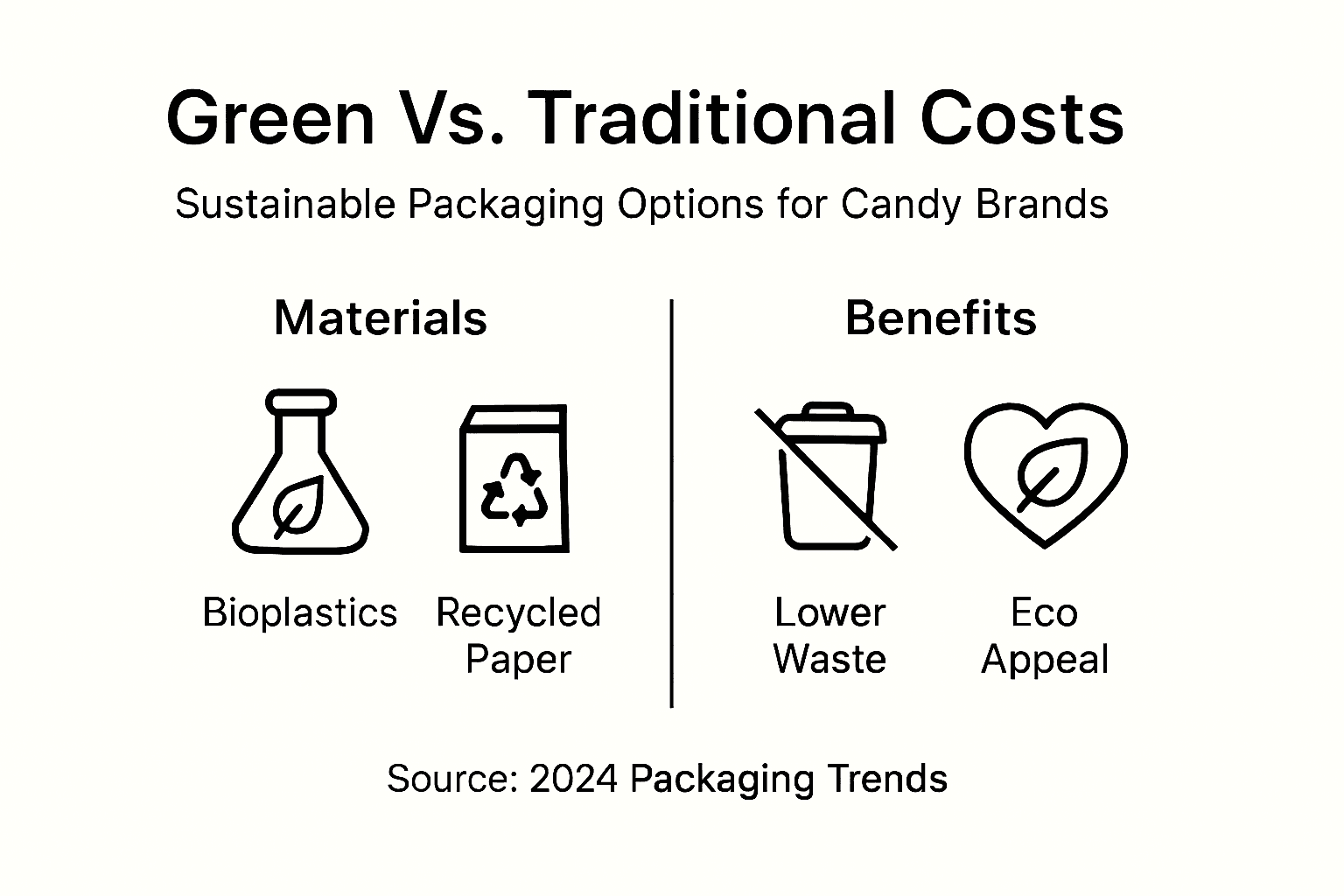
Successful sustainable packaging implementation requires a holistic approach that balances economic constraints with ecological objectives. By understanding true lifecycle costs, exploring innovative materials, and maintaining flexibility, manufacturers can develop packaging solutions that are both financially sound and environmentally conscious.
For reference, here is a summary of common financial mistakes and smarter strategies for eco-friendly packaging adoption:
| Mistake | Impact on Business | Better Approach |
|---|---|---|
| Ignoring long-term savings | Missed profit potential | Calculate lifecycle cost savings |
| Neglecting supplier vetting | Quality risk | Work with certified suppliers |
| Poor consumer messaging | Weak brand loyalty | Promote sustainability efforts |
| Rigid technology choices | Lost innovation chance | Stay open to new materials |
Pro tip: Conduct a detailed three-year financial projection that includes potential sustainability-driven revenue increases and long-term cost savings.
Elevate Your Candy Brand with Sustainable Packaging Solutions
The challenge of adopting green product packaging involves balancing environmental responsibility with maintaining product quality and compliance. Many candy manufacturers struggle with material selection, cost management, and meeting Canadian legal labeling standards while appealing to eco-conscious consumers. At Spaceman, we understand these pain points. We offer innovative packaging and co-packing services that align with sustainable packaging concepts like biodegradability, recyclability, and renewable sourcing discussed in the article.
Discover how you can start transforming your packaging today with our Bulk Unbranded Freeze Dried Candy & Treats designed for flexibility and customization. Our solutions help you meet sustainability goals without sacrificing quality, supported by private labeling and packaging expertise tailored for Canadian market standards.

Explore The Perfect Gift : Freeze Dried Candy Bundles! for inspiration on eco-friendly presentation that resonates with consumers. Take the next step now and visit https://space-man.ca to partner with a Canadian freeze dried candy manufacturer committed to your green packaging success.
Frequently Asked Questions
What are the key characteristics of sustainable packaging?
Sustainable packaging is designed to minimize environmental impact and typically features biodegradability, recyclability, renewable sourcing, and minimal resource consumption.
How can candy brands transition to eco-friendly packaging?
Candy brands can transition by conducting an initial assessment of current packaging, researching sustainable materials, collaborating with certified suppliers, optimizing designs, and ensuring that the new materials maintain product quality.
What types of materials are commonly used in green packaging for candy products?
Common materials include biopolymer films from renewable resources like corn starch, recyclable paper products, natural fiber composites, and compostable packaging that breaks down in industrial composting facilities.
What are some common financial mistakes to avoid when adopting sustainable packaging?
Common mistakes include ignoring long-term savings, underestimating supply chain complexities, poor consumer communication about sustainability efforts, and rigid adherence to outdated strategies instead of embracing new technologies.