

Freeze-dried candy manufactured in Canada can double traditional candy shelf life while meeting strict food safety standards and bilingual labeling requirements. Canadian retailers and manufacturers increasingly turn to private labeling and co-packing solutions to capture the growing 8-10% annual market expansion for innovative, healthier confectionery products. This guide covers Canadian regulations, freeze-drying technology, private labeling advantages, packaging compliance, quality control, and practical implementation steps to successfully launch freeze-dried candy products in 2026.
Table of Contents
- Understanding Canadian Regulations For Candy Manufacturing
- The Freeze-Drying Process In Candy Manufacturing
- Private Labeling And Co-Packing Options For Canadian Candy Businesses
- Packaging And Labeling Compliance For Freeze-Dried Candy In Canada
- Market Trends And Consumer Demand For Freeze-Dried Candy In Canada
- Quality Control And Shelf-Life Considerations
- Implementing Freeze-Dried Candy Solutions: Practical Steps For Retailers And Manufacturers
- Explore Freeze-Dried Candy Manufacturing Solutions With Spaceman
- Frequently Asked Questions About Manufacturing Candy In Canada
Key takeaways
| Point | Details |
|---|---|
| Canadian candy manufacturing must comply with food safety laws and bilingual labeling | All candy products require English and French labels per federal law, covering ingredients, allergens, and nutrition facts |
| Freeze-drying extends candy shelf life and preserves quality by reducing moisture below 2% | Moisture control prevents microbial growth and maintains crisp texture for 12-24 months or longer |
| Private labeling and co-packing in Canada cut costs 20-30% and speed market entry by 40% | Outsourcing production eliminates capital equipment needs and regulatory burdens for faster launches |
| Packaging must meet bilingual and allergen labeling regulations plus sustainability standards | Biodegradable and recyclable materials align with consumer expectations and regulatory waste reduction goals |
| Market demand for healthier, novel freeze-dried candy is growing 8-10% annually in Canada | Consumers seek lower sugar, fewer preservatives, and unique textures that freeze-dried candy delivers |
Understanding Canadian regulations for candy manufacturing
Canadian candy manufacturers operate under strict federal oversight to ensure product safety and accurate consumer information. The Food and Drugs Act governs food safety, ingredient disclosure, and allergen labeling for all confectionery products sold in Canada. The Consumer Packaging and Labeling Act mandates bilingual (English and French) labeling on every retail candy package, covering product names, ingredient lists, nutritional information, and allergen warnings.
Health Canada enforces confectionery-specific regulations that require precise labeling accuracy and complete disclosure of artificial colors, sweeteners, and potential allergens. Common compliance pitfalls include inadequate French translations, missing allergen warnings, and incomplete nutritional data. Even minor labeling errors can trigger product recalls, fines, and market withdrawal.
Critical compliance areas for freeze-dried candy manufacturers include:
- Accurate bilingual ingredient lists with proper technical translations
- Complete allergen disclosures for nuts, dairy, soy, and gluten sources
- Nutritional information formatted per Health Canada guidelines
- Clear manufacturing and best-before dates in both languages
- Proper weight declarations in metric units
Engaging professional bilingual label services reduces legal risks significantly for manufacturers and retailers entering the Canadian market. Private label candy manufacturers in Canada often provide compliance support as part of their service packages, streamlining the regulatory burden for new brands.
The freeze-drying process in candy manufacturing
Freeze-drying technology removes moisture from candy through sublimation, transforming ice directly into vapor without passing through a liquid phase. This gentle process maintains moisture content below 2%, which is critical for preventing microbial growth and maintaining the distinctive crisp texture consumers prefer.
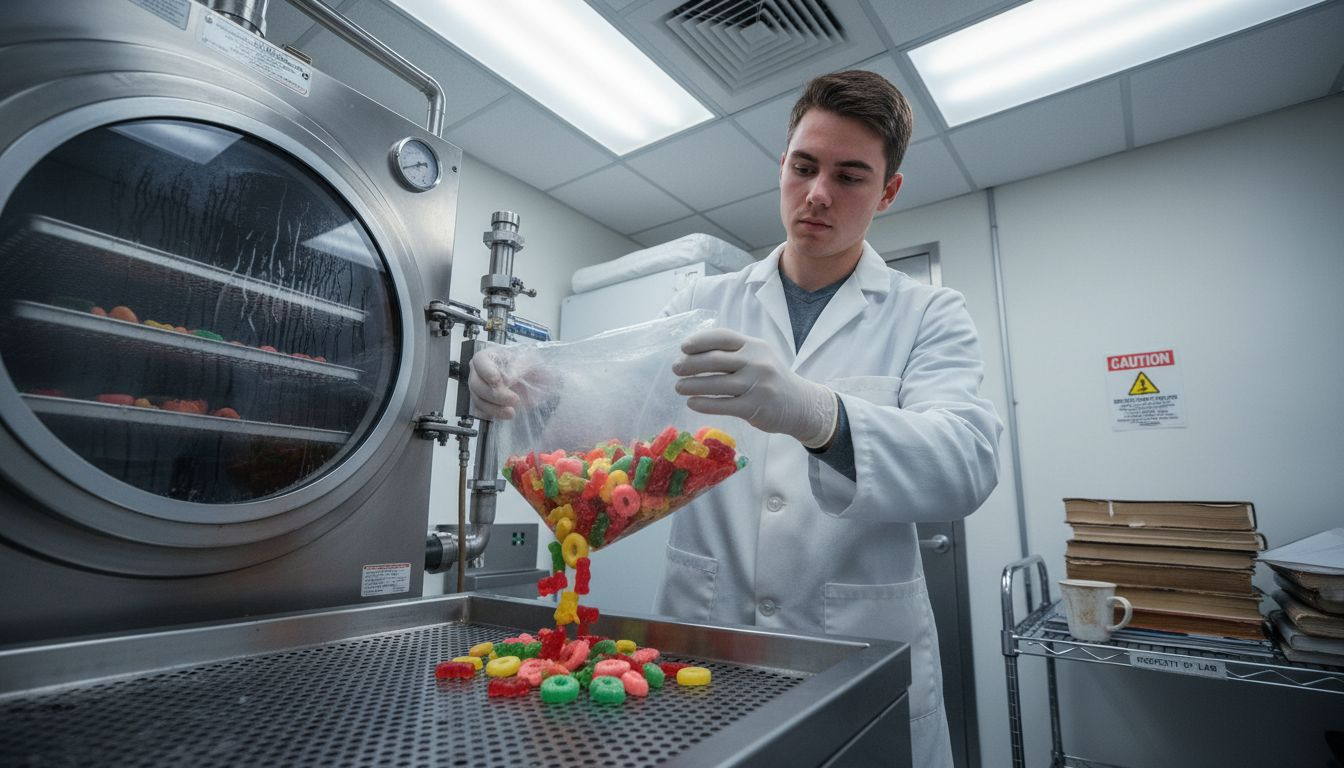
Shelf life extends dramatically compared to traditional candy formulations. Conventional candy typically lasts 6-12 months before quality degradation, while properly freeze-dried and packaged candy maintains peak quality for 24 months or longer. This extended shelf life reduces waste, improves inventory management, and expands distribution opportunities for Canadian retailers.
Freeze-drying preserves natural flavors more effectively than heat-based dehydration methods. The low-temperature process protects volatile flavor compounds and prevents caramelization or browning that alters taste profiles. The resulting texture transformation creates a unique crunchy experience that differentiates freeze-dried candy from traditional soft or chewy varieties.
Key freeze-drying benefits for candy manufacturing include:
- Moisture reduction to safe levels preventing spoilage and microbial contamination
- Extended shelf life enabling broader distribution and reduced product loss
- Preserved authentic flavors without heat damage or chemical degradation
- Novel crunchy texture appealing to consumers seeking unique sensory experiences
- Reduced weight per unit simplifying shipping logistics and lowering transport costs
Pro Tip: Adjust recipes minimally when adapting traditional candy formulations for freeze-drying to maintain familiar flavor profiles while leveraging the unique textural benefits consumers increasingly seek in innovative confectionery products.
Understanding the freeze-dried candy manufacturing process helps manufacturers optimize product development and quality standards.
Private labeling and co-packing options for Canadian candy businesses
Private labeling and co-packing reduce upfront production investment by eliminating the need for manufacturers to purchase expensive freeze-drying equipment, secure facility certifications, and navigate complex regulatory compliance independently. Canadian retailers typically reduce capital needs by 20-30% when partnering with experienced co-packers rather than building in-house production capabilities.
Time to market accelerates by approximately 40% through co-packing relationships. Established co-packers already maintain Health Canada compliant facilities, bilingual labeling expertise, and validated quality control systems. This operational foundation allows new brands to launch products within months rather than the years required to build independent manufacturing infrastructure.
Practical co-packing implementation follows these strategic steps:
- Evaluate co-packer credentials including facility certifications, freeze-drying capacity, and compliance track records with Canadian food safety authorities
- Negotiate flexible minimum order quantities that balance initial market testing with inventory cost management
- Review quality assurance protocols covering moisture testing, microbial analysis, and sensory evaluation procedures
- Establish clear communication channels for recipe development, packaging design approval, and ongoing production monitoring
- Structure contracts with tiered pricing based on volume commitments to optimize cost efficiency as sales grow
Private labeling enhances brand differentiation by allowing retailers to develop proprietary formulations, unique packaging designs, and targeted positioning strategies. Retailer profit margins typically improve by 10-15% compared to distributing national brands because private label products eliminate wholesale markups and enable premium pricing for exclusive offerings.
Pro Tip: Negotiate tiered order sizes in co-packing contracts to maintain flexibility during product launches while securing volume discounts as market demand grows, balancing inventory costs against capital efficiency.
Exploring the benefits of private labeling in Canada and co-packing freeze-dried candy services provides manufacturers with strategic alternatives to capital-intensive production investments.
Packaging and labeling compliance for freeze-dried candy in Canada
Canadian law requires complete English and French labeling on all retail candy packaging sold within the country. Labels must display product names, ingredient lists, nutritional facts panels, allergen warnings, manufacturer contact information, and weight declarations in both official languages with equal prominence and readability.
Allergen disclosure follows strict Health Canada guidelines requiring clear identification of priority allergens including peanuts, tree nuts, milk, eggs, wheat, soy, sesame, fish, shellfish, and mustard. Precautionary statements about potential cross-contamination must appear when manufacturing facilities process multiple allergen-containing products. Missing or unclear allergen information constitutes a serious compliance violation triggering mandatory recalls.
Sustainability-focused packaging increasingly incorporates biodegradable films and recyclable materials to meet consumer expectations and regulatory waste reduction guidelines. Canadian consumers demonstrate strong preferences for eco-friendly packaging, with surveys indicating 65-70% of shoppers actively seek products using sustainable materials.
Packaging material comparison for freeze-dried candy:
| Material Type | Compliance | Moisture Barrier | Cost Level | Sustainability |
|---|---|---|---|---|
| Metallized polyester | Excellent | Superior | Medium | Low recyclability |
| Biodegradable film | Good | Moderate | High | Excellent compostability |
| Recyclable plastic | Excellent | Good | Low | Moderate recyclability |
| Paper composite | Good | Fair | Medium | Good recyclability |
Key packaging compliance considerations include:
- Bilingual text meeting minimum font size and contrast requirements for readability
- Barrier properties protecting freeze-dried candy from moisture reabsorption during storage
- Tamper-evident seals ensuring product integrity from manufacturing through retail sale
- Recyclability or compostability symbols clearly marked per provincial waste management programs
Retailers benefit from appealing to eco-conscious consumers by adopting sustainable packaging that aligns with broader environmental values while maintaining compliance with federal labeling mandates. Innovative candy packaging in Canada balances regulatory requirements with market differentiation opportunities.
Market trends and consumer demand for freeze-dried candy in Canada
The freeze-dried candy market in Canada grows annually at approximately 8-10%, significantly outpacing traditional confectionery categories experiencing flat or declining sales. This expansion reflects shifting consumer preferences toward novel textures, perceived healthier formulations, and premium positioning of freeze-dried products.
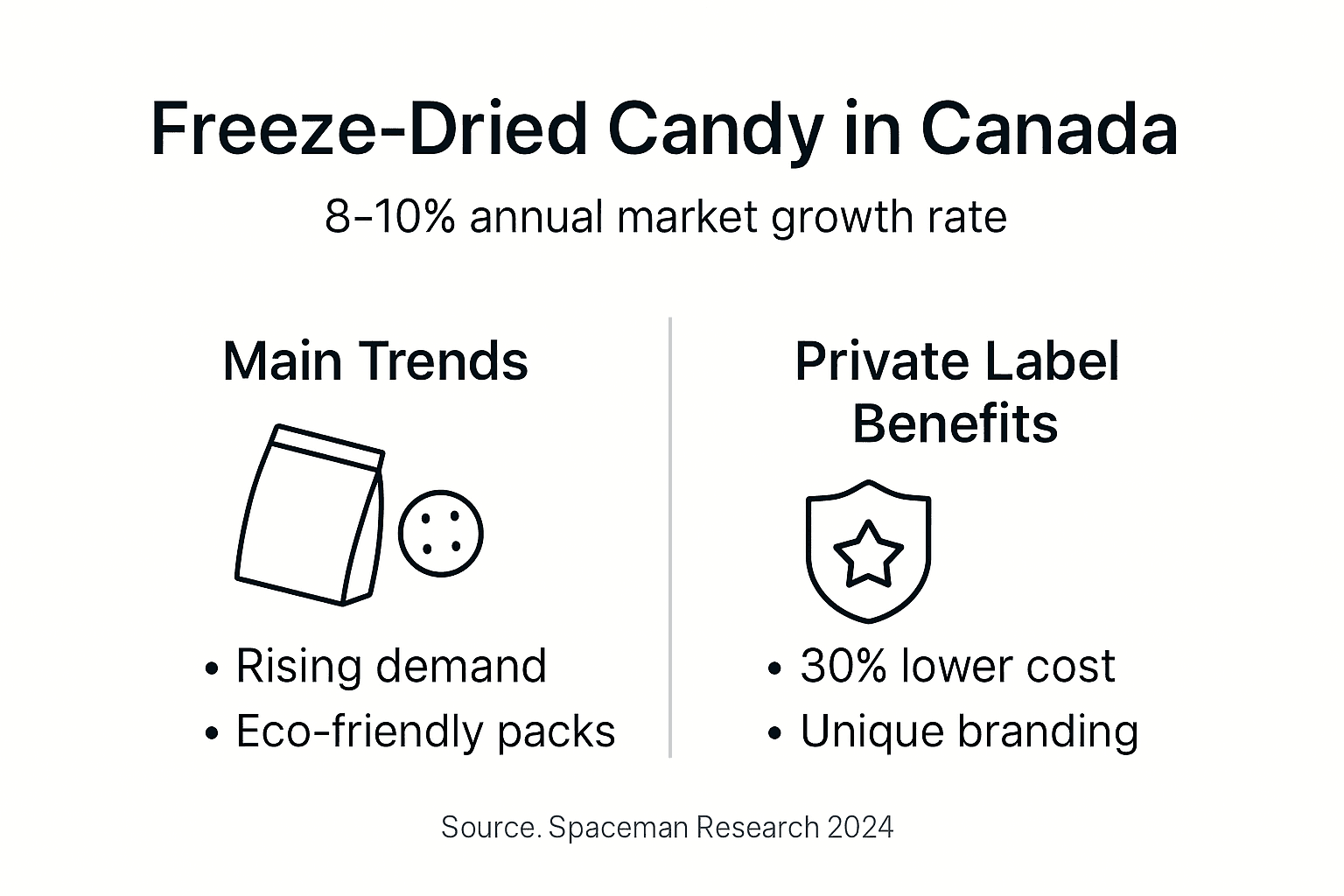
Consumers increasingly seek candy options with lower added sugar, fewer artificial preservatives, and clean ingredient labels. Freeze-dried candy naturally aligns with these preferences because the manufacturing process requires minimal additives compared to traditional candy production relying on stabilizers, humectants, and artificial colors to maintain texture and appearance.
Key consumer demand drivers include:
- Health-conscious shoppers seeking lower sugar and additive content in confectionery choices
- Novelty seekers attracted to unique crunchy textures unavailable in conventional candy formats
- Premium positioning enabling higher price points justified by production complexity and quality perception
- Sustainability expectations favoring products with extended shelf life reducing food waste
- Social media influence amplifying awareness of freeze-dried candy through viral content and product reviews
Demand for eco-conscious packaging reflects broader sustainability expectations across food categories. Canadian consumers particularly value brands demonstrating environmental responsibility through material choices, waste reduction initiatives, and carbon footprint transparency. Retailers incorporating sustainable packaging gain competitive advantages in attracting and retaining environmentally aware customers.
Retailers can leverage these trends for product line expansion by introducing private label freeze-dried candy offerings that capture premium pricing while differentiating from mass-market national brands. Companies embracing private labeling benefit from speed and flexibility to respond quickly to emerging flavor trends and seasonal opportunities.
Understanding freeze-dried candy market growth in Canada and consumer trends helps manufacturers align product development with evolving market demands.
Quality control and shelf-life considerations
Maintaining moisture content below 2% is essential to prevent microbial growth and preserve the crisp texture that defines quality freeze-dried candy. Moisture migration from ambient humidity during storage can compromise product safety and sensory characteristics, making barrier packaging and proper storage conditions critical.
Freeze-dried candy shelf life ranges from 12 to 24 months depending on packaging quality, storage temperature, and humidity control. Products stored in climate-controlled environments with proper moisture barrier packaging consistently achieve longer shelf life compared to those exposed to temperature fluctuations or high humidity conditions.
Comprehensive quality testing programs include multiple validation points:
- Moisture content analysis using calibrated instruments to verify levels remain below safety thresholds
- Microbial testing for aerobic plate counts, yeast, mold, and pathogen screening ensuring food safety
- Sensory evaluation panels assessing texture, flavor, color, and overall acceptability against established standards
- Package integrity testing confirming seal strength and barrier properties throughout shelf life
- Accelerated aging studies predicting long-term stability under various storage scenarios
Consistent quality controls protect brand reputation by ensuring every batch meets specifications before reaching consumers. Product returns due to quality failures damage retailer relationships, erode consumer trust, and generate costly recall expenses. Investing in robust quality assurance programs prevents these issues while demonstrating commitment to excellence.
Retailers should verify co-packer quality assurance protocols before contracting to ensure manufacturing partners maintain adequate testing infrastructure, trained personnel, and documented procedures. Requesting audit reports, certification credentials, and sample testing results during vendor selection reduces downstream quality risks.
Exploring freeze-dried candy quality and shelf life considerations helps manufacturers establish appropriate specifications and testing regimens.
Implementing freeze-dried candy solutions: practical steps for retailers and manufacturers
Successfully launching freeze-dried candy products requires systematic planning across manufacturing partnerships, regulatory compliance, packaging design, and market positioning. Following structured implementation steps reduces risks and accelerates time to market.
Actionable implementation sequence:
- Vet compliant Canadian co-packers with demonstrated freeze-drying expertise, verified through facility tours, customer references, and certification documentation
- Develop bilingual packaging designs aligned with Health Canada standards using professional translation services and regulatory review before finalizing artwork
- Align product formulations with current market trends emphasizing health attributes, sustainability claims, and unique sensory experiences consumers actively seek
- Balance initial order quantities to optimize inventory investment without overcommitting capital during market testing phases
- Establish distribution partnerships targeting retailers aligned with premium positioning and target consumer demographics
- Monitor sales performance and customer feedback to refine formulations, packaging, and marketing strategies based on real market data
Managing bilingual packaging design requires careful attention to translation accuracy, visual balance between languages, and regulatory compliance across all label elements. Working with specialized packaging designers familiar with Canadian requirements prevents costly revisions and launch delays.
Aligning products with health and sustainability trends involves transparent ingredient communication, credible environmental claims, and authentic brand messaging. Consumers quickly identify and reject superficial marketing without substantive product attributes supporting promotional claims.
Pro Tip: Collaborate closely with co-packers early in development to streamline labeling and packaging compliance, leveraging their regulatory expertise and established supplier relationships to avoid common pitfalls that delay product launches.
Choosing private label candy manufacturers and evaluating strategic candy packaging options provide foundational knowledge for successful implementation.
Explore freeze-dried candy manufacturing solutions with Spaceman
Spaceman offers specialized private labeling and co-packing services designed specifically for Canadian candy businesses seeking to enter the freeze-dried market efficiently. Our proven compliance expertise ensures products meet all Health Canada requirements while our cutting-edge freeze-drying equipment delivers consistent quality across production runs.
Partner with Spaceman to access sustainable packaging solutions tailored to current market demands, reducing your environmental footprint while appealing to eco-conscious consumers. Our flexible order quantities and tiered pricing structures accommodate businesses at every growth stage, from initial market testing through full-scale distribution expansion.
Benefit from faster time to market, reduced capital investment, and comprehensive manufacturing support that transforms freeze-dried candy concepts into profitable products. Explore our private label and co-packing services to discover how we help Canadian retailers and manufacturers succeed. Learn about freeze dry candy machines and review our comprehensive freeze drying candy guide for detailed technical insights.
Frequently asked questions about manufacturing candy in Canada
What licenses do I need to manufacture candy in Canada?
You need federal food establishment licenses from the Canadian Food Inspection Agency plus provincial business registrations and health permits specific to your manufacturing location. Most co-packers handle facility licensing, simplifying compliance for private label partners.
How long does freeze-dried candy last compared to regular candy?
Freeze-dried candy maintains quality for 12-24 months when properly packaged, roughly double the 6-12 month shelf life of traditional candy formulations. Extended shelf life reduces waste and expands distribution opportunities.
What are the minimum order quantities for private label freeze-dried candy in Canada?
Minimum orders vary by co-packer from 500 to 5,000 units depending on product complexity and packaging requirements. Negotiate flexible terms during initial market testing to balance inventory costs.
Is bilingual labeling required for all candy sold in Canada?
Yes, federal law mandates English and French labeling on all retail candy packages sold in Canada, covering product names, ingredients, nutrition facts, and allergen warnings with equal prominence.
What packaging materials work best for freeze-dried candy?
Metallized polyester and recyclable plastic films with superior moisture barriers protect freeze-dried candy effectively. Biodegradable options appeal to eco-conscious consumers but require careful selection to maintain adequate moisture protection.
How much can I save using co-packing versus building my own manufacturing facility?
Co-packing typically reduces capital investment by 20-30% while accelerating market entry by 40% compared to building independent manufacturing infrastructure requiring equipment purchases, facility certifications, and regulatory expertise development.