

More than 60 percent of environmentally-conscious consumers in North America actively seek candy brands that use eco-friendly packaging, raising the bar for Canadian retail and e-commerce businesses. As American trends continue to shape retail expectations, Canadian candy and snack companies must rethink their packaging strategies to stay competitive and meet tighter legal standards. This guide reveals what makes packaging truly sustainable, highlighting both practical and profitable approaches for attracting today’s green-minded customers.
Table of Contents
- Defining Friendly Packaging For Candy Brands
- Key Materials And Formats For Eco Packaging
- Legal Requirements For Sustainable Packaging In Canada
- Practical Benefits For Retail And E-commerce
- Common Mistakes And How To Avoid Them
Key Takeaways
| Point | Details |
|---|---|
| Friendly Packaging Emphasis | Canadian candy brands must prioritize environmentally responsible packaging that balances consumer needs and business sustainability. |
| Innovative Material Exploration | Brands should explore sustainable materials like Polylactic Acid (PLA) and natural polymers to reduce environmental impact. |
| Regulatory Compliance Necessity | Adapting to evolving Canadian regulations around packaging is essential for compliance and sustainability. |
| Strategic Implementation Caution | Successful transition requires careful planning and evaluation to avoid common pitfalls such as greenwashing and inadequate testing. |
Defining Friendly Packaging for Candy Brands
Friendly packaging represents a holistic approach to product design that balances environmental responsibility, consumer needs, and business sustainability. For Canadian candy brands, this means creating packaging solutions that minimize ecological impact while maintaining product quality and appeal. Sustainable packaging strategies now require comprehensive consideration of the entire product value chain.
At its core, friendly packaging goes beyond traditional recycling goals. It encompasses thoughtful material selection, reduced waste generation, and strategic lifecycle management. Candy manufacturers must evaluate packaging through multiple lenses: food safety, environmental protection, consumer convenience, and economic feasibility. Confectionery sustainability efforts increasingly focus on circular economy principles that transform packaging from a waste problem into a resource opportunity.
Key characteristics of friendly packaging for candy brands include:
- Minimal material usage
- Biodegradable or compostable components
- Renewable resource sourcing
- Reduced carbon footprint during production
- Easy end-of-life disposal or recycling
- Preservation of product freshness and quality
Pro tip: Conduct a comprehensive packaging audit to identify potential sustainability improvements across your product line.
Key Materials and Formats for Eco Packaging
Canadian candy brands are increasingly exploring innovative packaging solutions that minimize environmental impact while maintaining product integrity. Sustainable packaging materials now encompass a wide range of biodegradable and bio-based options that transform traditional packaging approaches. Polylactic acid (PLA), polyhydroxyalkanoates (PHA), and natural polymers offer promising alternatives to conventional petroleum-based packaging materials.
The landscape of eco-friendly packaging formats has dramatically expanded, providing candy manufacturers with multiple sustainable options. Biomaterial packaging technologies now include advanced formats like compostable films, plant-based trays, and innovative hybrid systems designed to balance environmental responsibility with functional performance. These materials are engineered to address critical challenges such as waste reduction, carbon footprint minimization, and circular economy principles.
Key sustainable packaging materials for candy brands include:
- Polylactic acid (PLA) derived from corn starch
- Cellulose-based films and wrappings
- Marine-derived polymers
- Protein-based packaging materials
- Starch-based compostable containers
- Biodegradable hybrid packaging systems
Each material offers unique advantages in terms of environmental impact, product protection, and end-of-life disposal. Manufacturers must carefully evaluate these options based on their specific product requirements, production capabilities, and sustainability goals.

Here’s how popular sustainable candy packaging materials compare based on major criteria:
| Material Type | Environmental Benefit | Functional Durability | Disposal Option |
|---|---|---|---|
| Polylactic acid (PLA) | Reduces carbon emissions | Moderate moisture barrier | Commercial compost |
| Cellulose-based films | Biodegradable & renewable | High clarity & flexibility | Home compostable |
| Marine polymers | Ocean-safe & edible | Limited shelf stability | Degrades in marine |
| Protein-based packs | Renewable, low toxicity | Susceptible to humidity | Compost or animal feed |
| Starch containers | Energy efficient to make | Limited rigidness | Easy composting |
| Hybrid bio systems | Multiple end-of-life paths | Customizable strength | Compost/recycling |
Pro tip: Conduct comprehensive testing of sustainable packaging materials to ensure they meet both your environmental and product protection standards.
Legal Requirements for Sustainable Packaging in Canada
Canadian regulatory frameworks are rapidly evolving to address the environmental challenges associated with packaging waste. Plastic packaging regulations now mandate comprehensive requirements for sustainable packaging across various industries, including the confectionery sector. These regulations aim to significantly reduce plastic waste and promote a more circular economy by establishing strict guidelines for packaging materials and their lifecycle.
National plastics compliance standards outline critical requirements for candy manufacturers and packaging designers. By 2030, companies must meet several key regulatory benchmarks:
- Minimum 50% recycled content in plastic packaging
- Accurate and transparent recyclability labeling
- Strict restrictions on misleading environmental claims
- Comprehensive recordkeeping and compliance verification
- Prohibition of problematic packaging terms like ‘biodegradable’
- Mandatory assessment of packaging across collection, sorting, and re-processing phases
These regulations represent a significant shift towards environmental responsibility, requiring Canadian candy brands to fundamentally rethink their packaging strategies. Manufacturers must invest in innovative materials, redesign packaging systems, and develop robust tracking mechanisms to ensure compliance with emerging environmental standards.
Summary of recent Canadian sustainable packaging requirements for candy brands:
| Regulation Focus | Required Action | Impact on Manufacturers |
|---|---|---|
| Plastic content | 50% recycled minimum by 2030 | Material sourcing rethink |
| Labeling transparency | Accurate disposal instructions | Better communication needed |
| Green claim restrictions | Ban on vague environmental terms | Stricter marketing standards |
| Compliance tracking | Record packaging lifecycle | Invest in monitoring tools |
Pro tip: Consult with a regulatory compliance expert to develop a comprehensive packaging strategy that meets Canadian environmental regulations.
Practical Benefits for Retail and E-commerce
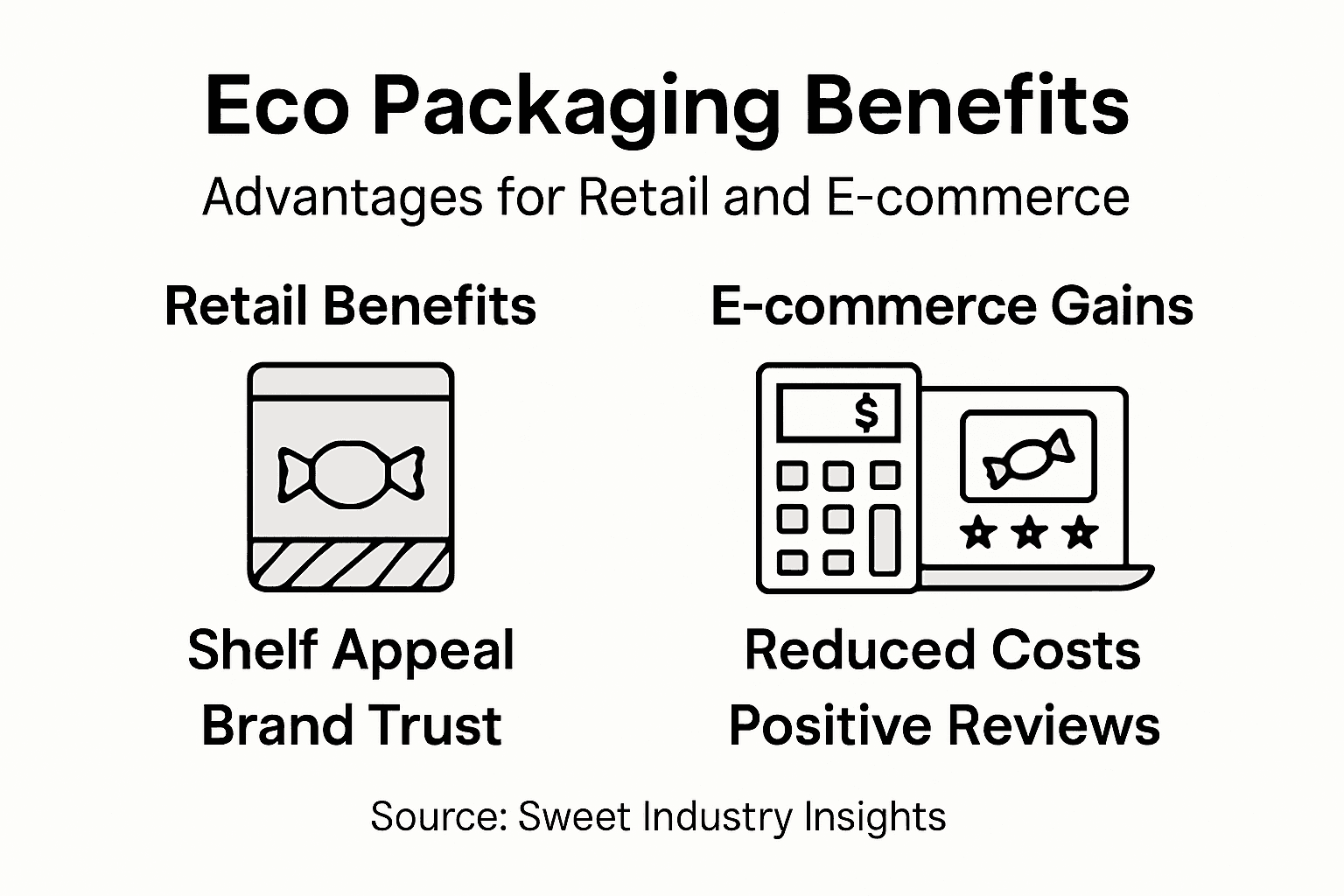
Sustainable packaging offers transformative advantages for Canadian retail and e-commerce businesses in the candy industry. E-commerce packaging strategies demonstrate significant potential for reducing operational costs, enhancing brand reputation, and meeting growing consumer environmental expectations. By implementing eco-friendly packaging solutions, businesses can simultaneously address waste reduction and create competitive market differentiation.
Consumer sustainability preferences have dramatically shifted, with increasing demand for packaging that balances environmental responsibility and product protection. The practical benefits for retailers and online sellers include:
- Reduced shipping and material costs
- Enhanced brand loyalty and customer perception
- Compliance with emerging environmental regulations
- Improved supply chain efficiency
- Lower waste management expenses
- Increased market competitiveness
These strategic advantages extend beyond environmental considerations, providing tangible economic benefits. Candy brands that proactively adopt sustainable packaging can differentiate themselves, attract environmentally conscious consumers, and potentially reduce long-term operational expenses through more efficient material usage and waste management strategies.
Pro tip: Conduct a comprehensive packaging audit to identify immediate sustainability improvements that can generate both environmental and financial returns.
Common Mistakes and How to Avoid Them
Canadian candy brands often encounter significant challenges when transitioning to sustainable packaging. Sustainable packaging pitfalls can derail environmental efforts and potentially damage brand reputation if not carefully navigated. Understanding these common mistakes is crucial for developing an effective and authentic sustainability strategy.
Packaging implementation strategies reveal several critical errors that businesses frequently make:
- Selecting materials without comprehensive lifecycle assessment
- Engaging in misleading greenwashing practices
- Neglecting local recycling infrastructure capabilities
- Focusing solely on material choice without holistic design
- Rushing implementation without proper testing
- Ignoring actual environmental impact measurement
- Failing to consider supply chain and customer disposal behaviors
Successful sustainable packaging requires a nuanced, multifaceted approach that goes beyond simple material substitution. Candy manufacturers must develop a comprehensive strategy that balances environmental responsibility, product protection, brand identity, and practical functionality. This means conducting rigorous research, piloting solutions, and maintaining transparency throughout the packaging development process.
Pro tip: Develop a robust internal sustainability audit process that evaluates packaging choices across environmental, economic, and functional dimensions.
Boost Your Candy Brand with Sustainable Packaging and Premium Freeze Dried Treats
Sustainable packaging is more than a trend for Canadian candy brands it is a critical step to reduce environmental impact while enhancing product appeal and consumer trust. At Space-Man we understand the challenge of balancing eco-friendly materials with product freshness and quality. That is why we offer comprehensive packaging and co-packing solutions tailored to help candy manufacturers meet evolving regulations and satisfy eco-conscious customers.

Discover our Wholesale Freeze Dried Candy & Treats designed to pair perfectly with your friendly packaging initiatives. Whether you want to create unique private-label products or bundle environmentally responsible offerings our experienced team supports your sustainability goals from sourcing to delivery. Act now to upgrade your candy lineup sustainably and see the difference at Space-Man. For more flexible options explore our Bulk Unbranded Freeze Dried Candy & Treats and start your journey toward eco-friendly candy sales today.
Frequently Asked Questions
What is friendly packaging for candy brands?
Friendly packaging refers to a holistic approach that balances environmental responsibility, consumer needs, and business sustainability. It involves minimizing ecological impact while maintaining product quality and appeal.
What are the key benefits of using sustainable packaging for candy?
Using sustainable packaging can lead to reduced operational costs, improved brand reputation, compliance with regulations, and enhanced market competitiveness. Sustainable packaging also helps meet growing consumer demands for environmentally friendly solutions.
What materials are considered eco-friendly for candy packaging?
Eco-friendly materials include polylactic acid (PLA), cellulose-based films, marine-derived polymers, and starch-based containers. These materials offer advantages like biodegradability, renewable sourcing, and reduced carbon footprint.
What common mistakes do candy brands make when transitioning to sustainable packaging?
Common mistakes include selecting materials without lifecycle assessments, engaging in greenwashing, neglecting local recycling capabilities, and focusing only on material choice without holistic design considerations.