

The best swaps for tortilla chips are vegetable scoops, roasted chickpeas, baked sweet potato rounds, cheese crisps or pork rinds, air-popped popcorn, and freeze-dried snacks, each trading empty starch for protein or fiber that actually fills you up. The American Heart Association recommends keeping snacks around or below 200 calories, and some brands now sell freeze-dried options that hit that mark with real crunch. The rest of this guide breaks down which one to grab depending on whether you’re dipping or building nachos.
TL;DR:
- Roasted chickpeas and sweet potato rounds provide sturdy, nutrient-rich alternatives that can hold toppings without turning soggy.
- Vegetable options like bell peppers and cucumbers are ideal for dipping but are too fragile for loaded nachos or wet toppings.
- Freeze-dried snacks offer convenient, portion-controlled crunch for light dips but lack the structural support needed for heavier toppings.
- Choosing options with protein and fiber, such as chickpeas or cheese crisps, increases satiety while staying within recommended calorie limits.
- Proper prep, including drying, consistent slicing, and par-baking, is essential to achieve a crispy texture when making homemade swaps.
Table of Contents
- Healthy Replacement for Tortilla Chips: The Quick Shortlist
- The Best Chip Alternatives, One by One
- How to Pick the Right Swap for Your Situation
- Kitchen Tricks for Better Crunch at Home
- Where Freeze-Dried Snacks Fit Into the Picture
- Tortilla Chips vs. the Alternatives: A Nutrition Snapshot
- Allergen Considerations Worth Knowing
- Making These Alternatives Actually Taste Like Chips
- Store-Bought vs. Homemade: Which Makes More Sense?
- Try a Ready-Made Crunchy Swap This Week
- What Actually Changed My Snacking Habits
- Sources
- FAQ
Healthy Replacement for Tortilla Chips: The Quick Shortlist
If you just want the short version so you can get back to your grocery list, here it is. Each of these works differently depending on whether you’re scooping guacamole or piling on nacho toppings, and the calorie counts below are rough per-serving estimates for a typical snack-size portion.
- Bell pepper strips — Crunchy, slightly sweet, and basically free calorically (about 20 to 30 calories per cup). Best for dipping, not nachos, since they bend under weight.
- Cucumber rounds — Cool and hydrating at roughly 16 calories per cup, but they get watery fast, so they’re a dipping-only option.
- Baked sweet potato rounds — Sturdy enough to hold cheese and salsa, with about 100 calories per cup baked. Works well for nachos.
- Roasted chickpeas — Around 120 calories per half cup, packed with fiber and plant protein. Good for both dipping and topping a nacho platter.
- Cheese crisps — Low-carb and satisfying at roughly 110 calories per ounce, though sodium runs high. Great nacho base for keto eaters.
- Pork rinds — Zero carbs, about 80 calories per half-ounce serving, high protein. Sturdy enough for heavy nacho toppings.
- Air-popped popcorn — Light and whole-grain at about 30 calories per cup, but too fragile for wet dips.
- Freeze-dried fruit or veggie snacks — Ultra-light and shelf-stable, generally under 100 calories per serving, best for lighter dips rather than loaded nachos.
Vegans can lean on chickpeas, popcorn, and most vegetable options without modification. Anyone counting carbs may want to consider cheese crisps or pork rinds, since these alternatives are very low in carbohydrates.
The Best Chip Alternatives, One by One
Picking a single “best” replacement is a little like asking for the best shoe. It depends on what you’re doing with it. Here’s what actually works, category by category, with the prep details that make or break the result.
Vegetable scoops: your everyday dipper
Bell peppers, cucumber, zucchini, and jicama are the classic swap, and for good reason. Cut bell peppers into wide “boat” shapes and they scoop guacamole almost as well as a chip. Zucchini needs a thicker cut, at least a quarter inch, or it turns limp the second it touches dip. Cucumber is the most refreshing option but also the most watery, so slice it just before serving rather than prepping it hours ahead.
- Bell peppers: cut into wide 2 to 3 inch pieces, remove seeds, serve chilled.
- Cucumber: slice into thick rounds or spears, pat dry with a paper towel first.
- Zucchini: slice a quarter inch thick, lightly salted and rested for 10 minutes to draw out moisture before serving raw or roasting.
- Jicama: peel and cut into sticks, holds up longer than cucumber for party trays.
Baked sweet potato, plantain, and beet rounds
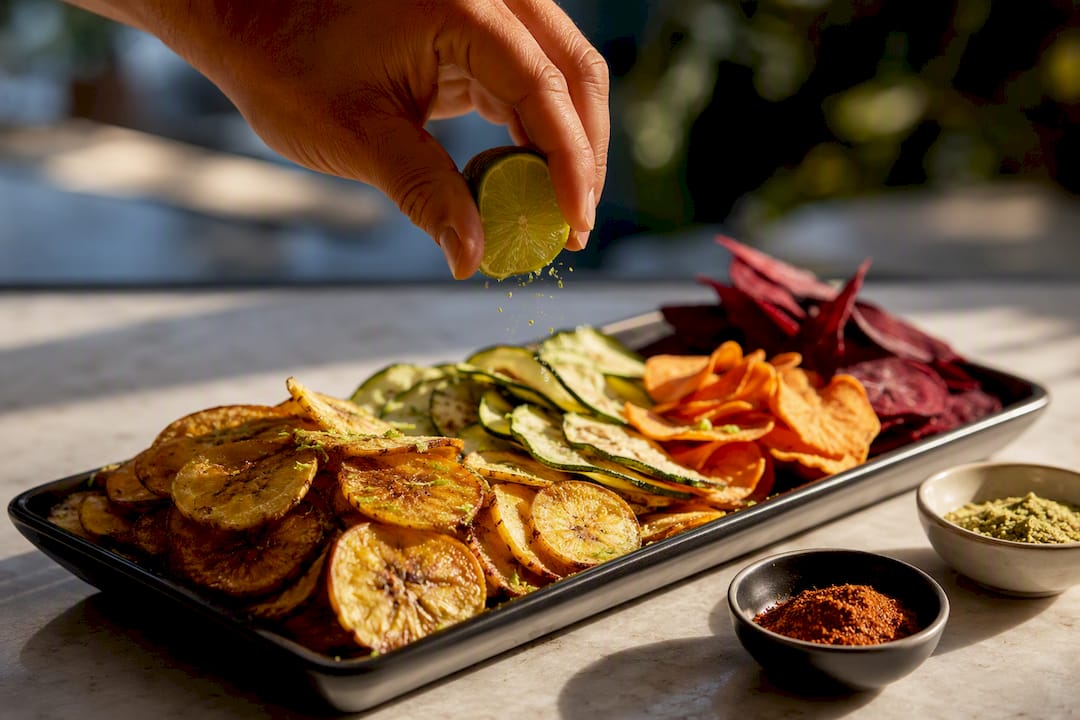
These are the closest thing to an actual chip replacement for nacho night. Slice sweet potatoes about an eighth of an inch thick, toss lightly in oil, and bake at 400°F for 20 to 25 minutes, flipping halfway. The USDA’s baked sweet potato chip recipe is a solid starting template if you want exact timing. Beets follow a similar process but need a couple extra minutes since they’re denser. Plantains crisp up faster, closer to 15 minutes, and taste noticeably closer to a traditional chip once salted.

For nacho use specifically, a brief par-bake before loading toppings keeps the base from turning to mush under melted cheese and salsa. Thinner slices crisp better but break more easily under heavy toppings, so aim for that eighth-inch range as a sweet spot between crunch and sturdiness.
Roasted chickpeas and air-fried legumes
Chickpeas are the sleeper pick here because they deliver both fiber and plant protein, which is exactly the combination dietitians point to for satiety. Drain and thoroughly pat dry a can of chickpeas, toss with a little oil, and roast at 400°F for 20 to 30 minutes, tossing them halfway through so they crisp evenly. An air fryer cuts that time down to around 15 minutes at the same temperature.
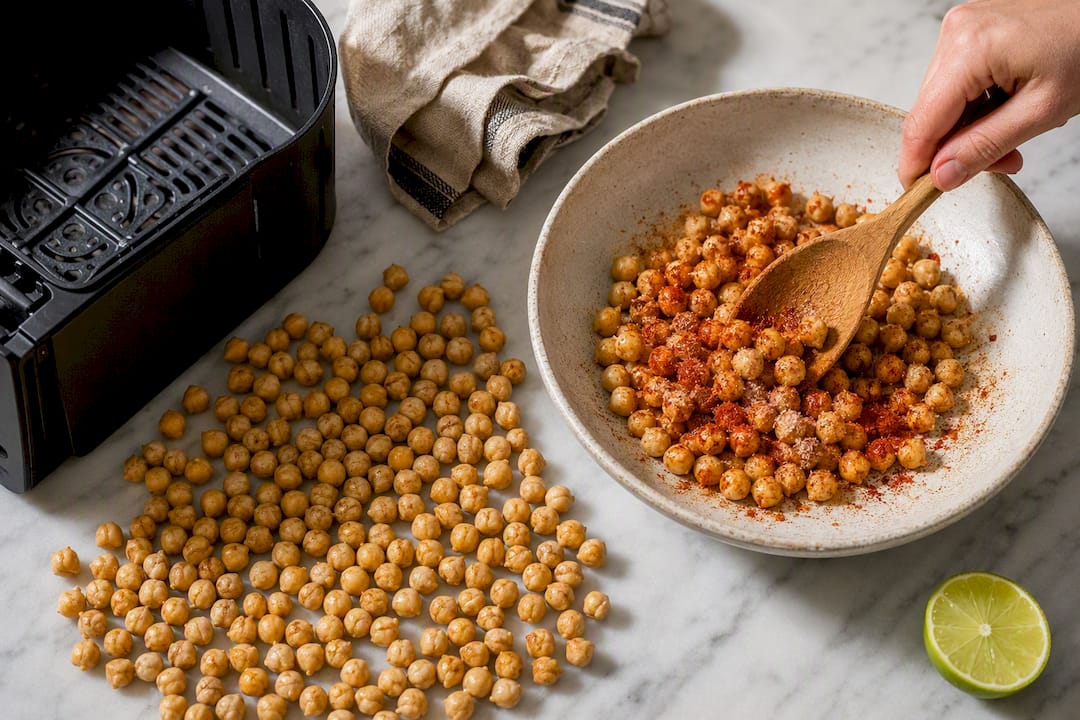
Season them the way you would season chips: smoked paprika and garlic powder for a smoky note, or chili powder and lime zest for something closer to a nacho flavor. They lose crunch within a few hours at room temperature, so they’re best made same-day or reheated briefly before serving.
Cheese crisps and pork rinds
For strict low-carb eaters, these two dominate. Cheese crisps are just baked shredded cheese, usually cheddar or parmesan, cooked in small mounds at 400°F for 5 to 7 minutes until they firm up and turn golden. Pork rinds need no prep at all since they’re sold ready to eat, and they hold up shockingly well under queso or salsa without going soft.
The tradeoff is sodium and saturated fat, both of which run higher than in most vegetable-based swaps. If you’re watching blood pressure, treat these as an occasional nacho base rather than a daily habit.
Popcorn and whole-grain crackers
Air-popped popcorn is genuinely one of the better whole-grain snacks around, and it’s the one on this list that most resembles regular snacking rather than a “diet” substitute. It won’t survive contact with guacamole, but it works fine alongside a lighter dip like hummus if you eat it by hand rather than scooping. Whole-grain crackers split the difference, sturdy enough for a modest dip but never quite as crunchy as a fried chip.
Freeze-dried snacks
Freeze-drying pulls almost all the moisture out of food while keeping its shape and structure intact, which is why freeze-dried fruit or vegetable pieces stay crisp for months in the pantry rather than days in the fridge. They’re genuinely convenient for portion control since a serving is light and pre-measured, which matters when you’re trying to stay near that 200-calorie mark.
The 200-Calorie Rule of Thumb The American Heart Association suggests keeping most snack portions under roughly 200 calories. Nearly every alternative on this list, from a full cup of roasted chickpeas to a generous handful of freeze-dried fruit, fits comfortably under that number when portioned correctly.
Pro Tip: Weigh or measure your first few servings of any new snack instead of eyeballing it. Roasted chickpeas and cheese crisps especially are easy to overeat because they’re small and don’t feel as filling bite for bite as a chip does, even though they usually are.
How to Pick the Right Swap for Your Situation
Not every alternative fits every craving, so it helps to run through five quick filters before you decide what goes in the bowl.
- Sturdiness — Will it hold cheese, salsa, and guacamole without collapsing? Sweet potato rounds, cheese crisps, and pork rinds pass. Cucumber and popcorn don’t.
- Satiety — Does it combine protein and fiber, or is it just crunch with no staying power? Chickpeas and cheese crisps score high; plain veggie sticks are lower unless paired with a protein-rich dip like hummus.
- Calories — Sticking near the roughly 200-calorie guideline keeps portions honest. A cup of chickpeas and a cup of baked sweet potato rounds both land in a reasonable range.
- Sodium — Cheese crisps and pork rinds tend to run salty. If you’re watching sodium, balance them with unsalted vegetables elsewhere on the plate.
- Prep time — Cucumber takes 30 seconds. Sweet potato rounds take 25 minutes in the oven. Decide how much time you actually have before committing to a recipe.
For nacho night specifically, go with baked sweet potato rounds, cheese crisps, or pork rinds since they need to survive toppings. For light dipping with something like guacamole or salsa, bell peppers, cucumber, or a small bowl of freeze-dried veggie pieces work just as well without the extra prep.
Before buying any packaged version of these swaps, run a quick 30-second label check: look at serving size first, since it changes every other number on the label, then scan sodium and added sugar. A bag marketed as a “veggie chip” can carry as much sodium as a regular tortilla chip once you check the actual Nutrition Facts panel rather than the front-of-package claims.
Kitchen Tricks for Better Crunch at Home
Getting a homemade chip alternative to actually taste good on the first try comes down to moisture control more than anything else.
- Pat everything dry first. Whether it’s chickpeas from a can or sliced zucchini, excess surface moisture is the number one reason homemade veggie chips turn soggy instead of crisp.
- Slice at a consistent thickness. Aim for about a quarter inch for vegetables meant to hold dip, and closer to an eighth inch for anything you want genuinely crispy, like sweet potato rounds.
- Par-bake sturdier vegetables before loading toppings. A quick 10-minute bake at 400°F before adding cheese or salsa keeps sweet potato or beet rounds from collapsing under a loaded nacho platter.
- Roast chickpeas at 400°F for 20 to 30 minutes, tossing halfway through, or cut that to about 15 minutes in an air fryer.
- Bake cheese crisps in small, evenly spaced mounds at 400°F for 5 to 7 minutes, then let them cool fully on the pan. They firm up as they cool, not while hot.
- Store cooled snacks in an airtight container, not the fridge, since refrigeration reintroduces moisture and softens anything you just spent 20 minutes crisping up.
Pro Tip: Batch-roast a double portion of chickpeas or sweet potato rounds on a Sunday and store them in a paper-lined airtight container. They’ll stay reasonably crisp for two to three days, which covers most of the week’s snacking without daily prep.
Where Freeze-Dried Snacks Fit Into the Picture
Freeze-drying removes water from food through a vacuum process rather than heat, which is why the finished product stays light, crisp, and shelf-stable for a long stretch without refrigeration. That low-moisture structure is exactly what gives many freeze-dried fruit, candy, and other treats their signature snap, closer to a chip’s texture than most dehydrated snacks manage.
The practical upside is convenience. A pre-portioned bag of freeze-dried snacks travels well, doesn’t need prep, and gives you built-in portion control, which helps if you’re trying to stay near that 200-calorie guideline without measuring anything yourself. They work best as a lighter dipping snack or an on-the-go substitute rather than as the structural base for a fully loaded nacho platter, since very light, airy pieces won’t support heavy toppings the way a baked sweet potato round or a pork rind will. Pair them with a lighter dip, like a fruit-based salsa or a thin yogurt dip, rather than a dense queso.
Tortilla Chips vs. the Alternatives: A Nutrition Snapshot
A standard serving of tortilla chips, about one ounce or roughly 10 to 12 chips, runs close to 140 to 150 calories with minimal fiber and almost no protein. That’s where most of the alternatives on this list pull ahead, not necessarily on calories alone but on what those calories deliver.
Roasted chickpeas pack in both fiber and plant protein per serving, which is the exact protein-plus-fiber combination tied to better satiety than a straight starch snack. Baked sweet potato rounds carry more vitamin A and potassium than a tortilla chip will ever offer, though they land in a similar calorie range once oil is added. Cheese crisps and pork rinds flip the script entirely, trading almost all the carbohydrate for protein and fat, which makes them the closest match for anyone managing blood sugar or following a low-carb pattern.
Vegetable scoops are the outlier: genuinely low-calorie across the board, but low in protein too, so they lean on whatever you’re dipping them in for staying power. If you want exact numbers for a specific brand or homemade batch, the USDA’s FoodData Central database lets you look up precise calorie, fiber, and protein counts rather than guessing.
Allergen Considerations Worth Knowing
Most of these swaps sidestep the biggest tortilla chip allergen concerns, but a few need a second look depending on what you’re avoiding.
Gluten isn’t usually an issue since corn tortilla chips are naturally gluten-free, but flour-based chips and some whole-grain crackers aren’t. Vegetable scoops, roasted chickpeas, cheese crisps, and pork rinds are all naturally gluten-free, making them safe defaults for anyone with celiac disease or a gluten sensitivity. Dairy shows up mainly in cheese crisps, so anyone avoiding dairy should lean toward chickpeas, vegetables, popcorn, or pork rinds instead. Nut allergies rarely intersect with this list directly, since none of the core swaps rely on nuts, though pre-made trail mixes or seasoned snack blends sometimes add cashews or peanuts, so it’s worth checking labels on anything packaged.
Sodium is the quieter concern across nearly every category here, since salt is doing a lot of the flavor work that fat and starch used to handle in a fried chip. Anyone managing blood pressure should treat pork rinds, cheese crisps, and packaged roasted chickpeas as occasional items rather than daily staples, and check labels rather than assuming “healthy-sounding” automatically means low-sodium.
Making These Alternatives Actually Taste Like Chips
The texture swap is only half the battle. Flavor is what makes a substitute feel like an upgrade instead of a punishment, and the good news is that seasoning translates almost identically across every category on this list.
For a spicy kick, toss roasted chickpeas or sweet potato rounds with chili powder, cayenne, and a pinch of smoked paprika before roasting, so the spice bakes in rather than just sitting on the surface. For salty and savory, a light dusting of sea salt combined with garlic powder and onion powder gets remarkably close to a classic tortilla chip’s flavor profile on cheese crisps or popcorn. For smoky, smoked paprika alone does most of the work, and it pairs especially well with pork rinds or baked plantain rounds since their neutral base lets the smokiness come through clearly.
A squeeze of lime juice and zest right before serving brightens up almost anything on this list and mimics the tang a lot of people associate with restaurant-style chips. If you’re mixing flavors across a party platter, keep one tray milder for guests who don’t want heat and season the rest boldly. It costs nothing extra and saves you from remaking a batch halfway through the night.
Store-Bought vs. Homemade: Which Makes More Sense?
Homemade versions win on control. You decide the oil, the salt level, and the slice thickness, and you avoid the preservatives and mystery seasoning blends that show up in some packaged “healthy” snacks. The tradeoff is time: a batch of roasted chickpeas or sweet potato rounds takes 20 to 30 minutes of active attention, which isn’t always realistic on a weeknight.
Store-bought options solve the time problem but vary wildly in quality. Some “veggie chips” are just potato starch and food coloring, offering little advantage over a regular chip despite the marketing. Others, like a genuinely dehydrated or freeze-dried vegetable snack, deliver on the promise.
For freeze-dried snacks specifically, look for options sold directly through a manufacturer’s own collection of freeze-dried treats rather than a generic supermarket brand, since direct sellers tend to be more transparent about ingredients and batch freshness. Grocery stores, natural food shops, and online retailers all carry some version of these swaps now, so availability isn’t the barrier it used to be. The real work is reading past the packaging.
Try a Ready-Made Crunchy Swap This Week
If roasting chickpeas at 9 p.m. on a Tuesday isn’t realistic for your week, that’s exactly the gap freeze-dried snacks are built to fill. Some manufacturers produce freeze-dried candy, chocolate, marshmallows, and ice cream sandwiches in Canada, giving you a shelf-stable crunchy option you can portion out without touching an oven.

Browse the Freeze Dried Candy & Treats collection if you want something crisp and pre-portioned to keep on hand for movie nights or lunchboxes, without the sogginess risk that comes with homemade veggie chips left sitting out too long. If you run a store, snack brand, or subscription box and want your own branded version of a crunchy freeze-dried treat, Space-man’s private label and co-packing services handle everything from formulation to packaging so you’re not building a production line from scratch. Either way, the next step is simple: pick a product, check what’s in stock, and add it to your cart.
What Actually Changed My Snacking Habits
Cutting tortilla chips cold turkey never worked for me, and I don’t think it works for most people. What actually stuck was a 50/50 mix, half the usual chips, half roasted chickpeas or baked sweet potato rounds in the same bowl, so nothing felt like a punishment. Over a few weeks the ratio shifted on its own toward the healthier side without any willpower involved.
The protein-and-fiber combination is the real reason it worked, not the calorie count, and choosing crunchy options like almonds and pumpkin seeds can also boost satiety with healthy fats. A snack that fills you up means you stop reaching back into the bowl every ten minutes. Pick one swap from this list and try the 50/50 approach this week before you commit to anything stricter.
— Chadi
Sources
- Make better snack choices with these healthy tips — American Heart Association
- Healthy snacks: Quick tips — U.S. Office of Disease Prevention and Health Promotion (MyHealthfinder)
- Baked sweet potato chips — USDA recipe resource
FAQ
What Is a Healthier Alternative to Tortilla Chips?
Vegetable scoops like bell peppers and cucumber, roasted chickpeas, baked sweet potato rounds, cheese crisps, and freeze-dried snacks all work as healthier substitutes, depending on whether you’re dipping or building nachos.
What Can You Replace Tortilla Chips With?
For dipping, use raw vegetable strips or air-popped popcorn; for nachos, baked sweet potato rounds, pork rinds, or cheese crisps hold up better under toppings than a raw vegetable would.
What’s the Healthiest Tortilla Chip?
Among packaged options, look for baked (not fried) chips with whole-grain corn as the first ingredient and check the label for sodium under 150 milligrams per serving, since that number varies enormously between brands.
What Is the Healthiest Substitute for Chips?
Roasted chickpeas tend to top the list because they combine fiber and plant protein for real satiety while staying close to the American Heart Association’s 200-calorie snack guideline.
Does Space-man Sell Ready-Made Crunchy Snacks?
Yes, Space-man’s freeze-dried candy and treats collection offers pre-portioned, shelf-stable crunchy snacks; current pricing is listed on the product pages.