

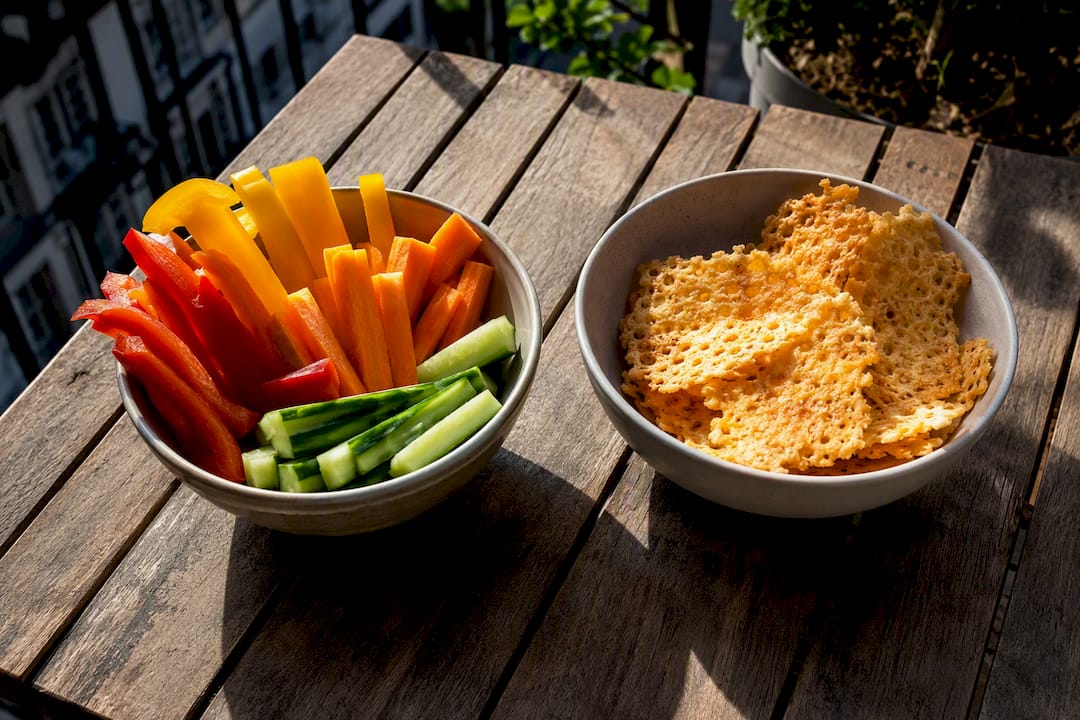
Your best bets for a healthy nacho chip alternative: bell pepper strips, baked sweet potato rounds, baked zucchini rounds, mini peppers, cheese crisps, roasted chickpeas, air-popped popcorn, whole-grain crackers, and freeze-dried crunchy snacks. Pick veggie scoops if you want the lowest calorie count, cheese crisps if you’re cutting carbs, and freeze-dried snacks if you need something shelf-stable for the pantry. Registered dietitians point out that snacks make up roughly one-third of daily calorie intake for most people, which is exactly why swapping fried tortilla chips for a whole-food option moves the needle. The American Heart Association backs raw veggies, roasted chickpeas, and air-popped popcorn as go-to picks, and if you want exact numbers on any of these, USDA FoodData Central has you covered.
- Lowest calorie: bell pepper strips, cucumber rounds, jicama sticks
- Best low-carb: cheese crisps, roasted chickpeas (in moderation)
- Best shelf-stable: freeze-dried crunchy snacks, whole-grain crackers
- Most filling: baked sweet potato rounds, cheese crisps
Key Takeaways
The best healthy nacho chip alternative depends on your goal: fresh veggies win on calories, cheese crisps win on low-carb, and freeze-dried snacks win on shelf life.
| Point | Details |
|---|---|
| Lowest-calorie pick | Bell pepper strips and cucumber rounds are mostly water and fiber, ideal for cutting calories. |
| Best for low-carb goals | Cheese crisps and roasted chickpeas swap starch for protein and fat without sacrificing crunch. |
| Satiety comes from protein and fiber | Pairing a veggie base with hummus or beans keeps you full longer than the base alone. |
| Check labels on packaged options | Compare serving size, sodium, and added sugars before trusting a “healthy” chip claim. |
| Shelf-stable choice | Space-man’s freeze-dried crunchy snacks hold their crunch for months with simple ingredient lists. |
Table of Contents
- Healthy Snack Options Grouped by Type and Craving
- What to Check Before Buying “Healthy” Packaged Chips
- How to Make Crunchy Nacho Bases at Home
- Matching the Swap to Your Actual Goal
- What Registered Dietitians Actually Say About These Swaps
- A Shelf-Stable Crunch Option Worth Keeping Around
- Sources
Healthy Snack Options Grouped by Type and Craving
Not every “healthy” swap fits every situation, so grouping them by what they actually do makes picking one a lot easier.
-
Fresh vegetable scoops. Bell pepper strips, cucumber rounds, and jicama sticks bring crunch without the calorie baggage. They’re mostly water, so they hydrate as you snack, and their neutral flavor lets salsa or guac do the talking. This is your move when the goal is simply eating less without feeling deprived.
-
Baked vegetable rounds. Sweet potato and zucchini rounds trade some of that low-calorie advantage for more fiber and a heartier bite. A single sweet potato round has more substance than a pepper strip, which means fewer trips back for seconds. These work well when you want nacho night to actually feel like a meal.
-
Protein and crisp swaps. Cheese crisps, roasted chickpeas, and (for strict keto eaters) pork rinds shift the nutrition math toward protein and fat instead of carbs. Cheese crisps are basically baked cheese, so watch the sodium. Roasted chickpeas add fiber but can spike sodium fast if you’re using a store-bought bag, so check the label.
-
Pantry and shelf-stable options. Air-popped popcorn, whole-grain crackers, and freeze-dried crunchy snacks live in your cabinet for weeks or months, which matters more than people think when late-night snack cravings hit. Portion these into bowls before you start dipping. Bags disappear fast when you’re eating straight from the source.
-
Novelty nacho bases. Mini peppers halved and loaded like nacho boats, or baked pita and whole-grain pita chips broken into scoopable triangles, both hold up under melted cheese and salsa without turning to mush in the first five minutes.
What to Check Before Buying “Healthy” Packaged Chips
Grocery store shelves are stuffed with bags that scream “baked” or “reduced fat,” and plenty of them are still glorified junk food in disguise, underscoring the role snack products play in healthful convenience. Before you toss a bag in your cart, run through this quick checklist:
- Serving size math. A bag might look low-calorie until you realize the listed serving is six chips, not the handful you’re actually eating.
- Sodium per serving. Anything over 200mg per serving adds up fast if you’re double-dipping through a whole bag.
- Added sugars. Some “sweet potato” or “veggie” chips sneak in cane sugar or corn syrup solids to boost flavor.
- Ingredient order. If oil or starch isolates appear before actual vegetables, that “veggie chip” is mostly potato starch and corn oil.
- Fiber and protein per serving. Anything under 2 grams of either is basically empty crunch.
Checking labels this way matters because “low calorie” claims can be misleading if you’re not also looking at sodium and sugar. When in doubt, cross-reference the bag against USDA FoodData Central to see what a realistic dip portion actually costs you calorie-wise.
How to Make Crunchy Nacho Bases at Home
You don’t need a deep fryer to get real crunch, just an oven and a little patience.
-
Baked sweet potato rounds. Slice sweet potatoes into 1/8 inch coins, toss lightly in oil, and lay them in a single layer on a baking sheet. Bake at 425°F for 20 to 25 minutes, flipping halfway. The USDA’s baked sweet potato chip method confirms this lower-fat baking approach gets you real crisp without frying oil.
-
Baked zucchini rounds and mini pepper nachos. Zucchini holds a ton of water, so salt the slices and let them sit on paper towels for 10 minutes before baking. This one step is the difference between crisp rounds and soggy discs. Mini peppers need no such prep. Just halve, seed, and load them straight into a hot oven.
-
Cheese crisps and baked pita chips. Drop small mounds of shredded cheese onto parchment paper and bake at 400°F for 5 to 7 minutes until golden and lacy. For pita chips, cut whole-grain pita into triangles, brush lightly with oil, and bake at 375°F for 8 to 10 minutes.
Pro Tip: Bake your base fully crisp first, add toppings last, and broil for 60 to 90 seconds just to melt the cheese. Anything longer and steam from the toppings turns your crunchy base into a sad, damp mess.
Matching the Swap to Your Actual Goal
The “best” alternative depends entirely on what you’re optimizing for, so match the swap to the goal instead of picking whatever’s trending.
- Cutting calories: bell pepper strips or cucumber rounds win easily since they’re mostly water and fiber.
- Low-carb or keto: cheese crisps and pork rinds keep carbs near zero while still handling heavy toppings.
- Gluten-free: vegetable-based scoops and rice-based crackers sidestep gluten without you having to hunt for a special label.
- Vegan: roasted chickpeas, popcorn, and raw veggies check every box without substitutions.
- Shelf-stable convenience: freeze-dried crunchy snacks and whole-grain crackers survive weeks in a pantry.
Calories alone don’t tell the whole story. A handful of pepper strips might be lower calorie than a few baked sweet potato rounds, but the sweet potato’s fiber and slightly higher glycemic load mean it keeps you full longer, which matters if you tend to snack out of boredom rather than hunger.
What Registered Dietitians Actually Say About These Swaps
Dietitians quoted in nutrition research keep circling back to one point: snacks account for close to a third of the calories most people eat in a day, so whole-food swaps aren’t a minor tweak, they’re a real lever. The American Heart Association’s snacking guidance specifically calls out vegetables with hummus, roasted chickpeas, and popcorn as legitimate options, not consolation prizes.
Pairing a low-calorie vegetable base with a protein-rich topping, like hummus, black bean dip, or shredded chicken, does more for satisfying hunger than either one alone. Protein and fiber together slow digestion, which keeps you from raiding the pantry an hour later.
Pro Tip: Add a handful of chopped nuts to your topping mix. They’re nutrient-dense and linked to better heart health in moderate amounts, and they add crunch exactly where a soggy veggie base needs it most.
A Quick Note on Not Overthinking This
My personal rotation is bell peppers with a smoky salsa verde on a lazy Tuesday, and baked sweet potato rounds with black beans and a little cheese when I want something closer to an actual meal. You don’t have to overhaul the whole nacho plate at once. Swap just the base and keep your favorite toppings. That one change alone knocks out a good chunk of the calories without touching the flavor you actually came for. For more swap ideas, our healthy snack replacements guide has a bunch worth trying.
A Shelf-Stable Crunch Option Worth Keeping Around
Fresh veggies and homemade rounds are great, but they don’t last. If you want something that sits in your pantry for months without going soft or spoiling, freeze-dried snacks solve a problem that fresh produce simply can’t.

Freeze-drying pulls almost all the moisture out of a food while keeping its structure intact, which is exactly why the crunch holds up so well next to a bowl of salsa or guac. Space-man makes freeze-dried crunchy snacks with short, simple ingredient lists, no deep fryer involved, so you’re not squinting at a label full of oils and preservatives. They’re a solid grab-and-go option for parties, road trips, or just keeping something crunchy on hand when the tortilla chip craving hits and you’d rather not run to the store. As with any packaged snack, check the serving size on the bag so a “handful” doesn’t quietly turn into three servings. If you’re stocking up for a gathering or want a bundle to keep in rotation, the 10-pack freeze-dried candy bundle ships free and comes with two bonus bags. Grab one and see which flavor becomes your new go-to.
Sources
- 30 healthy snack ideas from registered dietitians – AICR
- Healthy snacking – American Heart Association
- How to read food labels – NHS
- Baked sweet potato chips recipe – USDA
- Nuts: Are they good for your heart? – Mayo Clinic