

The fastest upgrade you can make to your snacking habits is swapping chips, candy, and pastries for fruit, vegetables, protein-rich whole foods, and crunchy low-fat options like air-popped popcorn or freeze-dried fruit. These categories work because they deliver fiber and protein, which keep you fuller longer and cut the cycle of reaching for another handful twenty minutes later.
Here are six swaps you can start today:
- Chips → air-popped popcorn, roasted chickpeas, or freeze-dried crunchy fruit/veg
- Candy → fresh fruit with a tablespoon of nut butter, or frozen grapes
- Pastries or doughnuts → a whole-grain crumpet with almond butter, or Greek yogurt with berries
- Sugary granola bars → a small handful of mixed nuts with a piece of fruit
- Ice cream → plain Greek yogurt topped with frozen mango or berries
- Salted peanuts → unsalted mixed nuts or edamame
Pair any of these with water or unsweetened tea instead of juice or soda. A chocolate bar plus a juice pouch can exceed your daily recommended added sugar in a single snacking session, so the drink choice matters as much as the snack itself.
Key Takeaways
The single most effective snack upgrade is pairing a protein source with a fiber-rich whole food, keeping portions in the 150–250 calorie range, and replacing sugary drinks with water at every snack occasion.
| Point | Details |
|---|---|
| Lead with protein and fiber | Pair produce with a protein (nuts, yogurt, eggs) to stay full and avoid the blood sugar spike-and-crash cycle. |
| Stick to the two-processed-snack limit | NHS guidance caps processed snacks at two per day; use traffic-light labels to choose greens and ambers. |
| Portion before you eat | Measure nuts, popcorn, and nut butter before eating — never snack straight from the bag. |
| Avoid the double sugar overload | Never pair a sweet packaged snack with juice or a sports drink; choose water or unsweetened tea instead. |
| Space-man for the crunch fix | Space-man freeze-dried candy and snack bundles deliver the crunch of chips or candy with no added oil, making them a practical swap for the hardest cravings to break. |
Table of Contents
- 1. Fruit and vegetable swaps you can make right now
- 2. Protein and fiber combos that actually keep you full
- 3. Crunchy low-calorie swaps for the chip craving
- 4. Whole-grain and fiber-forward swaps
- 5. Portable and budget-friendly options
- 6. DIY energy bites and trail mix
- How to pick healthier packaged snacks
- Portion guidance and pairing tips
- Why freeze-dried snacks can replace chips for crunch
- Space-man freeze-dried snacks: a crunchy swap worth trying
- Sources
1. Fruit and vegetable swaps you can make right now
The American Heart Association recommends choosing whole foods like fruits, vegetables, yogurt, and nuts over ultra-processed treats because they add real nutrients rather than empty calories. These swaps are the easiest entry point.
Fresh fruit instead of candy. A medium apple, a cup of grapes, or a sliced mango hits the sweet craving without added sugar. Freeze grapes overnight for a texture that genuinely rivals candy. Portion: one medium piece of fruit or one cup of berries.
Vegetable sticks instead of chips. Carrot sticks, cucumber slices, celery, and bell pepper strips give you the crunch without the oil. Prep a week’s worth on Sunday and store in water in the fridge. Pair with hummus (two tablespoons) for protein and staying power.
Frozen edamame instead of salted snack mixes. A half-cup of shelled edamame delivers around 9 grams of protein and plenty of fiber. Lightly salted, it scratches the salty-crunchy itch without the saturated fat load.
Pro Tip: Batch-prep veg sticks every Sunday and portion them into small containers. You are far more likely to grab the healthy option when it is already cut and at eye level in the fridge.
2. Protein and fiber combos that actually keep you full
Registered dietitians at the American Institute for Cancer Research are consistent on this: pairing protein with produce is the most reliable way to control hunger between meals. A snack that is only carbs spikes blood sugar and leaves you hungry again fast. Add protein and fiber and the whole equation changes.
- Greek yogurt + berries: Plain, low-fat Greek yogurt with a handful of blueberries or raspberries. Around 15–17 grams of protein per cup, plus antioxidants from the fruit.
- Cottage cheese + sliced tomato or pineapple: Underrated combo. High protein, low fat, and the fruit adds natural sweetness.
- Apple + peanut butter (1 tbsp): Classic for a reason. The fat and protein in the nut butter slow digestion and extend satiety.
- Hard-boiled eggs: Two eggs make a complete, portable snack with about 12 grams of protein. Prep a batch at the start of the week.
- Nuts + a piece of fruit: A small handful (roughly 1 oz) of almonds, walnuts, or cashews alongside an orange or pear. The fat and protein from the nuts, the fiber and vitamins from the fruit.
Research published on PubMed supports high-protein, high-fiber snacks for reducing subsequent energy intake compared to high-sugar alternatives. The mechanism is straightforward: protein and fiber slow gastric emptying, so you feel satisfied longer.
3. Crunchy low-calorie swaps for the chip craving
This is where most people struggle. The chip craving is not just about flavor — it is about texture. Satisfying that crunch with something lower in fat and sodium is the key to making the swap stick.
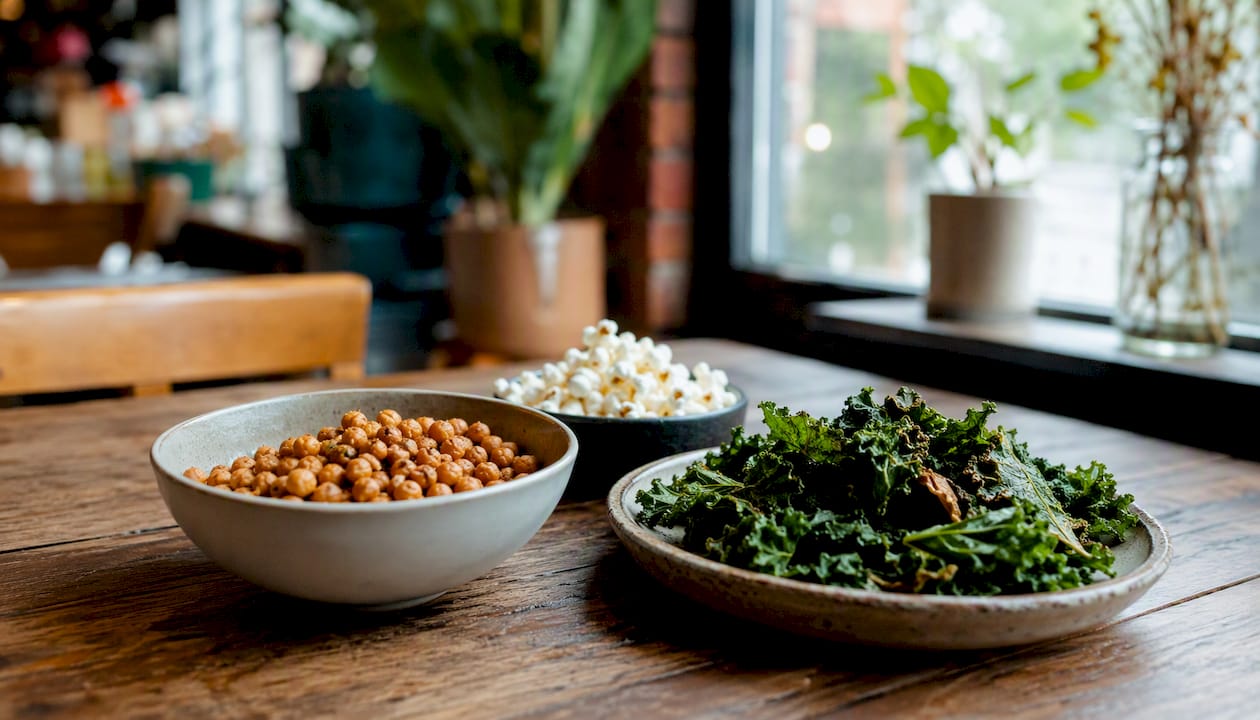
| Crunchy swap | Why it works | Portion hint |
|---|---|---|
| Air-popped popcorn | Whole grain, high fiber, very low fat without added oil | 3 cups (about 90 calories) |
| Roasted chickpeas | High protein and fiber, satisfying crunch | ½ cup |
| Freeze-dried fruit or veg | Intense flavor, light texture, no added oil | Check label; typically ½ oz |
| Rice cakes with avocado | Whole grain base, healthy fats from avocado | 2 rice cakes + ¼ avocado |
| Kale chips (homemade) | Nutrient-dense, crispy, very low calorie | 1 cup baked |
Roasted chickpeas are worth a special mention for budget-conscious snackers. A can of chickpeas costs very little, and you can batch-roast them with olive oil and spices in about 30 minutes. They keep in an airtight container for up to a week.
4. Whole-grain and fiber-forward swaps
The Dietary Guidelines for Americans 2020–2025 emphasize fruits, vegetables, whole grains, and lean protein across meals and snacks to improve nutrient density. Refined grains in crackers, white-bread snacks, and most commercial cookies offer very little fiber or staying power.
Whole-grain crackers instead of white crackers. Look for “whole wheat” or “whole grain” as the first ingredient. Pair with a slice of low-fat cheese or a tablespoon of hummus.
Oat-based energy bites instead of granola bars. Most commercial granola bars are closer to candy bars in sugar content. A homemade oat ball with rolled oats, a tablespoon of honey, nut butter, and dark chocolate chips takes ten minutes to prep and gives you control over every ingredient. Batch a dozen and refrigerate for the week.
Whole-grain crumpet instead of a doughnut. Toasted with a thin spread of almond butter, it hits a similar warm-and-comforting note at a fraction of the sugar. NHS healthy food swap guidance specifically points to this kind of format-preserving swap as a practical way to reduce sugar and fat without feeling deprived.
5. Portable and budget-friendly options
Healthy snacking does not require expensive specialty products. Some of the best options are shelf-stable, cheap, and require zero prep.
- Canned tuna or sardines: High protein, omega-3 fats, and portable. A small pull-tab can with whole-grain crackers is a complete snack.
- Unsalted mixed nuts: Buy in bulk to cut cost. A 1-oz portion (roughly a small handful) delivers healthy fats, protein, and magnesium.
- Frozen fruit: Cheaper than fresh out of season, just as nutritious, and ready to blend or eat thawed. Frozen mango chunks are a surprisingly good candy substitute.
- Peanut butter packets: Single-serve packets travel well and pair with anything from apple slices to rice cakes.
- Seed-based snacks: Pumpkin seeds, sunflower seeds, and hemp seeds are nutrient-dense and inexpensive. Seed-based snack ideas work well as portable, plant-based protein sources between meals.
For storage, keep a “snack station” in your fridge at eye level: prepped veg, portioned nuts, and a container of Greek yogurt. What you see first is what you eat.
6. DIY energy bites and trail mix
Making your own snacks gives you full control over sugar, salt, and fat, which is something most packaged products cannot offer. WebMD notes that many commercial snack bars are high in sugar and fat, and that soft, chewy, or coated textures are often a reliable signal of heavier processing.
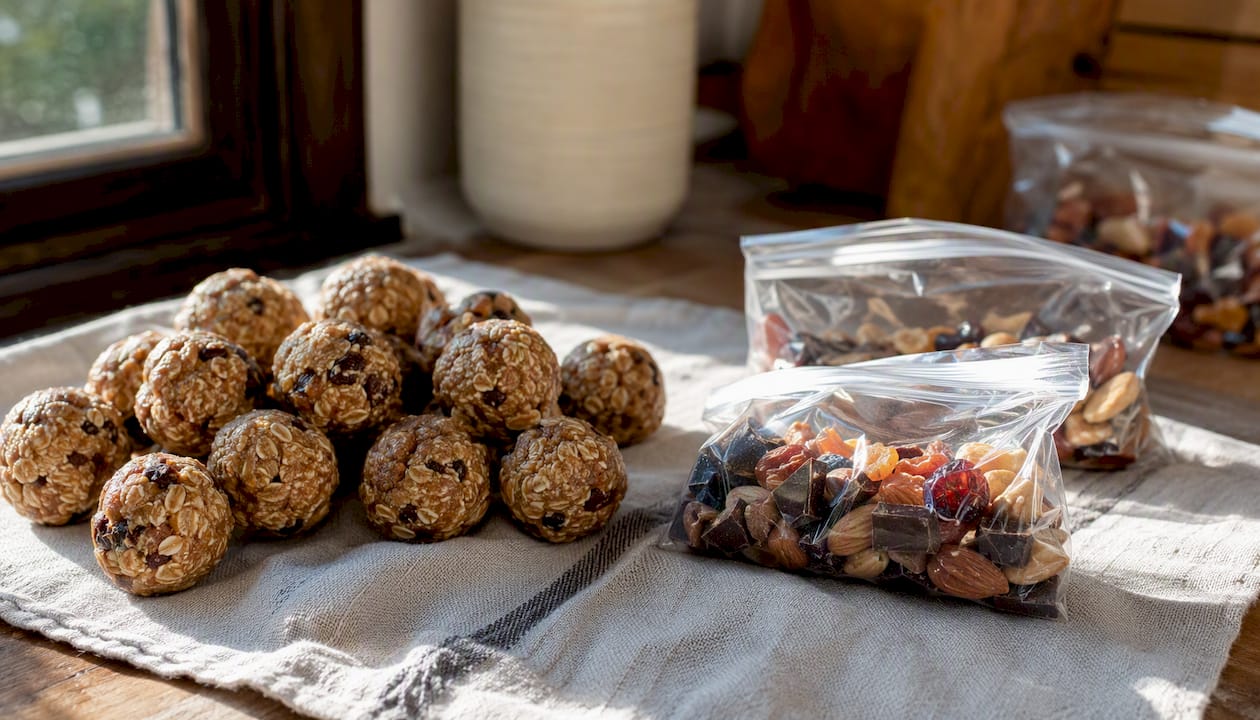
Basic trail mix formula: 1 oz mixed nuts + 1 tbsp dried fruit (unsweetened) + 1 tbsp dark chocolate chips. Prep in small zip-lock bags for grab-and-go portions. Keep the dried fruit modest — it is calorie-dense and easy to overdo.
No-bake energy bites: Combine 1 cup rolled oats, ½ cup natural peanut butter, 3 tbsp honey, 2 tbsp chia seeds, and a handful of dark chocolate chips. Roll into balls and refrigerate. Each ball is roughly 100–120 calories and takes the edge off a sweet craving without a sugar spike.
If you are traveling or on holiday, planning ahead with shelf-stable snacks prevents the vending machine trap. Practical tips for eating healthy on holiday include packing portable whole-food snacks like nuts, fruit, and rice cakes to avoid defaulting to airport or convenience-store options.
How to pick healthier packaged snacks
Reading a nutrition label takes about 30 seconds once you know what to look for. Here is the order of priority:
- Serving size first. Everything else on the label is based on this number. A bag that looks reasonable might list 2.5 servings — meaning you multiply every figure by 2.5 if you eat the whole thing.
- Added sugars. The Dietary Guidelines recommend limiting added sugars to less than 10% of daily calories. On a 2,000-calorie diet, that is about 50 grams. A single flavored yogurt or granola bar can use up half of that.
- Sodium. Aim for under 600 mg per snack serving. Many flavored crackers, chips, and “healthy” popcorn brands push well past this.
- Saturated fat. Keep it low, especially if you are pairing the snack with a meal that already contains meat or dairy.
- Ingredient order. Ingredients are listed by weight, heaviest first. If sugar, corn syrup, or a refined grain appears in the first three ingredients, put it back.
- Front-of-pack labels. Traffic-light labels (green/amber/red) give a fast visual cue. NHS guidance recommends aiming for mostly greens and ambers, and limiting processed snacks to two per day to reduce added sugar, salt, and saturated fat.
Watch out for marketing language. “Natural,” “low-fat,” “reduced sugar,” and “made with real fruit” are not regulated in the same way as nutrition facts. A “low-fat” cookie can still be high in sugar. Always flip to the label.
Pro Tip: Scan apps like Yuka or Open Food Facts let you scan a barcode and get an instant breakdown of additives and nutritional quality. Useful when you are standing in a store aisle and do not want to do the math yourself. For a deeper look at reading ingredient lists, the Space-man guide to ingredient labels walks through exactly what to look for.
Portion guidance and pairing tips
A reasonable snack sits in the 150–250 calorie range for most adults. That is enough to take the edge off hunger without eating into your next meal’s appetite. Here are practical visual cues:
- Nuts: 1 oz is roughly a small handful or what fits in your cupped palm — about 23 almonds or 14 walnut halves.
- Fruit: 1 medium piece (apple, pear, orange) or 1 cup of berries or grapes.
- Popcorn: 3 cups air-popped is a generous, satisfying portion at around 90 calories.
- Yogurt: ¾ cup plain Greek yogurt with a handful of fruit.
- Nut butter: 1 tablespoon is a serving. Two tablespoons is easy to pour and doubles the calories.
Pairing dos and don’ts:
Do pair fruit with a protein (nuts, cheese, yogurt) to slow sugar absorption and extend satiety. Do drink water or unsweetened tea alongside your snack. Do prep portions in advance so you are not eating straight from the bag.
Do not pair a packaged sweet snack with fruit juice or a sports drink. That combination can push you well past your daily added-sugar target in one sitting. Do not eat snacks while distracted — screens and snacking together reliably lead to eating more than intended.
Quick portion examples:
- 1 small apple + 1 tbsp peanut butter (roughly 180 calories)
- 3 cups air-popped popcorn + a glass of water (about 90 calories)
- ¾ cup plain Greek yogurt + ½ cup blueberries (around 130 calories)
- 1 oz mixed nuts + 1 clementine (about 200 calories)
- 2 rice cakes + 2 tbsp hummus (roughly 150 calories)
Why freeze-dried snacks can replace chips for crunch
Crunch is a sensory need, not just a preference. When you remove it from your snacking routine entirely, the craving tends to come back harder. Freeze-dried fruit, vegetables, and yes, even freeze-dried candy, can fill that role without the oils and sodium that make traditional chips a problem.
The freeze-drying process removes moisture while preserving most of the food’s original nutrients and flavor. The result is a light, intensely crunchy texture that satisfies the same sensory trigger as a chip. No added oil is required to achieve it. For fruit and vegetable options, you are often getting a single-ingredient product with no additives at all.
A few things to keep in mind:
- Freeze-dried items are calorie-dense by weight. Because the water is gone, a small volume can represent more calories than you expect. Check the serving size on the label and stick to it.
- For freeze-dried candy specifically, check the ingredient list. Look for minimal added sugar and a short ingredient list. Freeze-dried candy is still candy — it is a better-textured, often lower-fat alternative to a bag of gummies or a chocolate bar, but it is not a vegetable.
- When to prefer whole fresh fruit instead: if you are eating at home and have access to fresh fruit, that is always the better call for hydration and fiber. Freeze-dried options shine when you need portability, long shelf life, or a crunch fix on the go.
Pro Tip: Mix freeze-dried fruit with a small handful of nuts for a trail mix that travels well and does not melt. It covers the sweet-and-crunchy craving in one go. For a deeper look at freeze-dried snacks as a chip alternative, the Space-man blog on freeze-dried chip alternatives covers the comparison in detail.
For anyone interested in how manufacturers control ingredient quality, Space-man’s private label and co-packing services offer a window into how transparency and ingredient standards work at the production level.
What actually changed when I swapped my afternoon snack
For years, the 3 PM slot meant a bag of chips or something from the vending machine. Switching to air-popped popcorn with a small handful of almonds felt like a downgrade for about three days. Then something shifted: the afternoon energy crash got noticeably less severe, and the urge to snack again before dinner mostly disappeared. The crunch was still there. The salt was still there (lightly). The main thing missing was the regret. Try two swaps this week — just two — and give them five days before you judge.
Space-man freeze-dried snacks: a crunchy swap worth trying
If the chip-and-candy craving is your hardest habit to break, Space-man’s freeze-dried candy and snack bundles are worth a look. Space-man is a Canadian freeze-dried snack manufacturer offering freeze-dried candy, chocolates, marshmallows, and ice cream sandwiches, all with the intense crunch and concentrated flavor that makes them a genuinely satisfying replacement for conventional candy and chip snacks.
The products are available direct-to-consumer online, so you can try a variety before committing to a larger order. For retailers and distributors, Space-man also offers wholesale display kits and private label co-packing services for brands that want to bring their own freeze-dried snack line to market. As with any packaged snack, check the serving size and ingredient list before buying. Mix a portion with unsalted nuts for a trail mix that covers both the sweet and the crunchy craving in one bag.
Browse the full range at Space-man and pick a bundle to try this week.
Sources
The following authorities informed this article and are worth bookmarking for ongoing reference:
- Healthier snacks - Food facts - Healthier Families - NHS
- 30 Healthy Snack Ideas from Registered Dietitians - American Institute for Cancer Research
- Healthy Snacking | American Heart Association
- Dietary Guidelines for Americans 2020-2025