

Here’s a simple, effective rule for improving snacking: pair protein with fiber, and keep the whole snack within a moderate calorie range, typically between about 150 and 250 calories. That combination is what registered dietitians point to for satiety, since snacks can make up roughly a third of your daily calories whether you plan for that or not. Before you even open the pantry, drink a glass of water to stay hydrated. Thirst gets mistaken for hunger constantly, and skipping that step is how a lot of people end up snacking when they didn’t really need to.
One more thing worth knowing up front: try to keep packaged, processed snacks to a couple a day at most, and lean on whole foods the rest of the time. That’s straight from Health Canada’s snacking guidance, and it’s a lot easier to follow than it sounds once you’ve got a few go-to combos memorized.
Need something in the next five minutes? Grab one of these:
- An apple sliced up with a tablespoon of natural peanut or almond butter
- 14 almonds (that’s roughly 100 calories, almost to the almond)
- Six cups of air-popped popcorn, plain
- Plain Greek yogurt with a handful of berries
- Hummus with baby carrots or bell pepper strips
- A hard-boiled egg with a small handful of grapes
Key Takeaways
Pairing protein with fiber in every snack, staying within 150 to 250 calories, and checking labels for added sugar and sodium form the foundation of smarter snacking.
| Point | Details |
|---|---|
| Pair protein and fiber | Combine a protein source with fiber every time to stay full longer. |
| Check thirst first | Drink water before snacking since thirst often masquerades as hunger. |
| Cap packaged snacks | Limit processed, packaged snacks to about two per day. |
| Pre-portion everything | Split nuts, chips, and dried fruit into small containers to avoid overeating. |
| Batch prep on Sundays | Hard-boil eggs and cut produce once a week to make the healthy choice the easy one. |
Table of Contents
- Healthy Snack Options Organized By Category
- How To Build A Snack That Actually Holds You Over
- Better Swaps For Sweet, Salty, And Crunchy Cravings
- Smart Store-Bought Staples And What To Check On The Label
- Three Quick Recipes You Can Actually Keep Up With
- Why I Think Most Snack Advice Overcomplicates This
- Where This Advice Comes From
- Sources
Healthy Snack Options Organized By Category
Once you know the protein-plus-fiber rule, the next question is just: what actually fits it? Here’s a rundown organized by category so you’re not standing in front of the fridge improvising every single time.
Fruits and vegetables. Apple slices, berries, orange segments, and grapes all bring fiber and natural sweetness without added sugar. Raw veggies (carrots, cucumber, snap peas, bell peppers) add crunch and volume for almost no calories. Pair either with a protein source, like nut butter or hummus, and you’ve covered both halves of the equation. Freeze-dried fruit is a solid nut-free, shelf-stable stand-in when fresh produce isn’t around.
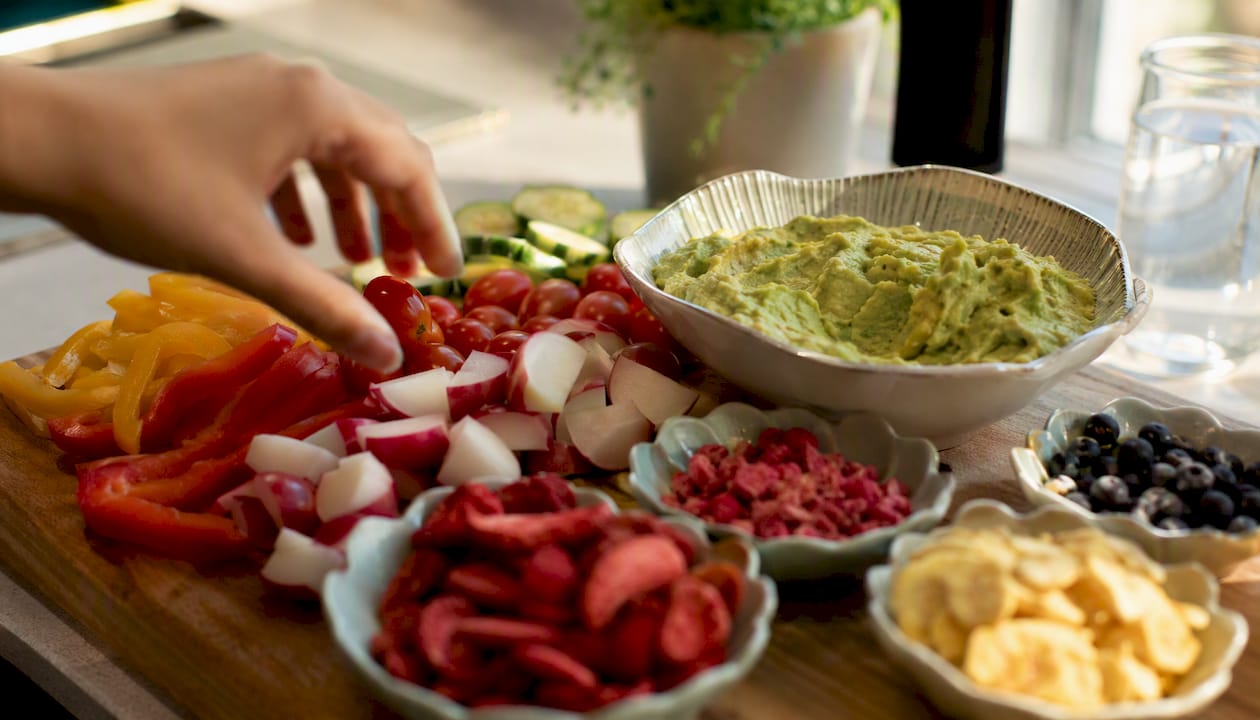
Protein-rich picks. Plain Greek yogurt, hard-boiled eggs, canned tuna or salmon, cottage cheese, and edamame all deliver protein with minimal prep. Vegan? Edamame, roasted chickpeas, and tofu jerky cover the same ground. These tend to be the most filling snacks on this list because protein slows digestion and keeps blood sugar steadier than carbs alone.
Whole grains. Whole-grain crackers, rice cakes, a small handful of whole-grain cereal, or a slice of whole-grain toast with a thin spread of nut butter all bring fiber that plain refined carbs don’t. Gluten-free readers can swap in rice cakes or certified gluten-free crackers without losing the fiber benefit.
Low-calorie crunchy options. Air-popped popcorn, roasted chickpeas, celery sticks, and cucumber rounds satisfy the urge to crunch without the calorie load of chips. This is also where freeze-dried snacks earn their keep. Because the water is removed, you get a bigger, crunchier portion for the same calorie count as a soggier fresh version, which is one reason freeze-dried snacks work well as a chip alternative.
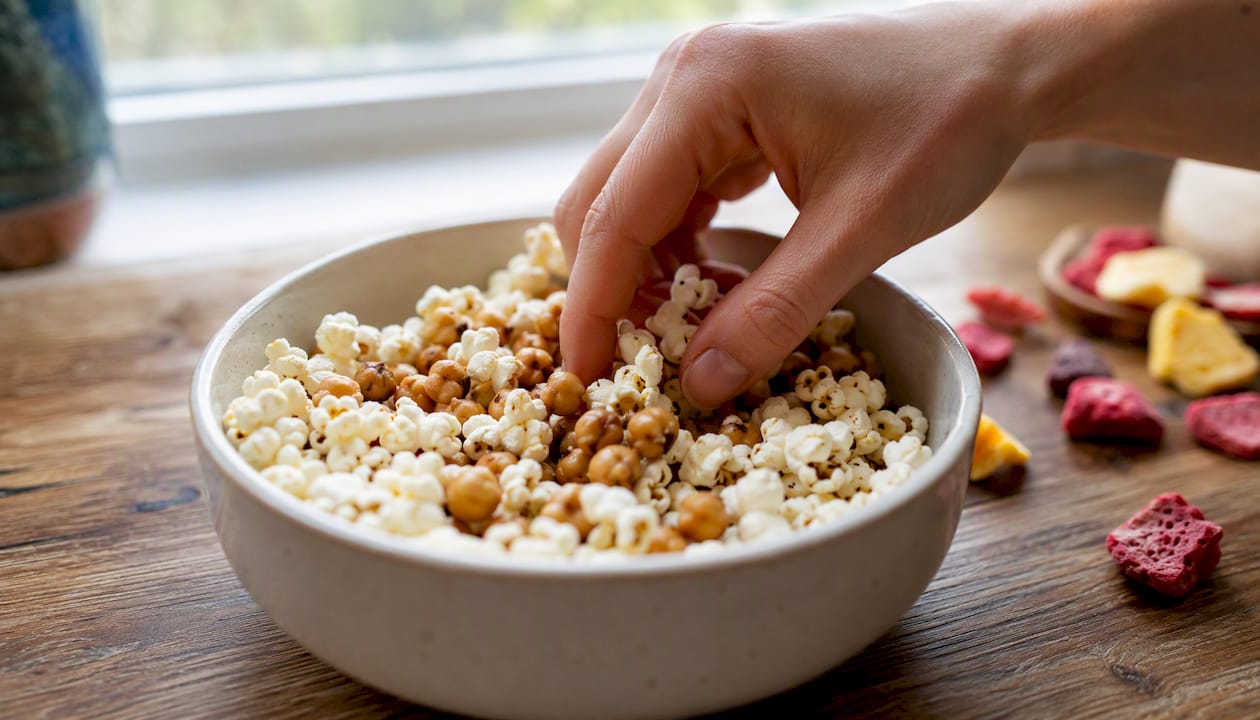
Portable packaged options. Single-serve nut butter packets, low-sugar yogurt cups, small nut and seed mixes, and jerky (meat or plant-based) travel well and don’t need refrigeration in most cases. Keep an eye on sodium here. It’s the category most likely to sneak past you.
Those calorie figures for almonds and popcorn come from the American Heart Association, and they’re a good gut check for how fast “healthy” snacks can add up if you’re not measuring at all.
How To Build A Snack That Actually Holds You Over
The framework is simple: protein plus fiber, and add a little healthy fat if you need it to last longer between meals. Avocado, olive oil, nuts, or seeds all slow digestion further, which matters if you’ve got a four-hour gap before dinner.
A few numbers to work with when you’re building your own combo:
- Aim for at least 5 to 10 grams of protein per snack
- Aim for 3 to 5 grams of fiber where you can get it
- Watch portions on calorie-dense foods like nuts and dried fruit. A “handful” can quietly become 400 calories
- Pair anything salty or dry with a full glass of water, not juice or soda
Environment matters more than willpower here. Pre-portion nuts into small containers instead of eating from the bag. Keep fruit and cut veggies at eye level in the fridge instead of buried behind leftovers. Toss a couple of single-serve packets (nut butter, jerky, freeze-dried fruit) into your bag or desk drawer so a bad option isn’t the only convenient one when hunger hits.
Pro Tip: Freeze single-serve yogurt tubes overnight. By mid-afternoon they’ve thawed into something between yogurt and soft-serve, and it genuinely scratches the ice cream itch for about 80 fewer calories than the real thing.
Better Swaps For Sweet, Salty, And Crunchy Cravings
The trick isn’t willpower, it’s substitution. Swap one craving for one satisfying alternative and you skip the guilt spiral entirely.
For sweet cravings, try fruit with a dusting of cinnamon, or Greek yogurt stirred with a little cocoa powder and berries instead of candy or a sugary drink. For salty cravings, air-popped popcorn or roasted chickpeas beat chips on volume for the same calories. For crunchy cravings, freeze-dried fruit or veggie chips (baked, not fried) give you the snap without the grease.
| Craving | Typical Choice | Better Swap |
|---|---|---|
| Sweet | Candy plus soda or juice | Fruit with cinnamon, or yogurt with cocoa |
| Salty | Potato chips | Air-popped popcorn or roasted chickpeas |
| Crunchy | Fried snack chips | Freeze-dried fruit or baked veggie chips |
Watch out for what the NHS calls “double sugar overload”: a sugary snack washed down with a sugary drink. That combo can hand you several sugar cubes’ worth of intake in one sitting without feeling like much at all. For kids’ lunchboxes, swap juice boxes for water and fruit snacks for actual fruit. For travel, pack nuts or jerky instead of grabbing airport candy. For the office, keep a drawer stash of popcorn or roasted chickpeas so the vending machine stops being the default.
Smart Store-Bought Staples And What To Check On The Label
Keep a short rotating list of packaged staples on hand so convenience never forces a bad choice. These hold up well and travel easily:
- Freeze-dried fruit (no added sugar varieties)
- Plain, unsalted or lightly salted nuts
- Single-serve nut butter packets
- Low-sugar Greek yogurt cups
- Roasted chickpeas
- Plain popcorn, pre-portioned
- Plain rice cakes
- Jerky, meat or plant-based
- Single-serve hummus cups with mini pretzels or veggies
- Whole-grain crackers in individual sleeves
Before anything goes in your cart, run the label through this checklist:
- Check the serving size first. Some bags list two or three servings that most people eat as one
- Scan added sugars. Anything over 8 to 10 grams per serving is worth a second look
- Check sodium, especially on anything savory or “roasted”
- Look at saturated fat, particularly on anything fried or cream-based
- Shorter ingredient lists usually mean less processing
- Check percent daily values for fiber and protein. Higher is generally better for satiety
Health Canada’s guidance backs up the maximum-of-two-packaged-snacks rule of thumb, and it’s a decent line to hold yourself to. For allergy-friendly swaps, seed butter replaces nut butter for nut-free households, and coconut or oat-based yogurt covers dairy-free needs. Gluten-free shoppers should double-check flavored popcorn and jerky marinades specifically, since gluten shows up in some unexpected sauces. If you want a deeper walkthrough of decoding ingredient panels, this label-reading breakdown covers it step by step, and these snack alternatives are worth a look if you’re trying to replace specific junk-food habits one at a time.
Three Quick Recipes You Can Actually Keep Up With
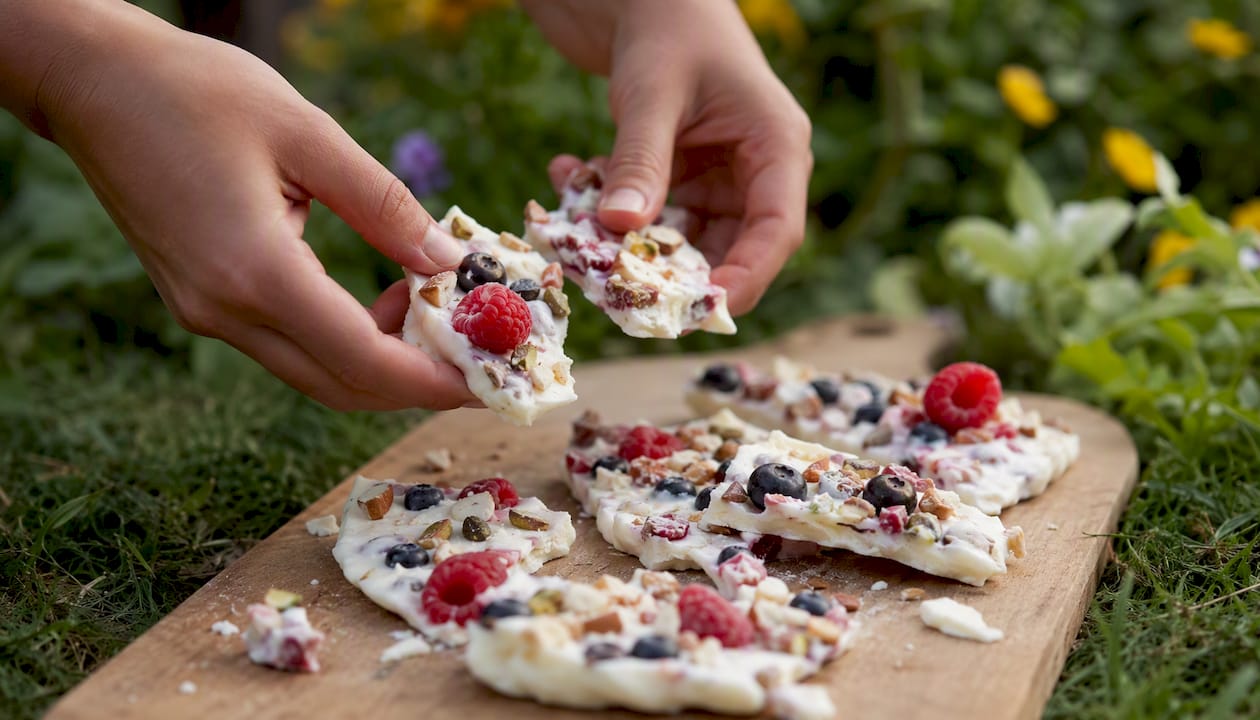
Sweet: Frozen yogurt bark. Spread a layer of Greek yogurt on parchment paper, scatter berries and a few chopped nuts on top, freeze for two hours, then break into pieces. Store in a freezer bag for up to two weeks.
Savory and crunchy: Roasted chickpea mix. Toss drained, dried canned chickpeas with a little olive oil and paprika. Roast at 400°F for 25 to 30 minutes, shaking halfway through. Cool completely, then store in an airtight container for up to a week.
Portable protein: Egg and veggie cups. Whisk eggs with chopped spinach and bell pepper, pour into a muffin tin, and bake at 350°F for 18 to 20 minutes. Refrigerate up to four days, or freeze individually for up to two months.
For weekly prep, Sunday is the day to hard-boil eggs, wash and cut produce, and portion nuts into small containers. Save the five-minute jobs, like yogurt with berries or hummus with veggies, for weekdays when you’re moving fast. One safety note: anything with eggs, dairy, or cut produce needs to stay refrigerated and used within the timeframes above. Freezer staples like the yogurt bark or extra egg cups are your backup when the fridge stash runs low.
Why I Think Most Snack Advice Overcomplicates This
Most snack guides bury you in rules. What actually works is boring: protein plus fiber, a rough calorie range, and a little planning so the good option is the easy option. That’s it. That’s the whole system, and it holds up whether your goal is weight management, steadier energy, or just not raiding the vending machine at 3 PM.
If I had to pick one habit to start this week, it’s this: keep three better-for-you packaged staples within arm’s reach (freeze-dried fruit, a nut butter packet, and roasted chickpeas cover a lot of ground) and prep one homemade option, like the egg cups, on Sunday. That’s a small ask, and it’s the difference between snacking on purpose and snacking on autopilot. If freeze-dried fruit becomes one of your staples, a starter pack of freeze-dried candy and fruit from Space-man is a low-effort way to stock up without hunting down individual bags. And if you’re a retailer or brand looking to offer freeze-dried snack options under your own label, Space-man’s private label and co-packing services handle that end of things too.
Where This Advice Comes From
- American Institute for Cancer Research: registered-dietitian guidance on satiety and portion sizes
- American Heart Association: craving swaps and calorie benchmarks for common snacks
- Health Canada: whole-food priorities and packaged-snack frequency guidance
- NHS: label-reading tips and the double sugar overload warning
- USDA Dietary Guidelines for Americans: nutrient-dense food choices and macronutrient balance
This article is general information, not a substitute for advice from a qualified doctor. Consult a qualified healthcare professional about your own circumstances before acting on anything here.
Sources
- 30 Healthy Snack Ideas from Registered Dietitians - American Institute for Cancer Research
- Conquer cravings with these healthy substitutions - American Heart Association
- Healthy snacks - Health Canada
- Healthier snacks - Food facts - NHS
- Dietary Guidelines for Americans 2020-2025 - USDA