

More than 30 percent of american candy sold today is produced under private label agreements, a number that keeps growing as businesses seek custom solutions without massive investment. For any american brand aiming to stand out, understanding private label candy manufacturing can be a game changer. This approach lets companies offer personalized sweets that reflect their unique style while saving time and resources. Discover how private label partnerships deliver creative control, streamlined production, and market-ready confections.
Table of Contents
- Defining Private Label Candy Manufacturing
- Types of Private Label Candy Offered
- Production Processes And Packaging Options
- Canadian Regulatory Standards And Compliance
- Cost Structure And Partnership Models
- Comparing Private Label And Branded Candy
Key Takeaways
| Point | Details |
|---|---|
| Private label candy manufacturing offers economic advantages | Retailers can leverage specialized production capabilities without significant infrastructure investments, enhancing profitability. |
| Diverse product offerings cater to various consumer preferences | Manufacturers provide a wide range of candy types, including hard candies, chewy confections, and specialized options tailored to brand specifications. |
| Regulatory compliance is crucial for consumer trust | Adhering to Health Canada guidelines ensures product safety and quality, vital for maintaining brand reputation. |
| Private label products increasingly compete with branded alternatives | They typically offer lower prices and high-quality options, appealing to value-conscious consumers in the market. |
Defining Private Label Candy Manufacturing
Private label candy manufacturing is a strategic business approach where one company produces candy products that are then sold exclusively under another company’s brand name. This flexible manufacturing model allows retailers to offer unique product lines without investing in complex production infrastructure.
At its core, private label manufacturing transforms the traditional product development landscape. Instead of creating and marketing their own branded items, manufacturers work directly with retailers to design, produce, and package candies that match the specific requirements and vision of the purchasing brand. This collaborative process enables businesses to leverage specialized production capabilities while maintaining brand-specific customization.
The mechanics of private label candy manufacturing involve several critical steps. Manufacturers must first understand the retailer’s specific product specifications, flavor profiles, packaging design, and quality standards. They then use their production expertise to craft candies that precisely match these requirements. From sourcing ingredients to final packaging, every aspect of the product is carefully controlled to ensure the final candy meets the retailer’s exact expectations.
Successful private label candy manufacturers like those in Canada must demonstrate remarkable flexibility, technical skill, and a deep understanding of consumer preferences. By exploring private label opportunities, businesses can create unique product offerings that stand out in a competitive marketplace.
Types of Private Label Candy Offered
Private label candy manufacturing encompasses a diverse range of confectionery products designed to meet the unique needs of retailers and consumer preferences. Candy manufacturers offer an impressive array of sweet offerings that can be customized to match specific brand requirements and market demands.
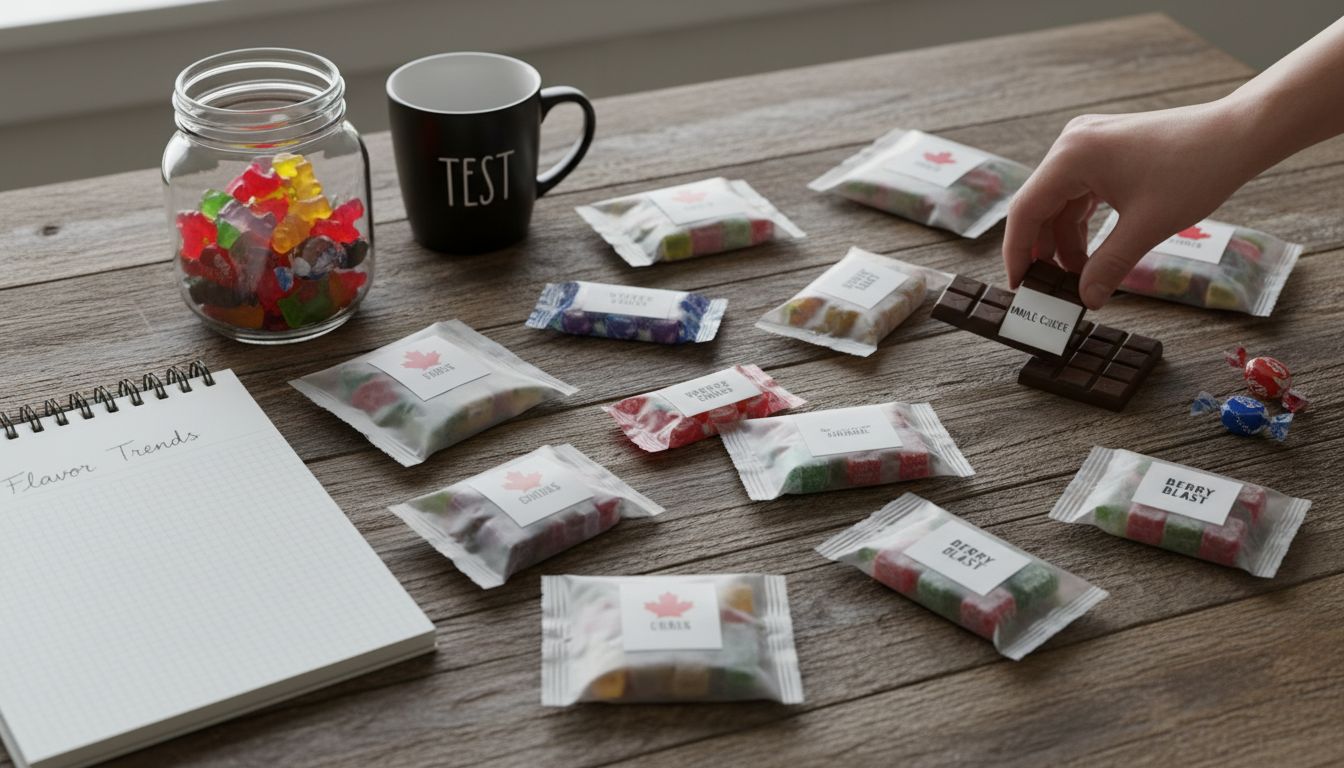
The spectrum of private label candy varieties is remarkably expansive. Manufacturers produce multiple candy categories, including hard candies, chewy confections, chocolate-based treats, and specialized formats like sugar-free and functional candies. Gummy candies represent a particularly popular segment, with manufacturers creating intricate flavor profiles and textures that appeal to different consumer segments.
Specifically, private label candy offerings typically include several key categories:
- Hard Candies: Lollipops, breath mints, and traditional boiled sugar candies
- Chewy Candies: Caramels, taffy, and fruit-flavored soft chews
- Chocolate Confections: Chocolate bars, truffles, and specialty chocolate products
- Specialty Options: Sugar-free candies, organic selections, and dietary-specific treats
Canadian private label candy manufacturers excel at developing innovative product lines that meet evolving consumer preferences. From traditional favorites to cutting-edge flavor combinations, these producers understand the importance of creating unique, memorable candy experiences that help brands stand out in a competitive marketplace.
Production Processes and Packaging Options
Private label candy manufacturing involves sophisticated production processes that transform raw ingredients into delectable confections. Manufacturers leverage advanced packaging technologies to ensure product quality, shelf life, and brand presentation across multiple candy types.
The production workflow begins with meticulous ingredient sourcing and precise formulation. Manufacturers carefully select high-quality ingredients, develop unique recipes, and implement strict quality control measures. Modern candy production typically involves several key stages:
- Ingredient Preparation: Weighing, mixing, and processing raw materials
- Cooking and Forming: Heating, molding, and shaping candy
- Cooling and Setting: Stabilizing candy structure and texture
- Packaging: Wrapping, sealing, and preparing for distribution
Packaging options for private label candies range from basic functional designs to premium branded experiences. Manufacturers offer multiple packaging solutions that protect product integrity while creating visual appeal. These can include:
- Single-Serve Pouches: Convenient, portable packaging
- Bulk Containers: Wholesale packaging for larger quantities
- Custom Printed Wrappers: Brand-specific design and messaging
- Eco-Friendly Options: Sustainable packaging materials
Successful private label candy manufacturers understand that production processes and packaging are critical to brand differentiation. By combining innovative manufacturing techniques with strategic packaging design, they help retailers create memorable product experiences that resonate with consumers.
Canadian Regulatory Standards and Compliance
Private label candy manufacturers must navigate a complex landscape of regulatory standards that ensure consumer safety and product quality. Health Canada provides comprehensive guidelines that govern every aspect of candy production, from ingredient sourcing to final packaging.
The regulatory framework for candy manufacturing in Canada encompasses several critical areas of compliance:
- Ingredient Safety: Strict regulations on permitted ingredients and additives
- Labeling Requirements: Detailed nutritional information and allergen disclosures
- Manufacturing Practices: Hygiene and sanitation standards for production facilities
- Quality Control: Mandatory testing and verification processes
Specific compliance requirements include detailed documentation of ingredient origins, precise nutritional labeling, and adherence to food safety protocols. Manufacturers must maintain rigorous record-keeping systems and undergo regular inspections to demonstrate ongoing compliance with national food safety standards. This includes providing transparent information about potential allergens, nutritional content, and product composition.
Successful private label candy manufacturers in Canada recognize that regulatory compliance is not just a legal requirement but a critical component of building consumer trust. By consistently meeting and exceeding government standards, these manufacturers demonstrate their commitment to producing safe, high-quality candy products that meet the stringent expectations of Canadian consumers and regulatory bodies.
Cost Structure and Partnership Models
Private label candy manufacturing offers compelling economic advantages for businesses seeking strategic partnerships. Contract manufacturing arrangements enable retailers and brands to leverage specialized production capabilities without substantial upfront infrastructure investments.
The cost structure of private label candy manufacturing typically involves several key financial considerations:
- Fixed Production Costs: Equipment, facility maintenance, and baseline operational expenses
- Variable Ingredient Costs: Raw material pricing and quantity fluctuations
- Minimum Order Quantities: Threshold volumes required for cost-effective production
- Packaging and Branding Expenses: Custom design and material selection
Partnership models in the Canadian private label candy market range from straightforward production contracts to more complex collaborative arrangements. Manufacturers often offer tiered pricing structures that accommodate businesses of different scales, from small local retailers to large national distributors. These models typically include:
- Full-Service Manufacturing: Comprehensive production, packaging, and distribution support
- Co-Packing Arrangements: Partial manufacturing with client-provided specifications
- Volume-Based Pricing: Sliding cost scales based on order quantities
- Customization Tiers: Different pricing levels for product complexity
Successful private label partnerships prioritize flexibility, transparency, and mutual economic benefit. By understanding the nuanced cost structures and collaboration models, businesses can develop strategic relationships that maximize profitability and product innovation in the competitive Canadian confectionery market.
Comparing Private Label and Branded Candy
Private label candy represents a strategic alternative to traditional branded products, offering unique advantages for retailers and consumers alike. Brand development strategies have evolved to include these innovative product lines that challenge conventional market dynamics.
Key differences between private label and branded candy emerge across several critical dimensions:
- Pricing: Private label products typically offer lower price points
- Profit Margins: Higher margins for retailers due to reduced marketing expenses
- Product Control: Greater flexibility in recipe, packaging, and positioning
- Consumer Perception: Increasingly viewed as quality alternatives to national brands
While national brands invest heavily in marketing and consumer recognition, private label manufacturers focus on delivering comparable quality at more competitive prices. This approach allows retailers to create unique product experiences that directly respond to consumer preferences. Private label candies can quickly adapt to emerging trends, test new flavor combinations, and provide more personalized offerings without the extensive marketing infrastructure required by established national brands.
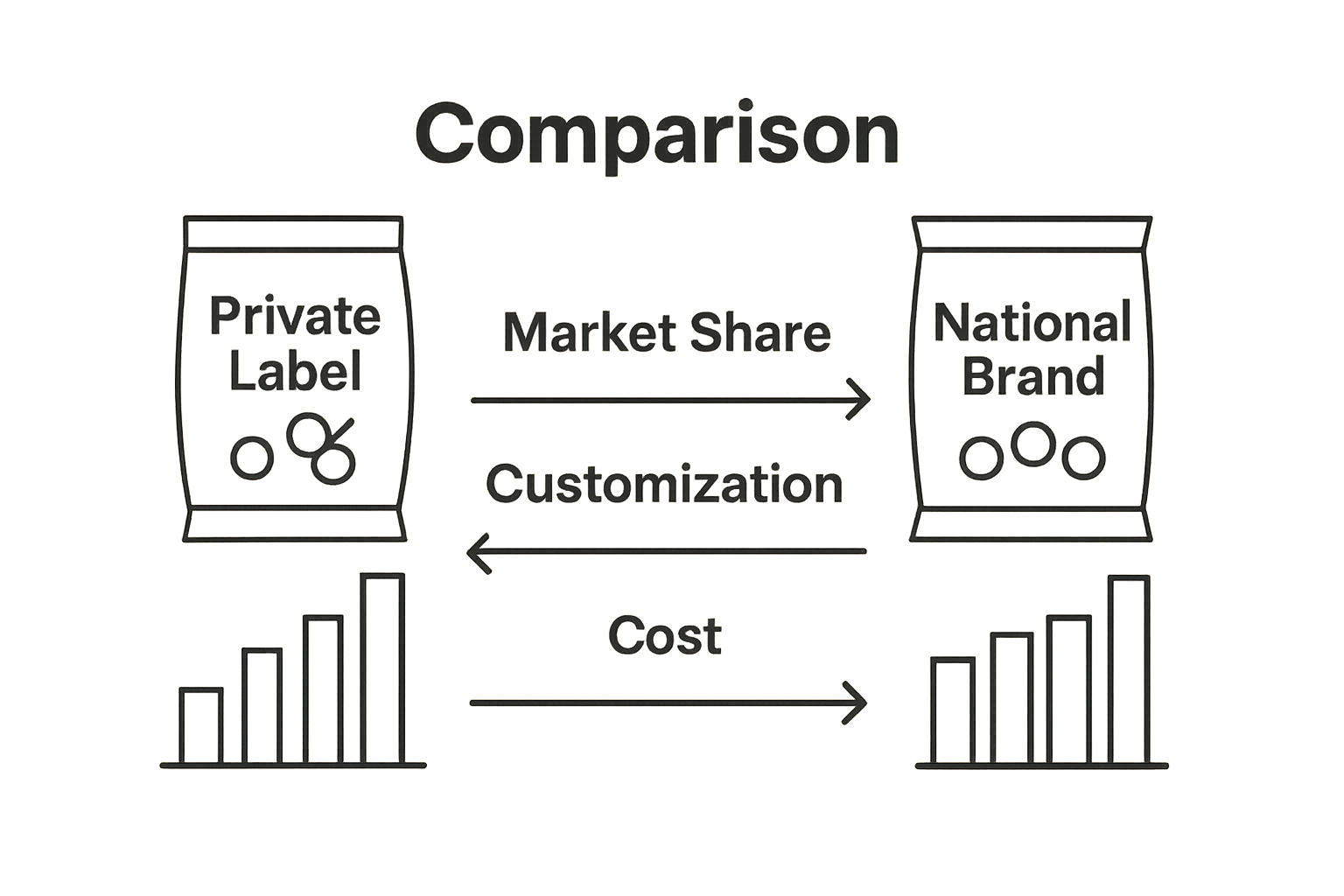
The competitive landscape continues to shift, with private label products gaining significant market share. Consumers are increasingly prioritizing value and quality over traditional brand loyalty, creating opportunities for innovative private label manufacturers to establish strong market positions in the Canadian confectionery industry.
Elevate Your Brand with Expert Private Label Candy Manufacturing
Navigating the complexities of private label candy manufacturing can feel overwhelming. From maintaining strict Canadian regulatory standards to optimizing production and packaging, every step requires precision and trust. If you seek to create unique candy products with full control over flavor and packaging while avoiding hefty infrastructure investments, you need a partner who understands these challenges deeply.
Discover how Wholesale Freeze Dried Candy & Treats at Space-Man can transform your vision into reality.
Start your private label journey today with a trusted Canadian manufacturer offering flexible co-packing, custom bagging, and packaging services. Don’t wait to capture your market with high-quality, customizable candy that stands out. Visit Space-Man now to explore Bulk Unbranded Freeze Dried Candy & Treats and unlock the potential of your brand.
Frequently Asked Questions
What is private label candy manufacturing?
Private label candy manufacturing is a process where one company produces candy products that are sold under another company’s brand name, allowing retailers to offer unique candy items without investing in their own production facilities.
What types of candies can be produced through private label manufacturing?
Private label candy manufacturers can produce a wide range of confectionery products, including hard candies, chewy candies, chocolate confections, and specialty items like sugar-free or organic options, tailored to meet specific brand preferences.
What are the key steps involved in the private label candy production process?
The key steps in the private label candy production process include ingredient sourcing, formulation, cooking and forming the candy, cooling, and packaging, with a strong focus on quality control at every stage to ensure product excellence.
How do the costs of private label candy manufacturing work?
The costs associated with private label candy manufacturing typically include fixed production costs, variable ingredient costs, minimum order quantities for cost-effective production, and expenses related to custom packaging and branding. Manufacturers usually offer flexible pricing models based on order volume.
Recommended
- Complete Guide to Candy Factories in Canada – Spaceman
- Candy Suppliers Canada: Complete Guide for Retailers – Spaceman
- Understanding the Benefits of Private Labeling – Spaceman
- How to Start Selling Private Label Candy Easily – Spaceman
- Complete Guide to Food Labeling Regulations in Canada - Probe IT
- When Should Precautionary Allergen Labelling Be Used?