

Competing as a Canadian candy shop means constantly searching for fresh ways to surprise customers and set yourself apart. Freeze-dried treats have quickly become a signature trend, but perfecting the process demands more than just the right machine. Understanding the unique properties of each candy, from chewy gummies to rich chocolates, plays a major role in choosing freeze-drying equipment and methods. This guide explains key steps for assessing your freeze-drying needs so your shop can produce standout confections with bold flavor and irresistible texture.
Table of Contents
- Step 1: Assess Your Freeze-Drying Needs
- Step 2: Select the Right Freeze-Drying Machine
- Step 3: Prepare Candy for Freeze Drying
- Step 4: Set Up and Operate the Machine
- Step 5: Inspect and Package the Finished Candy
Quick Summary
| Actionable Insight | Clear Explanation |
|---|---|
| 1. Assess Your Candy’s Properties | Understand moisture content and structure to tailor freeze-drying settings for optimal results. |
| 2. Choose the Right Machine | Select a freeze dryer that matches your production scale to ensure efficient processing. |
| 3. Prepare Candy Properly | Ensure candies are clean and uniformly sized for even freeze-drying and consistent texture. |
| 4. Monitor Machine Performance | Keep track of temperature and vacuum levels during drying to achieve desired candy quality. |
| 5. Package Immediately | Use moisture-proof containers to preserve the quality and flavor of freeze-dried candies. |
Step 1: Assess Your Freeze-Drying Needs
Successfully freeze-drying candy requires a strategic approach tailored to your specific production requirements. Understanding the nuanced characteristics of your candies will help you select the right freeze-drying machine and process parameters.
When assessing your freeze-drying needs, start by examining the specific physical properties of your candy. Different candies have unique moisture content, sugar compositions, and structural characteristics that impact the freeze-drying process. Some soft gummy candies might require gentler drying conditions compared to harder chocolate-based treats. Consider factors like initial water content, desired final texture, and potential flavor preservation.
Your machine selection should align with the volume and variety of candies you plan to process. Small artisan candy shops might prefer compact countertop units, while larger commercial operations need industrial-grade freeze dryers with higher throughput capabilities. Pay attention to temperature control ranges, vacuum pump efficiency, and shelf configurations that match your specific candy types.
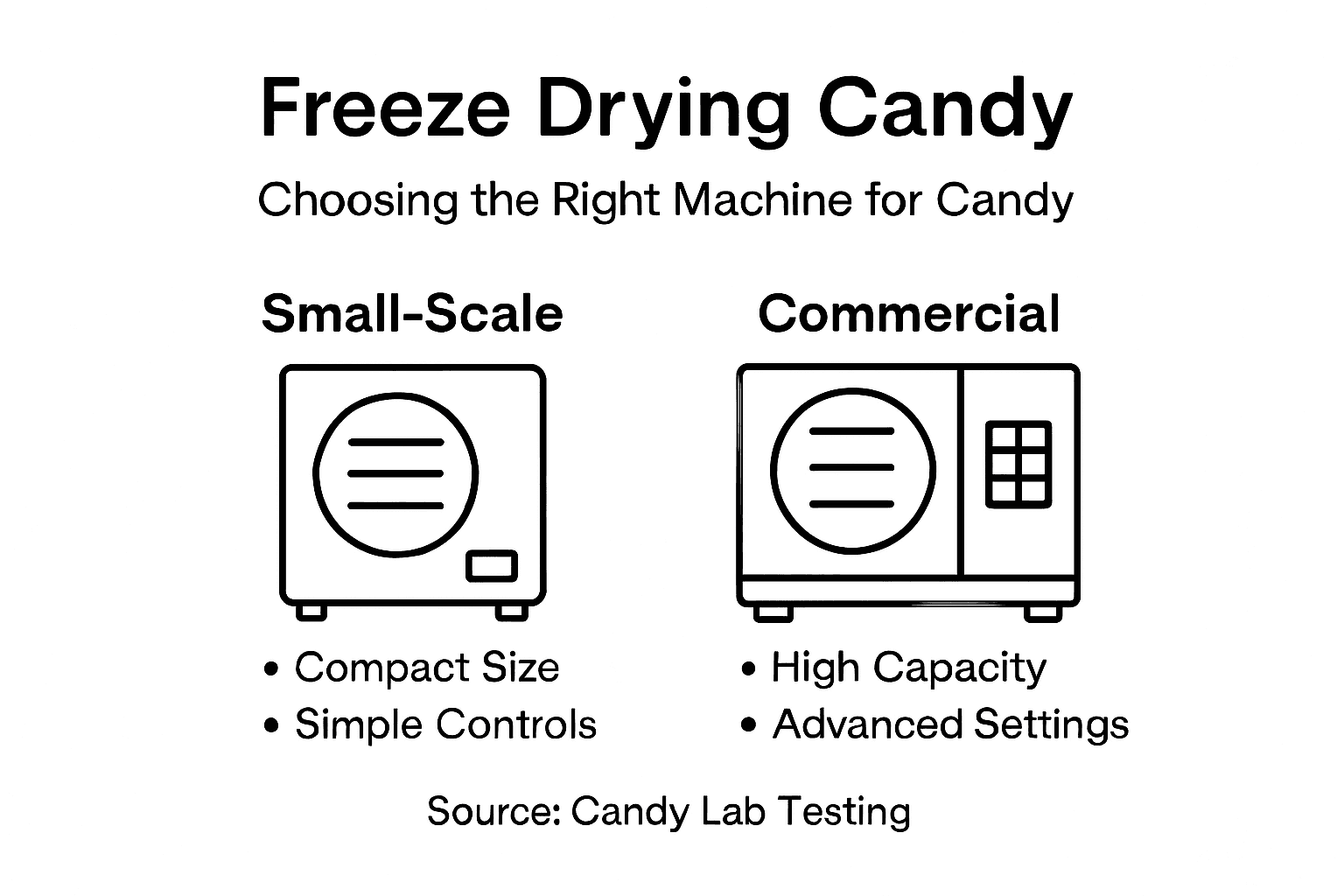
Pro tip: Always conduct small-batch test runs to validate your machine’s performance and fine-tune your freeze-drying parameters before scaling up production.
Here’s a comparison of freeze-drying machine features for different production scales:
| Feature | Small-Scale (Artisan) | Large-Scale (Commercial) |
|---|---|---|
| Machine Size | Compact, countertop units | Industrial, floor-standing units |
| Shelf Configuration | 1-2 trays, fixed spacing | Multiple trays, adjustable |
| Temperature Control | Limited range, manual | Wide range, digital controls |
| Vacuum Pump Efficiency | Basic for small batches | High-capacity for large loads |
| Batch Volume | 1-3 lbs per run | 10+ lbs per run |
Step 2: Select the Right Freeze-Drying Machine
Picking the optimal freeze dryer for your candy production requires careful consideration of several critical factors that will directly impact your final product quality and operational efficiency.
When choosing a freeze-drying machine, you need to evaluate specific performance capabilities that align with your candy production needs. Consider factors like total shelf area, temperature range, vacuum pump capacity, and cooling system efficiency. Commercial candy producers will want machines with robust temperature controls and larger processing volumes, while small batch artisan shops might prioritize compact units with precise environmental settings.
Your machine selection should also account for specific candy characteristics. Soft gummy candies require different drying parameters compared to chocolate or fruit-based treats. Look for machines that offer programmable cycles, multiple temperature zones, and flexible shelf configurations. Some advanced freeze dryers provide digital interfaces allowing you to save and replicate successful drying profiles for consistent candy quality across production runs.
Pro tip: Request machine demonstration and sample processing from manufacturers to verify actual performance matches their technical specifications before making a final purchase decision.
Step 3: Prepare Candy for Freeze Drying
Preparing your candy correctly is crucial for achieving exceptional freeze-dried results that maintain flavor, texture, and overall quality. Understanding the preparation process can make a significant difference in your final product.
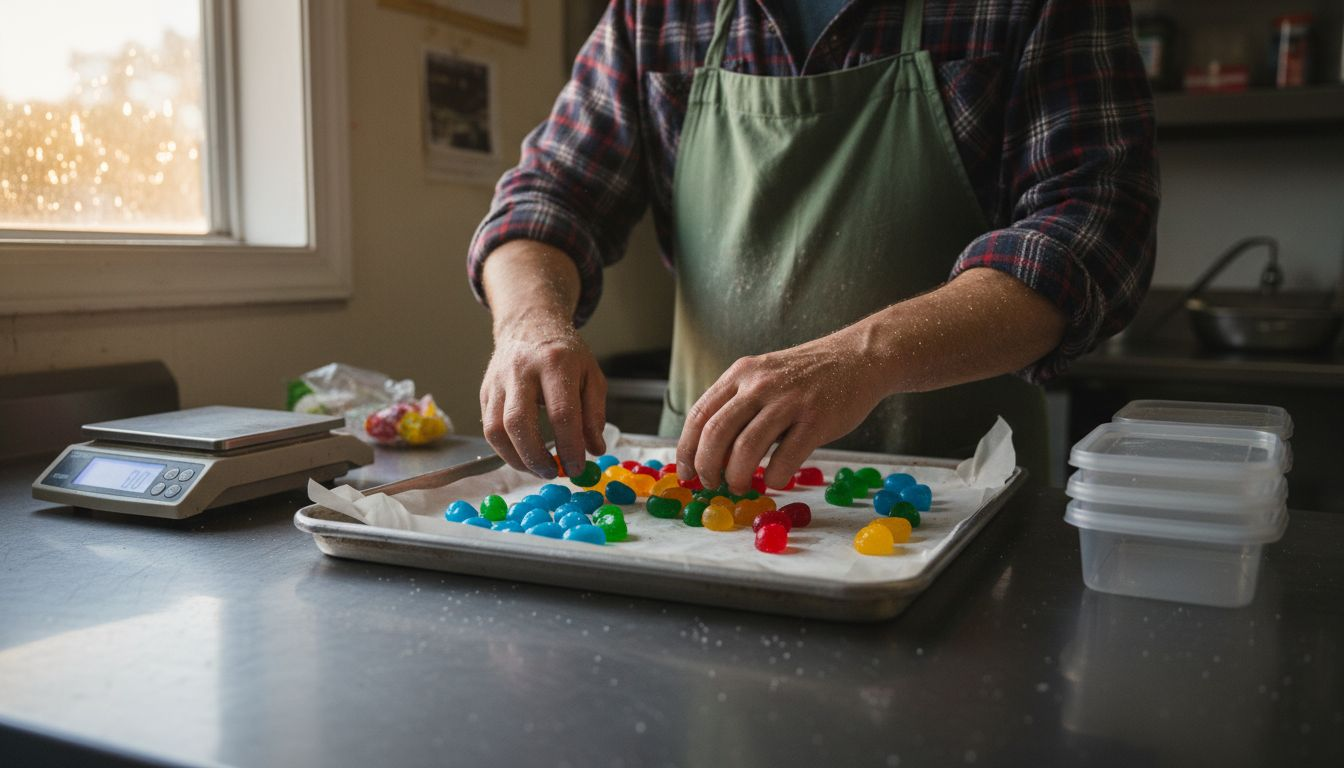
When preparing candy for freeze drying, start by selecting and sorting candy types carefully. Not all candies freeze dry equally well. Gummy candies, marshmallows, and certain chocolate varieties tend to work best. Remove any candies with excessive moisture or inconsistent shapes that might interfere with uniform freeze drying. For larger candies, consider cutting them into smaller uniform pieces to ensure even freezing and sublimation throughout the drying process.
Prepare your candy by cleaning each piece gently and patting them dry with paper towels. Arrange the candies on freeze dryer trays with adequate spacing between pieces to allow proper air circulation. Avoid overcrowding, which can lead to uneven drying and potential moisture retention. If working with multiple candy types, consider separating them onto different trays to maintain consistent processing conditions and prevent flavor cross-contamination.
Pro tip: Photograph your candy before and after freeze drying to track texture transformations and help refine your future processing techniques.
Step 4: Set Up and Operate the Machine
Successfully operating a freeze dryer requires precision technical knowledge and careful attention to each processing stage. Understanding the machine setup will help you achieve consistent and high-quality freeze-dried candy results.
To begin, focus on precise machine configuration and monitoring for optimal performance. Start by preheating your freeze dryer and calibrating its temperature settings. Load your prepared candy trays carefully, ensuring even spacing and avoiding contact between pieces. Most commercial freeze dryers have digital interfaces allowing you to program specific cycle parameters for different candy types. Set up your primary freezing stage by dropping the chamber temperature to approximately 40 degrees below zero, which helps transform moisture into solid ice crystals before sublimation.
During the drying process, monitor vacuum levels and temperature consistently. The primary drying phase requires maintaining low temperatures while applying vacuum pressure that enables direct ice to vapor conversion. Secondary drying focuses on removing residual moisture by gradually increasing chamber temperature. Watch your machine’s interface for real-time data on moisture content, ensuring each candy batch reaches the desired crisp texture without compromising its original flavor profile.
Pro tip: Keep a detailed log of machine settings and candy types to create a reference guide for future freeze-drying batches.
Step 5: Inspect and Package the Finished Candy
The final stage of freeze-drying candy requires meticulous attention to detail to ensure your product meets the highest quality standards and maintains its unique crisp texture. Careful inspection and proper packaging are critical to preserving your hard-earned results.
Begin by thoroughly examining your freeze-dried candy for consistent texture, color, and structural integrity. Look for uniform crispness across each piece, checking that no areas remain soft or retain moisture. Gently handle the candies to test their structural stability, ensuring they maintain their desired crunch without crumbling. Perform random sampling to verify flavor retention and check that the freeze-drying process has not compromised the original taste profile.
Package your candies immediately using moisture-proof containers to prevent rehydration. Select airtight packaging materials that block humidity and oxygen completely. Vacuum-sealed bags or rigid containers with tight-sealing lids work best for maintaining the delicate texture of freeze-dried candies. Label each package with the production date, candy type, and recommended storage conditions. For commercial production, consider adding oxygen absorbers to further extend shelf life and protect the candies from potential moisture intrusion.
Use this quick reference for recommended packaging solutions for freeze-dried candy:
| Packaging Type | Moisture Barrier | Typical Use Case |
|---|---|---|
| Vacuum-Sealed Bags | Excellent | Home or small-batch packaging |
| Rigid Containers | High | Retail display, bulk shipping |
| Oxygen Absorbers | Added protection | Long-term shelf storage |
Pro tip: Store packaged freeze-dried candies in a cool dark place and consume within three to six months for optimal flavor and texture.
Unlock the Best Freeze-Drying Solutions for Your Candy Production
Choosing the right freeze-drying machine is crucial to preserving the unique flavors and textures of your candy. If you struggle with selecting equipment that fits your production scale or need expert guidance on packaging and maintaining product quality, you are not alone. Many candy manufacturers face challenges around precise temperature control, vacuum efficiency, and achieving consistent crispness without compromising taste.
At Space-Man, we specialize in helping Canadian candy producers overcome these exact hurdles. Whether you are an artisan or a commercial operation, our advanced freeze-drying technology, private labeling, co-packing, and packaging services ensure your freeze-dried candies are customer-ready and packaged for lasting freshness. Discover how our tailored solutions can streamline your process and boost product appeal.

Take the guesswork out of freeze-drying and elevate your candy business today. Visit Space-Man’s homepage to learn more about our full range of manufacturing and packaging services. Don’t wait to transform your candy production with proven expertise designed just for you.
Frequently Asked Questions
What machine should I use for small-scale freeze-drying of candy?
To effectively freeze dry candy on a small scale, use a compact countertop unit. Look for features like limited shelf space and manual temperature controls to best suit your production needs.
What features are important in a commercial freeze-drying machine for candy?
For commercial candy production, prioritize machines with robust temperature controls, larger shelf areas, and high-capacity vacuum pumps. These features will ensure efficient drying and consistent quality in larger batch sizes.
How do I determine the right drying parameters for different candies?
Assess the physical properties, like moisture content and structural characteristics, of your candies to set appropriate drying parameters. Experiment with small-batch test runs to fine-tune settings for optimal flavor and texture preservation.
Can I freeze dry all types of candy?
Not all candies freeze dry equally well; softer candies like gummies tend to work best compared to harder varieties. Focus on candies with lower moisture content and uniform shapes for consistent drying results.
How do I package freeze-dried candy to maintain quality?
Package freeze-dried candy in moisture-proof containers to prevent rehydration. Use airtight materials like vacuum-sealed bags or rigid containers with tight seals, labeling each package with the production date and recommended storage conditions.
What maintenance is required for freeze-drying machines?
Regularly clean and inspect your freeze-drying machine to ensure optimal performance. Focus on checking vacuum seals and temperature settings, and document settings for different candy types to aid in future production.