

Over half of Canadian candy and snack brands now compete directly with American imports on store shelves. Private labeling has become a powerful way for small businesses to stand out, offering a path to exclusive products without the costs of full-scale manufacturing. Understanding how this model works can help your shop deliver unique treats, strengthen customer loyalty, and navigate an increasingly competitive market with confidence.
Table of Contents
- Private Labeling Defined In Consumer Goods
- Types Of Private Label Models Explained
- How Private Labeling Works Day To Day
- Key Benefits And Competitive Advantages
- Risks, Legal Considerations, And Costs
- Comparing Private, National, And White Labels
Key Takeaways
| Point | Details |
|---|---|
| Private Labeling Advantage | Private labeling allows retailers to offer unique products under their own brand, enhancing profit margins and consumer loyalty. |
| Model Variations | Different private label models, such as Generic and Premium, cater to various market segments and consumer preferences. |
| Collaboration is Key | Successful private labeling depends on effective communication and partnerships between retailers and manufacturers. |
| Risk Management | Brands must address legal, financial, and regulatory risks through careful planning and thorough market research. |
Private Labeling Defined in Consumer Goods
Private labeling represents a strategic business model where retailers collaborate with manufacturers to create products exclusively sold under the retailer’s own brand name. This approach allows companies to offer unique merchandise without investing in complex manufacturing infrastructure. Private label products are distinctive from generic or white label offerings because they provide retailers significant control over product development, design, and marketing.
In the Canadian consumer goods landscape, private labeling enables smaller brands and regional retailers to compete effectively with larger national manufacturers. The process involves carefully selecting a manufacturing partner who can produce high-quality goods matching the retailer’s specific brand standards. Retailers typically provide detailed specifications regarding ingredients, packaging, and overall product characteristics, ensuring the final product aligns perfectly with their brand identity and consumer expectations.
The core advantages of private labeling include enhanced profit margins, increased brand loyalty, and greater marketplace differentiation. By controlling product specifications and branding, retailers can create exclusive product lines that cannot be directly compared to competitors’ offerings. This strategy allows businesses to build unique value propositions and establish stronger connections with their target consumer base.
Pro tip: When exploring private label opportunities, start by conducting thorough market research to identify product categories with high consumer demand and potential for unique brand positioning.
Types of Private Label Models Explained
Private labeling encompasses several strategic models that offer Canadian candy brands varying levels of product customization and market positioning. Four primary private label approaches exist, each tailored to different business objectives and consumer market segments. These models range from basic generic offerings to sophisticated premium and innovative product lines.
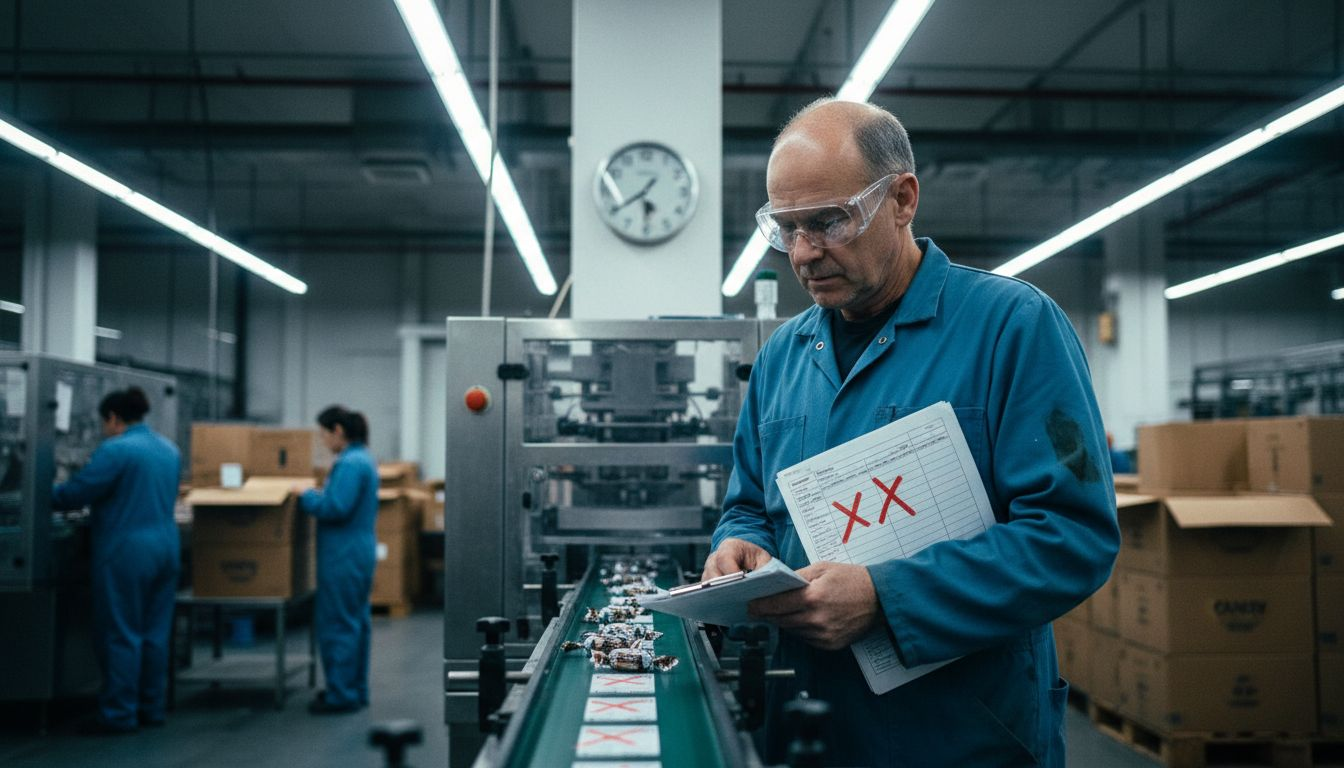
The first model is Generic Private Label, characterized by minimal packaging and cost-effective production. These products target budget-conscious consumers seeking affordable alternatives to national brands. Next, the Copycat Model focuses on creating products that closely resemble established national brands in appearance and quality, but at a more competitive price point. This strategy allows retailers to capture market share by offering near-equivalent products at lower price points.
The Premium Private Label model represents a higher-end approach where brands invest in superior ingredients, sophisticated packaging, and innovative product development. This model directly challenges national brands by offering comparable or superior quality. The most advanced model, Value Innovator, involves creating unique products that do not exist in the current market, providing retailers an opportunity to differentiate themselves and target niche consumer segments with specialized candy offerings.
Here’s a summary of how each private label model supports brand differentiation:
| Private Label Model | Customization Level | Target Consumer Segment | Brand Differentiation Focus |
|---|---|---|---|
| Generic Private Label | Low | Price-sensitive shoppers | Low price, basic presentation |
| Copycat Model | Moderate | Value-focused brand switchers | Looks like leading brands |
| Premium Private Label | High | Quality-driven buyers | Superior ingredients, packaging |
| Value Innovator | Very High | Niche and trend-driven buyers | Unique, innovative offerings |
Pro tip: When selecting a private label model, carefully analyze your target market’s preferences, price sensitivity, and potential for product differentiation to maximize your brand’s competitive advantage.
How Private Labeling Works Day to Day
Private labeling operations represent a complex dance of collaboration between retailers and manufacturers, requiring precise coordination and strategic planning. In the Canadian candy industry, this process begins with market research to identify consumer preferences, product gaps, and potential opportunities for unique offerings. Retailers develop comprehensive product specifications that outline everything from ingredient requirements to packaging design, serving as a detailed blueprint for manufacturing partners.
The daily workflow involves extensive communication between the retailer and manufacturer. Retailers focus on brand development, marketing strategies, and quality control, while manufacturers handle production logistics, ingredient sourcing, and product manufacturing. This collaborative approach allows Canadian candy brands to create specialized products without investing in extensive manufacturing infrastructure. Quality assurance becomes a critical component, with multiple checkpoints ensuring that each product meets the retailer’s exact standards before reaching store shelves.
Technological integration plays a significant role in modern private labeling operations. Digital platforms enable real-time communication, allowing retailers to track production progress, review samples, and make rapid adjustments to product specifications. Inventory management systems help optimize production runs, minimize waste, and ensure consistent supply chain efficiency. The most successful private label brands develop long-term partnerships with manufacturers, creating a symbiotic relationship that allows for continuous product innovation and market responsiveness.
Pro tip: Develop a comprehensive communication protocol with your manufacturing partner, including regular review meetings and clear quality benchmarks to ensure consistent product excellence.
Key Benefits and Competitive Advantages
Private label strategies unlock transformative opportunities for Canadian candy brands by enabling unprecedented control over product development, pricing, and market positioning. These strategic approaches allow smaller manufacturers to compete effectively against established national brands by offering unique, targeted product lines that directly address consumer preferences. By eliminating traditional intermediary costs, private labeling creates a pathway for more competitive pricing and enhanced profit margins.
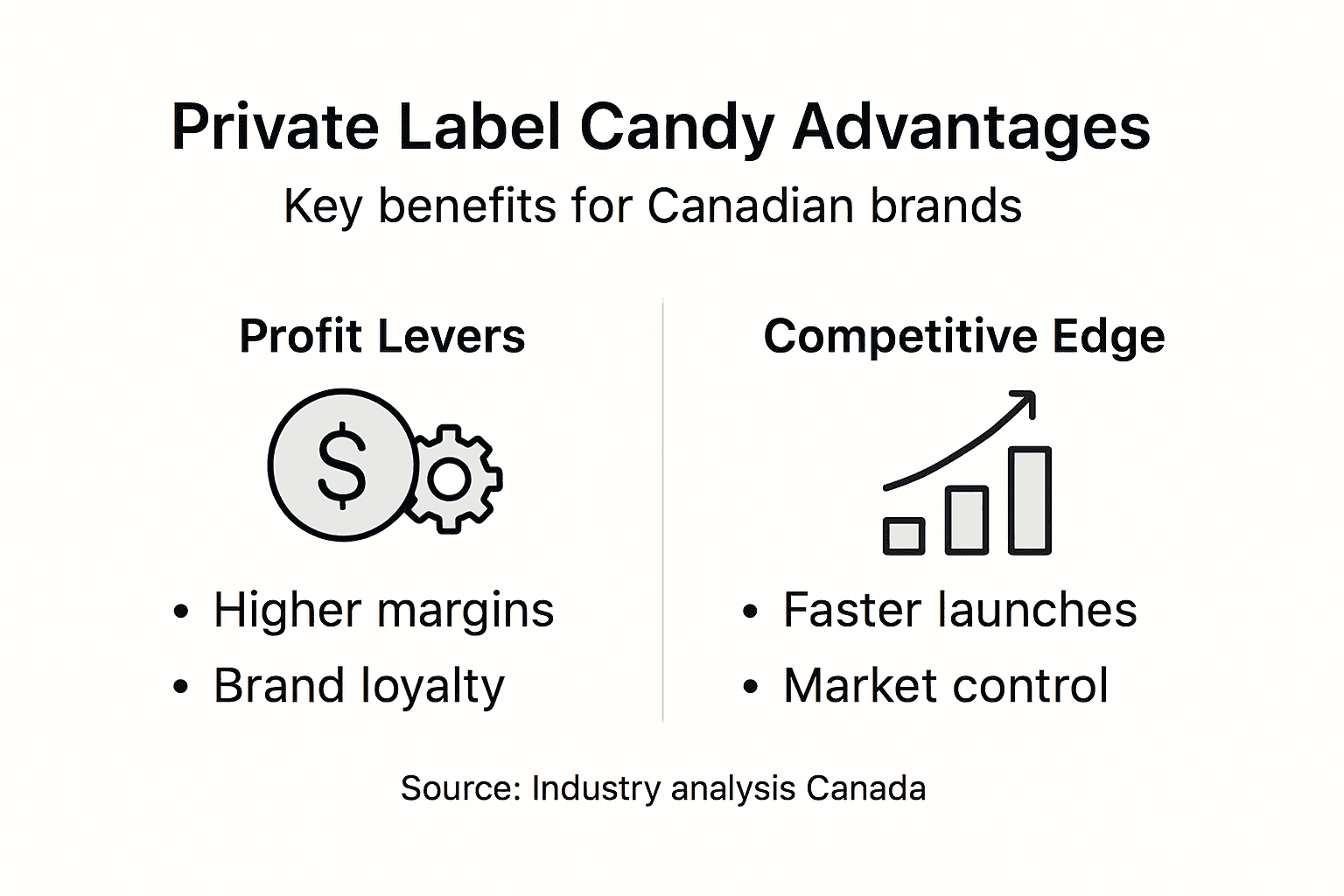
The competitive advantages extend far beyond simple cost savings. Canadian candy brands gain the ability to quickly respond to market trends, customize product offerings, and build direct consumer loyalty. Retailers can develop exclusive product lines that cannot be found elsewhere, creating a unique value proposition that distinguishes them from competitors. This approach allows for rapid product iteration, meaning brands can swiftly adjust recipes, packaging, or marketing strategies based on real-time consumer feedback and emerging market demands.
Financial benefits represent another critical advantage of private labeling. Without the extensive marketing expenses associated with building a national brand from scratch, Canadian candy manufacturers can allocate resources more efficiently. The reduced overhead allows for investment in product quality, innovative packaging, and targeted marketing campaigns. Moreover, the direct relationship with manufacturers enables more transparent supply chain management, faster product development cycles, and greater flexibility in meeting evolving consumer expectations.
Pro tip: Conduct thorough market research and maintain open communication with your manufacturing partners to continuously refine your private label product strategy and stay ahead of consumer trends.
Risks, Legal Considerations, and Costs
Navigating the private label landscape requires a comprehensive understanding of potential legal manufacturing complexities. Canadian candy brands must carefully draft manufacturing agreements that clearly define intellectual property rights, quality control standards, and liability provisions. These contracts serve as critical safeguards, establishing precise expectations for both manufacturers and retailers while mitigating potential disputes that could disrupt product development and distribution.
Financial risks represent another significant consideration in private labeling. Initial investments can be substantial, including product development costs, packaging design, initial production runs, and marketing expenses. Brands must conduct thorough market research and financial modeling to ensure potential revenue justifies upfront expenditures. Unexpected challenges like ingredient price fluctuations, supply chain disruptions, or regulatory changes can dramatically impact profitability, making risk management a crucial aspect of private label strategy.
Regulatory compliance adds another layer of complexity for Canadian candy manufacturers. Food safety standards, ingredient restrictions, nutritional labeling requirements, and potential product liability issues demand meticulous attention. Brands must stay current with evolving Canadian food regulations, ensuring their private label products meet all legal standards. This requires ongoing collaboration with manufacturers, regular product testing, and potentially engaging legal and compliance experts to navigate the intricate regulatory landscape.
This table highlights key risks and required actions in private labeling:
| Risk Area | Potential Challenge | Critical Action Needed |
|---|---|---|
| Legal & IP | Contract disputes, unclear ownership | Draft precise legal agreements |
| Financial | Unexpected cost overruns | Use detailed financial modeling |
| Regulatory Compliance | Changing food safety standards | Maintain up-to-date certifications |
| Supply Chain | Ingredient shortages, delays | Build contingency plans |
Pro tip: Invest in comprehensive legal counsel specializing in manufacturing agreements to develop robust contracts that protect your brand and clearly define responsibilities between manufacturers and retailers.
Comparing Private, National, and White Labels
The Canadian candy market presents a complex landscape of branding strategies, with brand competition dynamics shaping consumer choices and market positioning. National brands, private labels, and white labels each represent distinct approaches to product development, marketing, and consumer engagement. Understanding the nuanced differences between these models is crucial for Canadian candy manufacturers seeking to optimize their market strategy.
National brands distinguish themselves through extensive brand equity, established reputation, and premium pricing strategies. These brands invest heavily in marketing, product innovation, and consumer trust. In contrast, private label products offer retailers more control, allowing for customized formulations, unique packaging, and targeted positioning. Private labels enable Canadian candy brands to create exclusive product lines that cannot be found with national brands, providing a significant competitive advantage in a crowded marketplace.
White label products represent the most generic approach, offering mass-produced items that can be branded by multiple retailers with minimal customization. These products prioritize speed to market and cost efficiency over unique product development. While national brands focus on building long-term consumer loyalty and white labels emphasize affordability, private labels strike a strategic balance. They provide retailers the flexibility to create distinctive products that meet specific consumer needs while maintaining competitive pricing and quality standards.
Pro tip: Conduct thorough market research to understand your target consumer segment and select the branding approach that best aligns with their preferences and purchasing behaviors.
Take Control of Your Candy Brand with Expert Private Label Solutions
Many Canadian candy brands struggle with the complexities of private labeling—from ensuring precise product customization to maintaining consistent quality and navigating legal agreements. If your goal is to create a unique product line that stands out, maximizes profit margins, and builds lasting consumer loyalty, you need a manufacturing partner who understands these challenges deeply. Our services include private labeling, co-packing, and packaging solutions tailored specifically for candy brands aiming to elevate their market position with superior freeze dried products.
Discover how partnering with Space Man can simplify your private label journey. We offer full support in transforming your ideas into exclusive candy offerings that resonate with quality-driven buyers. Act now to leverage our expertise and cutting-edge production capabilities to quickly respond to market trends and expand your brand presence. Visit https://space-man.ca today to start a conversation about how we can help bring your private label vision to life with unmatched quality and speed.
Frequently Asked Questions
What is private labeling in the candy industry?
Private labeling is a business model where retailers collaborate with manufacturers to create products sold exclusively under the retailer’s brand name, allowing for unique merchandise without the need for complex manufacturing.
What are the advantages of private labeling for candy brands?
Private labeling offers enhanced profit margins, increased brand loyalty, and greater marketplace differentiation, allowing brands to create exclusive lines that cannot be easily compared to competitors’ offerings.
What are the different types of private label models for candy products?
The four primary private label models are Generic Private Label, Copycat Model, Premium Private Label, and Value Innovator, each varying in customization level and target consumer segment.
How does the private labeling process work for candy manufacturers?
The process involves market research, detailed product specifications, and collaboration between retailers and manufacturers, ensuring quality control and alignment with brand identity before products reach the market.
Recommended
- Understanding the Benefits of Private Labeling – Spaceman
- Complete Guide to Private Label Candy Manufacturers Canada – Spaceman
- How to Start Selling Private Label Candy Easily – Spaceman
- Complete Guide to Candy Factories in Canada – Spaceman
- The Ultimate Guide to Third Party Tested Supplements: Ensuring Quality – Nutribliss Inc.