

TL;DR:
- Dove’s packaging combines protective foil wraps with uplifting messages to create a memorable brand experience. The brand employs various formats, from resealable bags to keepsake tins, enhancing gift appeal and sustainability efforts. Industry-leading engineering and design communicate quality, while ambitious targets aim to improve recyclability by 2030.
Dove chocolate packaging is easy to take for granted. You tear it open, eat the chocolate, and move on. But there’s a lot more happening behind that glossy wrapper than most people realize. From the precisely engineered foil that locks in freshness to the uplifting messages printed inside each piece, Dove has built a packaging system that works on multiple levels at once: protecting the product, communicating brand values, and creating a small moment of joy with every unwrap. This guide breaks it all down, including the design details, the sustainability push, and how Dove stacks up against the competition.
Table of Contents
- Key takeaways
- Dove chocolate packaging styles and formats
- Design elements and brand storytelling
- Sustainability in Dove’s packaging
- How Dove packaging compares to other brands
- My take on Dove’s packaging
- Elevate your chocolate product with Space-man packaging
- FAQ
Key takeaways
| Point | Details |
|---|---|
| Packaging formats range widely | Dove offers everything from small 3.04 oz seasonal tins to large 24.2 oz shareable bags. |
| Foil wraps do double duty | Individual foil wrappers protect freshness and double as a canvas for uplifting brand messages. |
| Design signals quality first | Color, texture, embossing, and typography work together to build purchase confidence before the first bite. |
| Sustainability is a real priority | Dove and its peers are moving toward recyclable materials and reduced virgin plastics with 2030 targets in sight. |
| Packaging shapes the whole experience | The unwrapping ritual, the box design, and the hidden message are all part of what makes Dove feel premium. |
Dove chocolate packaging styles and formats
Most people think of Dove as the brand with the shiny little wrapped pieces. And yes, that’s a big part of it. But the full range of Dove chocolate packaging styles goes well beyond the everyday bag you grab at the grocery store checkout.
The core product line uses stand-up pouches and resealable bags, which come in sizes that range from a modest 4.5 oz all the way up to the 24.2 oz shareable bag containing roughly 100 individually wrapped pieces. That large bag is genuinely impressive for a party bowl or movie night. The 15.8 oz size lands closer to 56 pieces, which is still plenty for sharing.
Then there are the seasonal formats, and this is where Dove’s packaging creativity really shows. Around Valentine’s Day, you’ll find heart-shaped tins weighing about 3.04 oz, holding enough chocolate for three servings. These aren’t just practical containers. They’re designed to be kept, repurposed, or gifted as a keepsake. Dove also releases limited-edition porcelain keepsake boxes during the holiday season, which blur the line between chocolate packaging and decorative gift.
Here’s a quick breakdown of the most common Dove packaging formats:
- Stand-up pouches and bags: Everyday retail packaging in multiple sizes, resealable for freshness
- Individually foil-wrapped pieces: Inside every bag, each piece gets its own foil wrap with a printed message inside
- Seasonal heart-shaped tins: Holiday-specific metal containers designed for gifting and reuse
- Porcelain keepsake boxes: Premium limited-edition gift packaging with collectible appeal
- Chocolate gift boxes: Structured Dove chocolate box designs meant for special occasions
Pro Tip: If you’re buying Dove chocolate as a gift, the heart-shaped tins and keepsake boxes offer a presentation quality that the standard bags can’t match. They also tend to hold their retail value as collectibles, so don’t throw them out.
When you look at how candy packaging boosts freshness and sales, the logic behind Dove’s format variety becomes clear. Each format is matched to a specific purchase moment, whether that’s stocking up, gifting, or treating yourself.
Design elements and brand storytelling
Here’s something most chocolate enthusiasts don’t think about: Dove’s packaging is doing three jobs at once. It protects the chocolate, it looks beautiful on a shelf or in a gift bag, and it tells a story about who Dove is as a brand. That three-in-one approach is not accidental.
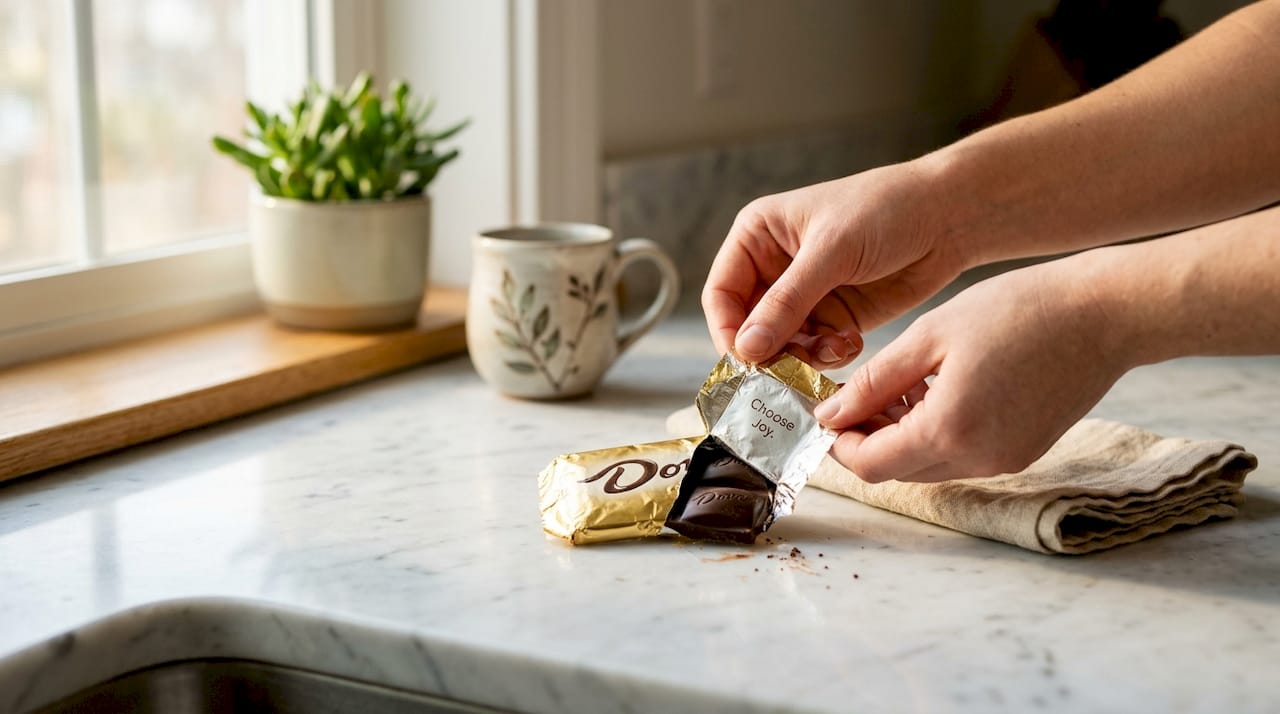
The technical side starts with the individual foil wrappers. These aren’t just decorative. Foil wrapping protects freshness by creating a barrier against moisture, light, and air, all of which degrade chocolate quality over time. But Dove takes it a step further by printing uplifting messages on the inside of each wrapper. That small detail transforms a functional material into an interactive brand experience. You don’t just eat the chocolate; you get a tiny moment of encouragement with it.
For the premium and seasonal products, Dove uses custom thermoformed blister trays that hold each chocolate piece in a precisely shaped cavity. This serves two purposes. First, the chocolates arrive without scuffs, cracks, or movement damage. Second, the clear blister windows let shoppers see the exact shape and texture of the product before buying. Industry experts describe this as a “first language” with consumers, where the packaging builds purchase confidence without a single word.
The broader design language across Dove’s product line leans on a few consistent cues:
- Color: Deep browns, silvers, and rich golds that read as premium without being over the top
- Typography: Clean, restrained lettering that doesn’t compete with the product itself
- Texture and finish: Matte finishes and subtle embossing signal quality and heritage to shoppers who pick up the box
- Brand mark placement: The Dove logo and dove symbol appear consistently, reinforcing recognition at a glance
The blister packaging engineering behind some of Dove’s premium products has been refined through over 20 years of precision manufacturing partnerships. That’s not a detail you’ll find on the label, but it explains why the chocolates look and feel so consistent across every product run.
Pro Tip: Pay attention to the inside of your Dove foil wrapper next time. The messages rotate, so no two bags give you the exact same sequence. It’s a small detail that makes the experience feel personal rather than mass-produced.
Understanding how packaging communicates brand quality is what separates brands that people remember from brands people just buy. Dove lands firmly in the first category.
Sustainability in Dove’s packaging
The chocolate industry is under real pressure to clean up its packaging practices, and Dove is not sitting still on this. The shift toward eco-friendly chocolate wraps is now central to how major confectionery brands plan their product lines.
Across the broader Mars family of brands, which includes Dove, sustainability efforts are focused on reaching measurable targets by 2030. Here’s how the industry is approaching this:
- Reducing virgin plastics: Brands are sourcing materials with higher recycled content and lower overall plastic use per unit.
- Improving recyclability: Moving away from multi-layer laminates that can’t be separated at recycling facilities, toward mono-material films that can.
- Consumer education: Including recycling instructions directly on packaging so shoppers know what to do with the wrapper after use.
- Thermoforming with sustainability in mind: The food-safe thermoformed materials used in Dove’s blister packaging are being evaluated for both performance and environmental impact simultaneously.
- Packaging weight reduction: Lighter packaging means less material used per unit and lower transport emissions per shipment.
“The movement in confectionery packaging is shifting away from minor refreshes toward transformative packaging innovations, with a strong focus on recyclable designs and reduced plastics by 2030.”
The tension Dove has to manage is a real one. Premium packaging, by its nature, tends to use more material, more layers, and more finishing processes than basic packaging. Matte coatings, embossing, and foil accents are not always the most recyclable choices. But consumer demand for both sustainability and premium experience is pushing brands to find materials that deliver on both fronts.
Dove’s approach to eco-friendly chocolate wraps reflects a broader industry truth: sustainability is no longer a niche selling point. Shoppers are reading labels, and brands that can’t show a credible environmental commitment are losing ground to those that can.
How Dove packaging compares to other brands
Dove does not exist in a vacuum. Understanding how its packaging stacks up against other major chocolate brands gives you a clearer picture of what makes Dove distinctive, and where the whole category is heading.
| Feature | Dove | Nestle | Mars | Hershey’s |
|---|---|---|---|---|
| Individually wrapped pieces | Yes, with messages | Selected products | Selected products | No (bars) |
| Seasonal gift tins | Yes (heart tins, keepsake boxes) | Limited | Limited | Yes (holiday) |
| Largest bag size | 24.2 oz | Varies by product | Varies by product | Varies by product |
| Sustainability target | 2030 recyclable focus | 2025/2030 goals | 2025/2030 goals | 2030 goals |
| Blister tray use | Yes (premium lines) | Selective | Selective | Selective |
| Uplifting message inserts | Yes (signature feature) | No | No | No |
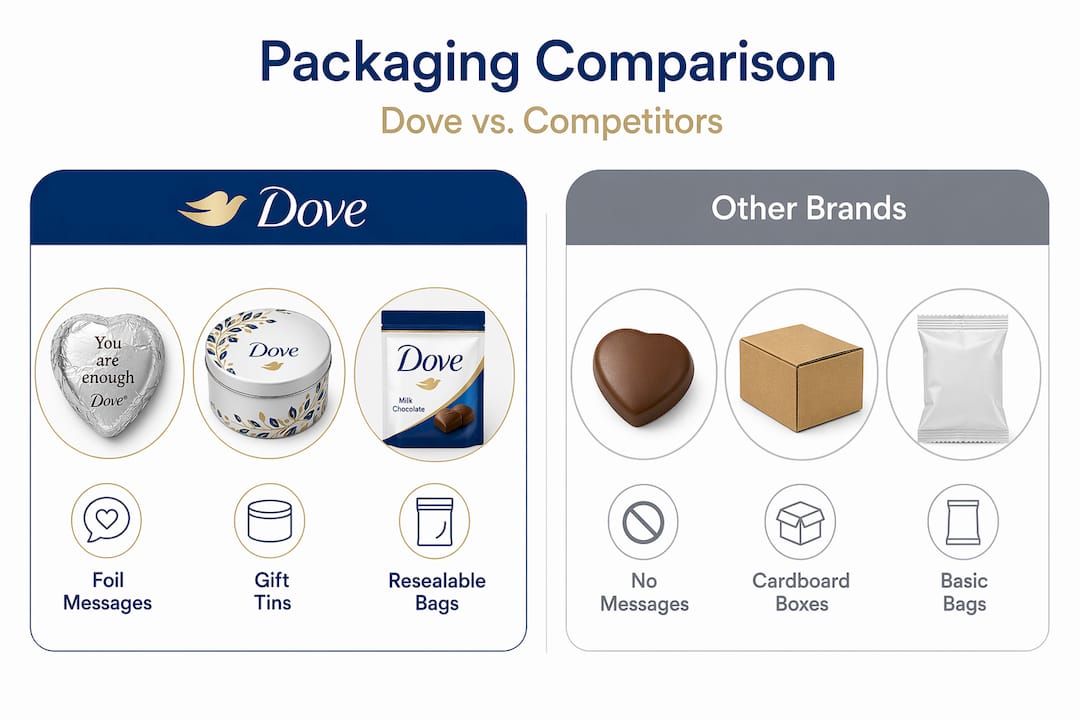
A few things stand out immediately. The uplifting message inside each foil wrapper is genuinely unique to Dove in the mass-market chocolate space. No other major brand has built that interactive element into its everyday retail packaging as a consistent, signature feature.
The seasonal gift packaging is another area where Dove separates itself. While competitors release holiday editions with festive graphics on standard packaging, Dove invests in unique chocolate packaging formats like the porcelain keepsake box that have collectible and reuse value. That’s a very different strategy from reprinting the same box in red and green for December.
On sustainability, all four brands are working toward similar 2030 targets. Mars and its peers are taking packaging sustainability seriously across their entire portfolio, not just for Dove. Where Dove has room to push further is in making its foil wrappers easier to recycle. Individual foil pieces are notoriously tricky in standard curbside programs, and that’s a challenge the brand hasn’t fully solved yet.
What’s clear across all brands is that packaging is no longer just a container. It’s a marketing tool, a freshness system, a sustainability statement, and a consumer experience all at once.
My take on Dove’s packaging
I’ve spent a lot of time thinking about what makes certain chocolate brands memorable and others forgettable, and I keep coming back to packaging as the deciding factor more often than people expect.
Dove gets a lot of things right. The foil message inside each piece is the kind of detail that costs almost nothing to execute once the system is set up, but it creates a disproportionate amount of goodwill. People photograph those messages. They share them. That’s earned media built into the product itself.
What I find genuinely underappreciated is the technical side. The precision thermoforming behind Dove’s premium blister packaging, and the controlled sealing specs that keep each piece fresh, represent real engineering investment. Most consumers never think about this. They just notice that the chocolate looks perfect when they open the box, and that impression of perfection translates directly into how they feel about the brand.
My honest take on the sustainability side: Dove is heading in the right direction, but individual foil wrappers at scale are a real problem that still needs a better solution. The brand hasn’t found it yet, and I think that’s the next frontier for Dove chocolate packaging.
If you’re a chocolate enthusiast, I’d encourage you to slow down the unwrapping process the next time you open a Dove product. Notice the weight of the bag, the texture of the packaging, and yes, actually read the message on the foil. You’ll enjoy the chocolate more. That’s not just a feeling. It’s exactly what the packaging was designed to do.
— Chadi
Elevate your chocolate product with Space-man packaging
If Dove’s packaging approach has you thinking about what great packaging could do for your own chocolate or candy product, Space-man can help you get there. As a Canadian manufacturer specializing in private labeling, co-packing, and custom packaging services, Space-man works with brands and retailers who want packaging that protects their product, tells their story, and connects with today’s eco-conscious shoppers. Whether you need a custom design aligned with your brand identity or a scalable co-packing solution for seasonal and retail runs, Space-man brings the expertise. Explore private label and co-packing solutions to find out what’s possible for your product line.
FAQ
What types of packaging does Dove chocolate come in?
Dove chocolate packaging includes stand-up resealable bags ranging from 4.5 oz to 24.2 oz, seasonal heart-shaped metal tins, limited-edition porcelain keepsake boxes, and individually foil-wrapped pieces inside every format.
What is the uplifting message inside Dove chocolate wrappers?
Each Dove chocolate piece is individually wrapped in foil that has a short, uplifting message printed on the inside. This is a signature Dove branding feature that no other major chocolate brand replicates consistently across its product line.
Is Dove chocolate packaging recyclable?
Dove and its parent company Mars are working toward recyclable packaging targets by 2030, focused on reducing virgin plastics and improving material recyclability. Individual foil wrappers remain a recycling challenge in most curbside programs.
How does Dove use packaging to protect chocolate quality?
Dove uses foil wrappers on individual pieces to block moisture, light, and air. Premium lines use thermoformed blister trays with food-safe materials and precise sealing specifications to protect texture, aroma, and shelf life.
What makes Dove’s seasonal packaging different from standard holiday editions?
Dove invests in unique formats like porcelain keepsake boxes and heart-shaped metal tins for seasonal releases. These are designed for reuse and gifting, not just decorative reprints of standard packaging with holiday colors.