

Standing out on crowded shelves is a daily challenge for Canadian chocolate brands, where the right packaging can mean the difference between a sale and a missed opportunity. Packaging is not just about wrapping your product; it is your brand’s silent ambassador and first handshake with every potential customer. Backed by research showing that packaging evokes stronger emotional associations than the chocolate taste itself, this guide reveals how the right design, materials, and strategy can transform mere wrappers into powerful sales tools for retailers and manufacturers across Canada.
Table of Contents
- Chocolate Brand Packaging Defined And Debunked
- Types And Materials Of Chocolate Packaging
- Design Strategies For Maximum Shelf Impact
- Navigating Canadian And Global Packaging Laws
- Sustainable Trends And Innovative Solutions
- Common Mistakes And How To Avoid Them
Key Takeaways
| Point | Details |
|---|---|
| Importance of Packaging | Chocolate packaging serves not only as protection but also as a critical marketing tool that communicates brand identity and influences purchase decisions. |
| Material Selection Matters | Choosing the right packaging materials impacts product freshness and consumer perception, with a strategic approach needed for effectiveness. |
| Design for Impact | Effective packaging design must capture attention quickly, employing visual hierarchy and color psychology to resonate with target consumers. |
| Compliance and Sustainability | Adhering to packaging regulations is crucial for legal compliance, while sustainable practices meet consumer expectations and enhance brand value. |
Chocolate Brand Packaging Defined and Debunked
Chocolate brand packaging isn’t just a wrapper that keeps your product from getting sticky fingers. It’s a silent salesperson sitting on retail shelves doing the heavy lifting for your brand. When we talk about chocolate brand packaging, we’re talking about the complete visual and physical system that protects your product, communicates your brand story, and ultimately convinces shoppers to grab your bar instead of the competitor’s. Think of it as the first handshake between your brand and the customer. The definition goes deeper than cardboard and foil: it encompasses everything from structural design and material selection to color psychology, typography, and the entire brand experience a consumer touches before they even taste the product.
Here’s where the myths fall apart. Many Canadian chocolate retailers believe that premium packaging automatically means higher sales, but that’s not how it works in real life. Research shows that packaging evokes stronger emotional associations than the chocolate taste itself, which sounds wild but makes sense when you think about impulse purchases at checkout. Yet here’s the nuance: it’s not about spending the most money on packaging. It’s about spending strategically. A beautifully designed wrapper with cheaper materials can outperform an expensive package with confusing messaging. Another common misconception is that packaging is purely aesthetic. Wrong. Consumers evaluate chocolate packaging using 12 key criteria that include practical benefits like durability and stackability, symbolic value like brand recognition and emotional connection, and social value like whether the package looks good on an Instagram story. The packaging isn’t just protecting your freeze-dried candy or chocolate bar during shipping—it’s creating an entire brand perception that happens in milliseconds when someone sees it on a shelf.
If you’re a Canadian manufacturer or retailer, understanding what packaging actually does separates you from competitors still stuck in 1990s thinking. Your packaging needs to work on multiple levels simultaneously: it must function as protection and information, yes, but it also needs to create emotional resonance and communicate your brand personality instantly. This becomes even more critical when you’re offering private labeling and co-packing services, because your packaging directly reflects the quality of your partnership with other brands. The packaging isn’t just a container; it’s a statement about your manufacturing standards and attention to detail. Whether you’re selling directly to consumers through e-commerce or stocking retail shelves, your chocolate brand packaging is working harder than your advertising budget ever could.
One final debunking: the idea that sustainable packaging costs too much and hurts your margins. Understanding sustainable candy packaging concepts shows that eco-friendly materials have become increasingly affordable while resonating with Canadian consumers who care about environmental impact. You can achieve both brand appeal and sustainability without destroying your profit margins. The packaging you choose today is an investment in how your brand gets remembered tomorrow.
Pro tip: When designing your chocolate packaging, test it first with your target Canadian audience in actual retail settings rather than relying solely on design software mockups, because lighting, shelf placement, and physical handling often reveal design flaws that screens never show.
Types and Materials of Chocolate Packaging
Chocolate packaging comes in more varieties than the chocolates themselves, and picking the right combination of type and material can make or break your retail presence. When you’re running a Canadian chocolate operation, you’re choosing between rigid boxes, flexible wrappers, blister packs, flow wraps, and combinations that work together as a system. Each type serves a different purpose depending on your product format, shelf presence, and how customers interact with it. A premium chocolate bar needs different protection and presentation than freeze-dried chocolate candies or bulk chocolate pieces destined for retail displays. The type you select influences everything from how long your product stays fresh to whether it survives the journey from your warehouse to a customer’s shopping cart without cracking or getting damaged.
Now let’s talk materials, because this is where the real decision-making happens. Your main players are paper and paperboard, flexible plastics, aluminum foil, glass, and increasingly, composite materials that blend several options. Packaging material selection depends on barrier properties, sustainability concerns, and how well the material protects your chocolate from moisture, oxygen, and light. Paperboard offers excellent printability and a premium feel that appeals to Canadian consumers who notice quality packaging. Plastics like polypropylene and polyethylene provide superior moisture barriers and transparency so customers can see your product, which matters for impulse purchases. Aluminum foil is your heavy hitter for oxygen protection, keeping chocolate fresh for months, but costs more and creates recycling considerations. Glass works beautifully for ultra-premium positioning but adds shipping weight and breakage risk. As a Canadian freeze-dried candy manufacturer offering private labeling and co-packing services, your material choice communicates directly to your partners and their end customers about your commitment to quality.
The strategic layer here involves understanding how material choice influences quality perception. Packaging material selection directly affects consumer perceptions of chocolate products, with texture and surface finish playing bigger roles than most retailers realize. A matte finish paperboard feels more premium than glossy plastic. Embossed surfaces suggest craftsmanship. Metallic ink on kraft paper signals artisanal quality. Your material isn’t just functional; it’s storytelling. If you’re selling directly through e-commerce, packaging materials also affect unboxing experience and social media appeal. Customers photograph their deliveries. Your packaging needs to look good when flattened on an Instagram post, not just when it’s on a store shelf. The combination of type and material determines whether your chocolate packaging becomes an afterthought or a reason customers choose you again.
Here’s the practical breakdown: consider your storage conditions, target market expectations, budget constraints, and environmental commitments before locking in a material decision. Paperboard works when you need excellent branding and moderate protection. Plastic excels for visibility and cost efficiency. Foil provides maximum freshness protection. Most successful Canadian chocolate retailers use combinations, like paperboard outer sleeves with foil inner liners. Test materials with actual customers before scaling production, because what looks good on a sample doesn’t always perform well at scale.
Here is a comparison of common chocolate packaging materials and their business impacts:
| Material Type | Key Benefit | Risk/Drawback | Business Impact |
|---|---|---|---|
| Paperboard | Excellent branding, premium feel | Lower moisture protection | Enhances shelf appeal, may reduce shelf life |
| Flexible Plastic | Superior moisture barrier | Challenging recycling options | Maintains freshness, can lower eco image |
| Aluminum Foil | Strong oxygen protection | Higher cost, recycling limits | Extends product life, raises costs |
| Glass | Premium positioning | High shipping and breakage risk | Signals luxury, boosts shipping expenses |
| Composites | Custom barrier properties | Complex disposal, higher cost | Enables innovation, adds complexity |
Pro tip: Request material samples from your co-packing partner and test them under real warehouse conditions for at least two weeks, checking for color bleeding, moisture absorption, and structural integrity, because design mockups never reveal how materials perform over time.
Design Strategies for Maximum Shelf Impact
Your chocolate packaging has about three seconds to convince a shopper to pick it up instead of walking past. That brutal reality means every design decision matters, from the moment light hits the shelf until fingers reach toward your bar. Maximum shelf impact isn’t about being the loudest or brightest package on the display. It’s about strategic choices that stop the eye, communicate quality, and create a reason to buy. When you’re competing on Canadian retail shelves against national brands with massive marketing budgets, your packaging design becomes your most powerful retail asset. The successful approach combines visual hierarchy, color psychology, typography, and imagery that work together as one cohesive system rather than random design elements thrown together.
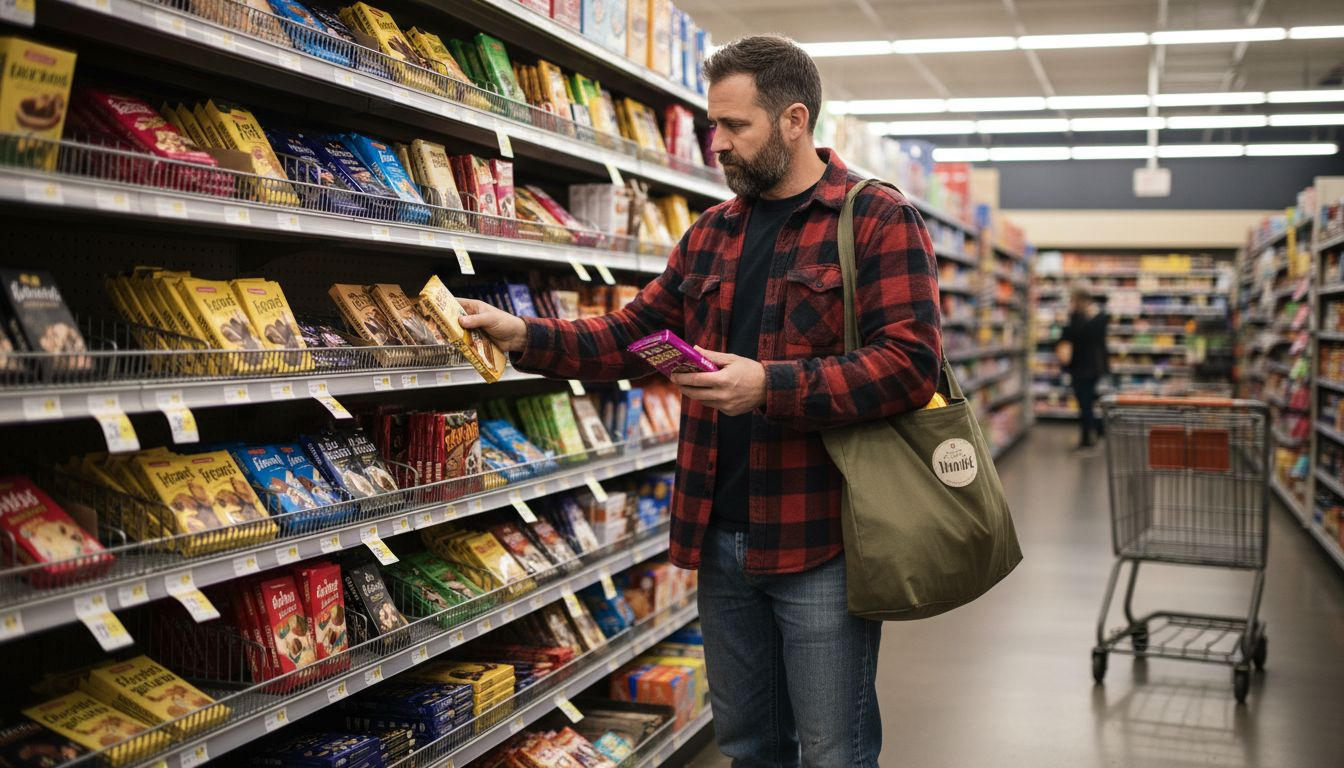
Color is your first weapon in the shelf impact arsenal. Color psychology directly influences consumer perception and purchase intent for chocolate products, which means the colors you choose aren’t decorative choices but conversion strategy. Deep browns and golds signal premium quality and tradition. Bright, contrasting colors grab attention and work for fun, affordable options. Metallic accents catch light and create perceived value. But here’s what most Canadian retailers get wrong: they assume their company colors or logo colors should dominate the packaging. Not always. Your background color needs to work with shelf lighting and adjacent products. Test your design under actual retail lighting conditions, not in your office under perfect LED bulbs. The color that looks stunning in your design software might disappear on a shelf next to ten similar products. Use negative space strategically. A clean, uncluttered design actually stands out more than packaging packed with information and imagery. Your freeze-dried candy or chocolate product deserves to be the star, not competing with visual noise.
Beyond color, packaging design builds emotional connections that drive sensory expectations and purchase decisions, which is why imagery and messaging matter as much as aesthetics. A photograph of your actual product on the package builds trust and appetite appeal. Hand-drawn illustrations suggest artisanal quality and craft. Minimalist design conveys sophistication and modern positioning. Typography sets the tone instantly. Serif fonts feel traditional and trustworthy. Sans-serif fonts feel contemporary and clean. Script fonts suggest luxury and handmade quality. Pick one primary typeface and stick with it. Mixing multiple fonts looks amateur and dilutes your message. Your hierarchy should guide the eye naturally: product name first, key benefit second, supporting details last. Most shoppers won’t read everything on your package, so prioritize ruthlessly. When you’re offering private labeling and co-packing services to other brands, your packaging design becomes a showcase of your manufacturing standards and design expertise. Consistency across your product line also builds recognition. If customers can identify your brand from the package shape or color pattern alone, you’ve won the shelf impact game.
The practical execution involves testing before you commit to large production runs. Create mockups and test them on actual shelves in actual Canadian retail stores, watching how real customers interact with them. Do they pick it up? Do they turn it over? Do they read the back? Their behavior reveals whether your design strategy works. Creative packaging design ideas for 2025 showcase emerging approaches that balance innovation with proven principles. Don’t chase trends just because they’re trendy. A design that works for your brand and your customers outlasts temporary style fads. Your packaging needs to feel contemporary without looking dated in two years.
Pro tip: Create three distinct design versions and test them against each other in actual retail settings with your target Canadian consumers, measuring not just which one they choose but which one they pick up first and hold longest, since purchase intent correlates strongly with initial tactile engagement.
Navigating Canadian and Global Packaging Laws
Compliance with packaging regulations isn’t optional for Canadian chocolate manufacturers and retailers. Get it wrong, and you face product recalls, fines, or worse, legal liability that can sink a business. Yet navigating the labyrinth of Canadian federal regulations, provincial requirements, and increasingly, international standards if you’re exporting, feels overwhelming. The good news is that understanding the core requirements puts you ahead of most competitors who wing it and hope for the best. Canada’s primary packaging regulations come from Health Canada, the Canadian Food Inspection Agency (CFIA), and Consumer and Corporate Affairs Canada, each with specific jurisdiction over different aspects of your chocolate packaging. Your packaging must comply with the Safe Food for Canadians Regulations, which detail what information must appear on packaging and how it must be displayed. These aren’t suggestions. These are legal requirements that inspectors verify during retail audits.
The essential elements your chocolate packaging requires include a product identity statement (what is it), the net quantity declaration (how much), manufacturer or distributor information (who made it and where), ingredient list (what’s in it), allergen declarations in plain language, nutrition facts table, and handling instructions if relevant. Understanding food packaging regulations in Canada provides detailed guidance specific to Canadian requirements that differ from American or European standards. One critical distinction: bilingual labeling is mandatory in Canada. English and French must appear on packaging sold in Canada, though some exceptions exist for certain provinces. Your ingredient list must follow specific formatting rules, allergens must be bold or capitalized, and nutrition facts tables have strict layout requirements defined by Health Canada. These details matter. A nutrition facts table with incorrect font size or spacing can technically be non-compliant, even if the information is accurate. When you’re offering co-packing services to other brands, compliance becomes your responsibility as the manufacturer. You can’t blame the brand owner if your packaging doesn’t meet regulations.
Beyond Canada, if you’re exporting freeze-dried chocolate products or selling internationally, regulations multiply. The European Union requires different allergen labeling and nutrition information formats. Australia has specific requirements for certain ingredients. The United States follows FDA guidelines that differ from Canada’s. Many Canadian manufacturers targeting both Canadian and American markets create two packaging versions to comply with both regulatory frameworks. Here’s where it gets strategic: build compliance into your packaging design from the beginning rather than trying to retrofit it later. Work with your co-packing partner to verify that your packaging meets all applicable regulations before you commit to large production runs. A 50,000-unit batch of non-compliant packaging becomes an expensive problem. Your packaging supplier should provide compliance documentation confirming their materials meet food safety standards. For e-commerce sales, additional requirements apply regarding shipping and storage information. Retailers also have their own packaging standards that often exceed regulatory minimums, so confirm requirements with each retail partner before finalizing designs.
The practical reality involves staying informed because regulations evolve. Health Canada periodically updates labeling requirements. New allergen concerns emerge. Sustainability regulations are increasingly pushing manufacturers toward recyclable or compostable packaging. Subscribe to CFIA alerts, work with a food safety consultant for initial compliance review, and maintain documentation proving your packaging meets all requirements. This documentation protects you if a regulator questions compliance later. Your packaging is your company’s face to consumers, but it’s also your legal armor in a regulated industry.
Pro tip: Have a food safety lawyer or consultant conduct a compliance audit of your chocolate packaging before launching production, because fixing regulatory violations costs exponentially more than preventing them, and compliance documentation proves you operated in good faith if issues arise later.
Sustainable Trends and Innovative Solutions
Sustainability in chocolate packaging isn’t a marketing gimmick anymore. Canadian consumers increasingly expect brands to care about environmental impact, and retailers track sustainability metrics as part of their vendor requirements. The pressure comes from multiple directions: consumer preferences, regulatory requirements, corporate responsibility commitments, and increasingly, cost advantages of efficient packaging design. When you’re manufacturing freeze-dried candy or chocolate products, your packaging choices directly reflect your brand values. The sustainable trends shaping chocolate packaging in 2025 go beyond using recycled materials. They include rethinking package design to use less material overall, switching to compostable or recyclable options, incorporating refillable systems, and using innovative materials that don’t sacrifice protection or shelf impact. The brands winning market share aren’t necessarily the ones spending the most on sustainability theater. They’re the ones making strategic choices that align environmental responsibility with business reality.
Innovative materials are transforming what’s possible in sustainable chocolate packaging. Plant-based plastics derived from corn, sugarcane, or cellulose offer plastic-like functionality with lower environmental impact than petroleum-based alternatives. Mushroom leather and seaweed-based films sound futuristic but are becoming commercially available for flexible packaging applications. Compostable coatings allow previously non-recyclable materials to break down completely in industrial composting facilities. Water-soluble films for individual candy wrappers dissolve completely without leaving microplastics. Understanding eco-friendly packaging solutions explores how these innovations translate into practical applications for Canadian businesses. But here’s the reality check: sustainable materials often cost more initially. Your decision to switch to compostable packaging increases per-unit costs by 15 to 30 percent depending on material and volume. This cost must either get absorbed by your margins or passed to retailers and consumers. The trick is demonstrating value that justifies the price premium. Brands successfully implementing sustainable packaging show that the environmental benefit attracts customers willing to pay more, loyalty increases among environmentally conscious buyers, and retail partners view sustainable options as competitive differentiators.
Design innovation matters as much as material innovation. Lighter packaging that uses less material reduces environmental footprint and shipping costs simultaneously. A chocolate bar wrapper that weighs 2 grams instead of 3 grams cuts material usage by 33 percent over millions of units. Minimalist design with less ink coverage reduces chemical waste during production. Packaging that eliminates secondary outer boxes and uses only primary packaging cuts waste dramatically. Some brands are experimenting with edible packaging made from rice paper or seaweed, though this remains niche. Others use modular packaging designs where one outer sleeve works with multiple product formats, reducing SKU complexity and excess packaging. The innovation that resonates most with Canadian retailers involves packaging that performs better while using fewer resources. Barrier technology improvements mean thinner materials can achieve the same oxygen and moisture protection, reducing weight without sacrificing shelf life. When your co-packing services incorporate these innovations, you’re offering partners a genuine competitive advantage.
Implementing sustainable solutions requires strategic planning. Start by auditing your current packaging: material composition, weight, waste generated during production, end-of-life disposal path, and regulatory compliance status. Identify quick wins where switching materials or reducing weight costs little but yields significant environmental improvement. Phase in larger changes over time as you build supplier relationships and validate that sustainable alternatives meet your performance requirements. Communicate sustainability improvements clearly on packaging and in marketing, but avoid greenwashing claims you can’t substantiate. Canadian consumers are sophisticated enough to catch exaggerated environmental claims, and regulatory bodies increasingly scrutinize packaging sustainability assertions. Work with retailers to confirm they support your sustainable packaging changes, because they influence which products they stock and how they position them on shelves. Your commitment to sustainable innovation becomes part of your brand story, differentiating you from competitors still using outdated packaging approaches.
Pro tip: Partner with your packaging supplier to conduct a lifecycle assessment (LCA) of your current and proposed sustainable packaging options, which provides documented proof of environmental improvements that you can confidently claim in marketing and use to justify price increases to retailers.
Common Mistakes and How to Avoid Them
Chocolate packaging mistakes often look obvious in hindsight but are remarkably easy to make when you’re focused on budget, timelines, and hitting production deadlines. The most dangerous mistakes aren’t the ones that look bad. They’re the ones that look fine in your office but fail silently on retail shelves, costing you sales without you ever knowing why. Canadian chocolate manufacturers and retailers frequently stumble on packaging decisions that seem smart at the time but create problems downstream. Understanding common pitfalls lets you spot and avoid them before they become expensive lessons. The pattern across failed chocolate packaging initiatives reveals consistent themes: designers create packaging that looks good in mockups but performs poorly in real retail environments, brands neglect to align packaging with their actual positioning and target customer expectations, and manufacturers skip crucial testing phases, discovering problems only after committing to massive production runs.
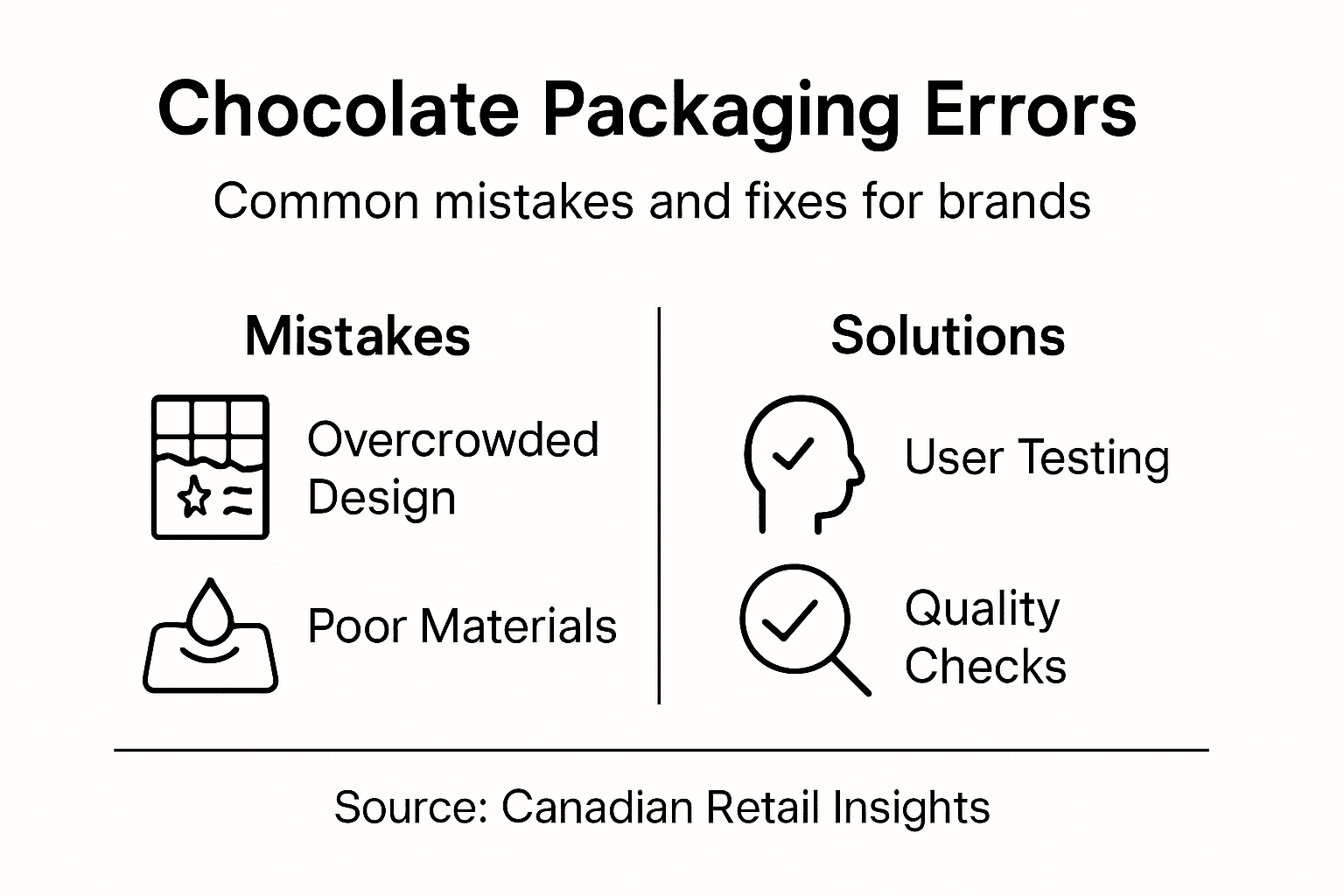
One of the most pervasive mistakes is over-complicating design in an attempt to communicate everything about your product on the package. You’ve got your logo, tagline, ingredient list, nutrition facts, allergen warnings, certifications, awards, website, social media handles, and testimonials. You try to fit it all on limited space, resulting in packaging that looks cluttered and confusing. Shoppers spend three seconds deciding whether to pick up your package. Competing visual elements steal attention from your core message. Chocolate packaging mistakes often stem from poor differentiation and over-complicated design that dilutes brand identity instead of strengthening it. The fix is brutal simplification. Your primary message should be immediately obvious. Product name, key benefit, and imagery that makes customers want to buy it. Everything else serves secondary purposes and shouldn’t compete for attention. Another critical mistake is ignoring your actual target customer during design. You design packaging that appeals to you and your team, but your customer wants something different. A premium chocolate bar needs sophisticated, elegant design. A fun, affordable option needs playful, approachable design. Misalignment between packaging personality and product positioning sends mixed messages. Customers perceive quality chocolate in elegant packaging. That same design applied to budget-friendly chocolate looks pretentious and confusing.
Material and cost cutting often create subtle but devastating mistakes. You choose cheaper packaging to improve margins, but the material feels flimsy or doesn’t protect the product adequately. Chocolate looks great on the shelf but arrives at customers’ homes damaged or melted. One damaged delivery ruins brand loyalty. You skip printing quality to save money, resulting in colors that look dull or text that appears blurry. These quality compromises signal to customers that your product itself might be lower quality, even if the chocolate is excellent. Packaging mistakes frequently involve neglecting consumer expectations around product protection and presentation aesthetics. Another mistake involves inadequate information hierarchy. Required information gets the same visual weight as nice-to-have details. Your nutrition facts table competes with your brand name for prominence. Ingredient lists appear in tiny font that customers can’t read without glasses. The fix involves clear hierarchy: brand name largest, key selling points next, regulatory information appropriately sized but visually separated, supporting details smallest. Information should guide the eye naturally without overwhelming.
Testing failures represent perhaps the costliest category of mistakes. You design packaging in a digital environment with perfect lighting and optimal viewing conditions. You approve the design based on screen mockups. Production starts. The packaging arrives and suddenly problems emerge: colors that look different under retail lighting, text that’s harder to read than anticipated, a design element that causes confusion, or materials that performed worse than expected during shipping and handling. These discoveries after 50,000 units have been produced are catastrophically expensive. The solution involves testing actual printed samples on actual retail shelves under actual retail lighting before committing to production. Watch real customers interact with your packaging. Do they understand what the product is? Can they find the information they’re looking for? Do they perceive quality and premium positioning? Their behavior reveals problems that your internal team never notices. When offering co-packing services, these testing phases become your responsibility as the manufacturer. Your reputation depends on catching mistakes before production scales.
Use this summary to avoid top chocolate packaging mistakes and their consequences:
| Mistake Type | Example Error | Resulting Issue | Long-Term Effect |
|---|---|---|---|
| Over-complication | Crowded design, too much info | Confuses shoppers | Lower sales, weak brand recall |
| Wrong Target Fit | Luxury look for budget product | Mismatched expectations | Mixed brand perception, lost sales |
| Poor Materials | Flimsy wrapper, dull print | Product damage, low quality feel | Returns, damaged reputation |
| Inadequate Testing | No real-store trials | Issues missed before rollout | High costs to fix post-launch |
Pro tip: Before approving final packaging designs, create a small production batch of 500-1,000 units, place them on actual retail shelves alongside competitor products for at least two weeks, and observe customer interaction and purchasing behavior without telling them you’re testing, which reveals real-world performance that design mockups never capture.
Elevate Your Chocolate Brand Packaging with Proven Solutions
Struggling to create packaging that not only protects your product but also connects emotionally with Canadian consumers and drives retail success Understand the challenge of balancing quality materials, strategic design, and compliance All while meeting sustainability goals and standing out on crowded shelves Space Man offers tailored private labeling and co-packing services that help you master this complex puzzle Your chocolate deserves packaging that captures attention and builds loyalty without breaking your budget
Explore our Wholesale Freeze Dried Candy & Treats to see how premium packaging meets exceptional product quality Partner with a trusted Canadian freeze dried candy manufacturer and distributor committed to your brand’s packaging excellence Visit Space Man now to get started and discover how our innovative packaging, co-packing, and bagging services translate your packaging vision into reality Don’t wait to transform your retail presence—connect with us today and make your chocolate brand packaging a powerful driver of sales
Frequently Asked Questions
What is the importance of chocolate brand packaging?
Chocolate brand packaging serves as a silent salesperson that protects the product, communicates the brand’s story, and influences consumer purchasing decisions.
How can I choose the right materials for chocolate packaging?
When selecting materials, consider factors like barrier properties, sustainability, cost, and aesthetic appeal. Materials such as paperboard, flexible plastics, and aluminum foil each have distinct advantages depending on your product’s needs.
What are common mistakes to avoid in chocolate packaging design?
Common mistakes include overcrowding the design with too much information, failing to align with target customer expectations, and skipping real-world testing before production to catch potential issues.
How can sustainable packaging impact my chocolate brand?
Sustainable packaging not only meets consumer demand for eco-friendly practices but can also serve as a competitive differentiator, potentially attracting customers willing to pay more for brands committed to environmental responsibility.