

Your staff can make or break freeze-dried candy sales. When a customer picks up a bag and asks “what makes this different?” a shrug or a vague answer kills the sale instantly. Most retail teams aren’t lazy — they just haven’t been given the right tools to sell a product that’s genuinely unfamiliar to most shoppers. This guide walks you through a practical, step-by-step training approach built specifically for Canadian retail operations, so your team can confidently describe, demo, and upsell freeze-dried candy every single shift.
Table of Contents
- Why training matters for freeze-dried candy sales
- Essential requirements for effective team candy training
- Step-by-step training process for retail teams
- Common mistakes and troubleshooting in candy team training
- Measuring success: What to expect from great candy training
- Empower your retail team with Spaceman solutions
- Frequently asked questions
Key Takeaways
| Point | Details |
|---|---|
| Staff knowledge drives sales | Teams who can explain and demo freeze-dried candy sell significantly more per customer. |
| Regulatory training is mandatory | Every Canadian retailer must train staff to meet hygiene and food safety rules. |
| Ongoing refreshers matter | Quick, regular micro-training keeps teams sharp and engaged, even with high turnover. |
| Track results for improvement | Measuring customer feedback and employee performance makes your training more effective. |
Why training matters for freeze-dried candy sales
Freeze-dried candy isn’t just another SKU on the shelf. It’s a product category that’s exploded thanks to social media, with customers actively seeking it out after seeing viral videos of the crunchy, airy textures. But that buzz only converts to sales when your team knows how to channel it.
The challenge is that most customers still don’t fully understand what freeze-drying does to candy. They see a bag of what looks like regular gummies or Skittles and wonder why it costs more. Without a trained team member to bridge that gap, you lose the sale. Worse, you lose the repeat visit.
Here’s what strong training actually delivers:
- Confident product descriptions that answer the “why is this different?” question before customers even ask
- Hands-on sampling that converts curious browsers into buyers
- Upselling and cross-selling that increases average transaction value
- Visual merchandising skills that make your display work harder (check out these candy display best practices for layout ideas)
Stat callout: Bulk candy margins typically run 60–75%, while packaged candy sits at 45–50%. Trained teams reliably capture more of that margin through upselling, cross-selling, and smart product sampling.
The bottom line is simple. A trained team doesn’t just sell more — it builds the kind of customer experience that earns five-star reviews and repeat business.
Essential requirements for effective team candy training
Before you run a single training session, you need a solid foundation. Jumping straight into demos without the right materials and compliance knowledge creates gaps that come back to bite you.
Regulatory compliance comes first. In Canada, food safety training requirements under the Safe Food for Canadians Regulations (SFCR) are mandatory. Specifically, SFCR Sections 75–81 cover staff hygiene, competency, sanitation, pest control, and preventive controls. Every team member handling or sampling freeze-dried candy must meet these standards.
Product knowledge is your second pillar. Your team needs to understand:
- Ingredients and allergen information for each SKU
- Flavor profiles and texture differences between products
- Proper storage conditions and shelf life
- What the freeze-drying process actually does (in plain, customer-friendly language)
Review the freeze-dried candy requirements to build accurate product knowledge sheets for your team.
Here’s a quick comparison of training readiness levels:
| Training element | Not ready | Ready |
|---|---|---|
| Regulatory compliance | No SFCR review | SFCR Sections 75–81 covered |
| Product knowledge | Generic candy info | Freeze-dried specific facts |
| Training materials | Verbal only | Checklists, demos, digital tools |
| Scheduling | Ad hoc | Micro-sessions + periodic reviews |
| Supply chain awareness | Unknown | Reviewed candy supply guidance |
Pro Tip: Build a one-page product cheat sheet for each freeze-dried candy SKU you carry. Include flavor notes, texture description, allergen info, and one customer-friendly selling line. Laminate it and keep it at the register.
Once your prerequisites are in place, you can roll out the actual training process.
Step-by-step training process for retail teams
A structured process beats a one-time info dump every time. Here’s how to build a training flow that sticks.
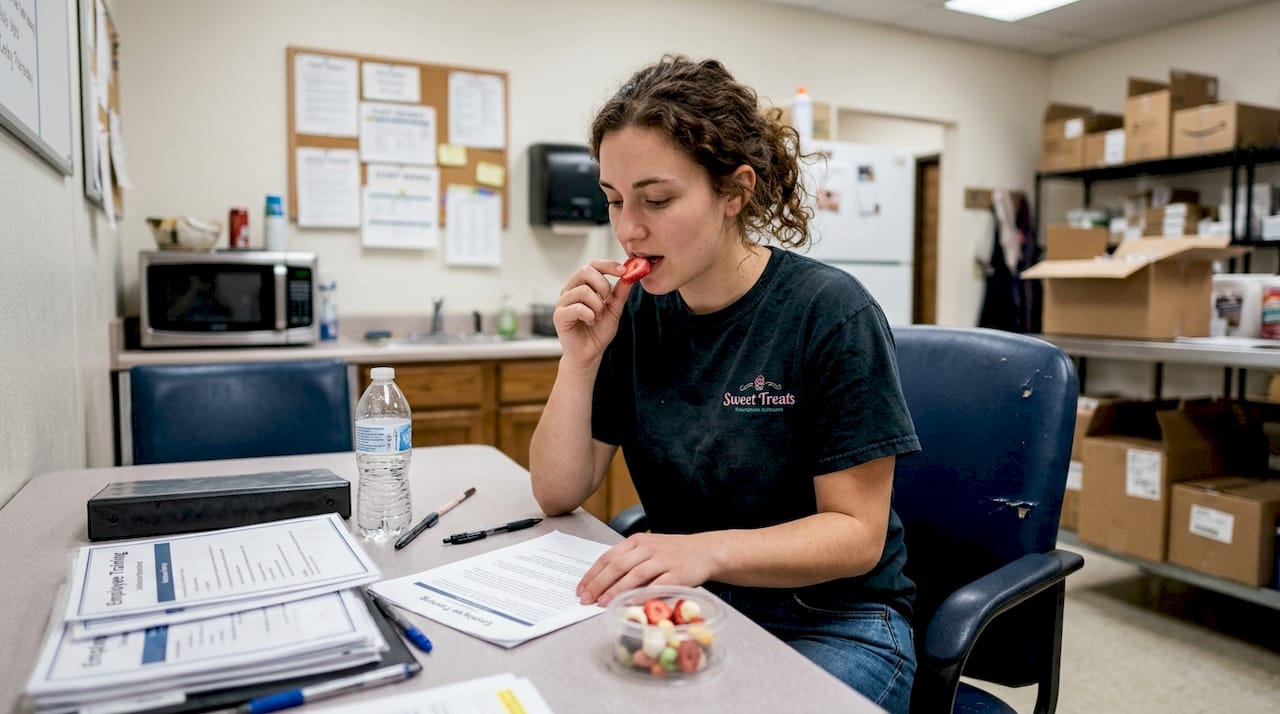
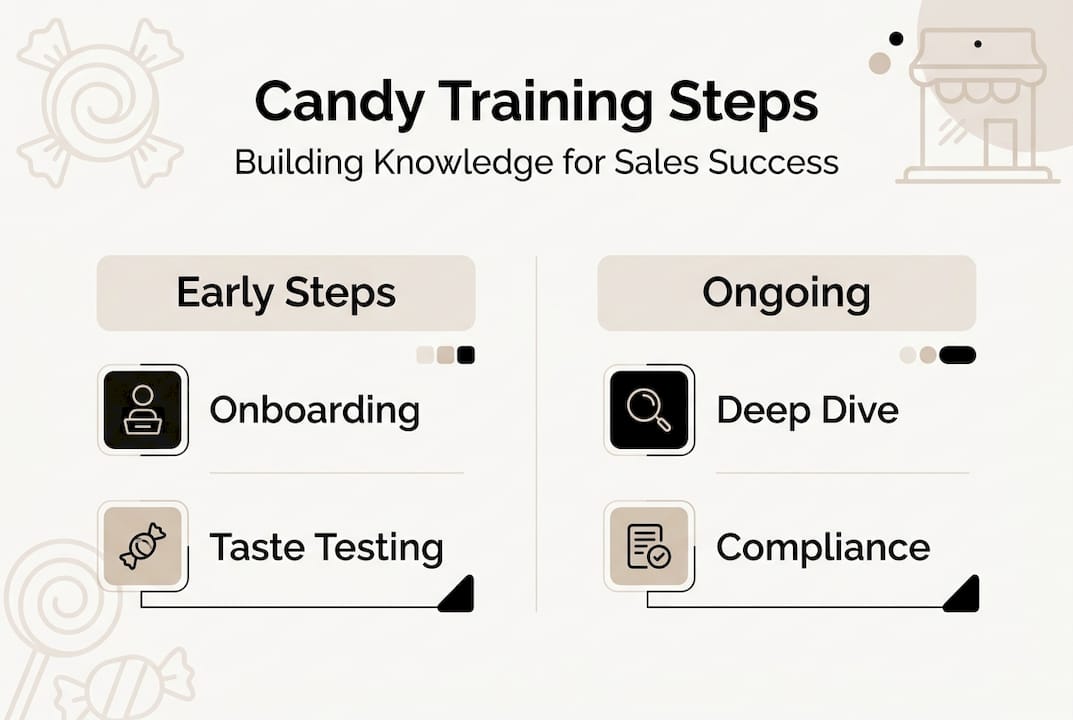
1. Onboarding session (Day 1) Cover product details, store policies, and your sales approach. New staff should taste every freeze-dried product you carry. You can’t sell what you haven’t experienced.
2. Product education deep dive (Week 1) Go beyond the basics. Teach staff how freeze-drying changes texture, intensifies flavor, and extends shelf life. Give them language to use with customers: “It’s like the flavor got turned up to 11 — same candy, completely different experience.”
3. Sales demo practice (Week 1–2) Role-play customer interactions. One staff member plays a skeptical shopper, another plays the associate. Practice answering: “Why is this more expensive?” and “What does it taste like?” Use candy sales tips to build realistic scripts.
4. Compliance reinforcement (Ongoing) Review hygiene and food handling rules monthly. This isn’t optional — it’s a legal requirement under SFCR. Keep a log of who completed each refresher. Check the food safety guidelines for a refresher on what to cover.
5. Micro-training huddles (Weekly) Ten minutes before a shift. Cover one product, one selling technique, or one customer scenario. Short and focused beats long and forgotten.
6. Incentive milestones Set weekly or monthly sales targets for freeze-dried candy specifically. Recognize top performers publicly. Small rewards drive big behavior changes.
“Key training mechanics for candy retail include onboarding, role-playing, regular micro-training, sales incentives, and digital tools — all working together to build a high-performing team.”
Training phase timeline:
| Phase | Timing | Focus area |
|---|---|---|
| Onboarding | Day 1 | Products, policies, tasting |
| Product deep dive | Week 1 | Flavor, texture, selling language |
| Demo practice | Weeks 1–2 | Role-play, objection handling |
| Compliance review | Monthly | SFCR hygiene and food handling |
| Micro-training | Weekly | One topic per session |
| Performance review | Quarterly | Sales data, feedback, adjustments |
Pro Tip: For multi-location operations, use a shared digital checklist platform so every store follows the same training steps. Consistency across locations protects your brand and your compliance record. Review wholesale supply tips to align your training with your inventory flow.
While following the process, steer clear of common training mistakes for best results.
Common mistakes and troubleshooting in candy team training
Even well-intentioned training programs fall apart in predictable ways. Knowing the pitfalls ahead of time saves you from learning them the hard way.
The most common mistakes retail managers make:
- Skipping taste demos entirely. If your team hasn’t tasted the product, they can’t describe it authentically. Customers sense hesitation immediately.
- Treating training as a one-time event. A single onboarding session fades fast. Ongoing refreshers and compliance checks are critical, especially with high staff turnover.
- Ignoring viral and seasonal trends. Freeze-dried candy trends move fast. A flavor that’s blowing up on social media this week needs to be in your team’s talking points by next week.
- No scalable system for new hires. If your training lives in one manager’s head, every new hire gets a different experience. That inconsistency shows up in your sales numbers.
- Forgetting to gather team feedback. Your staff are on the floor every day. They know what questions customers ask and what objections come up. Not using that intel is a missed opportunity.
“High-turnover retail environments need digital training tools and scheduled refreshers to maintain consistency — verbal training alone doesn’t scale.”
Pro Tip: If you’re offering private label candy options, make sure your team understands the brand story behind your private label products. Customers respond to authenticity, and staff who know the “why” behind a product sell it with more conviction.
Troubleshooting is straightforward once you build feedback loops. Run a short survey with your team every quarter. Ask what product questions they struggle to answer and what customer objections they hear most. Then update your training materials to address those gaps directly.
As you avoid these risks and optimize your training, you’ll soon see specific, measurable improvements.
Measuring success: What to expect from great candy training
Training without measurement is just hope. You need numbers to know if your investment is paying off.
Key metrics to track after training:
- Sales per team member: Compare individual sales data before and after training. Look for upward trends in freeze-dried candy specifically.
- Average transaction value: Are customers buying more per visit? Upselling and cross-selling should move this number up.
- Customer return rate: Repeat visits signal a positive experience. Track this through loyalty programs or POS data.
- Conversion rate on demos: How many customers who sample a product end up buying? This tells you how effective your demo technique is.
- Customer feedback scores: Monitor reviews and in-store feedback for mentions of staff knowledge and helpfulness.
Candy retailers report consistent sales growth and stronger customer engagement after implementing focused training programs. The results aren’t instant, but they’re reliable.
Benchmarks to aim for:
| Metric | Baseline | Post-training target |
|---|---|---|
| Bulk candy margin | 45–50% | 60–75% |
| Upsell rate | Under 10% | 20–30% |
| Customer satisfaction score | Average | Above average |
| Demo-to-purchase conversion | Under 20% | 35–50% |
| Staff product knowledge score | Inconsistent | 80%+ on assessments |
For display-specific performance, review these convenience store display tactics to see how placement and signage work alongside your trained team to drive sales.
Realistic expectations matter here. You won’t double sales in a week. But within 60–90 days of consistent training, most retail operations see measurable improvement in both sales numbers and customer satisfaction scores.
Empower your retail team with Spaceman solutions
Your team now has a clear roadmap for training. The next step is making sure they have the right products and tools to put that training into action every day.
At Spaceman, we supply Canadian retailers with premium freeze-dried candy products designed to sell. Our 72 bag display rack gives your team a ready-made merchandising tool that makes demos and upselling effortless. Stock it with our freeze-dried candy bundles to give customers a clear value option that’s easy to recommend. If you want to build your own brand around these products, our private label candy options let you put your store’s name on a product your team can sell with pride. Reach out to us and let’s build your retail training toolkit together.
Frequently asked questions
How can I train staff quickly on freeze-dried candy features?
Focus on micro-training sessions and hands-on taste demos. Ten minutes per shift covering one product or one selling point builds confidence faster than a single long session.
Are there special regulatory rules for freeze-dried candy in Canada?
Yes. Retail teams must meet hygiene, competency, and food safety standards under SFCR Sections 75–81, including sanitation, pest control, and preventive controls training.
What ongoing training works best for high-turnover candy store teams?
Digital checklists and scheduled refreshers are most effective. They ensure every new hire gets the same training experience regardless of who’s managing the floor that day.
Does staff training really increase freeze-dried candy sales?
Yes. Well-trained staff drive higher upsells, stronger customer engagement, and can improve sales margins by 10–30% through consistent demos and product recommendations.
Recommended
- Retail pricing strategies for freeze-dried candy 2026 – Spaceman
- Candy Distribution Canada: Boost Margins 50% Freeze-Dried – Spaceman
- Top Freeze Dried Candy Benefits for Retailers and Shops – Spaceman
- Freeze-Dried Candy Distribution: What to Know Before You Jump In – Spaceman
- Barista Training Courses Devon Somerset | SCA Certified | Wholesale