

Running a Canadian candy shop means constantly seeking new ways to surprise your customers and stand out from competitors. Freeze-dried snacks have exploded in popularity for their intense flavors and crispy texture, but entering this market brings real questions about equipment, preparation, and process. This guide gives you practical steps and expert insights to help you confidently expand into freeze-dried candy production while picking the right machines and production methods for your shop.
Table of Contents
- Step 1: Choose The Right Freeze Dryer For Your Needs
- Step 2: Prepare Food Items For Optimal Freeze Drying
- Step 3: Set Up And Operate The Freeze Drying Equipment
- Step 4: Monitor And Verify The Freeze Drying Process
- Step 5: Package And Store Freeze-Dried Products Safely
Quick Summary
| Key Point | Explanation |
|---|---|
| 1. Choose the Right Equipment | Assess batch size, temperature control, and compatibility with candy types to select an appropriate freeze dryer for your shop. |
| 2. Prepare Ingredients Properly | Select fresh ingredients, cut uniformly, and consider pre-treatments like blanching to ensure high-quality freeze-dried results. |
| 3. Master Equipment Operation | Execute freeze drying in three phases, ensuring uniform placement and monitoring for precise temperature control to maintain candy integrity. |
| 4. Monitor Quality Throughout | Implement real-time monitoring of temperature and pressure to detect issues and ensure your candy meets quality standards. |
| 5. Focus on Packaging and Storage | Use airtight packaging methods like Mylar bags and store in cool, dark conditions to enhance shelf life and maintain product quality. |
Step 1: Choose the Right Freeze Dryer for Your Needs
Selecting the appropriate freeze dryer for your candy shop requires careful consideration of several critical factors. Understanding your specific business needs will help you make an informed equipment investment that supports your production goals.
When evaluating freeze dryers, you need to assess multiple variables beyond just price. Commercial candy producers must consider batch size, temperature precision, and compatibility with different candy types. Freeze dryer machines vary significantly between compact countertop models designed for hobbyists and larger industrial units meant for high volume production. Your selection should align with your anticipated production volume and product diversity.
Practical considerations include vacuum sealing capabilities, automated cycle options, and heat sensitivity management for delicate candies. Budget plays a significant role too. Smaller shops might start with compact units that offer flexibility, while established businesses can invest in larger commercial models with advanced features. Consider factors like electrical requirements, maintenance costs, and potential future expansion when making your choice.
Here’s a summary of freeze dryer types and their suitability for candy production:
| Model Type | Batch Size | Ideal For | Key Business Benefit |
|---|---|---|---|
| Compact Countertop | 1-5 lbs | Small shops, beginners | Lower investment, flexible use |
| Mid-Size Commercial | 5-30 lbs | Growing candy shops | Scalability, expanded capacities |
| Industrial Units | 30+ lbs | Large, high-volume producers | Maximum throughput, advanced features |
Pro tip: Always request equipment demonstrations and product testing samples before finalizing your freeze dryer purchase to ensure optimal performance with your specific candy recipes.
Step 2: Prepare Food Items for Optimal Freeze Drying
Preparing food items for freeze drying is a critical step that determines the quality and taste of your final candy product. By understanding the right techniques, you can ensure your candies retain their flavor, color, and nutritional value through the freeze drying process.
Start by selecting high quality fresh ingredients and performing careful food preparation techniques. This involves washing produce thoroughly, removing any bruised or damaged areas, and cutting items into uniform pieces approximately 1/4 to 1/2 inch thick. Uniform sizing helps guarantee consistent moisture removal and drying. Small whole fruits like blueberries can be freeze dried intact, but remember to pierce their skins to facilitate proper moisture extraction.
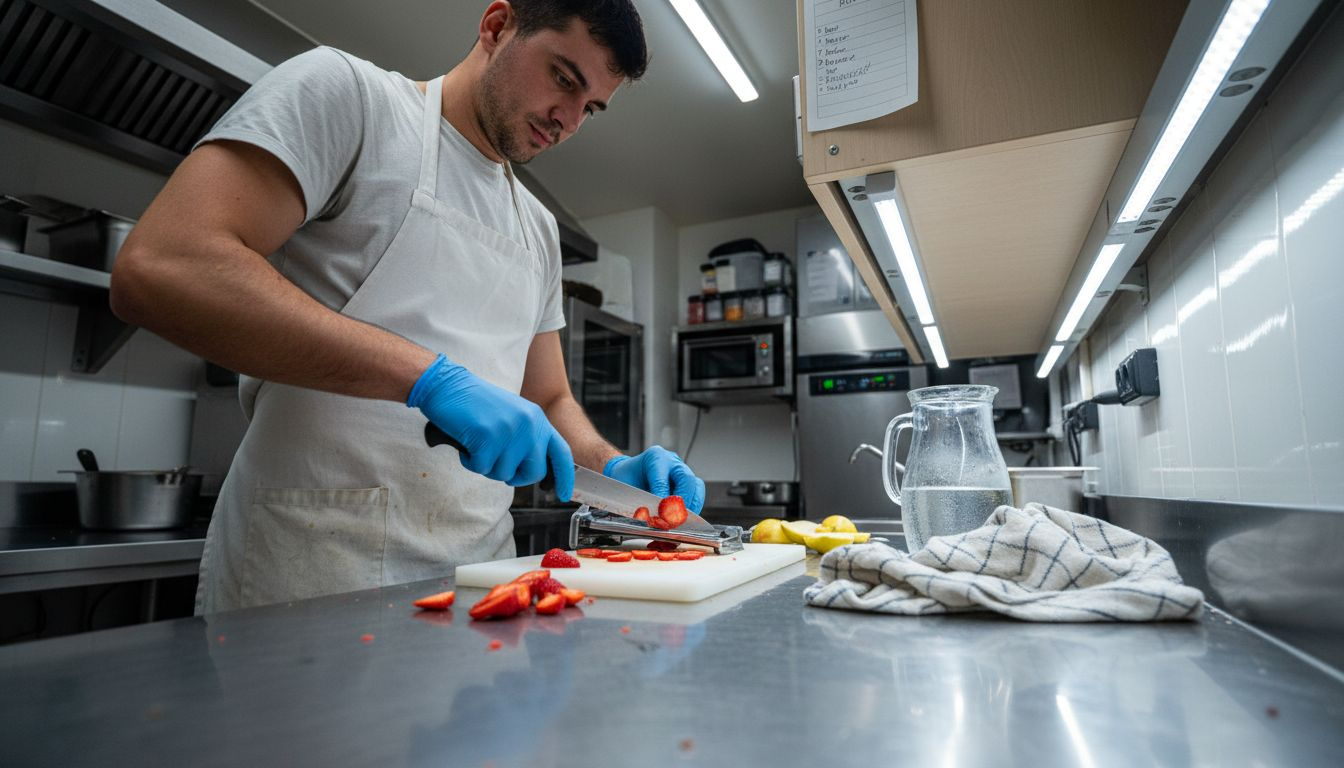
The physical properties of your ingredients play a significant role in freeze drying success. Consider pre-treatment steps such as blanching to inactivate enzymes and preserve color and nutrients. Temperature management is crucial for stabilizing food structure and preventing biochemical deterioration. Your goal is to create a consistent product that will transform beautifully into crispy, flavorful freeze dried candy pieces that retain their original taste and nutritional profile.
Pro tip: Invest in a sharp mandoline slicer to ensure precise and uniform food item sizing for more consistent freeze drying results.
Step 3: Set Up and Operate the Freeze Drying Equipment
Mastering the freeze drying process requires understanding the precise equipment operation and technical nuances that transform your candy ingredients into crispy, flavorful treats. Your success depends on carefully executing each stage of the freeze drying cycle with precision and attention to detail.
Freeze drying candy involves three critical phases, beginning with an initial freezing stage that solidifies water content at extremely low temperatures. Arrange your candy pieces evenly across drying trays, ensuring they do not touch or overlap to guarantee uniform moisture removal. The vacuum chamber creates low pressure conditions that enable direct sublimation of ice into vapor, a transformative process that preserves your candy’s original flavor and structural integrity.
The entire freeze drying cycle typically spans 24 to 48 hours, depending on your specific candy type and machine settings. Monitor your equipment closely during the heating phase, which carefully sublimates remaining moisture without compromising the delicate structure of your candies. Precise temperature control and patience are key to achieving that perfect crisp texture and intense flavor concentration that makes freeze dried candies so unique and appealing to customers.
Pro tip: Create a detailed log tracking each batch’s specific settings, drying times, and results to develop a consistent and repeatable freeze drying process for your candy production.
Step 4: Monitor and Verify the Freeze Drying Process
Ensuring the highest quality in your freeze dried candy production requires meticulous monitoring and precise verification of each processing stage. Your ability to consistently produce excellent products depends on understanding and implementing robust quality control techniques.
Real-time monitoring using advanced spectroscopy techniques helps detect potential process faults and verify critical quality parameters. Temperature and pressure sensors play a crucial role in controlling freeze drying conditions, preventing issues like melting or over-drying that could compromise your candy’s texture and flavor. Pay close attention to residual moisture content, as this directly impacts the final product’s quality and shelf stability.
Careful calibration of monitoring equipment is essential for accurate results. Track key metrics such as product temperature, vacuum levels, and drying duration throughout the entire cycle. By maintaining detailed logs and analyzing data from each batch, you can develop a consistent and reliable freeze drying process that minimizes failures and ensures your candy meets the highest quality standards. Remember that precision is the difference between an average product and an exceptional one that will delight your customers.
Pro tip: Invest in a digital data logging system that automatically records temperature and pressure readings to streamline your quality control process and provide a comprehensive record of each production batch.
Step 5: Package and Store Freeze-Dried Products Safely
Safeguarding the quality and longevity of your freeze-dried candy requires strategic packaging and storage techniques that protect against moisture and environmental degradation. Your packaging choices will directly impact the shelf life and customer satisfaction of your final product.
Proper packaging is crucial for maintaining freeze-dried product integrity. Immediately package your warm, completely dry candies to prevent moisture absorption. Mylar bags with impulse sealers provide an exceptional airtight barrier for long-term preservation. Alternatively, mason jars with tight rubber gaskets and oxygen absorbers offer another reliable storage solution. Avoid standard plastic zipper bags, as they cannot maintain the necessary airtight environment and may lead to product spoilage.
Moisture control remains the primary challenge in storing freeze-dried products. Select storage containers that completely block humidity and protect against temperature fluctuations. Opt for cool, dark storage environments and consider adding desiccant packets to absorb any residual moisture. Label each package with production date and recommended consumption timeline to help manage inventory and ensure customers receive the freshest possible product. Regularly inspect your packaging seals and storage conditions to maintain the crisp texture and vibrant flavors that make your freeze-dried candies exceptional.
Here is a comparison of popular packaging methods for freeze-dried candy:
| Packaging Method | Airtight Protection | Shelf Life | Best Use Case |
|---|---|---|---|
| Mylar Bags | Excellent | Up to 2 years | Retail sales, long-term storage |
| Mason Jars | Good | 6-12 months | Gift packs, small batches |
| Plastic Containers | Poor | 1-3 months | Short-term, quick consumption |
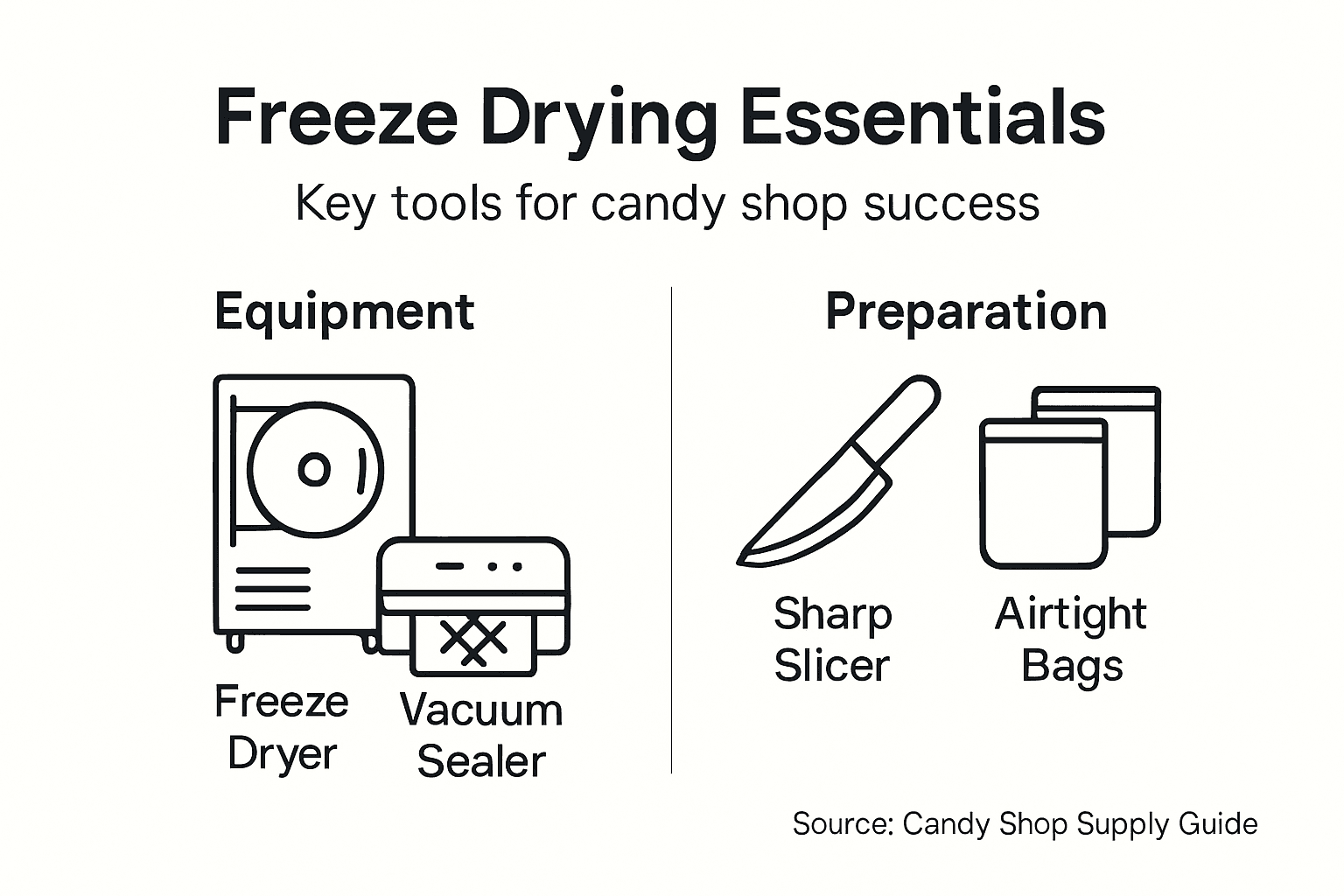
Pro tip: Invest in a professional vacuum sealer with mylar bag compatibility to create the most reliable moisture barrier for your freeze-dried candy products.
Elevate Your Candy Shop with Expert Freeze Drying Solutions
Struggling to find the perfect freeze dryer that matches your candy shop’s unique needs? Whether you are just starting with small batches or scaling to high-volume production, mastering freeze drying requires the right equipment, precise monitoring, and reliable packaging. At Space-Man, we understand these challenges and offer comprehensive support from manufacturing to private labeling and packaging services tailored for Canadian candy producers. Our expertise ensures your freeze dried candy retains amazing flavor, crisp texture, and extended shelf life.

Discover how partnering with a trusted freeze dried candy manufacturer and distributor in Canada can help you overcome technical hurdles like equipment selection, moisture control, and consistent quality assurance. Take advantage of our co-packing and packaging services to streamline your production and impress customers with professionally sealed products. Don’t wait to turn your freeze drying ambitions into reality. Visit Space-Man now and start delivering irresistible freeze dried candies today.
Frequently Asked Questions
What types of freeze dryers are suitable for candy shops?
Compact countertop models are perfect for small shops, while mid-size and industrial units are ideal for larger operations. Assess your batch size and production needs to choose the right type; for example, select a compact unit for 1-5 lbs or an industrial model for 30+ lbs of candy.
How can I prepare food items for optimal freeze drying?
Start by selecting high-quality ingredients and cut them into uniform pieces of about 1/4 to 1/2 inch thick. This ensures consistent drying; for instance, if you use whole fruits like blueberries, pierce their skins to enhance moisture extraction.
What are the critical phases in the freeze drying process?
The freeze drying process consists of three critical phases: freezing, primary drying, and secondary drying. Make sure to arrange candy pieces evenly on drying trays during the initial freezing stage to ensure uniform moisture removal.
How do I monitor the freeze drying process effectively?
Implement real-time monitoring using temperature and pressure sensors to track critical parameters throughout the process. Maintain detailed logs of product temperature and drying duration to refine your technique and improve consistency over time.
What packaging methods will ensure the longevity of freeze-dried candy?
Use Mylar bags or mason jars with tight seals for effective airtight protection, as these options can significantly extend shelf life. For example, Mylar bags can preserve your candy for up to 2 years; ensure to store them in cool, dark locations to maintain quality.
Recommended
- Complete Guide to Machines for Freeze Drying Candy – Spaceman
- What Does a Freeze Dryer Look Like in Candy Production – Spaceman
- What Machine Do You Use to Freeze Dry Candy Effectively – Spaceman
- What Candy Can You Freeze Dry: Complete Guide – Spaceman
- How to Reduce Reuse and Recycle for Foodservice Success – The Ocean Straw