

TL;DR:
- Understanding and tracking margins is essential for profitability in Canadian candy retailing.
- Sourcing locally and consolidating orders helps reduce costs and improve margins.
- Strategic pricing, product mix adjustments, and premium positioning increase profitability for freeze-dried candy.
Running a candy shop in Canada means walking a constant tightrope between what customers will pay and what it costs you to stock the shelves. Margins in specialty candy retail are tighter than most people outside the industry realize, and freeze-dried candy adds a fascinating wrinkle: it commands premium prices, but only if you source and price it correctly. The good news is that with the right product mix, smarter supplier relationships, and deliberate pricing tactics, most Canadian candy retailers have untapped room to grow. This article walks you through exactly how to find that room and use it.
Table of Contents
- Understand your current candy margins
- Optimize your candy product mix
- Source freeze-dried candy efficiently in Canada
- Apply pricing strategies for freeze-dried candy
- A fresh perspective: Why most candy retailers overlook bulk and freeze-dried for margin gains
- Explore Canadian services to elevate your candy margins
- Frequently asked questions
Key Takeaways
| Point | Details |
|---|---|
| Know your margins | Understanding your current gross and net margin benchmarks is critical for improvement. |
| Optimize product mix | Prioritize high-margin items like gift boxes, bulk, and freeze-dried candy to lift overall profitability. |
| Source locally | Leveraging Canadian wholesalers reduces costs and avoids expensive import fees. |
| Premium pricing strategy | Use bundling, upselling, and premium positioning to raise average order value and maximize margins. |
| Leverage expert services | Partner with Canadian packaging and supply chain specialists to further boost your store’s profit. |
Understand your current candy margins
Before you can improve your margins, you need to know what they actually are. A lot of candy shop owners track revenue closely but only check their margins once a quarter or, worse, at tax time. That delay means weeks of margin erosion go unnoticed.
Start with gross margin, which is your revenue minus the cost of goods sold (COGS), expressed as a percentage of revenue. Then look at net margin, which subtracts all operating expenses including rent, labor, utilities, and packaging from that gross figure. Both numbers tell a different story, and you need both to make smart decisions.
Here is what the industry data looks like for reference:
| Product type | Typical gross margin |
|---|---|
| Bulk candy | 60-75% |
| Freeze-dried candy | 55-70% (with efficient sourcing) |
| Packaged/branded candy | 45-50% |
| Overall store average | 45-60% |
Canadian candy retailers typically see gross margins of 45-60%, with net margins landing between 10-25% once expenses are factored in. Bulk candies punch higher at 60-75%, while branded packaged items drag the average down at 45-50%. Understanding where each product category sits in that range is the foundation of any margin improvement plan.
To measure your own margins accurately, pull your sales data by product category for the past 30 days. Divide each category’s gross profit by its revenue. Then compare those numbers to the sweet shop margin benchmarks for your store type. This exercise alone often reveals one or two underperforming categories that deserve immediate attention.
Here are the key data points to track each month:
- Gross margin by product category
- COGS as a percentage of category revenue
- Net margin after fixed and variable expenses
- Average transaction value per customer visit
For more tactical guidance on setting prices that protect these numbers, the internal resource on pricing candy for profit is worth bookmarking. Understanding your baseline is not optional. It is the first real step toward building a more profitable candy business.
Optimize your candy product mix
Once you know where your margins stand, the next move is adjusting what you sell and how you sell it. Not all candy is created equal from a profitability standpoint, and even small shifts in your product mix can create meaningful margin gains.
The biggest opportunity most retailers miss is the gift box and curated mix category. Bundled products allow you to blend high-cost and lower-cost items while pricing the bundle based on perceived value rather than ingredient cost alone. According to profitability research, curated gift boxes can lift gross margin by approximately 2 percentage points when promoted correctly.
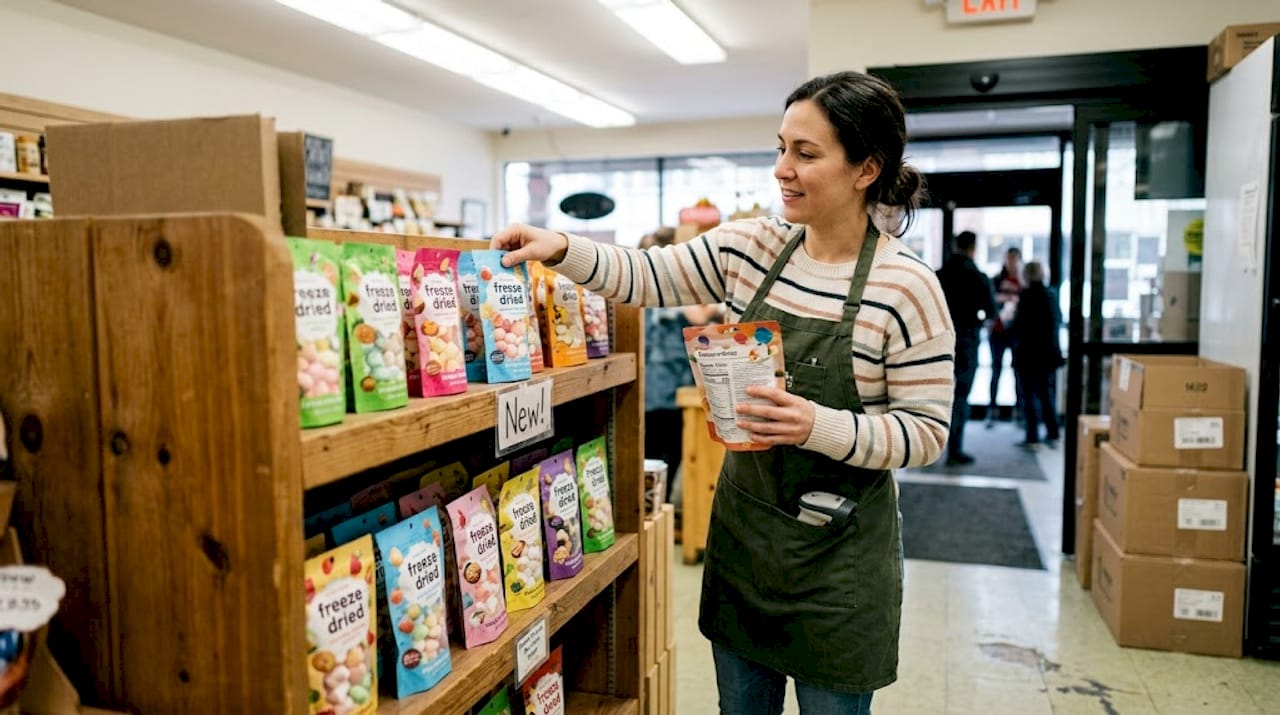
Freeze-dried candy fits naturally into this tier. Its novelty factor, distinctive texture, and trend visibility make it easy to position as a premium product, which means customers accept higher prices. When you add freeze-dried candy options to existing product lines, you create new upsell pathways that raise average order value (AOV) without requiring more traffic.
Here is a quick comparison of how different candy types stack up:
| Category | Avg gross margin | AOV impact | Upsell potential |
|---|---|---|---|
| Freeze-dried candy | 55-70% | High | High |
| Curated gift boxes | 50-65% | High | High |
| Bulk candy by weight | 60-75% | Medium | Medium |
| Branded packaged candy | 45-50% | Low | Low |
For increasing AOV, the research points to upselling from the baseline of $21.85 toward $25 or more per transaction. That gap might sound small, but across dozens of daily transactions it adds up fast. Effective tactics include:
- Pairing freeze-dried candy with branded bags or tins
- Offering a “build your own box” option at a slight premium
- Training staff to suggest one complementary add-on per purchase
- Placing high-margin items at the register for impulse buying
Pro Tip: Position your freeze-dried section near the front of the store and use clear shelf labels that highlight the flavor intensity or novelty of each variety. Customers who engage with a product description are significantly more likely to add it to their purchase.
For a deeper look at how freeze-dried candy trends are shaping consumer buying behavior in Canada, that resource lays out what shoppers are actively looking for right now.
Source freeze-dried candy efficiently in Canada
Your product mix means nothing if your sourcing costs are eating the margin before the product even hits the shelf. Freeze-dried candy is a premium product with a real cost structure behind it, and understanding that structure helps you source smarter.
The freeze-dried candy market is growing at 7.4% CAGR and is projected to reach $3.99 billion by 2034. That growth comes with pricing pressure at the wholesale level. Raw material costs have risen by roughly 25%, and transport costs are up around 30%. The $3.50 per ounce average retail price exists because the supply chain supports it, but only if you are not adding unnecessary import fees or middleman markups on top of that cost structure.
Here is a step-by-step approach to sourcing more efficiently:
- Start with Canadian manufacturers and distributors. Avoiding cross-border shipping eliminates customs fees, currency conversion losses, and unpredictable lead times. This alone can recover 5-10% of your sourcing cost.
- Consolidate your orders. Placing larger, less frequent orders gives you real negotiating leverage. Research on efficient sourcing benchmarks suggests supplier consolidation can reduce COGS by 2 percentage points and save approximately $900 per month for a mid-sized store.
- Request minimum order quantity (MOQ) flexibility. Some Canadian suppliers will work with growing retailers to offer volume pricing before you hit traditional bulk thresholds.
- Audit your current suppliers annually. Pricing agreements made a year ago may not reflect current market conditions. Renegotiate regularly.
Pro Tip: When approaching a new Canadian supplier, come with your monthly volume numbers ready. Suppliers respond to data. Showing that you move 200 bags per month positions you as a serious buyer, not a small-order customer.
Sourcing locally is not just about cutting costs. It is about controlling your margin from the first link in the chain. Every dollar saved on sourcing flows directly to your bottom line without requiring a single extra sale.
For a full breakdown of how to build reliable supply relationships, the guides on wholesale supply chain tips, bulk candy supply chains, and sourcing Canadian candy cover this territory in detail.
Apply pricing strategies for freeze-dried candy
With sourcing dialed in, pricing becomes your most direct lever for capturing margin. Most candy retailers underprice freeze-dried candy because they anchor it against regular candy prices, but these are fundamentally different products with different value propositions.
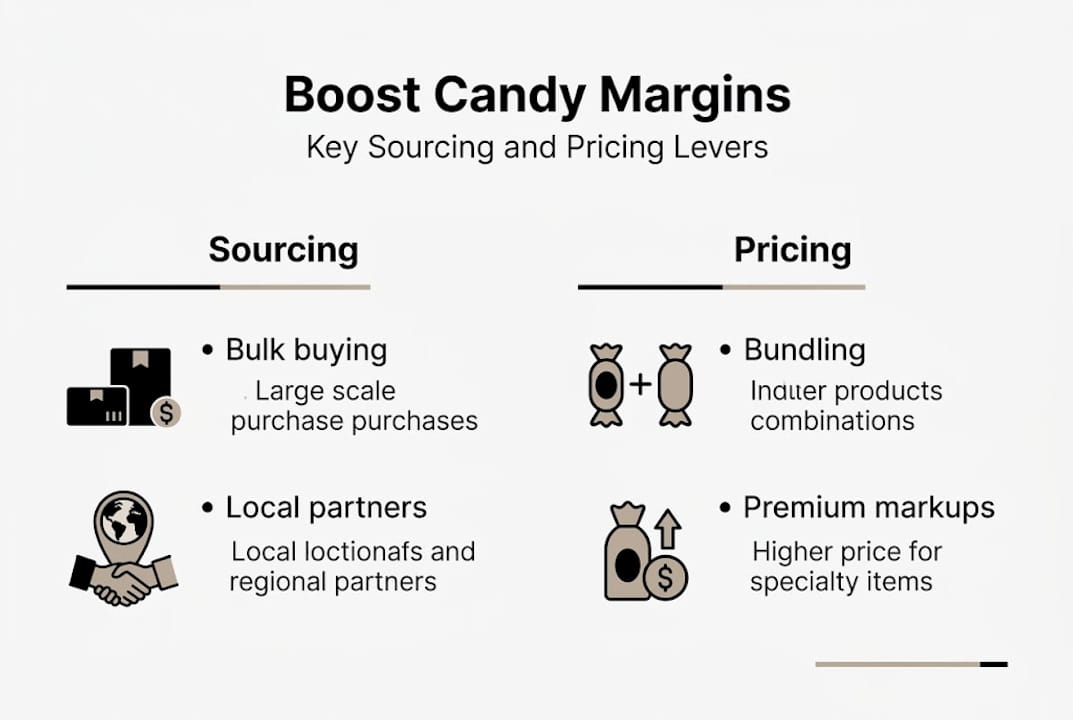
The average retail price sits at $3.50 per ounce for freeze-dried candy, and that price point exists because the market has validated it. Customers who seek out freeze-dried products are not price shopping against gummy bears. They are paying for the experience, the novelty, and the texture. That psychological separation is your pricing advantage.
Here are four steps to set pricing that captures full margin:
- Anchor your pricing visually. Place your premium freeze-dried bags beside higher-priced novelty items, not beside standard packaged candy. Anchoring drives perception of value.
- Price by weight, not by bag. Displaying a per-ounce price alongside the bag price makes the value calculation feel fair and reduces sticker shock on larger bags.
- Use bundles to drive higher ticket sales. A three-flavor sampler priced at $18-22 feels like a deal even if the per-ounce margin is higher than selling each bag individually.
- Layer in seasonal or limited-run pricing. Scarcity and seasonality allow short-term price increases of 10-15% without significant resistance.
The impact of these tactics on your pricing benchmark is real. Upselling customers from a baseline AOV of $21.85 to $25 or more can shift your monthly net margin by several percentage points, depending on your fixed cost base.
Additional tactics worth testing:
- Loyalty rewards that favor high-margin SKUs (stock-keeping units)
- Sample-driven upsells at the register to introduce new flavors
- Tiered pricing on bag sizes that rewards larger purchases
For more on setting prices with intention, the resources on freeze-dried candy pricing and distribution tips for freeze-dried candy both offer practical frameworks built for Canadian retailers.
A fresh perspective: Why most candy retailers overlook bulk and freeze-dried for margin gains
Here is the uncomfortable truth most retail guides skip over: the majority of candy shop owners compete on price when they should be competing on selection and sourcing. Discounting is a margin killer, and it does not build loyalty. It builds price-dependent customers who will leave the moment someone charges ten cents less.
Bulk candy and freeze-dried candy are two categories where the margin math actually works in your favor, but only if you position them correctly and source them from the right partners. Canadian retailers have a structural advantage here. Working with domestic suppliers means you avoid import fees, reduce lead time uncertainty, and build relationships that give you access to better pricing over time.
We have seen store owners pivot from a predominantly branded-packaged product mix to one anchored in bulk and freeze-dried, and the margin improvement is not marginal. It is transformational. The Canadian bulk candy guide and the guide on selecting candy suppliers are where we recommend starting that pivot.
The retailers who win in this market stop asking “how do I sell more?” and start asking “how do I make more on what I already sell?” That mindset shift is everything.
Explore Canadian services to elevate your candy margins
If you are ready to move beyond sourcing basics and build a margin-optimized candy operation, Canadian private label and packaging solutions are worth a serious look.

At Space-Man, we work directly with candy retailers across Canada to supply freeze-dried candy at competitive wholesale pricing, with no import headaches and no border delays. Our private label and co-packing services let you put your own brand on high-margin freeze-dried products, which means higher perceived value and better shelf differentiation. If you want to explore what is available, browse our full Canadian candy product finder to see current inventory. We make it easy to start small and scale up as your margins improve.
Frequently asked questions
What is the typical profit margin for a candy shop in Canada?
Most Canadian candy shops report gross margins of 45-60% and net margins between 10-25% after expenses like rent and labor are factored in.
How can I negotiate better prices with candy suppliers?
Consolidating orders and working with Canadian wholesalers can reduce COGS by 2 percentage points and save roughly $900 per month for a typical mid-sized candy store.
What makes freeze-dried candy a high-margin product?
Freeze-dried candy supports premium retail positioning, with retail averages around $3.50 per ounce due to its novelty and production process, which customers willingly pay for.
How can I avoid costly import fees when sourcing freeze-dried candy?
Partnering with Canadian wholesalers eliminates cross-border fees and currency conversion losses, directly protecting your per-unit margin on every order.
Which pricing strategies work best for freeze-dried candy?
Bundling products and upselling curated mixes can increase AOV from $21.85 to $25+, which compounds across daily transactions and meaningfully improves monthly net margin.