

TL;DR:
- Effective candy displays prioritize visibility, accessibility, and impulse triggers at eye level.
- Modular, dynamic, and themed displays boost sales, engagement, and adaptability for seasonal changes.
- Over-sized and themed endcap displays create high-impact moments that significantly increase sales velocity.
Candy retailers across Canada know the feeling: you’ve stocked great product, arranged everything neatly, and customers still walk past without stopping. The problem isn’t your candy. It’s your display. Impulse purchases drive a massive portion of candy revenue, and the difference between a shopper grabbing a bag and walking away often comes down to how your display looks, feels, and invites interaction. This guide breaks down the criteria, strategies, and real-world tactics behind displays that actually move product, so you can stop guessing and start selling more.
Table of Contents
- Key criteria for standout candy displays
- Top 5 innovative candy display ideas to try
- Modular and dynamic displays: Space-saving and flexible
- Themed, oversized, and endcap displays: Maximum impact moments
- Quick comparisons: Which display works best for your goals?
- A fresh perspective: Rethinking store displays in 2026
- Ready to upgrade? Get supplies and inspiration
- Frequently asked questions
Key Takeaways
| Point | Details |
|---|---|
| Strategic placement works | Positioning candy at eye and hand level significantly boosts impulse buying. |
| Modular displays save time | Mobile and flexible display systems adapt quickly to seasons and reduce staff labor. |
| Themed props drive attention | Oversized and themed displays can triple sales during product launches or holidays. |
| Interactivity engages customers | Interactive display elements keep shoppers engaged and encourage unplanned purchases. |
| Choose displays for your goals | Compare types, costs, and engagement to pick the right display for your store’s needs. |
Key criteria for standout candy displays
Before you rearrange a single shelf, it helps to understand what separates a high-performing candy display from one that blends into the background. Most underperforming displays share the same problems: poor visibility, awkward placement, and no clear invitation to touch or buy.
The fundamentals come down to three pillars: visibility, accessibility, and impulse triggers. Eye-level placement between 48 and 66 inches drives the most engagement, and 51% of single-serve candy purchases are impulse buys. That stat alone should shape how you think about shelf height. If your bestsellers are sitting at ankle level, you’re leaving money on the floor.
Here’s what a strong candy display gets right:
- Vertical space: Use tiered risers and tall shelving to draw the eye upward and create visual interest at multiple heights.
- Lighting: Under-shelf LED strips or spotlights highlight color and texture, making candy look fresher and more appealing.
- Mobility: Displays on wheels or with modular components let your team reconfigure the floor quickly for seasonal changes or new launches.
- Interactivity: Scoop stations, rotating towers, and open bins invite customers to handle product, which dramatically increases the chance of a purchase.
- Photogenic design: Instagrammable setups generate free social media exposure and bring customers back.
For more eye-catching candy display tips, the setup details matter as much as the product itself.
Pro Tip: Skip the perfectly neat stacks. Slightly “jumbled” or loosely arranged displays signal that other shoppers have already been picking through the product, which makes new customers feel comfortable grabbing items without guilt. It’s a small psychological shift that drives real engagement.
Top 5 innovative candy display ideas to try
With those criteria as your filter, here are five display approaches that consistently outperform standard shelf setups.
- Tiered shelving: Stacking product at multiple heights creates visual depth and ensures more SKUs stay in the customer’s line of sight. It also makes restocking easier since each tier is independently accessible.
- Color-blocked and themed arrangements: Grouping candy by color or theme creates an Instagrammable moment and helps customers navigate quickly. A rainbow wall of gummies or a seasonal Halloween cluster stops people mid-aisle.
- Clear acrylic bins and scoop stations: These add a tactile, interactive element that standard bags can’t match. Customers love the experience, and store display effectiveness data consistently shows that touching a product dramatically increases purchase likelihood.
- Dynamic lighting: LED strips under shelves or focused spotlights on featured products guide customer attention exactly where you want it. Warm lighting makes colors pop and creates a premium feel.
- Rotating towers and interactive elements: A spinning display tower or a self-serve scoop station increases dwell time, which is the amount of time a customer spends near your display. More dwell time equals more impulse grabs.
According to creative candy design research, tiered shelving, color-blocked arrangements, clear acrylic bins, interactive scoop stations, and lighting-enhanced displays are among the most effective mechanics for candy presentation.
Pro Tip: Position your bestsellers at eye and hand level. That single adjustment can maximize candy display sales by up to 30% without changing a single product.
Stat callout: Placing high-margin candy at eye level (48 to 66 inches) combined with interactive elements can drive impulse purchases for over half of all single-serve candy shoppers.
Modular and dynamic displays: Space-saving and flexible
Static shelving made sense when stores carried the same products year-round. In 2026, seasonal drops, limited-edition flavors, and trend-driven launches mean your display setup needs to move as fast as your inventory does.
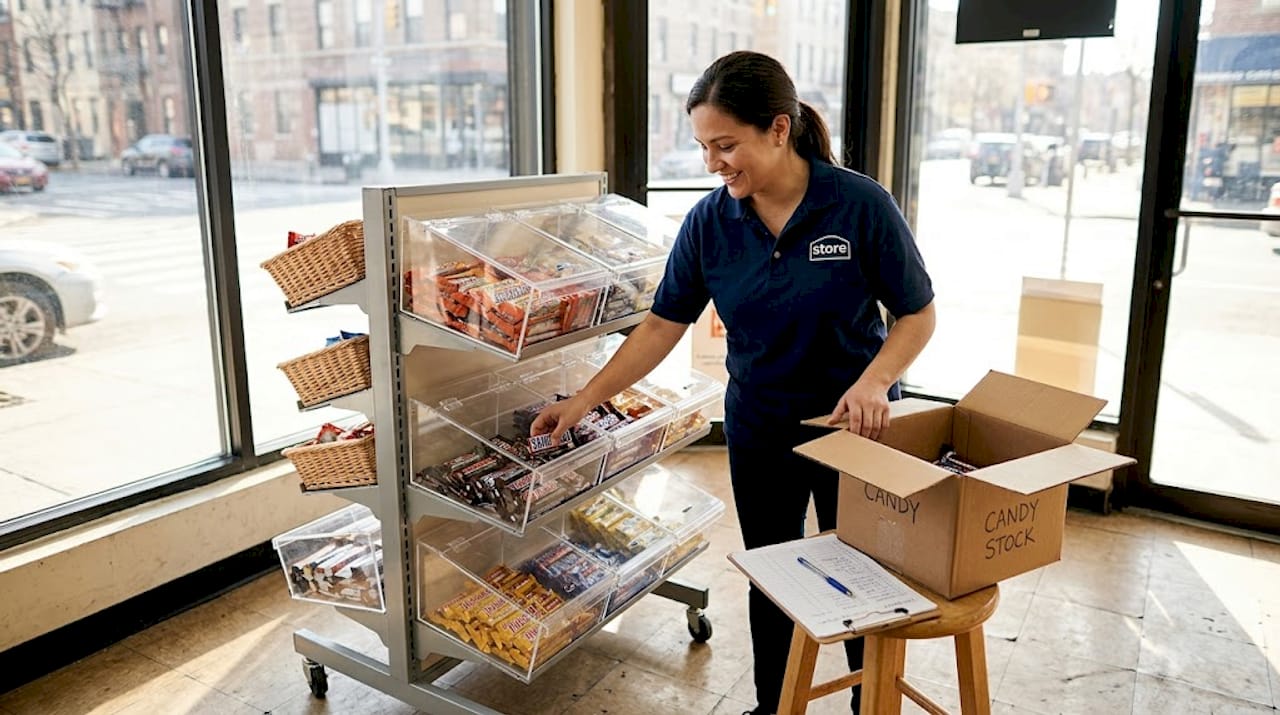
Modular and dynamic displays give you that flexibility. Convenience store displays built on modular frames can be reconfigured in minutes, letting your team respond to a new product launch or a holiday without calling in extra help.
Here’s what makes modular setups worth the investment:
- Rolling displays can be repositioned to follow foot traffic patterns or highlight a new product near the entrance.
- Rotating trays and towers eliminate dead zones by ensuring every side of the display gets customer-facing exposure.
- Spring-loaded pusher systems like the WonderBar automatically push product forward as items are removed, keeping shelves looking full with minimal staff effort. These systems increase SKU density by 15 to 35% in bagged candy while also reducing labor and minimizing product loss.
- Lightweight materials make it easy for a single staff member to reconfigure an entire section.
Retail display strategies that use modular candy formats also pair well with dynamic displays, since consistent product sizing makes restocking and facing much faster.
“A 15 to 35% uptick in SKUs and major labor savings, all from one modular setup.”
For smaller stores, creative candy display ideas that incorporate wheels, rotating towers, and easy restocking reduce labor and adapt to seasons without requiring a full store renovation.
| Display type | Flexibility | Labor required | SKU capacity |
|---|---|---|---|
| Fixed shelving | Low | High | Standard |
| Modular shelving | High | Low | Standard to high |
| Spring-loaded pushers | Medium | Very low | 15 to 35% more |
| Rolling display units | Very high | Low | Varies |
Themed, oversized, and endcap displays: Maximum impact moments
Some of the biggest sales spikes in candy retail history didn’t come from better pricing or more SKUs. They came from displays that stopped people cold and made them pull out their phones.
Themed and oversized displays are exactly that kind of tool. When Hershey launched Shaq-Licious XL Gummies at Walmart, the campaign used giant themed endcaps with floor clings, oversized props, and high-traffic placement to achieve 3x sales velocity, a 5% market share gain, and $1 million in sales within two weeks. That’s the ceiling for what a great display can do.
You don’t need a national budget to apply the same principles. Here’s how to bring this energy into your store:
- Oversized props: A giant lollipop, an oversized candy jar, or a themed backdrop creates a photo opportunity that customers share organically.
- Floor graphics and clings: Direct foot traffic toward your display and reinforce the seasonal or brand story you’re telling.
- Themed bins: Group product by occasion, such as Halloween, Valentine’s Day, or summer, and use props that match the theme.
- Endcap placement: High-traffic endcaps can achieve triple the sales velocity of mid-aisle placements. Treat them as premium real estate.
For penny candy display ideas and budget-friendly themed setups, even simple pick n mix themed baskets can create a curated, gift-ready feel that drives higher average transaction values.
| Display type | Sales impact | Best use case | Update frequency |
|---|---|---|---|
| Standard mid-aisle | Baseline | Everyday staples | Low |
| Themed endcap | Up to 3x velocity | Seasonal launches | Every 4 to 8 weeks |
| Oversized prop display | Very high | New product launches | Per campaign |
| Floor graphic + bin | High | Holiday traffic | Seasonal |
Quick comparisons: Which display works best for your goals?
Every store has different constraints: square footage, staff size, budget, and customer base. The right display isn’t always the flashiest one. It’s the one that fits your operation and delivers consistent ROI.
Use this comparison to narrow down your options:
| Display type | Cost | Labor | Flexibility | Customer engagement |
|---|---|---|---|---|
| Fixed shelving | Low | High | Low | Low |
| Modular shelving | Medium | Low | High | Medium |
| Spring-loaded pushers | Medium | Very low | Medium | Medium |
| Themed or oversized | High | Medium | Low | Very high |
| Rolling or mobile units | Medium | Low | Very high | Medium to high |
As candy display research shows, fixed shelving versus dynamic pushers is a real trade-off: pushers gain space and labor savings but require upfront investment, while themed displays drive engagement but need frequent updates to stay fresh.
Quick recommendations by store size and goal:
- Small stores with limited staff: Start with rolling modular units and spring-loaded pushers for the best ROI with minimal labor.
- Mid-size stores targeting impulse sales: Combine eye-level tiered shelving with LED lighting and at least one interactive scoop station.
- Larger stores or those running seasonal promotions: Invest in themed endcap displays and rotate them every four to eight weeks.
- Stores launching new products: Use oversized props or themed bins at the entrance to create immediate awareness.
For deeper guidance on candy storage solutions that work alongside your display strategy, keeping product fresh and visually appealing is just as important as the fixture itself.
A fresh perspective: Rethinking store displays in 2026
Here’s something most display guides won’t tell you: the stores seeing the strongest repeat traffic in 2026 aren’t the ones with the most elaborate setups. They’re the ones that made their candy shoppable and shareable without overcomplicating the experience.
The obsession with constant “wow moments” can actually work against you. Customers who come in for a themed Halloween display in October and find the same setup in December feel let down. Worse, a complex display that your staff can’t maintain consistently will look worse than a simple one that’s always clean and full.
The real competitive edge comes from three things: products that photograph well, packaging that tells a story, and displays that make grabbing something feel easy and fun. Freeze-dried candy, for example, has a naturally striking visual texture that photographs beautifully and stands out in open bins or clear acrylic displays. Pairing that with custom candy boxes and clean, consistent merchandising creates a return-visit experience that no one-time prop installation can match.
Sustainable flexibility beats theatrical complexity every time.
Ready to upgrade? Get supplies and inspiration
If you’re ready to put these ideas into practice, Spaceman has you covered.
Spaceman Canada supplies Canadian candy retailers with everything needed to build displays that actually sell. From ready-to-go candy display kits stocked with freeze-dried candy to private label services that help your store stand out with branded product, we support your business at every level. Whether you’re refreshing a single endcap or overhauling your entire candy section, visit the Spaceman Canada site to explore wholesale options, display hardware, and packaging solutions built for Canadian retailers.
Frequently asked questions
What type of candy display increases impulse sales the most?
Endcap and eye-level displays between 48 and 66 inches are the strongest drivers, with 51% of single-serve candy purchases being impulse buys triggered by well-placed, visible product.
How can I quickly refresh my store’s candy display for the season?
Modular and mobile displays are your fastest option. Seasonal display swaps using rolling units, rotating towers, and themed props can be completed by one staff member in under an hour.
What is the benefit of using spring-loaded pusher systems in candy displays?
Spring-loaded systems like WonderBar increase SKU capacity by 15 to 35% on bagged candy shelves while cutting the labor needed to keep shelves looking full and organized.
Are themed or oversized displays worth the investment?
For product launches and seasonal peaks, yes. Themed endcap displays have demonstrated up to 3x sales velocity and significant market share gains, making them a strong investment when timed correctly.
Recommended
- Retail Candy Display Strategies to Maximize Sales – Spaceman
- 7 Proven Tips to Maximize Sales in Your Candy Display Store – Spaceman
- Maximize Sales with Effective Store Displays for Candy – Spaceman
- 7 Smart Penny Candy Display Ideas for Retail Success – Spaceman
- How to Boost Ecommerce Sales with Advanced Store Strategies