

TL;DR:
- Producing a genuine Tumi toffee requires a co-packer with a true deposited candy line, FDA registration, and allergen controls. Evaluating equipment, certifications, and sample runs ensures consistent, premium melt texture and safety for U.S. distribution. The process spans several weeks, with attention to packaging, regulatory compliance, and thorough due diligence.
Yes, a Tumi toffee–style product can be produced and co-packed for U.S. distribution — provided the facility runs a true deposited candy line and can hand you FDA registration, allergen control documentation, and a sample stability report before you commit to a full run. The production technique is the non-negotiable: deposited processing is what gives premium milk toffee its signature smooth-melting texture, and no amount of clever formulation compensates for the wrong equipment. Your first move is to request a line sheet and a small sample run from any co-packer you’re evaluating.
Quick checklist before you read further:
- Confirm the facility operates a deposited candy line (not molded or pulled)
- Request FDA facility registration number and GMP/SQF certificate
- Ask for allergen segregation procedures and recent swab results
- Get a sample run before committing to a full MOQ
Table of Contents
- What is deposited candy production, and why does it matter for toffee?
- What production and packaging services should you expect?
- What should you ask when evaluating a co-packer?
- What does a typical co-packing timeline look like?
- What quality and regulatory requirements apply to U.S. distribution?
- Key Takeaways
- A note from the maker’s side
- Space-man’s private-label and co-packing services for U.S. distributors
- Sources and further reading
What is deposited candy production, and why does it matter for toffee?
Deposited production is the method that most reliably delivers the smooth-melting texture buyers expect from a premium milk toffee. It is not a marketing label — practitioners treat it as a technical specification tied to machine type and cooling profile.
Here’s how it works in plain terms: a cooked sugar-and-dairy mass is pumped through a precision depositor head that drops exact volumes into molds, which then travel along a cooling conveyor to set the piece. The result is a consistent shape, a defined melt profile, and a surface finish that pulled or molded toffee simply cannot replicate at scale.
A buyer can verify machine capability by tracing four stages:
- Raw cook: sugar, dairy, and glucose cooked to a precise temperature (a candy thermometer is the minimum; plant equipment uses continuous temperature probes)
- Depositor head: the machine drops measured volumes into molds; ask for the make and model
- Cooling conveyor: controlled ambient or chilled air sets the piece; ask for line speed
- Finishing and packaging: demold, inspect, and transfer to primary packaging
Many precision depositor lines in use today are German-engineered systems. That matters for two reasons: hygienic design (easy-clean contact surfaces) and repeatable run-to-run consistency at scale. A facility running an older, unbranded depositor may still produce acceptable product, but the risk of batch variation goes up.
Pro Tip: On a factory visit or video call, ask the co-packer to show you a short production run video. A good clip will show the depositor head, drop timing, and the cooling conveyor in motion. Written specs are easy to copy-paste; a video reveals actual operating conditions in about 90 seconds.
What production and packaging services should you expect?
A capable co-packer for a Tumi toffee–style product should offer the full stack: formulation support, private-label runs, small sample batches, full co-packing, and bagging or retail display fulfillment. If a facility only does bulk production with no packaging support, you’re adding a second vendor and a second point of failure.
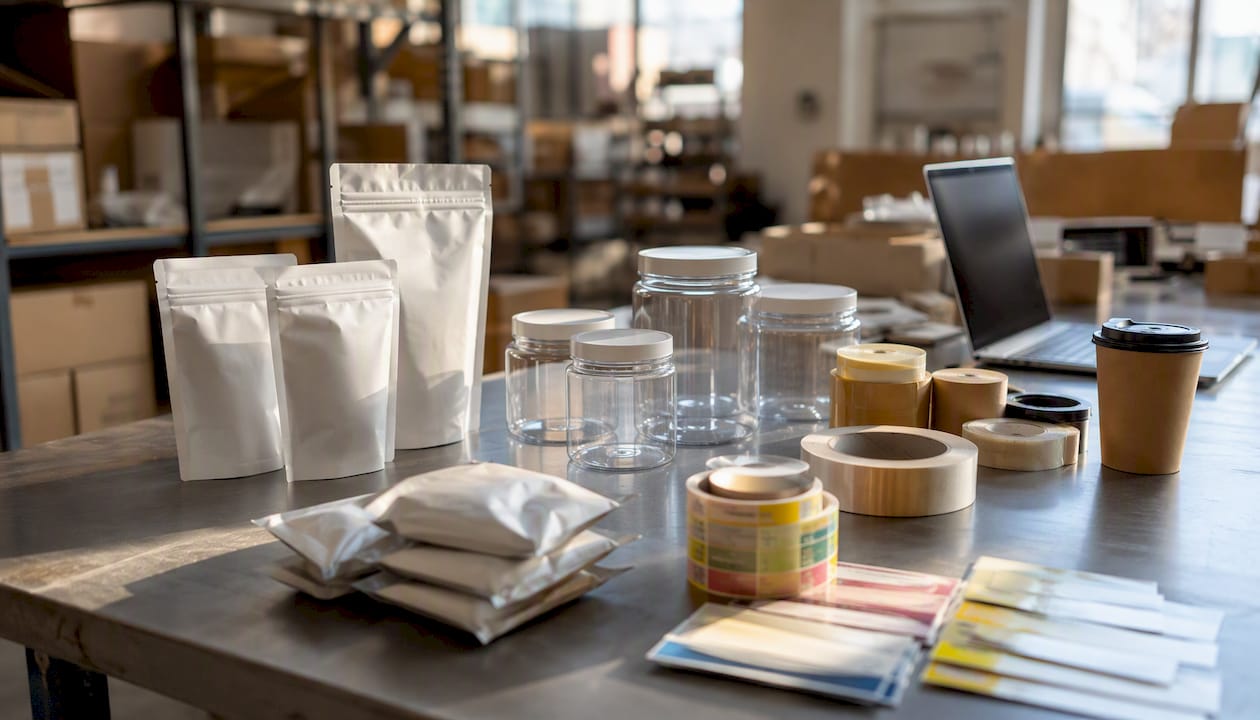
Packaging format is where a lot of buyers underestimate the downstream impact. Here’s a practical comparison:
| Format | Shelf Life | Retail Presence | Cost Bracket | Best Channel |
|---|---|---|---|---|
| PET jar | High (barrier + rigid) | Strong, premium feel | Higher | Specialty, gift retail |
| Resealable pouch | High (barrier film) | Good, flexible display | Mid | Grocery, e-commerce |
| Pillow pack | Moderate | Low-cost, high-volume | Lower | Bulk, club, foodservice |
| Display kit rack | Varies by inner pack | Excellent, impulse-buy | Mid-high | Convenience, specialty |
PET jars and pillow packs are the most common formats for milk-toffee style products. Resealable pouches are gaining ground for e-commerce because they survive shipping better than rigid jars and photograph well.
Secondary services worth asking about: label printing, UPC/GS1 barcode support, and retail-ready display assembly. A distributor who needs display kit SKUs for convenience or specialty retail should confirm the co-packer can handle kitting and shrink-wrapping in-house, not just hand off loose bags.
Pro Tip: Match your packaging choice to the retail channel before you finalize the pilot run. Grocery needs a planogram-friendly format; e-commerce needs a crush-resistant barrier pouch. Run a moisture-ingress test on your chosen format during the pilot — fixing a failed shelf-life test after a full production run is expensive.
What should you ask when evaluating a co-packer?
The single most telling question is whether the facility runs a true deposited line and can provide recent line-speed and stability data. Everything else flows from that.
Documents and proofs to request:
- Equipment make and model for the depositor and cooling conveyor
- FDA facility registration number (verifiable at FDA’s database)
- GMP certificate and, ideally, SQF or BRC certification
- Allergen control plan and recent allergen swab results
- Certificate of Analysis (COA) for key ingredients (dairy, glucose, fats)
- Finished-product stability report for a similar confection
- MOQ, lead times, and payment terms in writing
Questions for the call or site visit:
- What is your minimum sample run size, and what does it cost?
- Can you accommodate recipe adjustments after the first sample?
- What is your lot-coding and traceability system?
- How do you handle secondary packaging lead time if we supply custom labels?
- Do you have a documented recall plan?
Red flags that should disqualify a partner immediately:
- No evidence of a deposited processing line (only molded or pulled equipment)
- No allergen segregation between dairy and nut lines
- No documented QA release protocol before product ships
- Unwillingness to share FDA registration or certification numbers
What does a typical co-packing timeline look like?
End-to-end, from first R&D sample to product on a distributor’s shelf, plan for several weeks to a few months for a first run. That range assumes no major formulation rework. Here’s where the time goes:
- Sample development and approval: 2–4 weeks (longer if recipe adjustments are needed)
- Production scheduling: 1–3 weeks (slot availability varies by facility load)
- Packaging procurement: 2–4 weeks for custom-printed materials; stock formats are faster
- Production run: 3–7 days for a typical pilot batch
- QA release and shipping: 1–2 weeks
Primary cost drivers, in rough order of impact:
- Depositor setup and changeover: fixed cost spread across batch size; small runs are expensive per unit
- Ingredient quality: dairy fats and real butter push raw material costs up significantly
- Batch size: the single biggest lever on per-unit cost
- Packaging format: PET jars cost more than pillow packs at every volume level
- Secondary processing: freeze-drying adds equipment time and energy cost
- Regulatory testing: stability and allergen testing are fixed costs regardless of run size
Payment terms typically follow a deposit-plus-balance structure: 30–50% upfront to schedule the run, balance on QA release or before shipment. MOQs rise with formulation complexity and custom packaging. A standard deposited toffee run at a mid-size facility often starts at a few thousand units; custom flavors or specialty packaging formats push that number higher.
What quality and regulatory requirements apply to U.S. distribution?
For U.S. distribution, FDA registration and HACCP-based QA are the floor, not the ceiling. A recognized third-party scheme like SQF or BRC is what serious retail buyers and distributors will ask for. Certification signals like ISO 22000 are common among export-ready confectionery manufacturers, but U.S. buyers should prioritize schemes with U.S. retail recognition.
Non-negotiable documents to verify:
- FDA facility registration (confirm it’s current and active)
- Allergen control procedures with documented swab results for milk and nut cross-contact
- COAs for key ingredients
- Finished-product stability data (real-time and accelerated)
- Lot traceability examples showing batch-to-finished-unit chain
- Documented recall plan
Packaging compliance adds another layer. PET jars and barrier pouches must meet FDA food-contact material standards. Nutrition and ingredient labeling must follow U.S. FDA labeling rules, including allergen declarations in plain language. Oxygen and moisture barriers need to be validated for your specific product, not assumed from the packaging supplier’s generic spec sheet.
Pro Tip: Ask for one accelerated shelf-life test result for a product similar to yours — ideally a dairy-based confection. A co-packer who has run this test recently will hand it over without hesitation. One who hasn’t run it is telling you something.
Key Takeaways
Deposited candy production is the technical requirement that determines whether a co-packer can deliver a premium Tumi toffee–style product for U.S. distribution — confirm that first, then verify the regulatory and packaging stack.
| Point | Details |
|---|---|
| Deposited line is non-negotiable | Verify machine make/model and request a production run video before any other step. |
| Main cost drivers | Batch size, ingredient quality, and packaging format move per-unit cost the most. |
| End-to-end, from first R&D sample to product on a distributor’s shelf, plan for 8–14 weeks for a first run, including sample approval and packaging procurement. That range assumes no major formulation rework. | |
| Documents to request | FDA registration, SQF/GMP cert, allergen swab results, COA, and stability data. |
| Space-man as a ready option | Space-man offers private-label, co-packing, and display-kit fulfillment for U.S. distributors. |
A note from the maker’s side
The thing buyers often underestimate is how much the first sample run reveals. Scaling a toffee recipe from a lab batch to a depositor line almost always surfaces at least one formulation tweak — viscosity, cook temperature, or fat ratio — and a co-packer who offers formulation support at that stage saves you two or three extra sample cycles. That’s weeks, not days.
At Space-man, we produce premium freeze-dried confectionery and offer co-packing, private labeling, and packaging services for distributors entering the U.S. market. Pilot orders are welcome. We can discuss traceability documentation, packaging options, and formulation consultation before you commit to a full run. Flavor trends in the American and Caribbean snack space are moving fast in 2026, and we’re set up to help distributors move quickly on new SKUs without locking into large minimums upfront.
Space-man’s private-label and co-packing services for U.S. distributors
Space-man handles the full production-to-shelf workflow that U.S. distributors need: private-label runs, co-packing, custom bagging, and retail display kit fulfillment. If you’re sourcing a premium deposited or freeze-dried toffee product, you get formulation support, sample runs, and display-kit SKUs built for convenience and specialty retail. Starter packs are available for distributors testing new SKUs before committing to a full MOQ.
Logistics support includes kitting, warehousing options, and drop-shipping coordination for U.S. buyers. Custom take-away packaging and label printing are handled in-house, which cuts lead time on custom formats. To get started, visit Space-man’s private-label and co-packing services page and request a quote or sample run.
Sources and further reading
For procurement and technical teams doing deeper due diligence:
- Space-man private-label and co-packing services — service descriptions, capabilities, and contact for sample requests
- Packaging pouch types for candy — detailed comparison of pouch formats and tradeoffs for confectionery
- Specialty food co-packer selection — co-packer service models and retail readiness criteria
- Freeze-dried candy quality control — QA and compliance procedures relevant to U.S. buyers
- Custom food service packaging suppliers — packaging supplier selection and format guidance
- FDA food facility registration — verify any co-packer’s registration status directly with the FDA before signing a contract
When reviewing any of these pages, prioritize the documents that matter most: FDA registration confirmation, COAs, allergen swab results, and a stability report. Everything else is context.