

TL;DR:
- Magnum’s packaging shows that premium design and recycled materials can coexist without compromise, especially with certified rPP and IML.
- Successful implementation requires upfront material certification, precise design, pilot testing, and US compliance verification for scalable, sustainable freeze-aisle packaging.
Magnum’s packaging proves that premium freezer-aisle design and certified recycled materials aren’t a trade-off — they’re the same decision. For U.S. candy manufacturers and distributors, the practical takeaway is this: if you want shelf presence and a sustainability story that holds up to retailer scrutiny, you need to spec recycled polypropylene (rPP) with ISCC-Plus mass-balance traceability and engineer your containers for In-Mold Labeling (IML) from day one.
Magnum reported significant virgin plastic savings by end of 2023, with their pints now using a minimum of 90% recycled plastic. That’s not a pilot program — that’s a scaled commercial line. Here’s what it takes to get there.
- Specify rPP with ISCC-Plus mass-balance certification, not just “recycled content” on a spec sheet
- Design containers for IML from the start — retrofitting is expensive and usually compromises tolerances
- Budget for robotic assembly and iterative pilot runs before committing to full tooling
- Verify U.S. food-contact compliance for any recycled polymer resin before production
Table of Contents
- What does Magnum’s packaging actually show manufacturers?
- Materials and technologies for premium, freezer-stable packaging
- How do you design for the freezer aisle?
- What are the manufacturing and co-packing implications?
- How do you source rPP and navigate U.S. compliance?
- How do you brief a co-packer on this type of project?
- Key Takeaways
- The part most manufacturers skip
- Space-man handles the co-packing side so you don’t have to figure it out alone
- Useful sources
What does Magnum’s packaging actually show manufacturers?
Magnum (Unilever) didn’t just swap materials. They rebuilt the consumer experience around the container itself. The IML-enabled pint lets shoppers squeeze both sides to crack a thick chocolate shell before eating — a ritual that turns opening the package into part of the product. Rahul Rajpal, brand development at Magnum Europe, put it plainly:
The rollout followed a deliberate sequence: pilot tooling with injection molder Miko Pac and label converter Verstraete IML, regional European launch, then wider distribution. On the sustainability side, multi-pack wrappers moved to 50% ISCC-Plus mass-balance recycled plastic, while pints use a minimum of 90% recycled plastic. The retail format shifted too — flavors now ship in standardized 3-stick and 6-stick multi-packs, a format change driven partly by ingredient costs and partly by consumer budgeting.
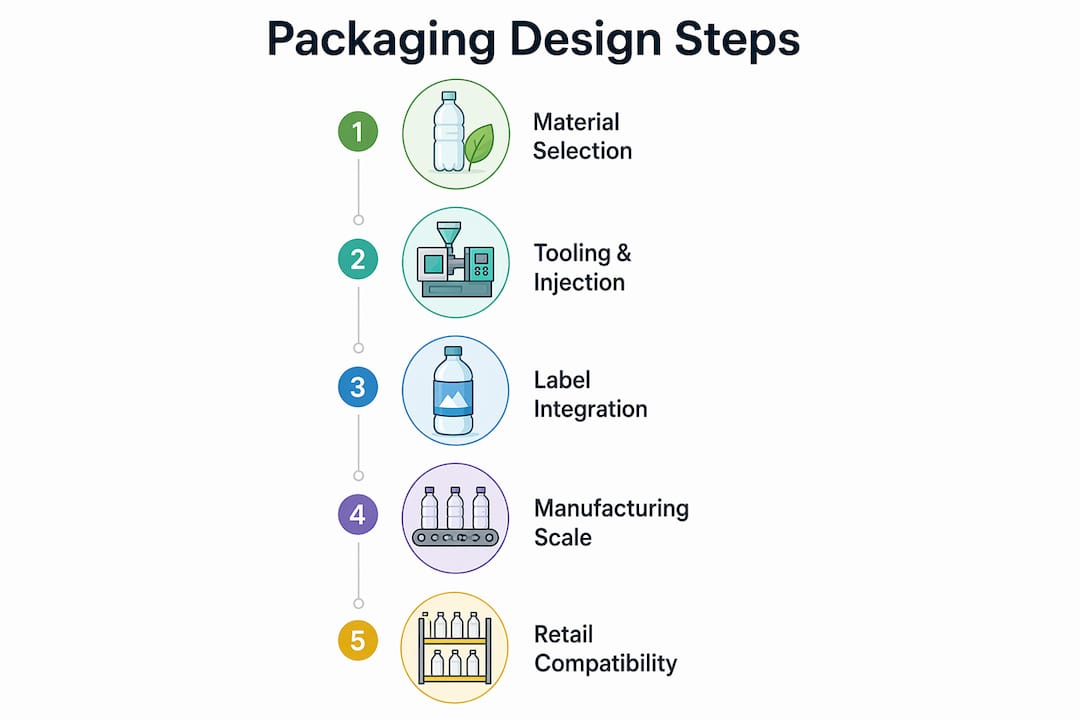
For U.S. co-packers, the case demonstrates three things at once: the design is manufacturable at scale, retailers accept it, and the sustainability claims are certifiable. That combination is rare enough to be worth studying closely.
Materials and technologies for premium, freezer-stable packaging
Not all materials perform equally in the freezer aisle, and the gap between “recyclable on paper” and “recyclable in practice” is wider than most spec sheets admit.
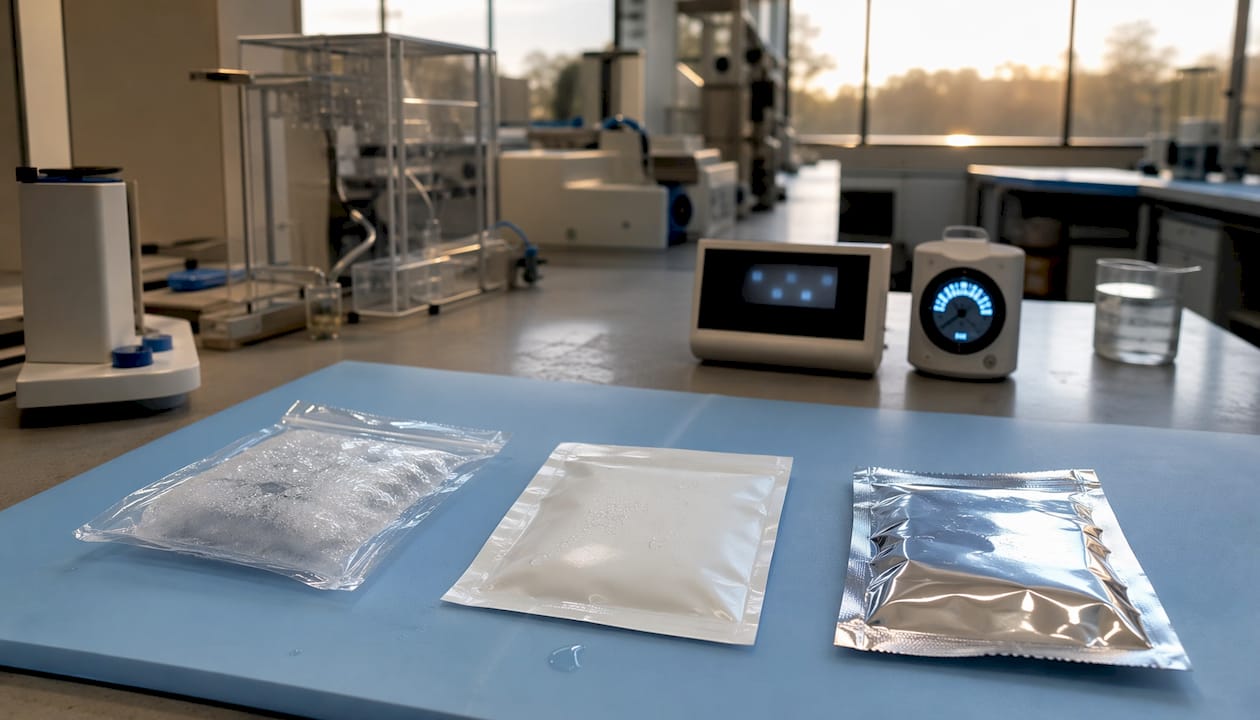
| Material | Certification & Recycled Accounting | Manufacturability | Consumer Experience | Cost Drivers | Freezer Performance |
|---|---|---|---|---|---|
| Recycled PP (rPP, mass-balance) | ISCC-Plus chain-of-custody; batch allocation docs required | Requires robotic handling; compatible with IML | Interactive (IML enables press-to-crack) | rPP premium over virgin; tooling investment | Excellent with impact copolymer grade |
| Virgin PP | No recycled claim; no certification needed | Standard injection molding; IML compatible | Interactive or conventional | Lower material cost; no certification overhead | Excellent |
| Paperboard (multi-layer) | FSC or SFI; no recycled-plastic claim | High-speed carton lines; no IML | Conventional; no structural interaction | Moderate; coating adds cost | Adequate; moisture barrier critical |
| Compostable alternatives | BPI or TÜV certification; limited U.S. infrastructure | Specialized converting; limited automation | Conventional | High material cost; short shelf life | Poor at sustained freezer temps |
SABIC TRUCIRCLE™ feedstock demonstrated that post-consumer mixed plastic can be processed into impact copolymer PP suitable for frozen-food tubs — a meaningful proof point for U.S. buyers sourcing rPP for freezer applications.
IML deserves its own paragraph. The process bonds a pre-printed label to the container during injection molding, which means the label becomes structural. That’s what enables metallic finishes and the precise geometry needed for a press-to-crack pint. It also improves moisture resistance compared to applied labels — a real advantage in a condensation-heavy freezer environment. The trade-off: IML requires robot systems for label placement, tighter mold tolerances, and a converter with IML-specific expertise.
For eco-friendly packaging buyers comparing lifecycle impacts, rPP via mass-balance currently offers the most practical path to a certifiable recycled-content claim without sacrificing freezer performance or IML compatibility.
How do you design for the freezer aisle?
The freezer aisle is a hostile environment for packaging design. Frosted glass, low lighting, and a shopper moving fast means your container has roughly two seconds to register. Bold, saturated color palettes and oversized typography consistently outperform intricate graphics at that distance — the Yala brand’s saturated blue-and-cream system is a textbook example of a palette that reads from across the aisle.
Magnum’s approach leans on metallic IML finishes, a restrained color palette, and clear instructional callouts for the press-to-crack zones. The metallic logo creates contrast against the matte label body, which Benedict Adins of Verstraete IML described as making the packaging “a real eye-catcher in the freezer.” That contrast is deliberate engineering, not decoration.
A practical checklist for briefing your converter and co-packer on design specs:
- Define press zones with precise dimensional callouts, not just visual indicators
- Specify finish types per zone: metallic IML for logo/interaction areas, matte for body
- Set minimum contrast ratios for instruction text against background
- Lock typography scale early — oversized wordmarks survive freezer condensation better than fine-detail graphics
- Confirm label bleed and registration tolerances with the IML converter before artwork is finalized
Pro Tip: Bring your mechanical engineer into the design review before the art director finalizes the press-zone graphics. A beautiful instruction callout placed over a structurally weak wall section will fail the crack test every time.
For more on freezer-aisle shelf appeal, the principles that apply to freeze-dried candy translate directly to ice cream formats.
What are the manufacturing and co-packing implications?
Achieving a reliable press-to-crack experience is an engineering problem first. The container must be rigid enough to survive automated filling, stacking, and cold-chain transit, yet deform predictably under the specific force a consumer applies by hand. That’s a narrow mechanical window, and it typically requires iterative pilot runs with custom robotic handling fixtures before the geometry is locked.
A phased implementation timeline for buyers working with a co-packer:
- Concept and material spec (weeks 1–4): finalize rPP grade, ISCC-Plus requirements, and IML finish specs with your converter
- Pilot tooling (weeks 5–14): build prototype molds; run small-batch IML trials with robot system
- Mechanical testing (weeks 12–16): compression/press-to-crack cycle tests, temperature cycling (freeze-thaw), drop tests, moisture barrier checks
- Pilot production run (weeks 16–20): full-line trial at co-packer; QA sampling against agreed acceptance criteria
- Scale-up and commercial launch (weeks 20+): tooling sign-off, ramp to full run size
Schedule delays most often come from tooling revisions after mechanical testing — budget at least one revision cycle. On cost, the main drivers are the rPP mass-balance material premium over virgin PP, metallic IML label finishing, robotic automation setup, and tooling amortization across the production run. Longer runs reduce per-unit tooling cost significantly, so minimum order quantities matter more here than in conventional packaging.
How do you source rPP and navigate U.S. compliance?
Mass-balance is an accounting mechanism, not a physical separation. When you buy ISCC-Plus certified rPP, you’re buying a certified allocation of recycled feedstock within a mixed production stream. That means batch allocation documentation and supplier certificate references are non-negotiable — without them, your recycled-content claim has no chain of custody.
A practical note on recyclability: “recyclable” on a U.S. label means very different things in different zip codes. Mono-material PP films are technically recyclable, but municipal acceptance varies widely. Before making an end-of-life claim to a U.S. retailer, check the How2Recycle program guidelines and confirm your specific format is accepted in your target markets’ curbside streams.
Documents to require from suppliers during procurement:
- ISCC-Plus certificate with current validity dates and scope
- Resin supplier declaration of recycled content and feedstock origin
- FDA food-contact compliance statement for the specific polymer grade
- Migration test reports for food-contact applications (per FDA guidance on indirect food additives)
- Chain-of-custody batch allocation records tied to your purchase order
For compostable alternatives, the compostable packaging process involves additional end-of-life infrastructure considerations that make them a poor fit for most U.S. frozen-food formats at this stage.
How do you brief a co-packer on this type of project?
A vague brief produces a vague quote. Here’s a numbered checklist you can paste directly into an RFP:
- Target SKU format: pint / multi-pack stick / tub (dimensions, fill weight, lid type)
- Material spec: rPP % recycled content, ISCC-Plus requirement (yes/no), resin grade
- Mechanical/function spec: press-to-crack force range (if applicable), lid interference tolerance
- Labeling finish: IML vs. applied label; finish zones (metallic, matte, gloss)
- Tolerance table: wall thickness, label registration, sealing integrity
- Test requirements: compression cycles, temperature cycling range, drop height, moisture barrier
- Run size and frequency: minimum order quantity, annual volume forecast
- Lead-time expectation: target launch date and key milestone dates
Questions to ask every co-packer before shortlisting:
- Do you have in-house robotic IML capability, or do you subcontract label placement?
- Can you share prior IML project examples with similar container geometry?
- What QA sampling protocol do you use for mechanical function tests?
- How do you handle contamination controls for food-contact rPP?
- What is your tooling revision policy if pilot testing requires geometry changes?
Cost-driver checklist for comparing quotes: material premium (rPP vs. virgin PP), run-size impact on tooling amortization, automation setup fees, IML label cost per unit, and inspection sampling rates.
Key Takeaways
Premium ice cream packaging requires rPP with ISCC-Plus mass-balance certification, IML-compatible tooling, and robotic assembly — Magnum’s 1,539,000 kg virgin-plastic saving by end of 2023 proves the model works at commercial scale.
| Point | Details |
|---|---|
| Lead with material specs | Specify rPP grade and ISCC-Plus certification before design begins — retrofitting is costly. |
| IML enables interaction and sustainability | In-Mold Labeling delivers metallic finishes, moisture resistance, and the structural geometry for press-to-crack pints. |
| Budget for pilot runs | Mechanical testing and at least one tooling revision cycle should be in every project timeline. |
| Verify U.S. food-contact compliance | Request FDA food-contact statements and migration test reports from every resin supplier. |
| Space-man co-packing option | Space-man offers co-packing and private-label services for manufacturers ready to move from spec to production. |
The part most manufacturers skip
Premium packaging projects fail at the brief stage more often than at the manufacturing stage. Manufacturers spend months on brand strategy and artwork, then hand a co-packer a two-page PDF and wonder why the first pilot run misses the press-to-crack spec by 30%. The engineering requirements for IML interactive packaging are specific enough that a co-packer without prior IML experience will cost you more in revision cycles than a specialist costs upfront.
The Magnum case is instructive not because it’s flashy, but because it’s disciplined. The sustainable packaging story and the interactive design story are the same story — both required choosing the right material, the right converter, and the right tooling partner before a single gram of ice cream was filled. That sequence matters. Most brands get it backwards.
Space-man handles the co-packing side so you don’t have to figure it out alone
Sourcing rPP, briefing IML converters, and managing pilot runs across multiple suppliers is a real project management load — especially if frozen confections aren’t your primary category. Space-man’s co-packing and private-label services cover the production and packaging side for candy manufacturers and distributors who want to move fast without building internal packaging operations from scratch.
Whether you need a pilot run quoted, a capabilities overview, or a technical conversation about material specs for a new SKU, the practical next step is a direct conversation. Reach out through the Space-man services page to request a capabilities deck or a pilot-run quote.
Useful sources
- Packaging and sustainability | Magnum Ice Cream — primary source for rPP metrics, ISCC-Plus mass-balance, and virgin-plastic savings data
- Consumers scream for ice cream ‘crack-ready’ IML packaging | PlasticsToday — engineering detail on IML press-to-crack design and robotic assembly
- Magnum Ice Cream Tubs Created with Recycled Polypropylene | Packaging Strategies — SABIC TRUCIRCLE feedstock and frozen-food PP development
- Innovative “Cracking” In-Mold Packaging Technology sets Magnum apart | Multi-Color Corporation — converter perspective on precision tooling and robot systems
- Magnum Miko Pac creates IML Magnum Pints | DairyReporter — pilot-to-market rollout timeline and supplier collaboration detail