

TL;DR:
- Plant-based and synthesized sweeteners replace sugar in candy to provide sweetness without extra calories or blood sugar effects. Combining high-intensity natural sweeteners like stevia and monk fruit with bulking agents such as allulose and fibers recreates the taste and texture of sugar, making the candy more enjoyable. Blended sweetener systems and functional ingredients are essential for producing sugar-free candies that taste satisfying and mimic traditional confections.
Sugar alternatives in candy are plant-based and synthesized sweeteners used to replace sucrose, delivering sweetness without the same caloric load or blood sugar impact. The most effective options combine high-intensity natural sweeteners like stevia and monk fruit with bulking agents such as allulose, inulin, and tapioca fiber to replicate both the taste and texture of sugar. This matters because candy without proper bulk and chew just isn’t candy. Health-conscious consumers now have more choices than ever, and understanding what’s actually in that “sugar-free” bag makes all the difference.
1. What are the best sugar alternatives in candy?
The top natural sweeteners for candy fall into two categories: high-intensity sweeteners that provide the sweetness lift, and bulking agents that rebuild the physical structure sugar normally provides. Stevia is 200–450 times sweeter than sucrose, and monk fruit lands at 150–250 times sweeter. Both deliver zero calories and zero glycemic impact.
Neither stevia nor monk fruit can stand alone in a candy formula. They provide sweetness but no bulk, no chew, and no caramelization. That’s why manufacturers pair them with functional ingredients like allulose, erythritol, and prebiotic fibers to build a complete candy experience.
The most common sugar substitutes used in candy today include:
- Stevia (from the Stevia rebaudiana plant): zero calories, intense sweetness, occasional bitter aftertaste when used alone
- Monk fruit extract (luo han guo): zero calories, cleaner finish than stevia, often blended with erythritol
- Erythritol: a sugar alcohol providing 70% of sugar’s sweetness with only 6% of the calories
- Allulose: a rare sugar that behaves like sucrose in browning and texture without spiking blood sugar
- Inulin and tapioca fiber: plant-based fibers that add bulk and prebiotic benefits
- Isomalt: a sugar alcohol ideal for hard candies and decorative work
- Xylitol: known for dental benefits, but requires careful dosing
Pro Tip: Look for candy labels that list two or more of these ingredients together. A blend almost always means better taste and fewer aftertaste complaints than a single-sweetener formula.
2. How natural high-intensity sweeteners work in candy
Stevia and monk fruit are the workhorses of natural sweeteners for candy. Their job is simple: deliver sweetness without calories. Their challenge is equally simple: they don’t taste exactly like sugar.
Stevia’s bitterness at high concentrations is a known formulation problem. Candy makers solve this by blending stevia with monk fruit or erythritol, which softens the aftertaste. Blending these sweeteners with rare sugars improves upfront sweetness and reduces the lingering finish that turns some consumers off.
Monk fruit has a cleaner taste profile than stevia and pairs especially well with erythritol in gummies and chewy candies. The combination mimics the way sucrose delivers a quick, clean sweetness hit. Neither sweetener adds the “weight” or mouthfeel of sugar, which is where the next layer of ingredients takes over.
Pro Tip: If a candy made with stevia tastes slightly medicinal, it’s likely using stevia as the only sweetener. Blended formulas taste noticeably better.
3. How bulking agents and rare sugars mimic sugar’s texture
High-intensity sweeteners solve the sweetness problem. They do not solve the texture problem. Sugar provides bulk, chew, moisture retention, and caramelization. Replacing it requires a different set of ingredients entirely.
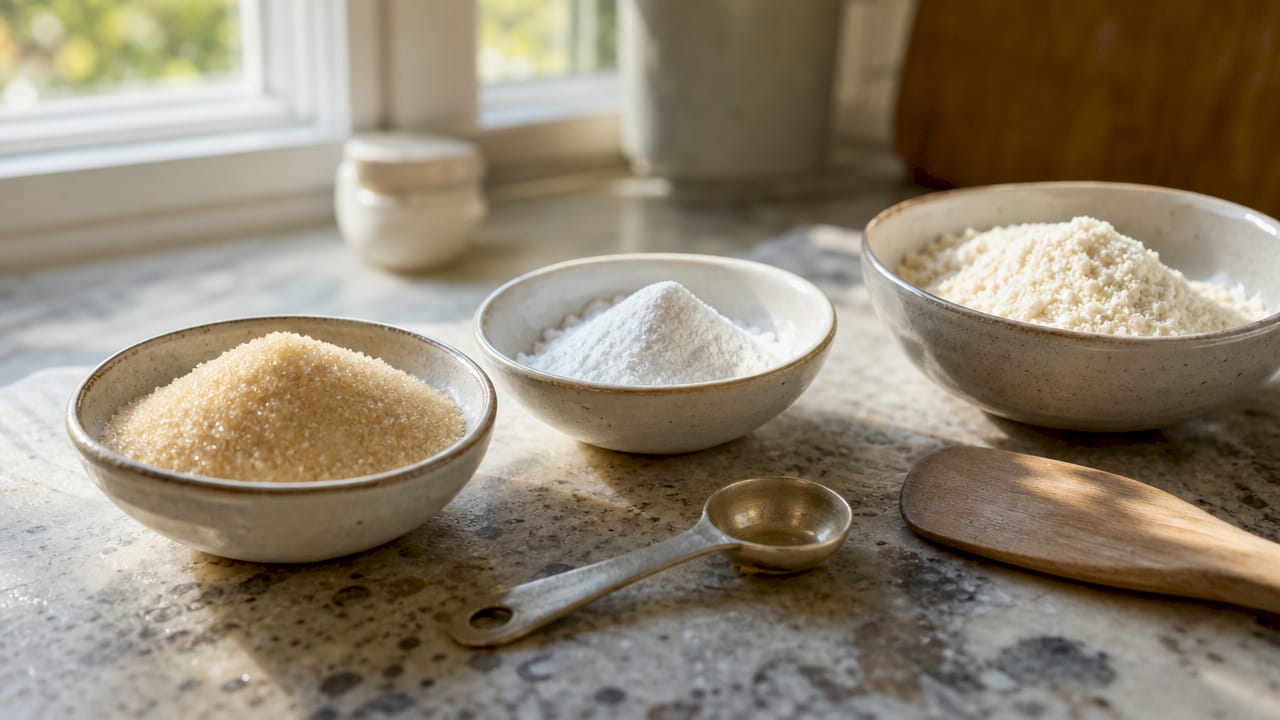
Allulose reduces water activity in candy, which is critical for shelf stability and preventing stickiness or grittiness over time. It also supports caramelization, giving sugar-free caramels and chocolates genuine flavor depth. Allulose is typically added at low levels to provide these functional benefits without overwhelming the formula.
Inulin and tapioca fiber add physical bulk and contribute a mild prebiotic benefit. They help gummies hold their shape and give chewy candies the resistance your teeth expect. The table below shows how the main bulking agents compare:
| Bulking agent | Primary function | Added benefit |
|---|---|---|
| Allulose | Texture, caramelization, shelf life | Not declared as added sugar |
| Inulin | Bulk, fiber content | Prebiotic, gut health support |
| Tapioca fiber | Chew, moisture management | Clean-label friendly |
| Erythritol | Sweetness plus bulk | Zero glycemic index |
Pro Tip: Allulose is one of the few sugar alternatives that actually browns like sugar. If you want a sugar-free caramel that looks and tastes like the real thing, allulose is the ingredient making that happen.
4. What are the common sugar alcohols in candy?
Sugar alcohols occupy a useful middle ground between sugar and zero-calorie sweeteners. They provide both sweetness and bulk, which makes them popular in a wide range of sugar-free candy options. Each one has a distinct profile worth knowing.
- Erythritol: 70% sweetness of sugar, only 6% of the calories, and a glycemic index of zero. It’s the most digestively friendly sugar alcohol and the most common in keto and diabetic-friendly candy.
- Isomalt: Derived from beet sugar, isomalt absorbs very little moisture. This makes it the go-to choice for hard candies, lollipops, and decorative sugar work that needs to stay crisp.
- Maltitol: Tastes and feels very close to sucrose. It’s widely used in chocolate-flavored candy coatings. The downside is a higher glycemic impact than other sugar alcohols, so it’s less ideal for strict diabetic diets.
- Xylitol: Well-documented dental benefits, including reducing cavity-causing bacteria. However, xylitol can cause digestive discomfort such as gas and bloating when consumed in large amounts. It’s also toxic to dogs, which is worth knowing if you have one at home.
Sugar alcohols as a category are generally well-tolerated in moderate amounts. The digestive issues associated with xylitol and maltitol are dose-dependent. Reading the serving size on sugar-free candy packaging is genuinely useful, not just fine print.
5. How formulators create sugar-free candy that actually tastes good
Making great sugar-free candy is not a simple ingredient swap. Sugar-free candy formulation requires rebuilding the entire candy matrix using fibers, hydrocolloids, and carefully selected sweetener blends. This is why the best sugar-free gummies taste like gummies and the worst taste like flavored rubber.
Tiered sweetener systems combine high-intensity sweeteners with bulking agents like allulose and fibers to mimic sugar’s full sensory profile. A single sweetener fails to replicate chew and bounce. Combined systems are now the industry standard for any candy that wants to compete with its sugared counterpart.
Hydrocolloids like pectin and gelatin rebuild the gel structure that sugar normally supports in gummies and jellies. Adjusting acidulants and hydrocolloids is critical for achieving balanced flavor and the right gel strength. Acidulants also manage sweetness perception, making a candy taste brighter and less flat.
Tagatose is a rare sugar that gained new relevance in june 2026. Tagatose no longer requires declaration as an added sugar on nutrition panels, which means formulators can use it for browning and flavor development in caramels and chocolates without the label penalty. That’s a meaningful shift for brands targeting clean-label consumers.
6. Which sugar alternatives work best for your dietary needs?
Choosing the right low-calorie candy alternative depends on your specific health goal. Not every sweetener suits every diet, and the wrong choice can cause more frustration than just eating the regular version.
- Zero-calorie, natural preference: Stevia and monk fruit are the clear choice. Both are plant-derived, zero-calorie, and widely available in candy made with stevia or monk fruit extract. Look for blended formulas for the best taste.
- Diabetic-friendly or keto diet: Erythritol is the strongest option. Its zero glycemic index and minimal caloric content make it compatible with both diabetic management and ketogenic eating. Allulose is a close second for the same reasons.
- Digestive sensitivity: Avoid high amounts of maltitol and xylitol. Both can cause bloating and gas in sensitive individuals. Erythritol is significantly better tolerated and causes far fewer digestive complaints.
- Clean-label priority: Allulose and tapioca fiber both carry clean-label credentials. Allulose is not declared as an added sugar, which keeps nutrition panels looking favorable. Inulin adds a prebiotic claim that resonates with gut-health-focused consumers.
- Best overall taste: Blended systems win every time. A candy using stevia plus erythritol plus allulose will taste closer to the sugared original than any single-sweetener product. When you’re browsing sugar-free candy options, check the ingredient list for at least two sweetener types.
The freeze-drying process used by Space-man changes candy texture dramatically, which actually makes it easier to work with alternative sweeteners. The crisp, airy structure of freeze-dried candy is less dependent on sugar’s moisture-binding properties, giving it a natural advantage in the sugar-free category.
Key takeaways
The most effective sugar alternatives in candy combine high-intensity sweeteners like stevia and monk fruit with bulking agents like allulose and erythritol to replicate both sweetness and texture.
| Point | Details |
|---|---|
| Stevia and monk fruit lead natural sweeteners | Both are zero-calorie and plant-based, but work best when blended with bulking agents. |
| Allulose rebuilds texture and shelf life | It reduces water activity and supports caramelization, making it a functional sugar replacement. |
| Erythritol suits diabetic and keto diets | It delivers 70% of sugar’s sweetness with only 6% of the calories and a zero glycemic index. |
| Sugar alcohols require moderation | Xylitol and maltitol can cause digestive discomfort at high doses; erythritol is better tolerated. |
| Blended sweetener systems taste best | Tiered formulas combining multiple sweeteners and fibers outperform single-ingredient substitutes. |
My take on navigating sugar alternatives as a candy lover
I’ve spent a lot of time looking at candy ingredient lists, and the honest truth is that most sugar-free candy disappoints not because the sweeteners are bad, but because the formula is lazy. A single sweetener doing all the work almost always produces an off-taste or a weird texture. The products that actually satisfy are the ones where someone put real thought into the full system.
The digestive issue with sugar alcohols is real and worth taking seriously. Eating half a bag of maltitol-sweetened candy in one sitting is a decision you will regret. Erythritol is genuinely the safest bet for people who want to snack freely without consequences.
What I find genuinely exciting is allulose. It browns, it caramelizes, and it doesn’t show up as added sugar on the label. That combination is rare in food science. If you see allulose on a candy label, that’s usually a sign the maker knows what they’re doing.
My practical advice: don’t expect a perfect one-to-one sugar replacement. Expect a different but genuinely enjoyable candy experience. The best sugar-free candies aren’t trying to trick you. They’re offering something that works for your lifestyle without pretending to be something they’re not. Be curious about ingredient lists. The more you understand what’s in there, the better your choices get.
— Chadi
Space-man’s private label services for sugar-free candy
Space-man works with brands and retailers across Canada to produce freeze-dried candy using custom formulations, including products built around alternative sweeteners.
Whether you’re looking to launch a sugar-free line, reformulate an existing product, or need co-packing support for a health-focused confectionery brand, Space-man’s private label and co-packing services cover the full production and packaging process. The freeze-drying method Space-man uses pairs naturally with alternative sweetener systems, since the process reduces moisture dependence and lets the sweetener blend do its job without interference. If you’re building a candy product for health-conscious consumers, this is a practical place to start.
FAQ
What are the healthiest sugar alternatives in candy?
Stevia, monk fruit, and erythritol are the healthiest options. They deliver sweetness with zero or minimal calories and have no meaningful impact on blood sugar.
Can sugar-free candy cause digestive problems?
Yes, if it contains high amounts of sugar alcohols like xylitol or maltitol. Erythritol is significantly better tolerated and rarely causes digestive issues at normal serving sizes.
What does allulose do in candy?
Allulose provides bulk, supports caramelization, and reduces water activity for better shelf stability. It is not declared as an added sugar on nutrition labels, which is a meaningful labeling advantage.
Is candy made with stevia safe for diabetics?
Stevia has a zero glycemic index and does not raise blood sugar, making it a safe sweetener choice for most people managing diabetes. Always check the full ingredient list, since other ingredients in the candy may still affect blood sugar.
Why do some sugar-free candies taste better than others?
Taste quality comes down to formulation. Candies using tiered sweetener blends with bulking agents like allulose and fibers consistently outperform single-sweetener products in both taste and texture.