

TL;DR:
- Canadian candy market is growing rapidly driven by export, innovation, and consumer diversity.
- Trends favor bold flavors, health-conscious options, and locally-made premium candy.
- Retailers should balance trending, nostalgic, and everyday products to build customer loyalty.
The Canadian candy market is not shrinking because of health trends. It’s actually growing faster than most retailers realize. Candy manufacturing revenue in Canada is projected at around CAD 1.5 to 1.6 billion for non-chocolate candy alone in 2025, with overall confectionery sales approaching $3 billion. What’s changed is not whether Canadians buy candy, but what they buy, why they buy it, and how they want to feel about buying it. For retailers, that shift is not a threat. It’s a wide-open opportunity waiting to be stocked on your shelves.
Table of Contents
- Understanding the Canadian candy market landscape
- Emerging consumer preferences and demographics
- Health-driven and premium trends transforming candy
- Retail strategies for capitalizing on candy consumer trends
- A retailer’s perspective: What most candy market guides miss
- Explore Spaceman’s retail solutions for trending candies
- Frequently asked questions
Key Takeaways
| Point | Details |
|---|---|
| Market growth is robust | Canadian candy sales continue to rise, fueled by exports, evolving consumer habits, and innovation. |
| Gen Z influences trends | Frequent sweet snacking, bold flavors, and social connection set new standards for Canadian candy offerings. |
| Health-conscious choices expand | Demand for reduced-sugar, plant-based, and functional candies is reshaping retail strategies. |
| Premium and nostalgic appeal matter | Artisanal, experiential, and Canadian-made candies attract both value-seekers and premium shoppers. |
| Retailers must adapt strategies | Mixing indulgence with moderation and leveraging online channels ensures success in today’s candy market. |
Understanding the Canadian candy market landscape
The Canadian confectionery market is bigger and more dynamic than most retailer conversations give it credit for. Candy manufacturing revenue grew at a CAGR of 6.5% to reach $1.6 billion in 2025, driven primarily by export growth, product innovation, and a diversifying consumer base. That growth rate is not a fluke. It reflects a category that continues to evolve and find new buyers even as nutritional awareness rises.
Exports play a larger role than many domestic retailers realize. Canadian candy manufacturers are shipping products into the United States and beyond, which keeps production volumes high and supply chains active. That matters for you because it means a healthier domestic supply ecosystem, more competitive pricing, and more product variety reaching Canadian shelves.
On the consumer side, attitudes toward candy have shifted but not disappeared. According to Canadian confectionery data, penetration of both chocolate and non-chocolate candy remains steady despite ongoing sugar concerns. People are not giving up sweets. They are making more deliberate choices about when and what they indulge in.
Here is a snapshot of where the market stands in 2026:
| Segment | Estimated 2025 Revenue | Growth Driver |
|---|---|---|
| Non-chocolate candy manufacturing | ~CAD 1.6 billion | Exports, innovation |
| Overall confectionery (incl. chocolate) | ~CAD 3 billion | Domestic demand, DTC |
| E-commerce candy sales | Fastest growing channel | 13.8% CAGR |
Key market drivers shaping the landscape right now include:
- Export momentum keeping Canadian manufacturers competitive and shelves well-supplied
- Product innovation in functional, premium, and novelty segments drawing new buyers
- Market diversity from multicultural flavor influences expanding what consumers expect
- Snacking trends in Canada shifting toward frequent, smaller treat occasions rather than single large purchases
“Steady confectionery penetration signals that candy is not losing its place in Canadian households. It’s just being redefined.” — Canada Confectionery Market Report
Understanding bulk candy supply chains is also becoming more strategic for retailers who want to stay competitive on margin while offering variety. The Canadian snack revenue statistics confirm that confectionery and snack categories combined represent one of the most active food retail segments in the country.
Now that you have seen the big picture, let’s break down what fuels this growth and what consumer attitudes really mean for retailers.
Emerging consumer preferences and demographics
With a grasp of overall market size and drivers, it’s time to dig deeper into which consumer segments and preferences matter most for product selection.
Gen Z is the segment rewriting the candy rulebook. According to Gen Z snacking data, 72% of Gen Z consumers eat one to six sweet treats daily, and they overwhelmingly favor candy over chocolate. They are chasing bold, layered, and multi-flavor experiences. Think intensely sour gummies, fruity combinations that shift taste mid-chew, and anything that photographs well for social media. That last part is not a minor detail. Shareable aesthetics drive trial and repeat purchase in ways that traditional point-of-sale never did.
Social media is not just marketing for Gen Z, it’s a discovery engine. A product that goes viral on TikTok can sell out a retailer’s entire stock within days. That’s exciting but also risky if your supply chain is not ready for sudden spikes. Emotional connection also plays a role. Candy tied to nostalgia, seasonal moments, or cultural identity performs consistently well across all age groups.
Here’s how key consumer segments compare in their candy priorities:
| Consumer Segment | Top Priority | Preferred Format |
|---|---|---|
| Gen Z | Bold, shareable, fruity/sour flavors | Single-serve, visually striking |
| Millennials | Nostalgic and premium blends | Resealable, mid-size bags |
| Older demographics | Familiar brands and dark chocolate | Standard or bulk formats |
| Multicultural consumers | Regional and globally inspired flavors | Specialty or imported-style packs |
Multicultural flavor influences are increasingly shaping what Canadian consumers expect from candy. Ingredients and flavor profiles from South Asian, East Asian, Latin American, and Middle Eastern traditions are moving from specialty stores into mainstream retail. Retailers who recognize this early gain loyalty from underserved communities while differentiating their shelves.

On the health side, confectionery market research shows indulgence and moderation existing side by side. Consumers do not want to feel guilty, but they also do not want to give up the experience. Trends like the Dubai chocolate phenomenon show how a viral, premium product can drive real purchasing behavior.
Here is a quick list of what moderation-focused consumers actually want:
- Smaller portion sizes that feel intentional, not restrictive
- Transparent ingredient labeling without the guilt-trip messaging
- Novel formats that justify the treat psychologically
- Products aligned with healthy snack innovations that still taste indulgent
Pro Tip: Stock a tiered candy selection that includes a bold novelty option, a nostalgic classic, and a moderation-friendly format. Retailers who offer all three consistently outperform those who bet on just one segment. Review your bulk candy wholesale tips to keep margins healthy across all three tiers.
Health-driven and premium trends transforming candy
Once you understand who’s driving trends, let’s look at how health concerns and premium choices are reshaping what consumers expect from candy.
Health consciousness is not killing candy. It’s upgrading it. Canada’s sugar confectionery analysis shows demand growing specifically for dark chocolate, reduced-sugar formulas, plant-based options, and functional ingredients like collagen, vitamins, and adaptogens. These are not fringe products anymore. They are moving from health food stores onto mainstream grocery shelves.
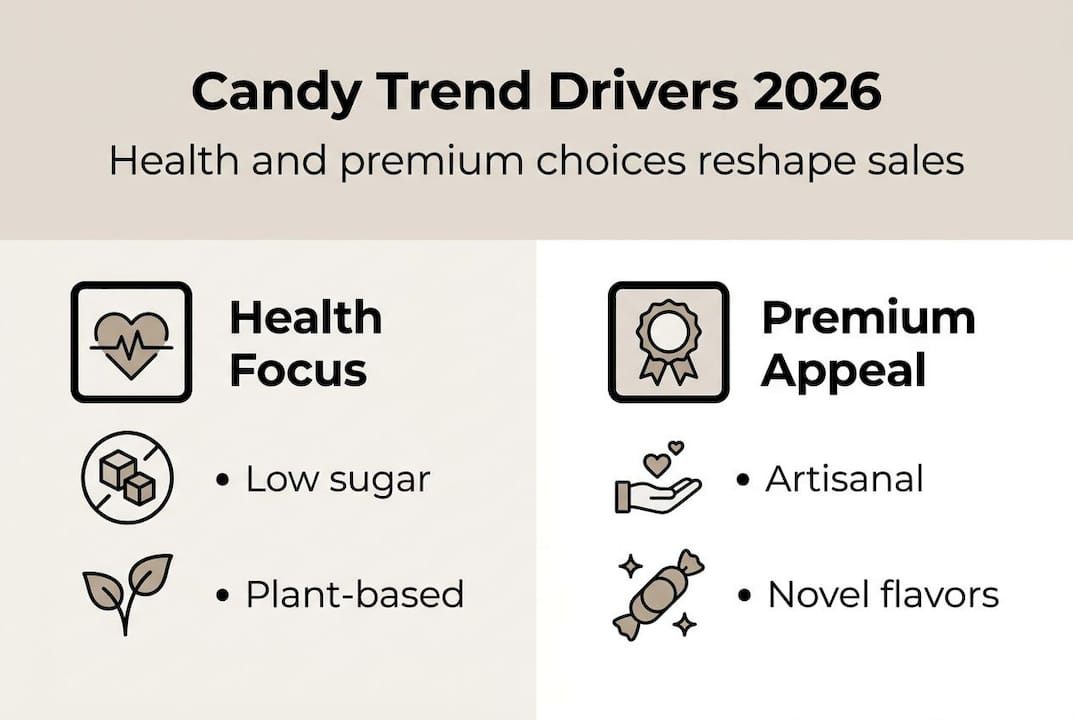
Premium and artisanal candy is also gaining serious ground. Consumers increasingly treat candy as an experience, not just a snack. Limited-edition flavor collabs, small-batch textures, and exotic ingredient combinations command higher price points and generate genuine excitement. Retailers who carry exclusive or hard-to-find items create a reason to visit that online giants cannot easily replicate.
Canadian-made positioning is another strong pull. A growing number of consumers actively seek out locally produced candy, especially when it is paired with sustainable or minimal packaging. This is not just a feel-good preference. It translates to actual purchase decisions at the shelf.
Key health and premium categories worth stocking in 2026:
- Dark chocolate with 70%+ cocoa content and minimal additives
- Reduced-sugar gummies and hard candies using natural sweeteners
- Plant-based and vegan-certified options with clean label claims
- Functional candy with added protein, fiber, or botanical ingredients
- Artisanal and limited-edition formats with strong visual packaging
- Canadian-made products with sustainable or compostable packaging
Statistic callout: Health-oriented candy segments are growing faster than the overall category, with functional and reduced-sugar formats seeing the sharpest uptick in consumer interest across Canadian markets.
Pro Tip: Build a “better for you” section near your main candy display rather than hiding health-oriented candy in a separate aisle. Proximity to indulgent options encourages cross-trial and increases basket size. Pair this strategy with innovative candy packaging choices that signal premium quality at a glance. And if you are looking for a product category that bridges novelty and clean-label appeal, freeze-dried candy trends are worth serious consideration for your next buying cycle.
Retail strategies for capitalizing on candy consumer trends
Having explored market and consumer shifts, the final piece is how you turn these insights into practical changes for your retail operations.
Product mix is where strategy starts. A well-balanced candy assortment in 2026 should reflect Canadian confectionery preferences across indulgence, health, nostalgia, and novelty. No single category should dominate unless your store has a very specific niche. Variety signals that you understand your customer.
Here is a practical framework for building a winning candy product mix:
- Lead with bold flavors. Stock at least two or three aggressively flavored options targeting Gen Z, including sour, fruity, or multi-layered profiles.
- Add a premium tier. One or two artisanal or Canadian-made options create a halo effect that elevates your entire candy section.
- Include a health-aligned choice. Reduced-sugar or plant-based options signal that you respect your customers’ values without preaching.
- Vary portion sizes. Single-serve, mid-size, and shareable bag formats serve different shopping missions and budget ranges.
- Rotate seasonally. Limited editions and seasonal drops create urgency and give loyal customers a reason to keep checking back.
For marketing, lean into the emotional and social dimensions of candy. Partner with local micro-influencers for product launches, create shareable in-store moments, and build your online presence around product stories rather than just promotions. E-commerce for candy is growing at a 13.8% CAGR, so retailers who have not yet invested in a direct-to-consumer channel are leaving real revenue on the table.
Common pitfalls to avoid:
- Stocking only trend-driven novelty products with no steady sellers as your base
- Ignoring value-seeking shoppers who still dominate volume even if margin is lower
- Over-investing in health candy without testing whether your specific customer base actually wants it
- Neglecting marketing candy products strategies that connect emotionally, not just transactionally
Pro Tip: The most overlooked merchandising move is vertical shelf zoning. Place bold novelty items at eye level, premium and health options at chest height, and value or bulk options lower. This mirrors how consumers actually shop and increases average transaction value without extra effort. Review your wholesale supply chain tips to make sure your restocking cadence supports this kind of active assortment management.
A retailer’s perspective: What most candy market guides miss
With all the strategies laid out, let’s pause and consider what really works and what most market reports fail to mention.
Most candy trend reports focus on what is exciting: the viral product, the new functional ingredient, the social media moment. What they rarely say is that none of that matters if you do not have a reliable everyday candy assortment that customers come back for habitually. Everyday treat routines generate more consistent revenue than any short-lived viral spike. The retailer who stocks a reliable gummy bear or a classic sour worm and never runs out will outsell the one chasing the next Dubai chocolate moment almost every time.
The real win is balance. Bold, trending, and health-oriented products bring new customers in. Familiar, affordable, consistent products keep them spending week after week. The retailers we see succeed long term understand snacking trends perspective not as a checklist to follow but as context for building an assortment that earns loyalty. Trends are a lens, not a strategy on their own.
Explore Spaceman’s retail solutions for trending candies
If you are ready to act on these insights and streamline your retail offerings, here’s how Spaceman can support your next steps.
At Spaceman, we manufacture and distribute freeze-dried candy across Canada, with options designed to meet the bold flavor, novelty, and clean-format demands that today’s consumers are actively seeking. Our products fit directly into the Gen Z-forward and premium-leaning segments this article has outlined.
For retailers who want to build a differentiated candy section, our freeze-dried candy display kit makes it easy to launch a ready-to-sell, visually compelling candy station in-store. If you want your own branded product line, our private label services handle co-packing, bagging, and packaging so you can go to market faster. You can also explore our freeze-dried candy bundle to sample what your customers will actually reach for.
Frequently asked questions
What candy flavors are most popular among Canadian consumers in 2026?
Bold, fruity, and sour flavors lead among Gen Z, with Gen Z preferring candy over chocolate and seeking intense, multi-layered taste experiences. Nostalgic and artisanal flavors remain steady sellers across older demographics.
How are health trends affecting candy sales in Canada?
Health consciousness boosts demand for reduced-sugar, plant-based, and functional candy formats, but indulgence remains a core purchase driver that is not fading any time soon.
Are candy viral trends like Dubai chocolate sustainable for Canadian retailers?
Viral trends can generate real short-term volume, but indulgence persists as the more reliable long-term sales driver. Treat viral products as traffic builders, not your core assortment.
How can Canadian retailers benefit from e-commerce and direct-to-consumer candy sales?
E-commerce candy sales are growing at a 13.8% CAGR, giving retailers a real opportunity to reach new customers through bold, shareable products paired with targeted digital marketing.