

TL;DR:
- Seasonal candy merchandising aligns product offerings with consumer buying patterns around holidays to boost sales.
- In addition to the four main seasons, micro-seasons like Summerween and National Candy Month create opportunities for incremental sales year-round.
Seasonal candy merchandising is the practice of aligning product selection, display, and promotions with consumer buying patterns around holidays and key calendar moments to drive sales. The four major candy seasons, Valentine’s Day, Easter, Halloween, and winter holidays, generated a combined $19.4 billion annually as of 2026. That number tells you one thing clearly: candy is not a passive category. Retail buyers who treat it as a set-and-forget shelf item leave serious money on the table. The buyers who win are the ones who plan phases, rotate displays, and think beyond the obvious holidays.
1. What are the top seasonal occasions to merchandise candy around?
The “big four” candy holidays are the foundation of any retail candy calendar. Halloween alone drives the largest single-season volume, followed by winter holidays, Easter, and Valentine’s Day. Together, these four major seasons account for the bulk of annual confectionery revenue, making them non-negotiable priorities for any retail buyer.
The real opportunity, though, sits in the gaps between those peaks. Micro-seasons are emerging as a meaningful source of incremental sales throughout the year. Industry leaders like Mars are actively expanding beyond the big four with occasions like Summerween in late june, Halfway to Halloween in may, National Candy Month, and Back to School. These micro-seasons fill the calendar dead zones that most retailers ignore.
Key micro-seasons worth adding to your planning calendar:
- Halfway to Halloween (may): Novelty and spooky-themed items sell well to enthusiast shoppers.
- Summerween (late june): A growing trend blending summer and Halloween aesthetics.
- National Candy Month (june): A natural hook for in-store promotions and social tie-ins.
- Back to School (late july through august): Lunchbox-size packs and variety bags perform strongly.
- Valentine’s Day lead-up (late january): Heart-shaped novelties and gift boxes move fast.
Micro-seasons do not replace the big four. They extend your sales curve and keep shoppers engaged between peaks.
2. How to structure seasonal candy merchandising phases
The most effective approach to holiday candy displays follows a three-phase arc across each season. Mike Gilroy, an industry leader in candy category management, recommends a three-phase merchandising arc that maps directly to how shoppers’ buying intentions shift as a season progresses.
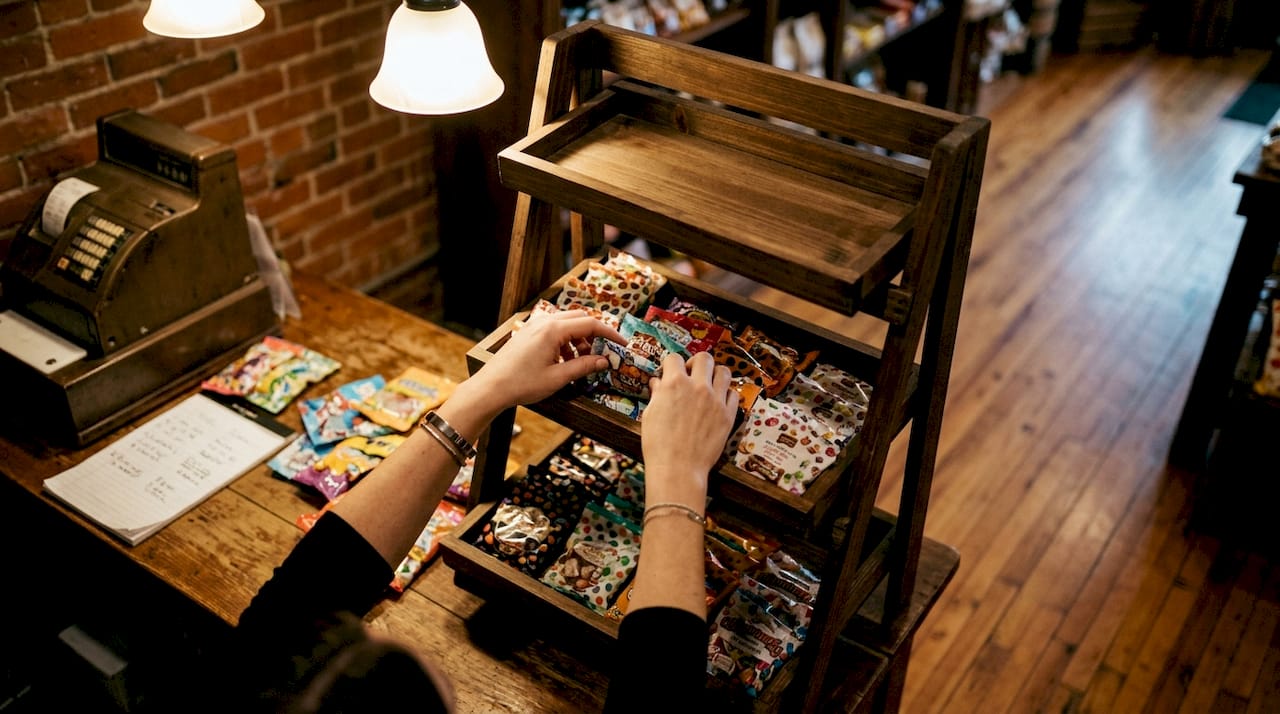
Phase 1: Early season (4–6 weeks before the holiday)
Lead with immediate-consumption formats. Think individually wrapped seasonal shapes, single-serve novelty items, and limited-edition flavors. Shoppers in this phase are browsing and discovering. They respond to newness and visual excitement. Place these items at eye level on endcaps and near store entrances.
Phase 2: Mid-season (2–3 weeks out)
Shift the focus to party-bowl formats, shareable novelty bags, and multi-pack options. Shoppers are now planning gatherings and buying for groups. Cross-merchandise with party supplies, baking items, or seasonal décor to capture basket-building behavior.
Phase 3: Late season (final 1–2 weeks)
Stock deep on variety packs and assortment boxes. This is peak volume time. Shoppers are buying for trick-or-treating, gift giving, or last-minute hosting. Running out of stock in this window is the most costly mistake a buyer can make.
Pro Tip: Start your inventory planning 6–8 weeks before each season. Planning that far ahead secures limited-import products and prevents stockouts during the highest-demand days.
3. What shopper missions drive candy impulse purchases?
Candy shoppers do not all walk into a store with the same goal. Effective seasonal candy promotions target three distinct shopper missions: refreshment, indulgence, and on-the-go convenience. Recognizing which mission your display is serving shapes every decision from product selection to placement.
Clear signage and cross-merchandising near checkout counters significantly increase candy impulse purchases, especially during seasonal peaks. A shopper grabbing a drink who spots a Halloween-themed gummy bag at the register is a classic refreshment-to-impulse conversion. That kind of placement is not accidental.
Tactics that capture each shopper mission:
- Refreshment seekers: Single-serve packs near beverages, coffee stations, or deli counters.
- Indulgence shoppers: Premium boxed chocolates and gift-ready formats on dedicated endcaps with lifestyle imagery.
- On-the-go buyers: Peg-hook displays near store exits, registers, and fuel station counters.
Rotating impulse SKUs weekly at checkout areas keeps the display fresh and prevents shopper fatigue. A display that looks the same for three weeks stops registering in shoppers’ minds. Swap in new flavors, seasonal shapes, or limited-edition items to maintain visual interest.
Pro Tip: Place seasonal candy at multiple touchpoints throughout the store, not just the candy aisle. A secondary display near greeting cards, seasonal décor, or the bakery section captures shoppers who would never visit the main candy section.
4. How to optimize your seasonal candy assortment and pricing
The candy sector is valued over $55 billion, with premium and take-home pack formats outperforming the broader market. That growth is driven by shoppers who want perceived value, not just low prices. A well-built assortment serves multiple price sensitivities at once.
The three-tier assortment play is the most reliable framework for seasonal sweets merchandising. A balanced three-tier mix of premium gifts, mid-tier novelties, and low-cost impulse SKUs covers the full range of shopper budgets and buying occasions.
| Tier | Format | Price Point | Example Use Case |
|---|---|---|---|
| Premium | Gift boxes, large take-home bags | $15–$30+ | Holiday gifting, hosting |
| Mid-tier | Novelty bags, themed multi-packs | $5–$14 | Party bowls, sharing |
| Impulse | Single-serve, peg-hook items | Under $5 | Checkout, on-the-go |
Themed bundle naming adds perceived value without changing the product. A bag labeled “Spooky Mix” or “Valentine’s Treat Box” sells faster than the same product with a generic name. Shoppers respond to occasion-specific framing because it removes the decision-making burden.
Pro Tip: Use shelf-ready cases on endcaps during peak season. They speed up restocking, keep displays tidy, and signal abundance to shoppers. A full-looking display sells more than a sparse one, even when the actual inventory is the same.
5. What merchandising mistakes to avoid
Reactive buying is the single biggest mistake retail candy buyers make. Retailers who plan ahead with strategic inventory depth across phases maximize sales without stockouts or excess shrinkage. Waiting until two weeks before Halloween to order is a guaranteed way to miss the early-season window entirely.
Other common mistakes that cost buyers real sales:
- Ignoring micro-seasons: Skipping occasions like Summerween or National Candy Month leaves incremental revenue on the floor.
- Flat assortments: Stocking only one price tier frustrates both budget shoppers and gift buyers.
- Static displays: Leaving the same display untouched for weeks kills impulse conversion rates.
- Poor inventory depth in late season: Running out of variety packs in the final week before a holiday is the most painful and avoidable loss.
Novelty textures and formats are a real differentiator right now. Freeze-dried candy, for example, delivers a genuinely different eating experience that shoppers talk about and share. Incorporating freeze-dried candy into your seasonal assortment adds a conversation-starting item that stands apart from standard gummies and chocolates.
“The retailers who consistently outperform during seasonal peaks are not the ones with the biggest budgets. They are the ones who plan earlier, rotate more often, and treat every micro-season as a real opportunity rather than a distraction.”
Supplier collaboration is underused by most retail buyers. Working with your candy supplier 8–10 weeks out gives you access to limited-run seasonal items, better pricing on volume orders, and display materials that make execution faster. That relationship pays off most visibly during the final push of peak season.
Key takeaways
Effective seasonal candy merchandising requires a phased approach, a tiered assortment, and consistent display rotation across both major holidays and micro-seasons.
| Point | Details |
|---|---|
| Plan 6–8 weeks ahead | Secure limited-import items and prevent stockouts during peak demand windows. |
| Use the three-phase arc | Shift from novelty singles early season to variety packs and deep stock in late season. |
| Target shopper missions | Match product format and placement to refreshment, indulgence, and on-the-go buyers. |
| Build a three-tier assortment | Cover premium, mid-tier, and impulse price points to serve every shopper budget. |
| Rotate displays weekly | Fresh impulse SKUs at checkout prevent fatigue and sustain conversion rates. |
What I’ve learned from watching retail candy buyers win and lose seasons
by Chadi
The buyers who consistently outperform are not doing anything magical. They are just doing the basics earlier and more deliberately than everyone else. The shift I have noticed most in recent years is the rise of micro-seasons as a genuine revenue driver. A few years ago, Halfway to Halloween was a novelty. Now it is a real planning event for serious buyers.
The other thing I keep coming back to is impulse placement. Retailers underestimate how much location matters relative to product selection. A mediocre product in a great spot at the register will outsell a great product buried in the candy aisle. That is not a knock on product quality. It is just how impulse buying works.
Premium formats are also outperforming expectations. Shoppers are willing to spend more on candy when the packaging signals quality and occasion-appropriateness. A well-designed take-home bag with seasonal branding converts at a meaningfully higher rate than a plain poly bag. If you are not already investing in packaging as part of your merchandising strategy, you are leaving margin on the table.
My honest advice: stop treating micro-seasons as optional. Build them into your calendar now, plan inventory for them the same way you plan for Halloween, and watch what happens to your Q2 and Q3 numbers. The seasonal candy trends are pointing clearly in this direction, and the retailers who move first will own those moments.
— Chadi
Space-man’s seasonal display solutions for retail buyers
Seasonal execution is only as good as the products and packaging behind it. Space-man is a Canadian freeze-dried candy manufacturer offering private label, co-packing, and packaging services built specifically for retail buyers who need flexibility across seasons.
Whether you are building a Halloween endcap or a Valentine’s Day impulse display, Space-man’s ready-to-retail display kits make setup fast and consistent. The 72-bag display kit is designed for distributors and high-volume seasonal campaigns, while the 40-bag starter pack works well for buyers testing freeze-dried candy in a new location. Freeze-dried candy is one of the strongest novelty additions you can make to a seasonal assortment right now. It is a product shoppers pick up, read, and talk about.
FAQ
What is seasonal candy merchandising?
Seasonal candy merchandising is the practice of aligning product selection, display placement, and promotions with consumer buying behavior around holidays and calendar events. The goal is to maximize sales by meeting shoppers at the right moment with the right product.
When should retail buyers start planning seasonal candy inventory?
Retail buyers should plan inventory 6–8 weeks before each major candy season. This timeline secures limited-import items and prevents stockouts during peak demand.
What are the most profitable candy seasons for retailers?
The four major candy seasons, Valentine’s Day, Easter, Halloween, and winter holidays, generate a combined $19.4 billion annually. Halloween typically drives the highest single-season volume of the four.
How do you prevent display fatigue during a long candy season?
Rotating impulse SKUs weekly at checkout and till-point locations keeps displays fresh and maintains shopper engagement throughout a multi-week seasonal window.
What is a micro-season in candy retail?
A micro-season is a smaller, emerging calendar occasion like Summerween or Halfway to Halloween that drives incremental candy sales outside the traditional big four holidays. Retailers who stock for micro-seasons capture sales that most competitors miss entirely.