

TL;DR:
- Increasing candy sales relies on a disciplined product mix, strategic placement, and seasonal promotions that extend beyond traditional holidays. Retailers who treat candy as a managed category and leverage data-driven merchandising, impulse placement, and digital payments maximize profits and capture impulse purchases. Younger consumer trends favor bold flavors, freeze-dried treats, and premium chocolates, making ongoing trend monitoring essential for growth.
Increasing candy sales in stores is the result of combining smart product assortment, precise placement, and well-timed promotions to capture impulse purchases and build repeat traffic. The U.S. confectionery market hit $55 billion in 2025 and is projected to reach $62.2 billion by 2030, meaning the opportunity is real and growing. Retailers who treat candy as a passive category are leaving serious money on the shelf. The strategies below are drawn from current category data, consumer behavior research, and merchandising science to give you a clear, practical path to better candy profits.
1. Increasing candy sales in stores starts with the right product mix
Product assortment is the single most controllable lever you have. A disciplined SKU structure built around 60% core classics, 25% upgraded or themed items, and 15% rotating experimental products delivers consistent revenue while keeping the fixture fresh. Rotating that experimental 15% every 30 to 60 days prevents shopper fatigue without disrupting your bestsellers.
Package size is a bigger deal than most managers realize. Large chocolate packages over 3.5 oz grew 18.3% in dollar sales in convenience stores in 2026, outpacing the broader category. Shoppers perceive share-size bags as better value, which makes them easier to justify at the register.
- Core classics: Kit Kat, Reese’s, Skittles, and Haribo anchor your base and drive repeat visits
- Upgraded/themed items: seasonal packaging, limited editions, and premium chocolate bars like Lindt or Ghirardelli
- Rotating experimental: bold flavors, freeze-dried candy, and novelty textures that generate social buzz
Pro Tip: Swap your experimental 15% around major retail events like back-to-school or the Super Bowl, not just traditional candy holidays. You’ll catch shoppers in a buying mood who are already browsing.
Seasonal assortment planning is equally critical. Stocking holiday-specific SKUs early and pulling them before they go stale keeps your fixture looking intentional rather than picked over.
2. What placement and merchandising tactics effectively boost impulse candy sales?
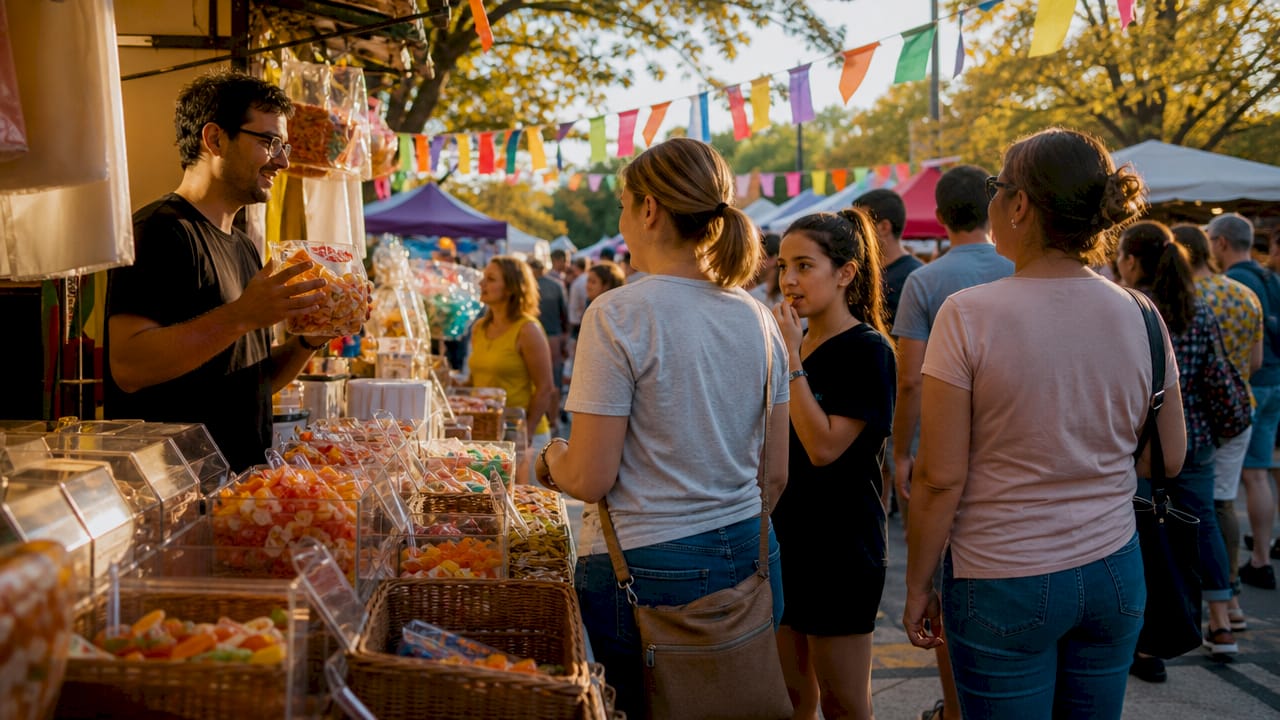
Placement is where candy sales are won or lost. 67% of in-store confectionery purchases are impulsive, which means the product needs to be in the shopper’s line of sight at the exact moment a purchase decision can happen. That moment is almost always near checkout.
Traditional staffed checkout lanes are still prime real estate, but self-checkout is now the critical frontier. Mars Snacking’s Paypoint Optimizer program exists specifically to help grocers align candy displays with modern checkout behaviors. If your self-checkout lanes have bare walls or generic signage, you are losing impulse sales every single day.
- Place single-serve bars and peg bags at eye level in self-checkout aisles
- Use floor-standing spinner racks at the entrance to high-traffic departments like pharmacy or floral
- Position candy near complementary categories: chips, beverages, and seasonal gift items
- In venues with idle time (car washes, nail salons, waiting rooms), a well-stocked vending machine or countertop display converts boredom into a sale
- Cluster candy with toys or collectibles in family-oriented stores to encourage multi-item purchases
Pro Tip: Measure foot traffic patterns using your store’s security camera data or a simple foot-traffic counter app. Place your highest-margin candy items at the peak dwell points, not just at checkout.
In-store digital shelf labels and telemetry tools from companies like Pricer or SES-imagotag can track which fixtures are being touched and which are being ignored. That data removes the guesswork from fixture optimization entirely.
3. Which seasonal and promotional strategies maximize candy sales throughout the year?
Seasonal holidays account for 63% of annual confectionery revenue, which means your promotional calendar is one of your most powerful tools. Most retailers focus on Halloween, Valentine’s Day, Easter, and Christmas. That is a mistake of omission. Mother’s Day, Father’s Day, the 4th of July, and National Candy Month (June) are all under-exploited opportunities with far less competitive noise.
Mars Snacking recommends a three-phase seasonal stocking approach that most retailers skip entirely:
- Early season: Stock immediate-consumption formats like single-serve bars and theater boxes to capture early shoppers who want to treat themselves now
- Mid season: Shift to party-bowl formats and variety packs as the event approaches and group buying increases
- Late season: Introduce variety bags and multi-pack bundles to capture last-minute shoppers and maximize remaining inventory turns
In-store sampling is one of the highest-conversion promotional tactics in food retail. A small sampling station near your candy fixture on a Saturday afternoon can move more product in two hours than a week of passive shelf presence. Pair sampling with a multi-buy offer (buy 3, save $1) and you increase both conversion and basket size simultaneously.
Digital promotions through loyalty apps like Shopify POS, Square Loyalty, or your store’s own program extend the promotional reach beyond the physical store. Push a “Candy of the Week” offer to loyalty members and you create a reason to visit that has nothing to do with their original shopping intent. For more on expanding beyond the big holidays, the seasonal candy trends guide from Space-man covers the Canadian retail calendar in useful detail.
4. How pricing and digital payment adoption improve candy profits
Pricing strategy in candy retail is less about discounting and more about perceived value. Share-size packages deliver a lower cost per ounce, which value-conscious shoppers recognize immediately. Tiered pricing (single bar at $1.99, three-pack at $4.99, share bag at $5.99) gives shoppers a clear upgrade path without requiring a hard sell from your staff.
| Format | Price point | Margin profile | Best placement |
|---|---|---|---|
| Single-serve bar | $1.49 to $2.49 | High per unit | Checkout lane, countertop |
| Share-size bag | $4.99 to $6.99 | High per transaction | Main candy aisle, endcap |
| Multi-pack bundle | $8.99 to $12.99 | Best basket size | Seasonal display, club section |
| Vending machine unit | $1.00 to $2.50 | High margin, low labor | Idle-time venues |
Cashless payment options increase transaction frequency, raise average ticket size, and make it easier for parents to authorize quick purchases for kids. Retailers still running cash-only checkout at vending machines or secondary registers are creating friction at the exact moment a shopper is ready to buy.
Data from cashless transactions also gives you something cash never could: a purchase history by time of day, day of week, and product type. That data feeds smarter replenishment decisions and helps you identify which SKUs are underperforming before they become dead stock.
Pro Tip: If you use Square, Clover, or Shopify POS, tag your candy SKUs as a separate category. Pull a weekly category report and you will quickly see which price points are converting and which are stalling.
For a deeper look at pricing mechanics, the retail candy pricing guide from Space-man walks through margin math with real product examples.
5. Consumer trends every retailer should monitor to stay ahead
Understanding what your customers actually want is the foundation of every other strategy on this list. Gen Z and Millennials prioritize texture, novelty, and TikTok-inspired flavors, and they are reshaping the candy category faster than any generation before them. Gummies now capture 41% of the non-chocolate candy market, a share that was unthinkable a decade ago.
- Bold and spicy flavors: Tajín-dusted gummies, chili-mango hard candy, and hot cinnamon formats are growing fast in both independent and chain retail
- Freeze-dried candy: The crunchy, intensified-flavor format has moved from novelty to mainstream, with strong demand from younger shoppers who discovered it on social media
- Premium and artisan chocolate: Shoppers who view treats as a permissible indulgence are willing to pay more when the value is clearly communicated
- Collectible and limited-edition packaging: Formats that encourage repeat purchases and social sharing (think Pokémon-themed candy or artist collaborations) drive both sales and organic word-of-mouth
Younger consumers view occasional treats as permissible and expect retailers to communicate value clearly. That means shelf signage, price callouts, and product descriptions that justify the indulgence rather than just listing the product name.
Tracking trend data does not require a research budget. Follow candy-focused accounts on TikTok and Instagram, monitor what is selling on Amazon’s candy bestseller list, and pay attention to what your own customers are asking for. The market tells you what it wants. You just have to listen.
For a practical merchandising approach to freeze-dried products specifically, the freeze-dried candy merchandising guide from Space-man covers display placement and product selection in detail.
Key takeaways
Increasing candy sales in stores requires disciplined product assortment, impulse-optimized placement, seasonal promotion beyond the big four holidays, and frictionless payment options working together.
| Point | Details |
|---|---|
| Product mix discipline | Use a 60/25/15 split of classics, themed items, and rotating experimental SKUs. |
| Self-checkout placement | Optimize candy displays in self-checkout lanes to capture the modern impulse buyer. |
| Seasonal expansion | Target second-tier holidays like Mother’s Day and National Candy Month for less competitive gains. |
| Pricing tiers | Offer single-serve, share-size, and bundle formats to give shoppers a clear upgrade path. |
| Trend monitoring | Stock gummies, freeze-dried candy, and bold flavors to meet Gen Z and Millennial demand. |
What I’ve learned after years in the candy category
The retailers I see consistently outperform their category peers share one habit: they treat candy as a managed category, not a passive one. They review their fixture weekly, rotate their experimental SKUs on a schedule, and actually look at their POS data instead of just printing it out and filing it.
The biggest missed opportunity I keep seeing is self-checkout. Managers spend real money building a beautiful main candy aisle and then leave their self-checkout lanes completely bare. That is where a growing share of your shoppers are going, and right now most stores are leaving that real estate empty.
I am also consistently surprised by how few retailers have expanded their seasonal calendar beyond Halloween and Valentine’s Day. The 4th of July, Father’s Day, and even National Candy Month in June are genuinely underserved. You face less competition, your displays stand out more, and shoppers are in a celebratory mindset that makes them easier to convert.
One more thing: do not be afraid of freeze-dried candy. I know it looks like a novelty, but the demand is real and the margins are strong. Younger shoppers are actively seeking it out, and if you do not stock it, they will find it somewhere else. The tips for maximizing candy display sales are worth reading if you want a practical starting point for your next fixture reset.
— Chadi
Ready to stock candy that actually sells?
Space-man makes it straightforward for retail managers and store owners to add high-demand, trend-forward candy to their shelves without the usual sourcing headaches. The private label and co-packing services let you create custom-branded candy products with your store’s own packaging, which is a real differentiator in a crowded candy aisle.
For retailers who want a ready-to-go display solution, the 72-bag display kit ships fully stocked with Space-man’s freeze-dried candy varieties and is designed to drop into a checkout lane or endcap with zero setup friction. It is the fastest way to add a trending product category to your store and start capturing impulse sales from the shoppers who are already looking for it.
FAQ
What drives the most candy sales in retail stores?
Impulse purchasing drives 67% of in-store candy sales, making checkout placement and high-traffic display positioning the single most impactful factor in candy category performance.
How important is seasonal timing for candy sales?
Seasonal events account for 63% of annual confectionery revenue, so stocking early and expanding beyond Halloween and Valentine’s Day to include Mother’s Day, the 4th of July, and National Candy Month creates meaningful incremental sales.
Which candy formats are growing fastest right now?
Large chocolate packages over 3.5 oz grew 18.3% in dollar sales in convenience stores in 2026, while gummies now hold 41% of the non-chocolate segment. Freeze-dried candy is also growing rapidly among younger shoppers.
Do digital payments actually increase candy sales?
Yes. Cashless payment options increase transaction frequency and average ticket size, particularly in vending and secondary checkout environments where cash friction previously killed impulse purchases.
What product mix works best for a candy display?
A structure of 60% core classics, 25% upgraded or themed items, and 15% rotating experimental products balances consistent revenue with the novelty that keeps shoppers coming back to check what is new.