

TL;DR:
- Effective bulk candy purchasing relies on aligning order quantities with actual demand while leveraging tiered discounts to improve margins.
- Applying ABC inventory analysis and planning seasonal orders well in advance helps retailers avoid stockouts and reduce waste, ultimately maximizing profits.
Bulk candy buying strategies are methods retailers and business owners use to purchase confectionery in large quantities while maximizing profit margins and minimizing inventory waste. The difference between a retailer who profits from bulk purchasing and one who ends up with expired stock usually comes down to three things: demand alignment, tiered pricing discipline, and inventory classification. Sources like Candyville.ca and SmallBusinessCoach.org confirm that profitable bulk ordering aligns purchase volumes with actual sales patterns rather than simply chasing the lowest case price. This guide covers every layer of that process, from calculating order quantities to storing product correctly so nothing goes to waste.
1. Estimating the right bulk candy quantities
Overordering is the most expensive mistake in bulk candy purchasing. The fix is simple: start with a consumption baseline before placing any order.
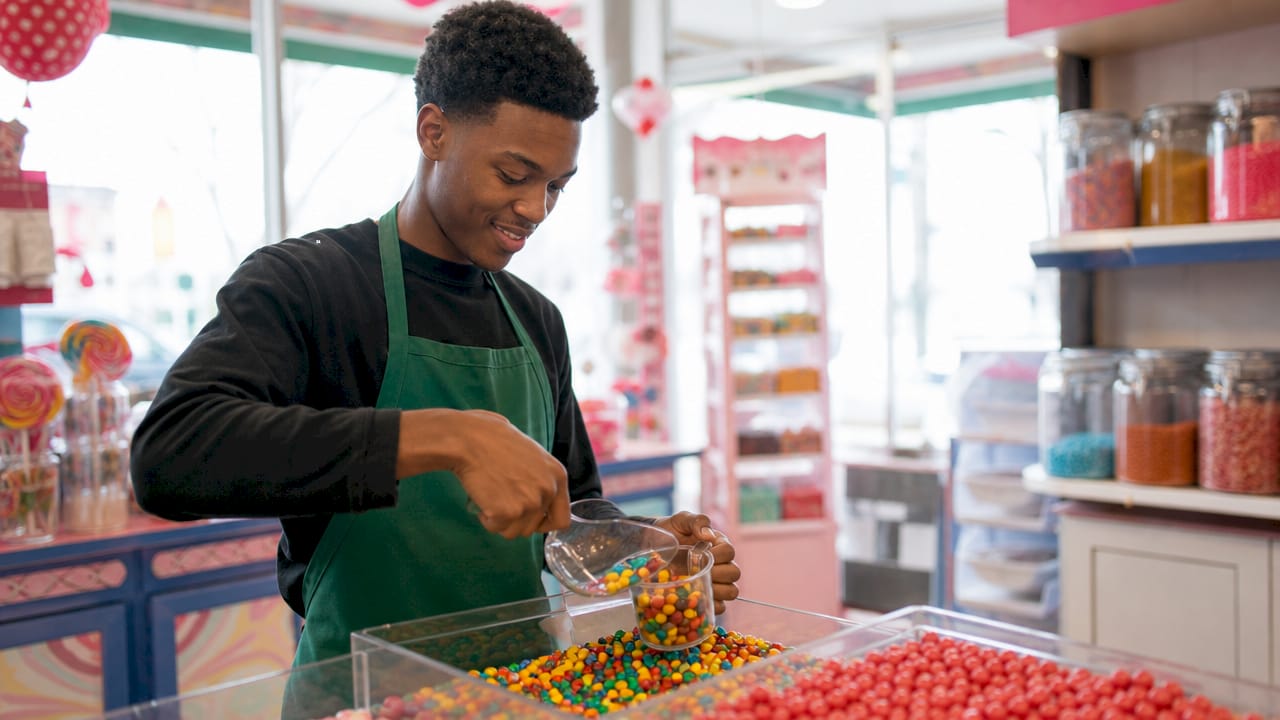
For event-based retailers and party supply businesses, 150 to 200g per guest is the standard planning figure used by experienced buyers. That translates to roughly 33 to 44 pounds for a 100-person event. For ongoing retail operations, replace the per-guest figure with your average weekly unit velocity pulled from your POS system.
Converting grams to bulk packaging units matters more than most buyers realize. A Hershey’s Kisses 25.5-pound case yields approximately 1,400 individual pieces, which gives you a concrete reorder point once you know your weekly sell-through rate. Build your order quantity from that number, not from what looks like a good deal on paper.
Key inputs for your quantity estimate:
- Historical sales data by SKU for the past 90 days
- Upcoming events, promotions, or seasonal spikes on your calendar
- Current on-hand inventory and days of supply remaining
- Supplier minimum order quantities and case pack sizes
Pro Tip: Scale your order by event type. A corporate candy bar needs roughly 30% more volume than a casual birthday party of the same size, because grazing behavior increases when candy is displayed openly.
2. Leveraging tiered pricing to maximize margins
Tiered pricing is the single most direct lever retailers have on candy margin. The math is straightforward once you see real numbers.
Life Savers hard candy pricing illustrates the impact clearly: $0.42 per ounce at one pound, $0.34 per ounce at five pounds, and $0.27 per ounce at 25 pounds. That is a 36% cost reduction per ounce by moving from the smallest to the largest purchase tier. Margin optimization requires calculating the actual per-serving cost after tiered discounts and repackaging conversions, not just comparing headline case prices.
| Purchase size | Cost per oz | Margin impact |
|---|---|---|
| 1 lb (small) | $0.42/oz | Lowest margin, highest flexibility |
| 5 lb (mid) | $0.34/oz | Moderate savings, manageable storage |
| 25 lb (large) | $0.27/oz | Best unit economics, requires storage capacity |
The comparison above shows that jumping from one pound to 25 pounds improves your cost basis by about a third. That improvement only translates to actual profit if the product sells before it expires.
Pro Tip: If you are $15 short of the next discount threshold, add a fast-moving SKU you already need rather than buying more of the same item. You hit the tier and diversify your inventory at the same time.
For a deeper look at how volume discounts affect your retail pricing decisions, the Space-man guide on candy retail pricing breaks down the math from cost to shelf price.
3. Using ABC analysis to prioritize your purchases
ABC inventory classification is the framework professional buyers use to decide how much of each SKU to stock and how often to reorder. It prevents the common mistake of treating every candy the same.
ABC analysis segments SKUs into three tiers: A items represent roughly 20% of SKUs but account for 80% of inventory value, B items cover 30% of SKUs and 15% of value, and C items make up 50% of SKUs but only 5% of value. Applying this framework to your candy catalog immediately tells you where to concentrate your bulk purchasing energy.
Retailers buy in tiers by SKU importance, purchasing A-items in larger batches due to higher turnover, while managing B and C items more conservatively to minimize dead stock.
Practical steps for applying ABC analysis to candy purchasing:
- Pull 90-day sales revenue by SKU and rank from highest to lowest
- Label the top 20% of SKUs by revenue contribution as A items
- Set reorder points and safety stock levels for A items first, since a stockout on these costs the most
- Order B items in moderate quantities with monthly review cycles
- Order C items only when stock drops to near zero, or consider dropping slow movers entirely
Sales velocity and shelf metrics like inventory turnover and sales per square foot sharpen this analysis further. A candy that turns over every five days is a very different purchasing decision than one that sits for six weeks.
4. Planning for seasonal demand spikes
Seasonal peaks like Halloween, Valentine’s Day, and Easter are predictable. Missing them because of poor lead time planning is an avoidable and expensive problem.
Bulk confectionery suppliers report lead times of four to eight weeks after order confirmation. That means a Halloween order needs to be placed no later than early September, and ideally in late August if you want any buffer. Retailers who wait until October to order seasonal candy are essentially hoping their supplier has leftover stock.
Steps for seasonal bulk candy planning:
- Map your top three to five seasonal periods on a 12-month calendar at the start of each year
- Pull last year’s sell-through data for each seasonal SKU to set your baseline order quantity
- Add a 15 to 20% buffer order on top of your baseline to account for demand variance
- Place your primary order eight weeks before the season start date
- Place a smaller backup order four weeks out to fill any gaps identified after the primary order ships
Using sales history and early backup orders is the standard practice among retailers who consistently avoid seasonal stockouts. Coordinating your seasonal candy displays and packaging with the order schedule also helps move product faster once it arrives.
5. Storing bulk candy to protect shelf life and reduce write-offs
Buying smart means nothing if the product degrades before it sells. Proper storage is where bulk candy buying guides often cut corners, but the financial stakes are real.
Most bulk candy stays fresh for six to 18 months when stored correctly. The range is wide because different candy types have very different sensitivities. Chocolates are the most demanding, requiring temperatures between 60 and 70°F and humidity below 50%. Gummies absorb moisture and stick together above 65% relative humidity. Hard candies are the most forgiving but still degrade in direct sunlight or heat above 75°F.
Storage best practices for bulk candy:
- Store all candy away from direct light, heat sources, and exterior walls
- Use airtight containers or resealable bags once original bulk packaging is opened
- Label every container with the received date and best-before date
- Rotate stock using first-in, first-out (FIFO) discipline without exception
- Keep chocolates and gummies in separate storage zones with appropriate temperature controls
Pro Tip: Run two parallel calculations before placing any large order: your demand estimate and your freshness window. If your sell-through rate suggests you will move 20 pounds per month and the candy has a six-month shelf life, your maximum order size is 120 pounds. Buying more than that is buying waste.
For freeze-dried candy specifically, Space-man’s guide on freeze-dried candy shelf life covers storage requirements in detail, including how packaging type affects longevity.
Key takeaways
The most effective bulk candy buying strategy combines demand-based quantity planning, tiered pricing discipline, ABC inventory classification, early seasonal ordering, and proper storage to protect margins at every stage.
| Point | Details |
|---|---|
| Quantity planning | Use 150 to 200g per guest or weekly sales velocity to set order sizes before checking prices. |
| Tiered pricing | A 25-pound order can cost 36% less per ounce than a one-pound order; calculate per-serving cost, not case price. |
| ABC classification | Focus bulk purchasing on A-tier SKUs that drive 80% of revenue; order C items conservatively. |
| Seasonal lead times | Place primary seasonal orders eight weeks out; add a backup order at four weeks to cover demand variance. |
| Storage discipline | Match order quantities to your sell-through rate and shelf life window to eliminate write-offs. |
What I have actually learned buying candy in volume
I have seen retailers make the same mistake repeatedly: they find a great price on a slow-moving SKU and buy a full pallet because the math on paper looks incredible. Six months later, half of it is written off. The discount was real. The demand was not.
The retailers who consistently win at bulk purchasing treat supplier relationships the way good buyers treat any vendor partnership. They communicate upcoming promotions early, ask about incoming price changes, and negotiate not just on price but on payment terms and minimum order flexibility. A supplier who knows your seasonal calendar will often hold inventory for you or flag when a popular SKU is running low.
Data-driven buying sounds obvious until you watch someone order based on gut feel and end up with 40 pounds of a candy that their customers stopped buying two seasons ago. Your POS system is the most underused tool in most candy retail operations. Pull the velocity reports weekly. Let the numbers tell you what to buy, not what looked good at the trade show.
One more thing worth saying plainly: the best bulk deals are on candies that turn over fast, not just the ones with the lowest list price. A candy that moves in five days at a moderate discount beats a candy that sits for two months at a deep one.
— Chadi
How Space-man helps retailers buy and sell smarter

Space-man is a Canadian freeze-dried candy manufacturer and distributor that gives retailers more than just product. The private label and co-packing services let you put your own brand on bulk candy orders, which is a direct path to better margins and stronger shelf presence without building your own production line. Whether you need custom bagging, branded packaging, or a ready-to-sell display kit, Space-man handles the fulfillment side so you can focus on selling. Retailers looking to test freeze-dried candy as a new SKU can start with the 40-bag starter pack to validate demand before committing to larger volumes.
FAQ
How much candy should I order per guest for an event?
Plan for 150 to 200g per guest as your baseline. Scale up by 20 to 30% for open-display setups where grazing behavior increases consumption.
What is ABC inventory analysis in candy retail?
ABC analysis ranks SKUs by revenue contribution. A items drive 80% of value from just 20% of SKUs, so those get priority in bulk purchasing volume and reorder frequency.
How far in advance should I order seasonal bulk candy?
Supplier lead times run four to eight weeks, so place your primary seasonal order at least eight weeks before peak demand and a backup order at four weeks.
How long does bulk candy stay fresh?
Most bulk candy lasts six to 18 months when stored in cool, dry, dark conditions. Chocolates and gummies have stricter temperature and humidity requirements than hard candies.
Does buying at the highest bulk tier always save money?
Not always. The per-unit cost drops significantly at higher tiers, but the savings only materialize if the product sells before expiration. Match your order size to your sell-through rate, not just the best price point.