

TL;DR:
- Candy manufacturing generates significant waste across raw ingredients, finished products, packaging, and energy.
- Implementing sustainable packaging and optimizing production processes can greatly reduce overall waste.
- Upcycling waste into resources like animal feed or energy offers both environmental and financial benefits.
Candy manufacturing generates far more waste than most people outside the industry expect. Food waste specialists handle over 1 billion pounds of food waste every year, with candy and sugar products making up a significant share of that volume. If you’re running a candy operation in Canada, waste reduction is no longer just a badge you wear for your marketing materials. It is an operational and financial imperative. This guide breaks down the waste streams affecting your facility and provides concrete, tested strategies to help you cut losses, lower costs, and build a more resilient operation.
Table of Contents
- Understanding waste streams in candy operations
- Implementing sustainable packaging solutions
- Process optimization and supply chain innovation
- Circular economy and upcycling in confectionery
- Why most waste reduction guides miss what manufacturers really need
- Take the next step toward zero-waste candy operations
- Frequently asked questions
Key Takeaways
| Point | Details |
|---|---|
| Know your waste streams | Map ingredient, packaging, and process waste sources to target the biggest reduction opportunities. |
| Prioritize sustainable packaging | Switching to recyclable or biodegradable wraps cuts both material waste and compliance risks. |
| Leverage process innovation | Adopting smart inventory and decontamination tech minimizes food, water, and energy waste. |
| Embrace the circular economy | Upcycle scrap into energy, fertilizer, or new products to save money and cut environmental impact. |
| Plan waste reduction from day one | Integrate waste flow design and local regulations early for smarter, more sustainable facilities. |
Understanding waste streams in candy operations
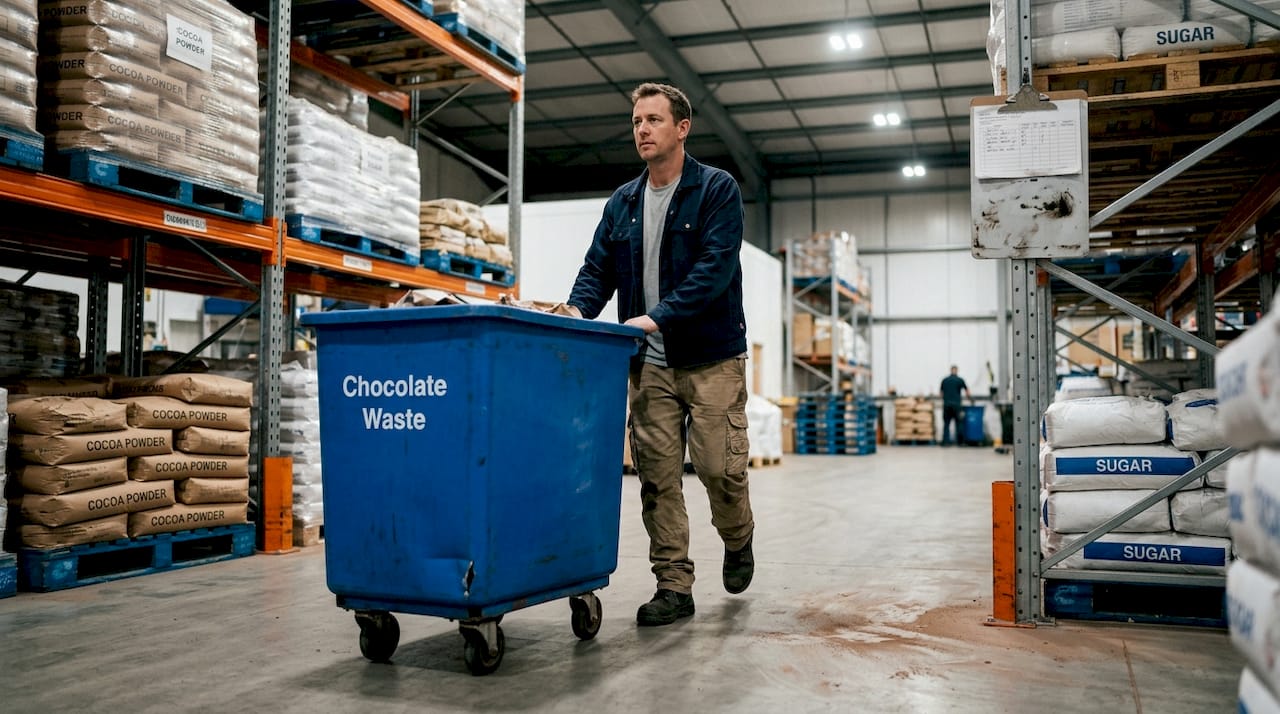
Before you can fix a problem, you need to know exactly where it lives. Most candy facilities generate waste across four major categories: raw ingredient loss, off-spec finished product, packaging material, and energy or water inefficiencies. Each one represents a different challenge, and each one demands a different approach.
Raw ingredient loss happens throughout mixing, cooking, coating, and depositing stages. Ingredients spill, weigh out inaccurately, or degrade before use. Off-spec product is finished candy that doesn’t meet size, color, or texture standards and gets rejected at quality control. These two streams alone can quietly consume 3 to 8 percent of your production volume depending on process maturity.
Packaging waste is often underestimated. Trim waste from film rolls, incorrect label runs, and mis-sealed pouches pile up fast in high-volume environments. If you’re producing thousands of units per shift, even a 1 percent packaging rejection rate generates real tonnage. Energy and water inefficiencies are harder to see but equally damaging, especially when running high-temperature processes like enrobing or kettle cooking.
The scale of this problem is real. Specialists like Green Field Solutions manage 12 million pounds annually in chocolate and candy bar waste alone. That number puts the industry’s inefficiency into sharp perspective.
| Waste stream | Where it occurs | Common cause |
|---|---|---|
| Raw ingredient loss | Mixing, weighing, depositing | Equipment calibration, spillage |
| Off-spec finished product | QC, packaging line | Process inconsistency |
| Packaging material | Sealing, labeling, trimming | Film waste, setup errors |
| Energy inefficiency | Cooking, cooling, HVAC | Poor scheduling, aging equipment |
| Water waste | Cleaning, cooling | Unoptimized CIP cycles |
Pro Tip: Run a full waste stream audit before investing in any new equipment or process. Walk every stage of your production line and physically document where material leaves the system, whether into the bin, down the drain, or into rejected product batches. You cannot reduce what you haven’t measured.
Understanding sustainable packaging concepts early in your audit process helps you see packaging waste not just as a disposal problem, but as a design opportunity.
Implementing sustainable packaging solutions
Once you know where your waste is coming from, packaging is usually the quickest place to make visible, measurable improvements. It’s also one of the areas with the most regulatory pressure. Canada’s plastics policies are evolving, and global buyer requirements are tightening. You don’t want to be caught retrofitting your entire packaging line under deadline.
The three most practical options for confectionery packaging right now are conventional plastic, paper-based materials, and biodegradable or compostable films. Each comes with real tradeoffs that affect your line speed, your storage requirements, and your customer perception.
| Packaging type | Recyclability | Line compatibility | Cost level | Barrier performance |
|---|---|---|---|---|
| Conventional plastic | Low to moderate | High | Low | Excellent |
| Paper-based wrap | High | Moderate | Moderate | Good |
| Biodegradable film | Variable | Moderate | Higher | Moderate |
| Recyclable mono-material film | High | High | Moderate | Good |
Paper-based packaging is gaining serious momentum. Coveris developed MonoFlexFibre Pure Twist, a material that replaces plastic in twist-wrapped confectionery and meets the EU’s 95/5 recyclability guidelines under the Packaging and Packaging Waste Regulation. While Canadian regulations differ, the direction of travel is the same. Paper is cost-competitive and increasingly viable for wrapping, pouching, and labeling applications.
Common mistakes manufacturers make when switching packaging include:
- Switching all SKUs at once instead of piloting on one or two products first
- Ignoring moisture barrier requirements for high-humidity or sugar-heavy products
- Underestimating line speed impacts when moving from high-slip plastic film to paper
- Failing to communicate the change to retail buyers and end consumers before rollout
- Choosing biodegradable options without verifying actual composting infrastructure in your region
Pro Tip: Pick one mid-volume SKU for a packaging pilot. Run it for 60 days, collect return data, retailer feedback, and real shelf performance numbers. That data will make your broader rollout much smoother and protect you from expensive mistakes at scale.
If you want to go deeper on your options, reviewing green packaging for candy, understanding plastic packaging types, and exploring biodegradable candy packaging will give you a well-rounded picture before committing to a direction.
Process optimization and supply chain innovation
Packaging is visible and tangible. But some of the biggest waste savings in candy manufacturing come from inside your process, in the decisions you make about production runs, inventory levels, and raw material purchasing. This is where technology is changing the game fast.
Hershey is the clearest large-scale example in confectionery. The company used decision-intelligence software to reduce inventory by $100M over two years by aligning production more tightly with actual demand signals. Less overproduction means less product hitting its best-before date in a warehouse. Less safety stock means fewer ingredients sitting in storage past optimal quality windows.
“Hershey reduced inventory by $100 million over two years by applying decision-intelligence software to production planning and demand forecasting, demonstrating that supply chain optimization is one of the most powerful tools for reducing waste in confectionery.”
You don’t need Hershey’s budget to apply similar thinking. Here are practical steps to start optimizing:
- Map your current demand patterns using at least 12 months of sales data before making any production scheduling changes
- Identify your top five overproduced SKUs and calculate the actual spoilage or markdown cost attached to each
- Integrate your inventory system with your procurement function so purchasing decisions reflect real stock levels, not habit-based ordering
- Use menu optimization thinking to rationalize your SKU count and focus production on higher-margin, lower-waste products
- Schedule shorter, more frequent production runs rather than long batch runs that tie up ingredient freshness
- Introduce automated weight checking at key process points to catch off-spec product earlier and reduce downstream rework
On the sanitation and facility side, Canadian Clean Works has developed a technology that uses hydrogen peroxide mist, ozone, and UV light to decontaminate produce waterlessly, cutting food waste and dramatically reducing wastewater generation in food processing environments. For candy manufacturers that run wet cleaning operations, this kind of innovation in clean-in-place (CIP) technology is worth serious attention. Reducing your water and chemical consumption in sanitation doesn’t just lower costs. It also reduces your environmental footprint across multiple categories simultaneously.
Circular economy and upcycling in confectionery
Once you’ve tightened your process and packaging, the next level of waste reduction thinking moves from “minimize what goes out” to “find value in what does go out.” That’s the foundation of a circular economy approach, and it’s already generating measurable financial returns in confectionery.
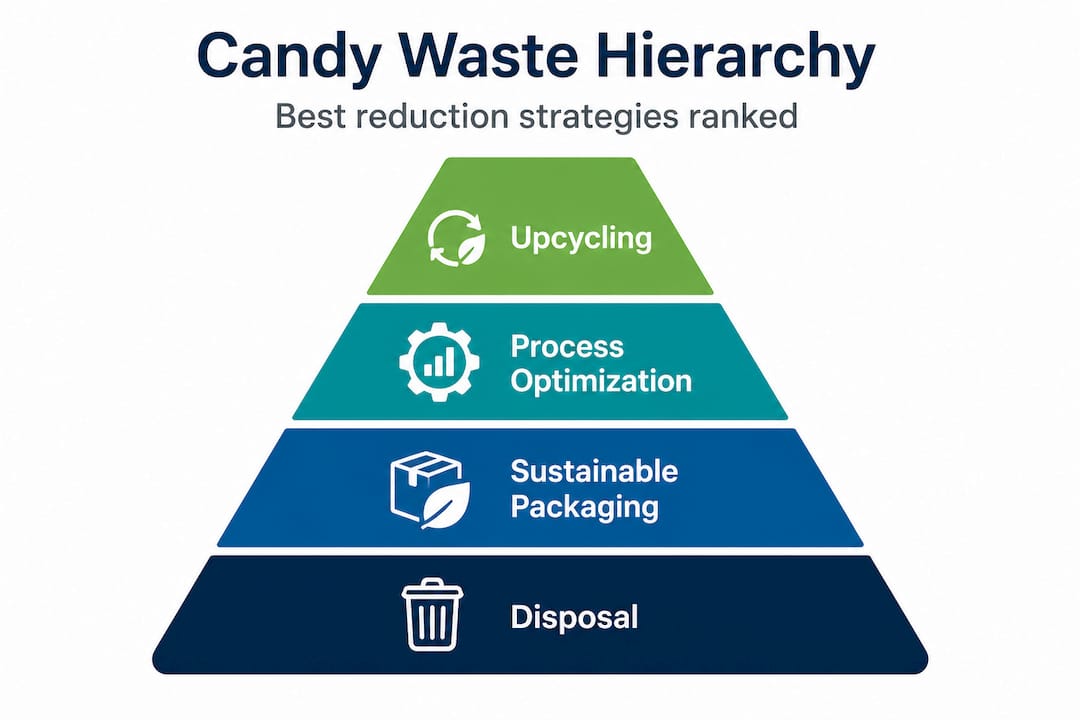
The circular economy model treats waste as a resource. In practical terms for a candy manufacturer, this means finding uses for materials that would otherwise go into landfill, incineration, or expensive specialty disposal streams.
Realistic upcycling options for candy manufacturers include:
- Animal feed from off-spec gummies, hard candies, and sugar-based product rejects (subject to Canadian feed regulations)
- Compost inputs from organic candy material, fruit-based fillings, and ingredient trims
- Bio-energy generation by converting high-sugar waste streams into feedstocks for anaerobic digestion
- Ingredient rework where off-spec candy is reprocessed into new batches within regulatory limits
- Cocoa shell and hull use for fertilizer, mulch, or energy generation at facilities handling chocolate coatings
Ferrero demonstrates exactly what’s possible at scale. The company reclaims 50,000 tons annually of cocoa shell waste and redirects it to energy generation and fertilizer production, saving €4 million every year. That’s not a rounding error on a sustainability report. It’s a real revenue and cost-avoidance number that the finance team notices.
Ingredient-level innovation also matters. Research shows that jelly candies made with apple pomace have a carbon footprint of 1.3946 kg CO2 per kg, measurably lower than conventional manufacturing methods that produce around 1.574 kg CO2 per kg. Apple pomace is a byproduct of juice and cider production, which means using it in candy formulations simultaneously reduces agricultural waste and lowers your product’s environmental impact. That’s a story your retail buyers and consumers will respond to.
The economic case is straightforward: every kilogram of waste you redirect from disposal has two financial effects. It reduces your disposal cost, and it either creates a new revenue stream or reduces your raw material cost. Over a full production year, that math compounds significantly for mid-sized manufacturers.
Why most waste reduction guides miss what manufacturers really need
Here’s the honest version of this conversation: most articles on confectionery waste reduction list what to recycle and which certifications look good on your website. Very few address the practical barriers that make or break actual implementation in a Canadian manufacturing facility.
The biggest gap is timing. Waste reduction works best when it’s designed into your facility and process from the beginning, not retrofitted after the fact. If you’re planning a facility expansion or a new production line, that is your moment to design waste flows into the layout, pursue TRUE zero-waste certification, and build recyclability into your packaging choices before you’re locked into equipment and infrastructure. Waiting until operations are running means every change carries a much higher cost and disruption risk.
The second gap is regulatory complexity. Canada’s waste regulations are not uniform. Provincial rules around hazardous waste, specialty chemical disposal from cleaning operations, and organic waste diversion differ meaningfully between Ontario, British Columbia, Alberta, and Quebec. Multinational guides and industry reports almost never account for this patchwork, which means a strategy that works perfectly in one province may create compliance headaches in another. Local expertise from a Canadian waste management specialist is not optional for serious operators. It’s essential.
The third gap is prioritization. Most manufacturers try to fix everything at once and end up making incremental progress on too many fronts. The better approach is to identify your single highest-volume waste stream, build a focused reduction plan around that specific stream, demonstrate ROI to internal stakeholders, and then expand the program. Wins build momentum. Complexity kills it.
Sustainability in candy manufacturing is ultimately a competitive advantage. The manufacturers who build lean, low-waste operations today are the ones who will have the margin flexibility and supply chain resilience to win retailer shelf space and meet tightening customer expectations over the next decade.
Take the next step toward zero-waste candy operations
Waste reduction in candy manufacturing requires the right operational partners alongside the right strategies.

At Spaceman, we work directly with Canadian candy manufacturers to deliver solutions that support both product quality and sustainability goals. Our private label and co-packing services are built to minimize packaging waste and reduce production overruns by aligning runs more precisely with real demand. If you’re exploring freeze dried formats as a lower-waste, longer-shelf-life option, our freeze dried candy starter kit gives you a practical way to test the category without committing to large production volumes. Let’s build something that works for your facility, your customers, and your sustainability targets.
Frequently asked questions
What is the most common waste in candy manufacturing?
Off-spec finished product and packaging material are the most frequent waste streams, with 12 million pounds of chocolate and candy bar waste managed professionally in North America each year.
How can upcycling reduce waste costs for candy makers?
Upcycling redirects disposal costs into recoverable value. Ferrero’s cocoa shell recovery program saves €4 million per year by converting waste into energy and fertilizer instead of paying for disposal.
What sustainable packaging options are available for confectionery in Canada?
Paper-based wraps, biodegradable films, and recyclable mono-material plastics are all viable options. MonoFlexFibre Pure Twist paper is one example of a paper format now replacing plastic in twist-wrapped confectionery at commercial scale.
How do inventory optimization tools help reduce waste?
They align production more closely with real demand, cutting overproduction and ingredient spoilage. Hershey’s decision-intelligence approach reduced inventory by $100 million over two years through better production planning.
Does reducing food waste also reduce environmental impact?
Yes, consistently. Formulations using upcycled ingredients like apple pomace show a measurably lower carbon footprint compared to conventional candy manufacturing, reducing both energy and emissions simultaneously.