

TL;DR:
- Freeze-dried foods retain more nutrients and last longer than dehydrated foods because they remove nearly all moisture through sublimation. Dehydration uses heat and airflow, resulting in a denser, chewier product with a shorter shelf life and lower nutrient retention. The choice depends on your needs for long-term storage, nutrition, budget, and preferred texture.
Freeze-dried and dehydrated foods are not the same thing. Both remove moisture to preserve food, but they use completely different methods, and the results are worlds apart in texture, nutrition, and shelf life. Freeze-drying removes 98–99% of moisture through a vacuum sublimation process at around -40°F, while dehydration removes 90–95% of moisture using heat between 95–165°F. That gap in moisture removal sounds small, but it drives massive differences in how the food looks, tastes, and lasts. If you have ever wondered why freeze-dried strawberries crunch like a chip while dried mango strips are chewy and dense, this is exactly why.
Is freeze dried the same as dehydrated? The core difference explained
The short answer is no. Freeze-drying and dehydration are two separate preservation techniques with different physics behind them.
Freeze-drying, technically called lyophilization, works by freezing food solid and then placing it in a vacuum chamber. Under low pressure, the ice in the food skips the liquid phase entirely and converts directly from solid to vapor. This process is called sublimation. Because no heat is involved, the food’s cellular structure stays almost perfectly intact.
Dehydration works the opposite way. It applies warm air and heat to slowly evaporate moisture out of food over several hours. The cells shrink, collapse, and compress as water leaves. The result is a denser, chewier product with a noticeably different texture.
The key takeaway: freeze-drying preserves structure, dehydration removes water. Both extend shelf life, but they do it through fundamentally different means.
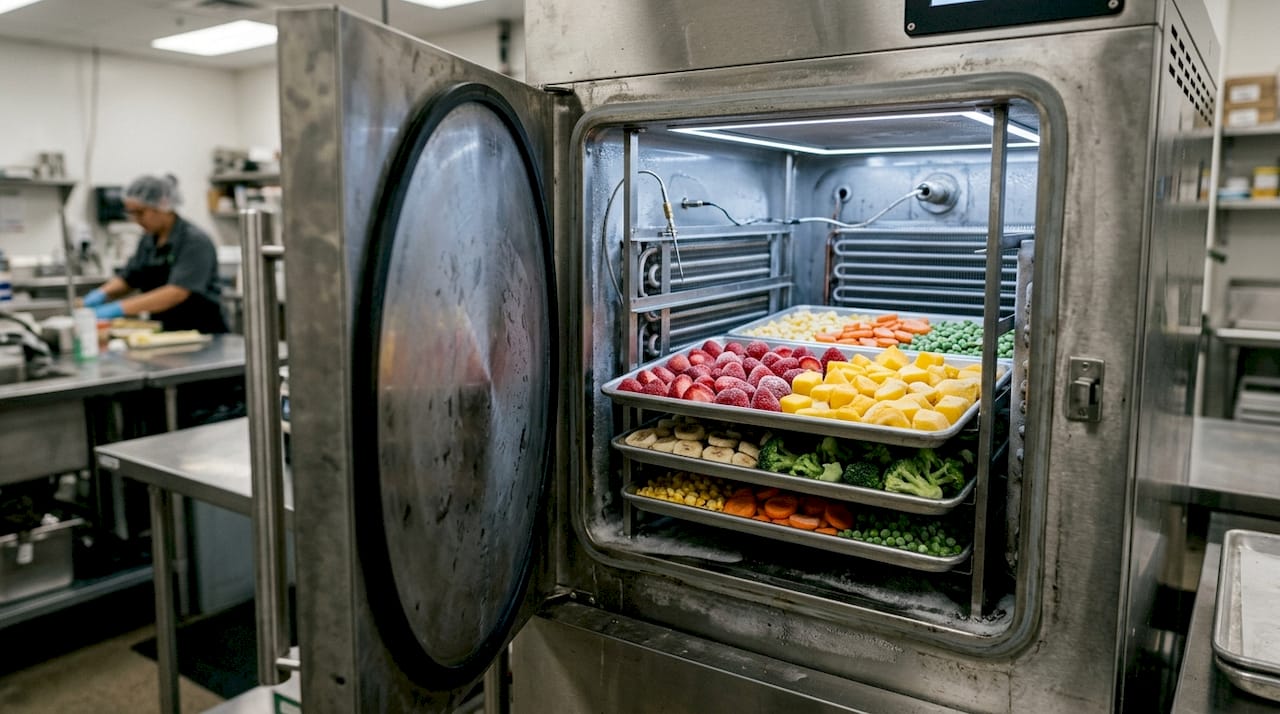
How does freeze drying work?
Freeze-drying happens in three stages: freezing, primary drying, and secondary drying.
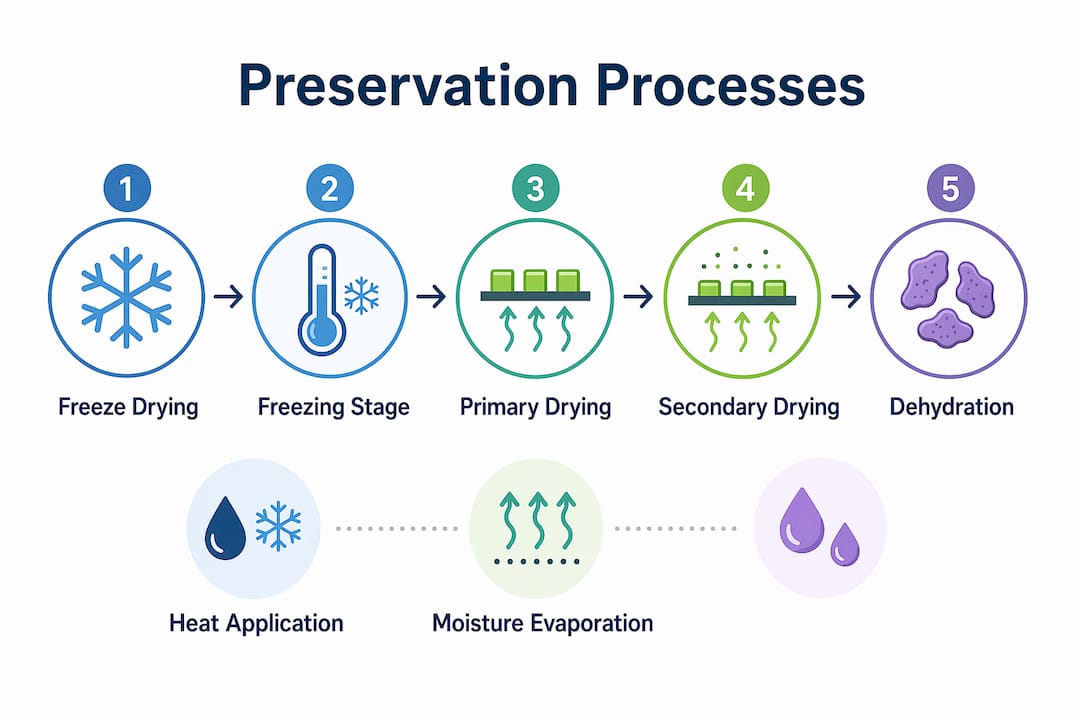
First, the food is frozen to below -40°F. Then it goes into a vacuum chamber where pressure drops low enough that ice sublimates directly into vapor. A condenser captures that vapor and removes it from the system. Finally, a gentle secondary drying phase removes any remaining bound moisture, leaving the food with just 1–3% residual water content.
Because no heat touches the food during this process, the cellular structure stays intact. That porous, sponge-like structure is what makes freeze-dried foods rehydrate so quickly and completely. Add water, and they bounce back close to their original texture within minutes.
Common freeze-dried foods include:
- Fruits like strawberries, blueberries, and raspberries
- Vegetables like peas, corn, and spinach
- Meats and full meals used in emergency food kits
- Dairy products like yogurt bites and cheese
- Candy (yes, freeze-dried candy is a real and delicious thing)
Freeze-drying is the gold standard for preserving heat-sensitive vitamins and maintaining cellular structure during drying. That is why it is used heavily in pharmaceuticals, military rations, and premium food products.
Pro Tip: If you are buying freeze-dried fruit for a recipe, check the ingredient list. True freeze-dried fruit has one ingredient: the fruit itself. No added sugar, no preservatives.
What is dehydration and how does it differ?
Dehydration is the older and more accessible of the two methods. It uses heat, typically between 95°F and 165°F, combined with air circulation to pull moisture out of food over several hours. A home dehydrator or even a conventional oven can do the job.
The process is straightforward but not gentle. Heat causes cell walls to collapse and shrink. Water evaporates, but so do some volatile nutrients and flavor compounds. The collapsed cellular structure in dehydrated food is why jerky is chewy, dried apricots are leathery, and sun-dried tomatoes are dense and concentrated.
Common dehydrated foods include:
- Beef jerky and other meat snacks
- Dried fruits like raisins, apricots, and cranberries
- Dried herbs and spices
- Vegetable chips and sun-dried tomatoes
- Trail mix components
The biggest advantage of dehydration is cost and simplicity. A quality home dehydrator runs between $60 and $350. That is a fraction of the investment needed for freeze-drying equipment. For short to medium-term storage and everyday snacking, dehydration is a practical and proven method.
Pro Tip: When dehydrating at home, slice food uniformly. Uneven pieces dry at different rates, and thicker sections can stay moist enough to grow mold even when the outside looks dry.
Nutritional differences: how do freeze-dried and dehydrated foods compare?
Freeze-drying wins the nutrition battle clearly. Because no heat is applied, freeze-drying retains 90–97% of vitamins including vitamin C and B vitamins. Dehydration, by contrast, retains roughly 50–80% of those same nutrients, with heat-sensitive vitamins taking the biggest hit.
Vitamin C is a good example. It degrades quickly when exposed to heat. Freeze-dried strawberries retain most of their vitamin C content. Traditionally dried strawberries lose a significant portion of it during the drying process. Minerals and proteins hold up better under heat, so the gap narrows for those nutrients, but it does not disappear.
“Freeze drying remains the gold standard for preserving heat-sensitive vitamins and maintaining cellular structure during drying.” — EnWave Food Science
The table below summarizes the key nutritional differences:
| Nutrient category | Freeze-dried retention | Dehydrated retention |
|---|---|---|
| Vitamin C | ~90% | ~50–60% |
| B vitamins | ~90–97% | ~60–80% |
| Minerals | High | Moderate to high |
| Proteins | High | Moderate to high |
| Antioxidants | High | Reduced by heat |
For anyone asking whether freeze-dried food is healthy, the answer is yes. It is one of the most nutritionally complete preservation methods available.
Shelf life, texture, and cost: what to expect
Shelf life is where freeze-drying pulls far ahead. Freeze-dried foods last 25–30 years when sealed properly at around 60°F. Dehydrated foods typically last 2–5 years under similar conditions. That is a dramatic difference for anyone building an emergency food supply or stocking a pantry for the long term.
Texture after rehydration also differs significantly. Freeze-dried foods rehydrate close to their original form because the cell structure was preserved. Dehydrated foods rehydrate into something softer and mushier than the original, because the collapsed cells cannot fully recover.
Cost is the trade-off. Home freeze-drying equipment runs between $2,500 and $4,500, with high energy consumption and long processing cycles. A dehydrator costs a fraction of that and is simple enough for a beginner to use on a Sunday afternoon.
Here is a quick comparison:
| Factor | Freeze-dried | Dehydrated |
|---|---|---|
| Moisture removed | 98–99% | 90–95% |
| Shelf life (sealed) | 25–30 years | 2–5 years |
| Texture after rehydration | Near fresh | Chewy or compressed |
| Home equipment cost | $2,500–$4,500 | $60–$350 |
| Nutrient retention | 90–97% | 50–80% |
For a deeper look at how these two methods affect retail and product quality, the dehydrated vs freeze-dried comparison on the Space-man blog covers the commercial side well.
When should you choose freeze-dried vs dehydrated foods?
The right choice depends on what you need the food to do.
Choose freeze-dried when:
- You are building a long-term emergency food supply and need 20+ year shelf life.
- Nutrient retention is a priority, such as for children’s snacks or health-focused diets.
- You need quick rehydration, like in camping meals or instant recipes.
- You want a light, crunchy snack with minimal processing, like freeze-dried candy or fruit.
Choose dehydrated when:
- Budget is a constraint and you want to preserve food at home affordably.
- You are making snacks like jerky or trail mix where a chewy texture is desirable.
- You need short to medium-term storage of 1–5 years.
- You are drying herbs, spices, or vegetables for cooking use.
One important safety note: freeze-drying does not kill bacteria. It puts microbes into a dormant state. When you rehydrate freeze-dried meat or eggs, those microbes can become active again. Cooking after rehydration is required for food safety, not optional.
Also worth knowing: not all foods are ideal for freeze-drying. High-fat and oily foods, as well as raw meats, require careful pre-processing. Without it, they can damage equipment or create safety hazards.
Pro Tip: For freeze-dried candy specifically, no rehydration is needed. The crunchy, airy texture is the whole point. Just open the bag and enjoy.
Key Takeaways
Freeze-drying and dehydration are distinct preservation methods with different outcomes for moisture, nutrition, texture, and shelf life. Choosing between them depends on your storage goals, budget, and how you plan to use the food.
| Point | Details |
|---|---|
| Different processes | Freeze-drying uses vacuum sublimation; dehydration uses heat and air circulation. |
| Nutrient retention | Freeze-drying retains 90–97% of vitamins; dehydration retains 50–80%. |
| Shelf life gap | Freeze-dried foods last 25–30 years sealed; dehydrated foods last 2–5 years. |
| Cost difference | Home freeze-dryers cost $2,500–$4,500; dehydrators cost $60–$350. |
| Food safety | Freeze-drying does not kill bacteria; cooking after rehydration is required for meats and eggs. |
My honest take on freeze-drying vs dehydrating after years in the space
People often assume freeze-dried means “better in every way.” That is not quite right, and I have seen that assumption lead to some expensive mistakes.
The texture difference is real and matters more than most guides admit. Freeze-dried foods rehydrate beautifully, but they are also fragile. They crumble easily, absorb ambient moisture fast once opened, and need airtight packaging to stay shelf-stable. Dehydrated foods are tougher, literally. They hold up better in a backpack, a lunch bag, or a loose container.
The nutrient retention advantage of freeze-drying is genuine, but for most everyday snacking purposes, the difference is not dramatic enough to justify the cost premium on its own. Where it really matters is in long-term storage, where dehydrated foods can lose significant nutritional value over years while freeze-dried foods hold steady.
The home freeze-dryer investment surprised me. The machine cost is just the start. Energy bills go up noticeably during processing cycles, and each batch takes many hours. For most home users, buying commercially freeze-dried products is more practical than making them at home.
The one area where freeze-drying is genuinely unmatched? Candy. The texture transformation is unlike anything dehydration can produce. Chewy candy becomes light, crunchy, and intensely flavored. That is not a nutrition story. That is just a great snack story.
— Chadi
Space-man’s packaging and co-packing services for preserved foods
Whether you are working with freeze-dried or dehydrated products, packaging quality determines shelf life and customer perception in equal measure.

Space-man offers private label and co-packing services designed for consumer goods including freeze-dried products. From bagging and sealing to full private label branding, the team handles the production side so you can focus on building your brand. If you are a retailer, distributor, or entrepreneur looking to bring a preserved food product to market under your own name, Space-man’s Canadian-based operation is worth a conversation. The infrastructure is already in place.
FAQ
Is freeze dried the same as dehydrated?
No. Freeze-drying uses vacuum sublimation at very low temperatures to remove 98–99% of moisture, while dehydration uses heat to remove 90–95%. The processes, textures, and shelf lives are significantly different.
Is freeze-dried food healthy?
Yes. Freeze-drying retains 90–97% of vitamins including vitamin C and B vitamins, making it one of the most nutritionally complete food preservation methods available.
How long does freeze-dried food last compared to dehydrated?
Freeze-dried foods sealed properly last 25–30 years. Dehydrated foods typically last 2–5 years under similar storage conditions.
Does freeze-drying kill bacteria?
No. Freeze-drying puts bacteria into a dormant state rather than killing them. Cooking after rehydration is required for meats, eggs, and other high-risk foods.
Which is better for snacking: freeze-dried or dehydrated?
It depends on the texture you want. Freeze-dried snacks are light and crunchy. Dehydrated snacks like jerky and dried fruit are chewy and dense. Both are shelf-stable and portable options.