

TL;DR:
- Freeze-drying preserves up to 97% of nutrients by removing moisture without heat, making it the closest alternative to fresh food. It offers superior shelf stability, retaining nutrients and flavor better than dehydration or canning, with foods lasting up to 30 years when properly sealed. Despite differences in texture, freeze-dried products are versatile for snacking, cooking, and emergency storage, though they should be used alongside fresh foods for a balanced diet.
Freeze-drying is a preservation method that retains up to 97% of original nutrients by removing moisture through sublimation at low temperatures, making it the closest alternative to eating fresh food. If you have ever wondered why freeze dried over fresh is even a question worth asking, the answer comes down to three things: nutritional density, shelf stability, and culinary flexibility. Fresh food is wonderful, but it has a short window. Freeze-dried food captures that window and holds it for years. Space-man has built its entire product philosophy around this principle, and the science backs it up completely.
Why freeze dried over fresh makes nutritional sense
The core advantage of freeze-drying over other preservation methods is that it avoids heat entirely. Traditional canning and hot-air dehydration use high temperatures that break down heat-sensitive vitamins, particularly vitamin C and B-complex vitamins. Freeze-drying works by first freezing the food solid, then placing it in a vacuum chamber where ice converts directly to vapor through sublimation, skipping the liquid phase altogether. This three-stage process of freezing, primary drying, and secondary drying keeps temperatures low enough to protect delicate compounds.

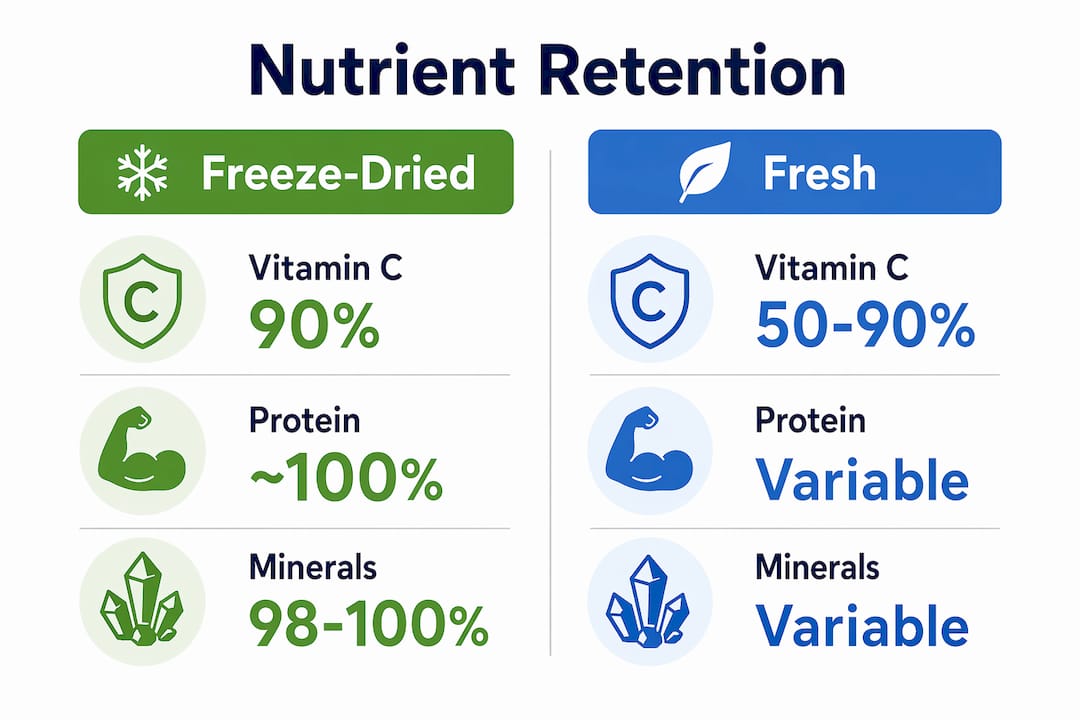
The numbers are genuinely impressive. Vitamin C loss is only 5 to 10% during freeze-drying, compared to losses of 50% or more during conventional heat drying. Proteins are preserved at nearly 100%, and minerals like iron, calcium, and potassium are retained at 98 to 100%. That level of preservation is not achievable through canning or standard dehydration, which is why freeze-drying is considered the gold standard in food preservation quality.
Here is a quick comparison of how these methods stack up on nutrient retention:
| Preservation method | Vitamin C retention | Protein retention | Mineral retention |
|---|---|---|---|
| Freeze-drying | 90–95% | ~100% | 98–100% |
| Hot-air dehydration | 40–60% | 70–85% | 80–90% |
| Canning | 30–50% | 60–75% | 70–85% |
| Fresh (after 3 days) | 70–90% | ~100% | ~100% |
One detail worth knowing: secondary drying temperature control matters a lot. Excessive heat during this final stage increases oxidation and specifically degrades vitamin C, which is why quality-controlled commercial freeze-drying consistently outperforms home methods. For a deeper look at how this plays out in fruits specifically, the freeze-dried fruit nutrition breakdown from Space-man covers the topic thoroughly.
Pro Tip: When buying freeze-dried products, look for those made from ripe, high-quality source ingredients. The freeze-drying process preserves what is already there. It cannot improve on poor starting material.
How does freeze-dried texture compare to fresh?
Texture is where freeze-drying gets interesting, and where it genuinely surprises people. Fresh food has a natural cellular structure filled with water. When you bite into a fresh strawberry, that juiciness comes from intact water-filled cells. Freeze-drying removes that water while keeping the cellular architecture largely intact, which produces a light, crispy texture with concentrated flavor. It is a different experience from fresh, but not an inferior one.
The structural preservation data is striking. Freeze-dried foods show only about 20.83% shrinkage compared to 35.53% for hot-air dried equivalents. Less shrinkage means less cell wall damage, which directly translates to better rehydration, more vivid color, and stronger aroma retention. When you add water back to freeze-dried strawberries, they return to something remarkably close to their original form. Hot-air dried strawberries, by contrast, rehydrate into a softer, less flavorful product because the heat collapsed the cell structure during drying.
Here is where freeze-dried foods shine in the kitchen:
- Snacking straight from the bag. Freeze-dried fruits and vegetables have an addictive crunch and intensely concentrated flavor. Freeze-dried mango, for example, tastes more like mango than a fresh mango that has been sitting in a grocery store for a week.
- Baking and desserts. Crushed freeze-dried raspberries or strawberries add real fruit flavor to buttercream, chocolate bark, and cookies without adding moisture that would change the texture of the recipe.
- Smoothies and oatmeal. Freeze-dried berries rehydrate almost instantly in liquid, making them a practical swap for fresh in blended drinks and hot cereals.
- Camping and travel food. Lightweight, compact, and requiring no refrigeration, freeze-dried meals and ingredients are the practical choice when a refrigerator is not an option.
- Candy and confections. Freeze-dried candy, which is a specialty at Space-man, transforms chewy sweets into airy, crunchy versions with amplified flavor. It is a genuinely different eating experience.
What are the shelf life advantages of freeze-dried foods?
This is where freeze-dried foods leave fresh food completely behind. Properly packaged freeze-dried food stays shelf-stable for 25 to 30 years. Fresh produce, by comparison, typically lasts between 3 and 14 days depending on the item and storage conditions. That gap is not incremental. It is transformational for how you think about food storage, waste, and convenience.
The reason for this extraordinary shelf life is simple: bacteria, mold, and enzymatic spoilage all require moisture to function. Freeze-drying reduces moisture content to between 1% and 4%, which effectively shuts down all three spoilage mechanisms without the need for chemical preservatives. Pair that with oxygen absorbers and sealed mylar bags, and you have a product that stays nutritionally intact and safe for decades.
| Storage condition | Fresh produce | Freeze-dried (sealed) | Freeze-dried (opened) |
|---|---|---|---|
| Room temperature | 3–14 days | 25–30 years | 6–12 months |
| Refrigerated | 1–4 weeks | Not required | 1–2 years |
| Frozen | 6–12 months | Not required | Not required |
The food waste angle deserves attention. Fresh food waste is a significant problem for households and retailers alike. Freeze-dried products eliminate the anxiety of a wilting bunch of spinach or overripe peaches. You use what you need and seal the rest. For a practical guide on keeping your freeze-dried products in peak condition, Space-man’s storage best practices guide is worth bookmarking.
Pro Tip: Once you open a bag of freeze-dried food, moisture is the enemy. Use a clip seal or transfer to an airtight container with a small silica gel packet to extend the opened shelf life significantly.
What freeze-dried foods lack compared to fresh
A balanced view matters here. Freeze-dried foods are not a perfect replacement for fresh in every situation, and pretending otherwise would not serve you well.
Fiber content can be lower in some freeze-dried products, particularly those that have been processed or pre-seasoned before drying. Pre-seasoned freeze-dried meals often carry higher sodium levels than their fresh equivalents, which is worth checking on the nutrition label if you are monitoring sodium intake. Some polyphenols and antioxidants also see minor degradation during the secondary drying phase, though losses are still far lower than with heat-based methods.
Food safety is another consideration that does not get enough attention. Freeze-drying does not kill bacteria. It inhibits bacterial growth by removing moisture, but any bacteria present before drying can become active again once the food is rehydrated. This is particularly relevant for proteins and meats. Rehydrated freeze-dried meats should always be cooked to safe internal temperatures, just as you would treat raw or thawed meat.
High-fat foods also present a challenge. Fats do not freeze-dry well because they slow the drying process and can become rancid over time. Freeze-dried oily or high-fat foods carry a higher risk of quality degradation and require more careful handling. This is why the best freeze-dried products tend to be fruits, vegetables, lean proteins, and confections rather than fatty cheeses or oily snacks.
The practical takeaway is this: combine freeze-dried and fresh foods rather than treating them as an either-or choice. Use fresh produce when it is in season and at peak quality. Reach for freeze-dried when convenience, shelf life, or concentrated flavor is the priority.
Key takeaways
Freeze-dried foods retain 90 to 97% of their original nutritional value while offering shelf stability of up to 30 years, making them a genuinely practical and nutritious alternative to fresh food in most everyday situations.
| Point | Details |
|---|---|
| Nutrient retention is exceptional | Freeze-drying preserves 90–97% of vitamins, minerals, and proteins by avoiding heat damage. |
| Texture and flavor concentrate | Lower shrinkage than dehydration means better rehydration, stronger aroma, and more vivid flavor. |
| Shelf life is transformational | Sealed freeze-dried products last 25–30 years versus days or weeks for fresh food. |
| Food safety still applies | Freeze-drying inhibits but does not kill bacteria; rehydrated meats must be cooked thoroughly. |
| Best used alongside fresh | Freeze-dried foods complement fresh produce rather than replacing it for a fully balanced diet. |
Why I think freeze-dried foods are underrated as everyday staples
People tend to associate freeze-dried food with emergency preparedness or astronaut meals, which is a shame. In my experience, the most compelling use case is the everyday one. A bag of freeze-dried blueberries in your pantry means you always have real fruit available, regardless of what the grocery store looked like that week. The nutritional profile is nearly identical to fresh, and the flavor is often more intense because the water is gone and the fruit compounds are concentrated.
What I find genuinely interesting is how freeze-dried ingredients perform in cooking. Crushed freeze-dried fruit in a glaze or sauce delivers a clean, bright fruit flavor that fresh fruit cannot always match, especially out of season. The texture contrast in baked goods is also something home bakers are starting to discover. A cookie with crushed freeze-dried strawberries has a different character than one made with fresh or frozen berries, and it is not a compromise. It is a choice.
The one thing I would caution against is assuming all freeze-dried products are equal. The quality of the source ingredient and the precision of the drying process make a significant difference in the final product. A well-made freeze-dried candy from Space-man and a poorly processed generic product are not the same thing, even if they share a label. Sourcing matters, and so does the care taken during the three-stage drying process. The freeze drying benefits guide is a good resource if you want to understand what separates quality products from the rest.
— Chadi
Explore Space-man’s freeze-dried products and packaging services
Space-man produces freeze-dried candy and snacks with the same nutritional and sensory standards discussed throughout this article. Whether you are a consumer looking to try something genuinely different or a business exploring private label options, Space-man has you covered.

The variety starter pack is the easiest way to explore the range, with 40 bags covering a broad selection of freeze-dried candy. For businesses interested in building their own branded freeze-dried product line, Space-man’s private label and co-packing services handle everything from formulation to final packaging. The same quality controls that make Space-man’s consumer products stand out apply directly to every co-packing and private label order.
FAQ
What nutrients does freeze-drying preserve best?
Freeze-drying preserves minerals like iron, calcium, and potassium at 98 to 100%, and proteins at nearly 100%. Vitamin C retention sits at 90 to 95%, which is significantly higher than canning or hot-air dehydration.
How long does freeze-dried food actually last?
Properly sealed freeze-dried food in mylar bags with oxygen absorbers lasts 25 to 30 years at room temperature. Once opened, the shelf life drops to 6 to 12 months depending on storage conditions and humidity.
Is freeze-dried food safe to eat without cooking?
Most freeze-dried fruits, vegetables, and confections are safe to eat directly from the bag. Freeze-dried meats and proteins should be rehydrated and cooked to safe internal temperatures because freeze-drying inhibits but does not eliminate bacteria.
Does freeze-dried food taste like fresh food?
The flavor is often more concentrated than fresh because water has been removed, intensifying the natural taste compounds. The texture is different, typically crunchier when eaten dry, but rehydrated freeze-dried food closely resembles the original fresh product.
Is freeze-dried better than dehydrated for nutrition?
Freeze-drying retains significantly more nutrients than dehydration because it avoids heat. Dehydration can reduce vitamin C by 40 to 60%, while freeze-drying limits that loss to just 5 to 10%, making it the superior method for nutritional preservation.