

TL;DR:
- Proper candy preservation requires environmental control, drying technology, and airtight packaging working together. Dehumidifiers keep humidity between 40 and 60 percent to prevent moisture absorption, while vacuum freeze dryers remove moisture without damaging texture. Airtight seals achieved by advanced packaging extend shelf life and protect product quality effectively.
Equipment for candy preservation is the category of industrial machinery and environmental control systems used to manage moisture, temperature, and packaging conditions that determine candy shelf life and quality. For food industry professionals and candy business owners, choosing the wrong setup does not just shorten shelf life. It destroys texture, triggers microbial growth, and sends product back from retailers. The core toolkit includes industrial dehumidifiers, vacuum freeze dryers, and automated packaging machines. Brands like HSYL Food Processing Equipment, Gondor Machinery, and Synchropack each address a distinct layer of the preservation problem.
What equipment for candy preservation is truly essential?
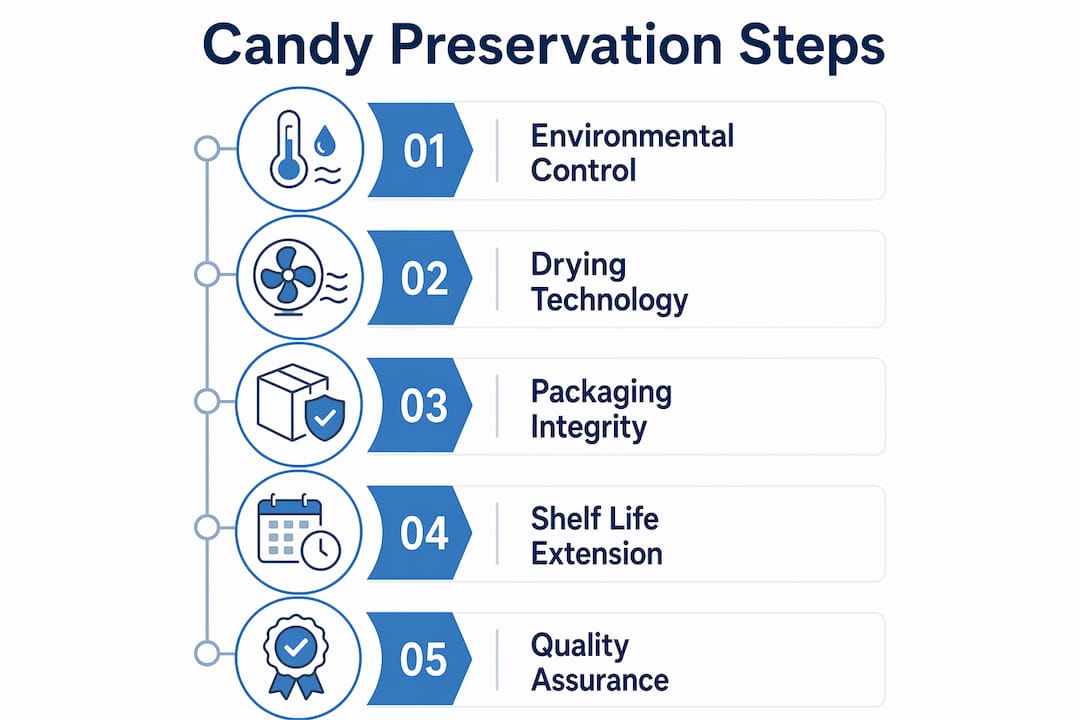
The three pillars of commercial candy preservation are environmental control, drying technology, and packaging integrity. No single machine covers all three. Operators who invest heavily in freeze drying but neglect humidity control in the storage room still end up with sticky, degraded product. The systems must work together.
Industrial dehumidifiers anchor the environmental control layer. Humidity for candy preservation must stay between 40–60% RH to prevent moisture absorption, clumping, and mold. That range is not a suggestion. Hygroscopic candies like gummies and caramels absorb ambient moisture within hours if the room drifts above 60% RH.
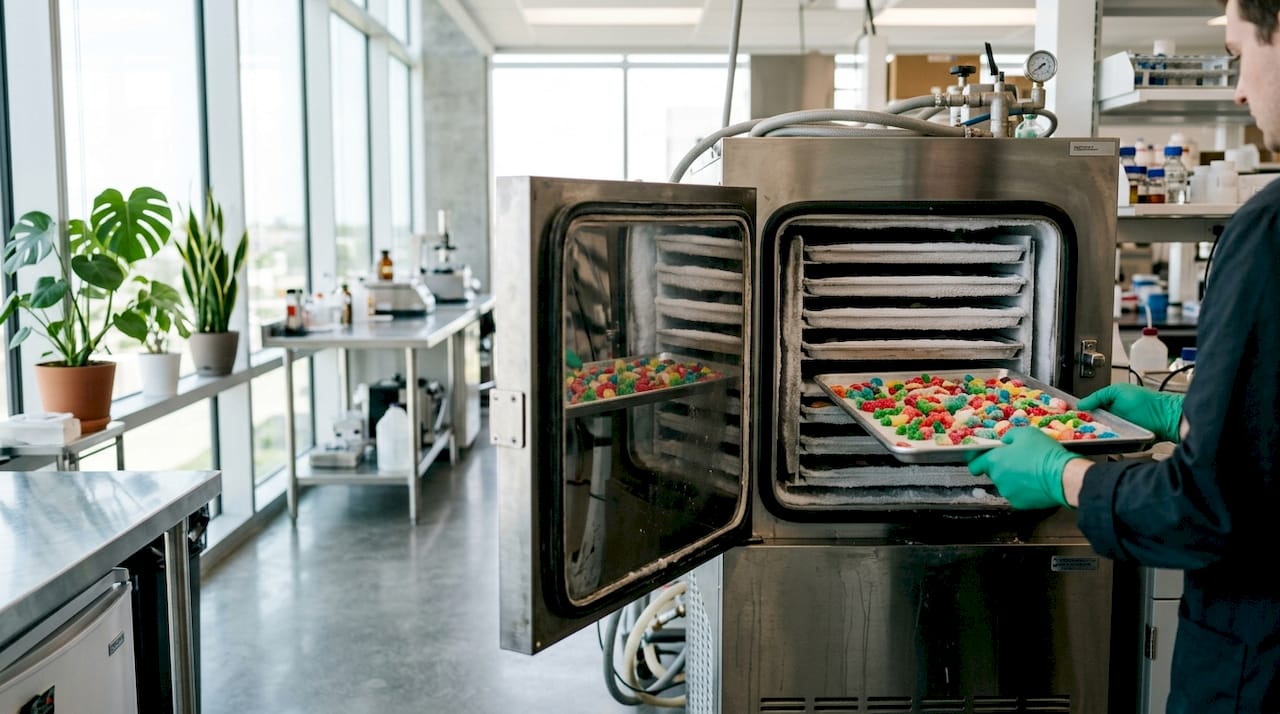
Vacuum freeze dryers handle the drying layer. HSYL freeze dryers use cold traps operating at temperatures between -60°C and -85°C, with batch capacities reaching 100–200 kg. That cold trap temperature is what drives sublimation efficiently. Without it, ice crystals do not convert directly to vapor, and the candy retains residual moisture that compromises texture.
Packaging machines close the loop. Gondor Machinery’s high-speed pillow packing machines use photoelectric tracking and modular stainless steel construction to package candy hygienically at speed. The goal is an airtight seal every single time, because even minor inconsistencies let air in and quality drops fast.
The role of water activity in preservation
Water activity (aw) is the industry standard metric for predicting microbial risk in candy. Hard candies with aw below 0.3 are virtually immune to microbial growth. That number matters because it shifts the preservation focus away from preservatives and toward controlling the manufacturing environment and packaging integrity. Get the environment right, and you need far less chemistry.
How does advanced packaging equipment extend candy shelf life?
Packaging is the preservation step most operators underestimate. A freeze dryer can produce perfect product, but a weak seal undoes all of it within days. Consistent, airtight seals prevent rapid degradation. That is the single most important thing packaging equipment must deliver.
Modern high-speed flow wrappers address this through several specific design features:
- Three-servo drive systems control film feed, cutting, and sealing independently. This allows the machine to maintain consistent tension and seal pressure even when candy sizes vary slightly within a batch.
- PID-controlled temperature sealing rollers hold the sealing surface at a precise temperature. Inconsistent heat is the leading cause of weak seals on flexible film packaging.
- Antistatic devices near the sealing zone prevent sticky candy from adhering to the film or rollers. Antistatic and cooling near sealing rollers is a standard feature on Gondor Machinery lines for exactly this reason.
- Teflon-coated feeders and dimpled stainless steel surfaces minimize candy sticking during infeed. This mechanical detail prevents jams that would otherwise force operators to stop the line and handle product manually.
- Modified Atmosphere Packaging (MAP) replaces oxygen inside the package with nitrogen or CO2. MAP reduces oxygen exposure and slows both oxidation and microbial activity, extending shelf life significantly for products like chocolate-coated or cream-filled candies.
Pro Tip: When evaluating flow wrappers, ask the vendor for seal strength test data at your specific candy weight and film type. A machine rated for 300 packs per minute means nothing if the seals fail at your product’s dimensions.
| Feature | Purpose |
|---|---|
| Three-servo drive | Consistent film tension and seal pressure across variable candy sizes |
| PID temperature control | Prevents weak seals caused by heat fluctuation |
| Antistatic devices | Stops sticky candy from fouling the sealing zone |
| MAP integration | Reduces oxygen inside pack to slow oxidation and microbial growth |
| Teflon-coated feeders | Eliminates infeed jams and reduces manual product handling |
Automation also reduces human handling, which directly lowers contamination risk. Every time a worker touches product between the dryer and the sealed pack, there is a hygiene variable. Automated lines remove most of those variables.
What are the key differences between freeze drying and other preservation methods?
Freeze drying is the only preservation method that removes moisture through sublimation at low temperatures. The candy goes from frozen to dry without passing through a liquid phase. This protects color, structure, and flavor in ways that heat-based drying cannot match.
Industrial vacuum freeze dryers use PID-controlled shelf heating with thermal feedback to manage eutectic temperatures during lyophilization. The eutectic point is where the sugar concentration in the candy changes phase. Missing it produces the “sticky center” defect that ruins texture. Automated thermal feedback catches this in real time. You can read more about how this looks in practice in a freeze dryer production setup.
Here is how the main methods compare:
- Freeze drying: Best texture and color retention. High capital cost. Ideal for gummies, sour candies, and novelty products where texture is the selling point.
- Refrigeration: Low cost but high risk. Refrigerating candy causes condensation and sugar bloom unless the product is in a fully airtight container. Bloom is not a safety issue, but it kills retail appeal instantly.
- Traditional dehydration (heat drying): Works for some products but degrades heat-sensitive flavors and colors. Hygroscopic candies like gummies reabsorb moisture quickly after heat drying, making the method largely ineffective without excellent downstream packaging.
- Packaging-only (MAP or vacuum seal): No drying involved. Effective for products already at safe water activity levels. Fails completely if the candy enters the package with excess moisture.
The right method depends on candy type and production scale. A small-batch artisan producer making chocolate truffles needs airtight packaging and climate-controlled storage, not a freeze dryer. A commercial gummy manufacturer targeting a 12-month shelf life needs freeze drying plus MAP packaging. Matching the method to the product is the decision that actually moves the needle.
How to select and integrate candy preservation equipment for commercial production
Start with your candy type and target shelf life before looking at any equipment catalog. A gummy bear and a hard candy have completely different water activity profiles, packaging requirements, and sensitivity to temperature swings. Buying equipment without that baseline is how operators end up with a $200,000 freeze dryer that sits idle because the packaging line cannot handle the output.
Pro Tip: Map your production flow from mixing to final seal before specifying any equipment. Bottlenecks almost always appear at the handoff between the dryer and the packaging line, not inside either machine.
Key factors to assess before purchasing:
- Production volume: Batch freeze dryers at 100–200 kg capacity suit mid-scale operations. Continuous belt freeze dryers suit high-volume lines but cost significantly more.
- Candy hygroscopicity: Highly hygroscopic products like gummies need tighter humidity control (closer to 40% RH) and faster transfer from dryer to sealed pack. Every minute of open-air exposure matters.
- Packaging film compatibility: Not all flow wrappers handle every film type. Confirm that your preferred MAP film runs cleanly on the machine before committing.
- Maintenance load: Dehumidifiers require monthly servicing including filter cleaning and leak checks. Factor that labor cost into the total cost of ownership, not just the purchase price.
System integration is where most commercial operations leave money on the table. A freeze dryer feeding directly into a humidity-controlled transfer zone, then into a sealed packaging line, produces far better consistency than three separate rooms with manual transfers. The complete guide to freeze-drying machines covers equipment pairing in detail for operators building out a full line.
Calibration schedules matter as much as the equipment itself. Thermal sensors on freeze dryers drift over time. Sealing roller temperatures shift with wear. A quarterly calibration program catches these issues before they show up as product failures or customer complaints.
Key takeaways
The most effective approach to candy preservation combines industrial dehumidifiers, vacuum freeze dryers, and automated packaging machines working as an integrated system rather than isolated pieces of equipment.
| Point | Details |
|---|---|
| Humidity control is non-negotiable | Maintain 40–60% RH using industrial dehumidifiers to prevent stickiness, mold, and texture loss. |
| Freeze drying protects texture | PID-controlled freeze dryers prevent sticky centers and preserve color better than heat drying. |
| Packaging seals determine shelf life | Consistent, airtight seals matter more than aesthetics; even minor gaps cause rapid quality loss. |
| Water activity beats preservatives | Keeping aw below 0.3 for hard candies stops microbial growth without chemical additives. |
| Monthly maintenance is mandatory | Dehumidifier filter cleaning and leak checks every month prevent mold and humidity drift. |
Why most candy preservation failures happen before the product is even packaged
I have seen operations invest serious money in premium packaging equipment and then wonder why their shelf life numbers still disappoint. Nine times out of ten, the problem is upstream. The candy enters the packaging line already compromised by poor humidity control in the production room or a freeze dryer running outside its optimal temperature window.
The uncomfortable truth is that moisture control is the heartbeat of the entire preservation system. Ongoing equipment maintenance is not optional. It is the difference between a product that holds quality for 12 months and one that degrades in six. Operators who treat dehumidifier servicing as a low-priority task are essentially gambling with every batch.
My other observation is that food businesses tend to over-index on the freeze dryer purchase and under-invest in the packaging line. A $150,000 freeze dryer paired with a mid-grade wrapper with inconsistent sealing is a bad trade. The impact of packaging problems on freeze-dried candy is real and measurable in returns and lost retail accounts.
Start with the environment, get the drying right, then invest in packaging that matches your output volume. That sequence works. Reversing it does not.
— Chadi
Space-man’s preservation and packaging solutions for candy businesses
Space-man is a Canadian freeze-dried candy manufacturer that has built its production around the same equipment principles covered here. Industrial freeze drying, humidity-controlled environments, and airtight packaging are the foundation of every product that leaves the facility.
For food businesses that want professional-grade candy preservation without building the infrastructure from scratch, Space-man offers private label and co-packing services that cover freeze drying, bagging, and packaging under your brand. Whether you are a distributor looking for a reliable supply of shelf-stable freeze-dried candy or a retailer wanting to launch a private label line, Space-man handles the equipment-intensive side of production. Explore the full range of candy packaging options to see what fits your shelf life and branding goals.
FAQ
What humidity level is best for candy storage rooms?
Candy storage rooms should maintain humidity between 40–60% RH using industrial dehumidifiers. Hygroscopic candies like gummies need levels closer to 40% RH to prevent stickiness and clumping.
How does freeze drying extend candy shelf life?
Freeze drying removes moisture through sublimation at low temperatures, preserving texture and color while reducing water activity to levels that prevent microbial growth. PID-controlled shelf heating prevents the sticky center defect common in poorly managed lyophilization.
Is refrigeration a good candy preservation method?
Refrigeration is generally not recommended unless candy is stored in fully airtight containers. Without airtight packaging, condensation causes sugar bloom, which damages appearance and texture.
What does MAP do for packaged candy?
Modified Atmosphere Packaging replaces oxygen inside the package with nitrogen or CO2, slowing oxidation and microbial activity. It is most effective for chocolate-coated and cream-filled candies with moderate water activity levels.
How often should preservation equipment be serviced?
Dehumidifiers need monthly servicing including filter cleaning and leak checks to maintain stable humidity. Freeze dryer thermal sensors and packaging machine sealing rollers should be calibrated quarterly to catch drift before it affects product quality.