

The freeze dried candy market is exploding, and Canadian retailers who lock in the right bulk supplier now are the ones capturing the biggest margins. The global market is projected to reach USD 3.99 billion by 2034, with North America already commanding a 36 to 45% share. That kind of growth means shelf space is competitive, and your supply chain decisions directly affect your bottom line. This guide walks you through exactly what to look for in a supplier, who the top Canadian options are, how they compare, and how to match the right source to your business model.
Table of Contents
- What to look for in a bulk freeze dried candy supplier
- Top bulk freeze dried candy suppliers in Canada
- Comparing suppliers: Price, lead times, and key differentiators
- Bulk freeze dried candy supply: Pros, cons, and business impact
- How to decide: Matching supply options to your business
- Where to source your bulk freeze dried candy in Canada
- Frequently asked questions
Key Takeaways
| Point | Details |
|---|---|
| Check supplier compliance | Choose CFIA-licensed partners to ensure safety and wholesale eligibility in Canada. |
| Compare lead times and minimums | Bulk orders often require 3–4 weeks and case-level minimums, so plan inventory accordingly. |
| Leverage premium margins | Freeze dried candy enables 4–10x volume expansion and high margins for retail sales. |
| Start with a test order | Begin with smaller wholesale runs to gauge demand and product fit before scaling bulk supply. |
What to look for in a bulk freeze dried candy supplier
Not every supplier is built the same, and a bad choice costs you more than just money. It costs you customer trust and shelf performance. Here is what separates a reliable bulk partner from a risky one.
Compliance and food safety come first. Any supplier you work with should hold a CFIA (Canadian Food Inspection Agency) license. This is non-negotiable for retail distribution in Canada. CFIA-licensed suppliers are the standard starting point for Canadian retail buyers, and testing with small wholesale orders before committing to full bulk is a smart risk management move.
Consistent quality across batches is the next filter. Freeze dried candy is sensitive to process variation. A supplier who nails one batch but ships inconsistent texture or flavor on the next will hurt your repeat sales fast. Ask for samples from multiple production runs before signing any agreement.
Here is a quick checklist of what to evaluate:
- CFIA license and food safety documentation
- Batch consistency in texture, flavor, and appearance
- Lead times (typically 3 to 4 weeks for fresh production)
- Minimum order quantities that match your retail volume
- Private label and co-packing support for brand differentiation
- Transparent pricing with clear freight and logistics terms
- Awareness of viral trends and seasonal flavor cycles
For a deeper breakdown of where to source product, the where to buy bulk in Canada guide covers regional options in detail. You can also review best Canadian freeze dried brands to understand what quality benchmarks look like across the market.
Pro Tip: Before placing a large bulk order with any new supplier, request a sample kit covering at least three different SKUs. This tells you far more about real batch quality than any product description ever will.
The Canadian supplier landscape has grown quickly, with both domestic manufacturers and importers competing for retail shelf space.
Top bulk freeze dried candy suppliers in Canada
With your checklist in place, here are the Canadian suppliers retailers turn to for bulk freeze dried candy. The market includes a mix of domestic manufacturers, small-batch artisan producers, and importers.
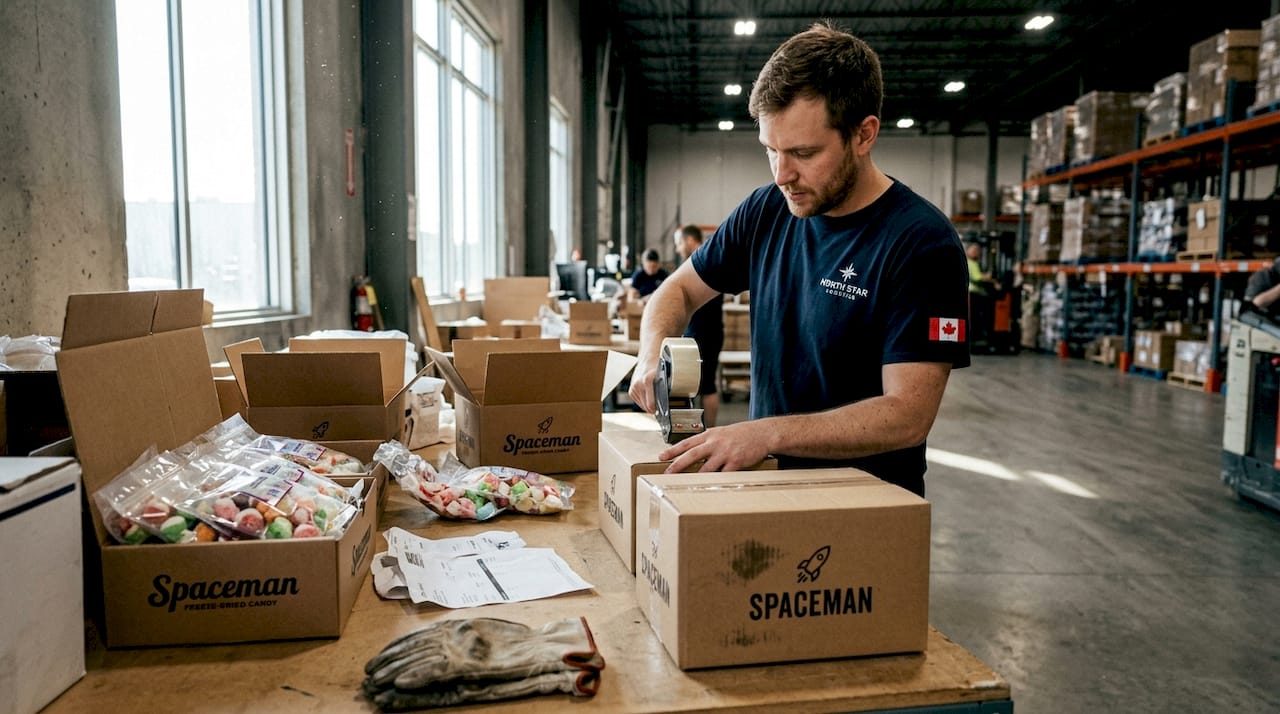
Spaceman (space-man.ca) is a Canadian manufacturer and distributor offering a full range of freeze dried candy products. They support private label, co-packing, and custom packaging, making them a strong fit for retailers who want branded product. CFIA-compliant, with flexible order sizes starting at variety packs of 40 bags.
Candy Frost operates as a smaller Canadian producer with a focus on trending flavors. They move quickly on viral SKUs and cater to boutique retailers and gift shops.
MyChillChew targets the premium snack segment with a curated product line. They work with specialty food retailers and online resellers.
Importers and distributors round out the market, bringing in product from U.S. and overseas manufacturers. These options often have lower per-unit costs but may carry longer lead times and less flexibility on custom branding.
Small Canadian makers leverage local trends and TikTok virality to compete directly alongside larger importers, often winning on novelty and speed to market.
Key features to compare across suppliers:
- CFIA compliance status
- Private label and co-packing availability
- Minimum order quantities
- Flavor variety and trend responsiveness
- Domestic production vs. import sourcing
- Packaging customization options
For a full breakdown of who is operating in this space, the top manufacturers comparison covers the major players in detail. The complete bulk buying guide also walks through sourcing strategy step by step. If you want market context, Canadian wholesale growth stats show how fast this segment is moving.
Comparing suppliers: Price, lead times, and key differentiators
Next, see how the top choices stack up side by side for the factors that matter most to your business.
| Supplier | Typical pricing | Min. order | Lead time | Private label | Delivery reliability |
|---|---|---|---|---|---|
| Spaceman | Competitive wholesale | 40 to 72 bags | 2 to 4 weeks | Yes, full co-packing | Strong, domestic |
| Candy Frost | Mid-range | 24 to 48 bags | 3 to 5 weeks | Limited | Moderate |
| MyChillChew | Premium | 36 bags | 3 to 4 weeks | Partial | Good |
| Importers | Low per-unit | 100+ units | 4 to 8 weeks | Rarely | Variable |
Lead times of 3 to 4 weeks are standard for fresh batch production, and price transparency combined with logistics reliability are the two factors that most often determine long-term supplier relationships.
One of the strongest financial arguments for freeze dried candy is the markup potential. The freeze drying process expands candy volume significantly, enabling retail markups of 4 to 10 times the bulk cost. That kind of margin is rare in the snack category. Pair that with a shelf life measured in months rather than weeks, and you have a product that reduces shrink while supporting premium pricing.
For a detailed side-by-side review, the manufacturers comparison page breaks down each supplier’s strengths. You can also check retail trends to understand which product types are driving the most consumer interest right now.
Pro Tip: Start with a smaller test batch when introducing a new supplier or SKU. It protects your cash flow, lets you gauge customer response, and gives you real sell-through data before you commit to a larger inventory position.
Bulk freeze dried candy supply: Pros, cons, and business impact
Let’s zoom out for a moment. What does bulk freeze dried candy actually do for your business, and where are the real snags?
Pros:
- High retail margins enabled by volume expansion and premium positioning
- Long shelf life reduces waste and shrink compared to fresh confections
- Strong consumer appeal driven by unique textures and bold flavors
- Viral social media trends (especially TikTok) drive consistent new demand
- Works across multiple channels: brick-and-mortar, e-commerce, and markets
Cons:
- Higher upfront cost compared to conventional candy
- 3 to 4 week lead times require advance planning and inventory discipline
- Batch quality variance is possible with smaller or less established suppliers
- The freeze drying process is energy-intensive, which can affect pricing during supply chain disruptions
E-commerce and supermarkets now drive 39% of sales in the freeze dried candy category, and the volume expansion of 4 to 10 times during processing is what makes the retail margin story so compelling.
| Business metric | Impact of freeze dried candy |
|---|---|
| Gross margin | High, typically 50 to 70%+ at retail |
| Shrink/waste | Low due to extended shelf life |
| Customer repeat rate | Strong with trending SKUs |
| Inventory planning | Requires 3 to 4 week lead time buffer |
| Brand differentiation | High with private label options |
For a full breakdown of the retail case, freeze dried candy pros and cons covers the financial and operational angles in depth. If you want the bigger picture on where this category is heading, future Canadian snacking lays out the long-term trends.
How to decide: Matching supply options to your business
With all the details in hand, here is how to quickly narrow the best option for your business.
- Assess your customer profile. Are your buyers trend-driven impulse shoppers, gift buyers, or health-conscious snackers? This shapes which flavors and formats will move fastest.
- Choose testable minimums. Start with a supplier who lets you order 40 to 72 bags before committing to full pallet quantities. Starting small before large bulk orders is especially important for first-time buyers or novel product lines.
- Align lead time to your inventory cycle. If you restock weekly, a 4-week lead time means you need to plan orders a month ahead. Build that buffer into your purchasing calendar.
- Evaluate branding needs. If you want your own label on the product, filter your supplier list to those who offer private label or co-packing. This is a major differentiator for retailers competing against online-only sellers.
- Confirm compliance. Verify CFIA licensing before placing any order. This protects you from regulatory issues at the retail level.
- Test performance. Run a 4 to 6 week sell-through test with your initial order. Track units sold, customer feedback, and margin per SKU.
- Scale with confidence. Once you have real data, increase order quantities and negotiate better pricing based on volume.
Pro Tip: If you sell through your own storefront or online shop, a private label or co-packing arrangement lets you build brand equity on every bag sold. It turns a commodity product into a proprietary line that competitors cannot easily copy.
The wholesale opportunity article explains why now is the right time for Canadian retailers to move on this category before shelf space gets crowded.
Where to source your bulk freeze dried candy in Canada
If you are ready to move from research to action, Spaceman is built for exactly what Canadian retailers need. We manufacture freeze dried candy right here in Canada and offer full private label and co-packing services so your product hits shelves under your brand, not ours.
For retailers who want a ready-to-sell display solution, the 72 bag distributor kit includes a retail display rack and a curated assortment designed to move product fast. If you are just getting started, the starter pack for wholesale gives you a 40-bag variety order to test the market without overcommitting inventory. Reach out for samples, custom pricing, or to discuss a co-packing project. We work with retailers of all sizes across Canada.
Frequently asked questions
What is the minimum order quantity for bulk freeze dried candy in Canada?
Most suppliers offer minimums starting at 40 to 72 bags, and test orders are possible with some suppliers for new buyers who want to validate demand before scaling up.
How long do bulk freeze dried candy orders take to fulfill?
Fresh batch lead times typically run 3 to 4 weeks, and private label or custom packaging projects may add additional time depending on artwork and production scheduling.
What are the main advantages of freeze dried candy for retailers?
Freeze dried candy delivers high margins and low waste thanks to its extended shelf life, and strong viral demand keeps consumer interest consistently high across both in-store and online channels.
Do Canadian bulk suppliers offer private label or custom branding?
Yes. Many established Canadian suppliers, including Spaceman, offer private label and co-packing options that let retailers sell under their own brand with customized packaging and labeling.