

Freeze dried candy is not just another snack trend. It is reshaping how Canadian candy shops stock their shelves and how e-commerce sellers think about product differentiation. While traditional candy has dominated retail for decades, freeze dried candy market growth is accelerating fast, driven by novelty, social media buzz, and a genuinely different eating experience. Before you commit shelf space or a purchase order, it pays to understand exactly what you are getting into, including both the real advantages and the honest limitations.
Table of Contents
- What is freeze dried candy and how is it made?
- Unique advantages for retailers: Why freeze dried candy stands out
- Potential drawbacks: Costs, health perceptions, and pitfalls
- Market outlook: Canadian trends and opportunities
- How to get the most from freeze dried candy: Best practices for retailers
- Ready to offer freeze dried candy? Next steps for Canadian retailers
- Frequently asked questions
Key Takeaways
| Point | Details |
|---|---|
| Shelf life advantage | Freeze dried candy stays fresh for much longer than standard candy if packaged well. |
| Retail novelty factor | Its unique texture and visual appeal make it a standout for Canadian candy shops and e-commerce. |
| Premium pricing | Higher equipment and production costs translate to premium retail prices and margin opportunities. |
| Not a health food | Freeze dried candy carries the same sugar and calories as traditional candy and should be marketed as an indulgence. |
| Handling is critical | Proper packaging and quick resealing are essential to avoid loss of crunch and preserve product quality. |
What is freeze dried candy and how is it made?
Freeze dried candy starts as regular candy. The transformation happens inside a freeze dryer, a machine that freezes the candy to extremely low temperatures and then uses a vacuum to pull out nearly all the moisture through a process called sublimation. The water skips the liquid stage entirely and goes straight from ice to vapor. What you are left with is a candy that is structurally expanded, bone dry, and completely changed in texture.
This is fundamentally different from air drying or dehydrating. Air drying removes surface moisture but leaves the interior largely intact. Freeze drying removes moisture from the inside out, which is why the candy puffs up and becomes so crunchy. The freeze dried candy taste is also noticeably more intense because the flavor compounds become more concentrated without water diluting them.
Here is a quick look at what makes freeze dried candy distinct:
- Crunchy texture that dissolves on the tongue
- Intensified flavor compared to the original candy
- Non-sticky and easy to handle
- Lightweight with dramatically reduced moisture content
- Long shelf life when kept in airtight packaging
As Chowhound notes, freeze dried candy delivers a unique crunchy texture and intense flavor that regular candy simply cannot replicate. That difference is exactly what makes it interesting to retailers.
Unique advantages for retailers: Why freeze dried candy stands out
With the basics covered, let’s break down why retailers are embracing freeze dried confections. The business case is stronger than most people expect, and it goes well beyond novelty.
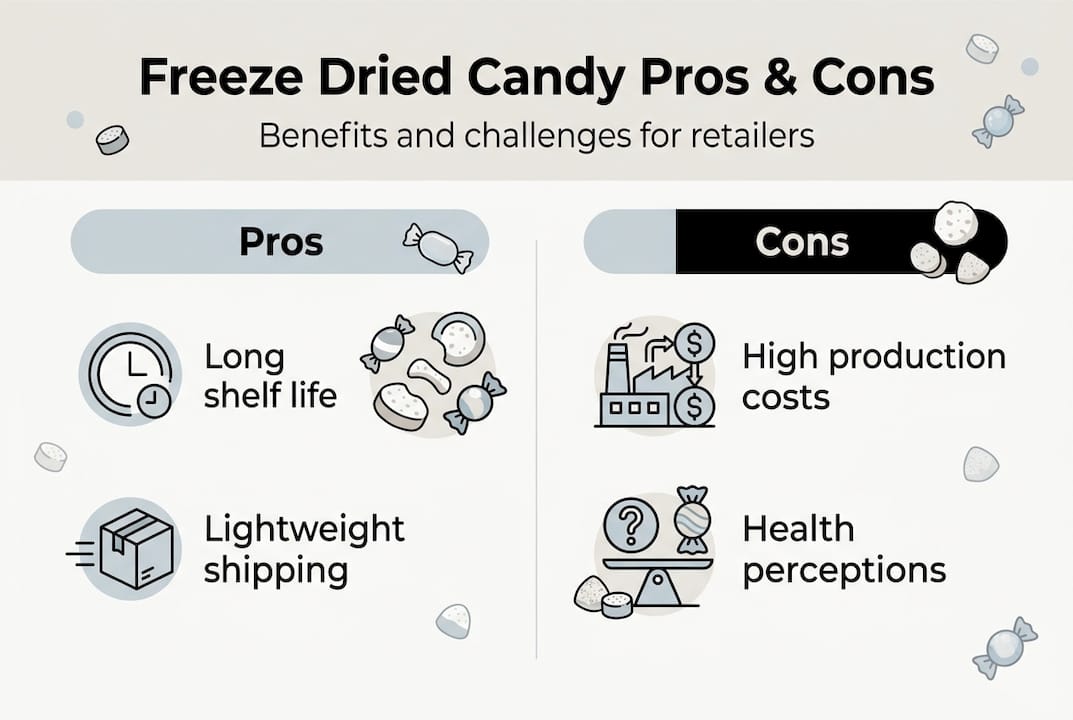
Extended shelf life is one of the biggest operational wins. Because freeze dried candy contains almost no moisture, it resists spoilage far longer than traditional candy. For retailers, that means less waste, fewer markdowns, and more flexibility in how you manage inventory. Shelf life and spoilage reduction translate directly into higher margins compared to conventional confections.
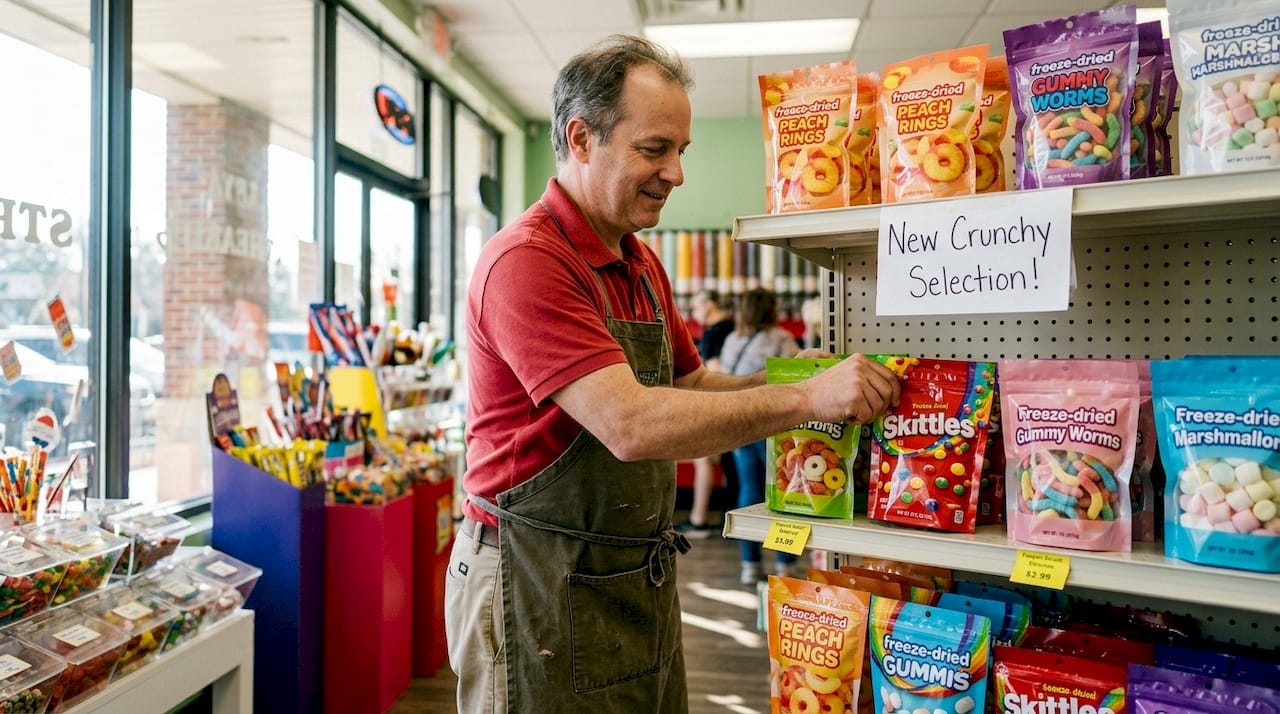
Shipping economics also favor freeze dried candy, especially for e-commerce sellers. The product is extremely lightweight, which lowers per-shipment costs. For Canadian online retailers shipping across provinces, that weight difference adds up quickly over hundreds of orders.
Social media appeal is real and measurable. Freeze dried candy has generated millions of views on TikTok and Instagram, with reaction videos and taste tests driving organic discovery. That kind of earned attention is something most candy products never get. Stocking it gives your store a built-in conversation starter.
Here is a summary of the core retail advantages:
- Reduced spoilage and waste
- Lower shipping weight for e-commerce
- High novelty and social media shareability
- Premium pricing potential
- Private label and co-packing opportunities for branded margins
The benefits for retailers extend into branding as well. Private label freeze dried candy lets you sell under your own brand name, which builds customer loyalty and protects your margins from price competition. This is a category where retail snack trends are clearly moving toward premium, experience-driven products.
“Freeze dried candy is not just a product. It is a retail experience that customers talk about, share, and come back for.”
Pro Tip: Use airtight packaging and display your freeze dried candy near the checkout counter. The visual novelty and crunch factor drive impulse purchases better than most traditional candy formats.
Potential drawbacks: Costs, health perceptions, and pitfalls
Every product has a flip side, and freeze dried candy deserves a closer look before you go all in. Understanding the limitations helps you set realistic expectations and avoid common mistakes.
Production costs are high. Freeze dryers are industrial machines with significant upfront and operating costs. That expense gets passed along the supply chain, which is why freeze dried candy costs are noticeably higher per unit than regular candy. For retailers, this means your buy-in price is higher, and you need to price accordingly to protect your margins. Reviewing solid pricing strategies before you set your retail price is a smart move.
Health perceptions can mislead customers. Many shoppers assume that because freeze dried candy sounds more processed or “different,” it must be either healthier or worse for them. The reality is straightforward: same sugar and calories as the original candy. The freeze drying process does not reduce sugar content. It is still candy, just with a different texture and shelf life. Being upfront about this with your customers builds trust.
Moisture is the enemy. Once a bag is opened, freeze dried candy absorbs humidity from the air quickly. Within minutes in a humid environment, that satisfying crunch can turn into a sticky, chewy mess. Proper candy storage tips are essential knowledge for both your staff and your customers.
Here is a quick breakdown of the main drawbacks:
- Higher per-unit cost compared to traditional candy
- No meaningful health advantage over regular candy
- Rapid texture loss when exposed to moisture
- Potential for overconsumption because the airy texture feels lighter than it is
- Requires consumer education to set correct expectations
Pro Tip: Always reseal bags immediately after opening. Even a few minutes of exposure to humid air can ruin the crunch that makes freeze dried candy worth the premium price.
Market outlook: Canadian trends and opportunities
To make smart stocking decisions, it is important to look at where the market is headed. The numbers are compelling for anyone considering adding freeze dried candy to their product lineup.
The global freeze dried candy market is projected to reach $2.4 to $4 billion globally between 2030 and 2034, with North America leading growth. Canada sits squarely in that growth zone, with rising consumer interest in novelty snacks and premium confections.
| Market segment | Current status | Growth outlook |
|---|---|---|
| Global freeze dried candy | Rapidly expanding | $2.4B to $4B by 2030 to 2034 |
| North America | Market leader | Highest regional growth rate |
| Canadian retail | Emerging category | Strong upside in specialty and e-commerce |
| Online/e-commerce | High growth channel | Driven by social media discovery |
| Specialty candy shops | Early adopters | Premium pricing accepted |
For Canadian retailers, this is not a saturated market. It is still early enough that stocking freeze dried candy positions you ahead of mainstream adoption. The retail and consumer benefits are well documented, and the window to establish brand recognition in this category is open right now.
Private label is a particularly strong opportunity. Rather than reselling someone else’s brand, you can work with a manufacturer to create your own labeled product. This protects your pricing, builds repeat customers, and gives you something competitors cannot easily copy. If you are thinking about selling freeze dried candy as a business, understanding distribution logistics early will save you significant headaches later.
How to get the most from freeze dried candy: Best practices for retailers
With opportunity comes responsibility. Here is how to maximize every bag on your shelf and build a sustainable freeze dried candy business.
- Start with a variety pack. Before committing to large quantities of a single flavor, test a range of products with your customer base. Reaction and preference data from real buyers is worth more than any trend report.
- Train your staff. Your team should be able to explain what freeze dried candy is, why it tastes different, and how to store it properly. A confident staff answer converts curious browsers into buyers.
- Display it visually. Freeze dried candy looks different from regular candy. Use clear packaging or open display formats where customers can see the texture. Visual novelty drives trial.
- Leverage social media. Encourage customers to share their reactions online. A single viral video can drive more traffic than a month of paid advertising. Create a hashtag, run a contest, or simply ask customers to tag you.
- Manage storage carefully. Keep unopened stock in a cool, dry location away from direct sunlight. Airtight packaging is non-negotiable for maintaining product quality through the supply chain.
- Price with confidence. Customers who understand the product accept the premium price. Education at the point of sale, whether through signage, staff, or packaging copy, justifies the cost.
For in-store display, keep freeze dried candy at eye level and near impulse purchase zones. For e-commerce, invest in product photography that shows the texture clearly. Knowing how to properly handle storing freeze dried sweets protects your investment from the warehouse to the customer’s door.
Pro Tip: Use TikTok and Instagram Reels to show the crunch. Short videos of freeze dried candy being bitten into or dissolved on the tongue consistently outperform static product photos in engagement and click-through rates.
Ready to offer freeze dried candy? Next steps for Canadian retailers
Once you are ready to stock freeze dried candy, expert support makes all the difference. At Spaceman, we manufacture and distribute freeze dried candy across Canada, and we work directly with retailers, candy shops, and e-commerce sellers to make launching this category as smooth as possible.

Our wholesale candy display kit gives you a ready-to-go retail setup with 72 bags and a display rack, so you can start selling from day one without the guesswork. If you want to build your own brand, our private label solutions cover everything from custom packaging to co-packing and bagging services. Not sure where to start? Our starter pack of 40 bags is the lowest-risk way to test the category with your customers before scaling up. We are here to help you succeed in this category from your first order forward.
Frequently asked questions
Does freeze dried candy last longer than regular candy?
Yes. When unopened and stored properly, freeze dried candy shelf life can extend to several years, far beyond what most traditional candy achieves. Moisture control is the key factor.
Is freeze dried candy healthier than regular candy?
No. Freeze dried candy carries the same sugar and calorie content as the original product. The process changes texture and shelf life, not nutritional value.
What packaging is best for freeze dried candy?
Airtight, moisture-resistant packaging is essential. Airtight packaging prevents texture degradation after opening and keeps the product shelf-stable for as long as possible.
Why is freeze dried candy more expensive than regular candy?
The freeze dryer equipment costs are substantial, and those costs flow through to production and retail pricing. It is a premium product with a premium price point.
How can retailers keep freeze dried candy fresh after opening?
Reseal bags immediately and completely after every use. Immediate resealing prevents humidity from destroying the crunch that customers pay a premium for.
Recommended
- Top Freeze Dried Candy Benefits for Retailers and Shops – Spaceman
- Freeze Dried Candy Basics: Cut Weight 90% & Boost Shelf Life – Spaceman
- Freeze-Dried Candy Distribution: What to Know Before You Jump In – Spaceman
- Retail pricing strategies for freeze-dried candy 2026 – Spaceman
- Food logistics tips for UK independent retailers in 2026 - WOODFORD - Bringing quality foods your way