

Stocking treats that last can give Canadian candy shops a real edge, but nothing tests patience like worrying if today’s snacks will stay fresh tomorrow. With consumer interest growing in healthier and longer-lasting products, savvy retailers know that understanding the shelf life of freeze dried foods unlocks new potential for their offerings. This guide brings practical details on how freeze drying extends product quality and what shop owners can do to maximize the appeal and value of their freeze dried inventory.
Table of Contents
- Defining Shelf Life of Freeze Dried Food
- How Freeze Drying Extends Food Longevity
- Types of Freeze Dried Foods and Variations
- Packaging and Storage Requirements for Maximum Shelf Life
- Common Risks and Mistakes to Avoid
- Comparing Freeze Dried vs. Other Food Preservation
Key Takeaways
| Point | Details |
|---|---|
| Shelf Life Influencers | Factors like packaging quality, storage temperature, and product moisture level significantly affect the shelf life of freeze dried foods. |
| Freeze Drying Benefits | This method removes moisture, preserving nutritional value, flavor, and preventing spoilage, allowing for long-term food storage. |
| Optimal Packaging | Using high-barrier, vacuum-sealed packaging ensures maximum protection against moisture and oxygen, extending product longevity. |
| Risks to Avoid | Common mistakes such as inadequate sealing and improper storage conditions can lead to moisture reabsorption and quality degradation. |
Defining Shelf Life of Freeze Dried Food
Shelf life represents the duration a food product maintains its optimal quality and safety for consumption. In the context of freeze dried foods, this concept becomes particularly nuanced. Shelf life depends critically on controlling microbiological reactions that could compromise food integrity over time.
Freeze dried foods undergo a specialized preservation process that dramatically extends their usable period compared to traditional storage methods. By removing moisture through sublimation, these products create an environment that significantly inhibits bacterial growth and enzymatic degradation. The primary goal of freeze drying is to establish a stable product that can retain nutritional value, flavor, and safety for extended periods.
Retailers should understand that shelf life is not a static measurement but a dynamic assessment involving multiple factors. Packaging quality, storage conditions, and initial product moisture content all play critical roles in determining how long a freeze dried food will remain consumable. The assessment involves distinguishing between safety dates and quality dates, which helps retailers make informed inventory management decisions.
Pro tip: Invest in high-barrier packaging with moisture-resistant seals to maximize the shelf life of your freeze dried food products and protect their quality.
Below is a summary of key factors influencing freeze dried food shelf life:
| Factor | Impact on Shelf Life | Best Practice |
|---|---|---|
| Packaging Quality | Prevents moisture/oxygen entry | Use vacuum-sealed, barrier bags |
| Storage Temperature | Affects chemical stability | Keep below 75°F |
| Product Moisture Level | High moisture shortens shelf life | Test and dry thoroughly |
| Light Exposure | Accelerates quality loss | Store in dark conditions |
How Freeze Drying Extends Food Longevity
Freeze drying represents a revolutionary preservation technique that dramatically transforms how food can be stored and maintained. By removing up to 98% of water content through a complex sublimation process, this method creates an environment that fundamentally disrupts the conditions necessary for food spoilage.

The scientific mechanism behind freeze drying is remarkably sophisticated. When foods are subjected to extreme cold and reduced atmospheric pressure, water molecules transition directly from solid to vapor, bypassing the liquid state. This process effectively reduces water activity to extremely low levels, typically between 0.08 and 0.33, which creates an inhospitable environment for microorganisms and enzymatic reactions that typically cause food degradation.
Numerous advantages emerge from this preservation technique. Nutritional integrity remains largely uncompromised, as the low-temperature process prevents protein denaturation and vitamin breakdown. Texture and flavor are remarkably well-preserved, allowing freeze dried foods to maintain characteristics extremely close to their original state. Commercial applications span multiple industries, from emergency food supplies to gourmet ingredient production, demonstrating the technique’s versatility and reliability.
Pro tip: Invest in professional-grade moisture barrier packaging to maximize the extended shelf life potential of your freeze dried food products.
Types of Freeze Dried Foods and Variations
Freeze drying technology offers remarkable versatility across food categories, transforming preservation possibilities for retailers and consumers alike. This innovative process effectively adapts to a wide range of food products, from fresh produce to complex prepared meals, enabling unprecedented shelf stability and nutritional preservation.
The spectrum of freeze dried foods encompasses multiple categories. Fruits and vegetables represent primary candidates, maintaining original color, shape, and nutritional content. Protein sources like meats and dairy products also respond exceptionally well to freeze drying, with specialized processing parameters tailored to each food type. Interestingly, the technique extends beyond traditional food sectors, finding applications in specialty markets like instant coffee production and pharmaceutical ingredient preservation.
Unique variations emerge based on specific food characteristics. Delicate berries require different treatment compared to dense meat products, with temperature and pressure settings meticulously calibrated to optimize moisture removal. Retailers should recognize that freeze drying is not a one-size-fits-all process but a nuanced preservation technique demanding scientific precision and deep understanding of individual food compositions.
Pro tip: Conduct comprehensive product testing to determine optimal freeze drying parameters for each unique food type in your inventory.
Packaging and Storage Requirements for Maximum Shelf Life
Packaging represents the critical first line of defense for preserving freeze dried food quality and extending shelf life. Selecting the right containment strategy is far more complex than simply choosing a bag or container - it requires understanding the precise environmental interactions that could compromise food integrity.
The gold standard for freeze dried food packaging involves multiple protective layers. Oxygen barriers and moisture-resistant materials are essential, with vacuum-sealed bags and glass containers offering superior protection. Oxygen absorbers and precise humidity control dramatically enhance preservation potential, creating an environment that essentially halts potential degradation mechanisms. Ideal storage conditions include cool, dark spaces with consistent temperatures below 75 degrees Fahrenheit and humidity levels under 15 percent.
Technical considerations extend beyond basic packaging. Different food types demand nuanced packaging approaches, with protein-based products requiring more robust oxygen protection compared to fruit-based freeze dried goods. Retailers must invest in high-quality packaging materials that provide complete sealing, minimal light exposure, and robust protection against environmental fluctuations. Professional-grade packaging can extend shelf life from months to potentially decades when implemented correctly.
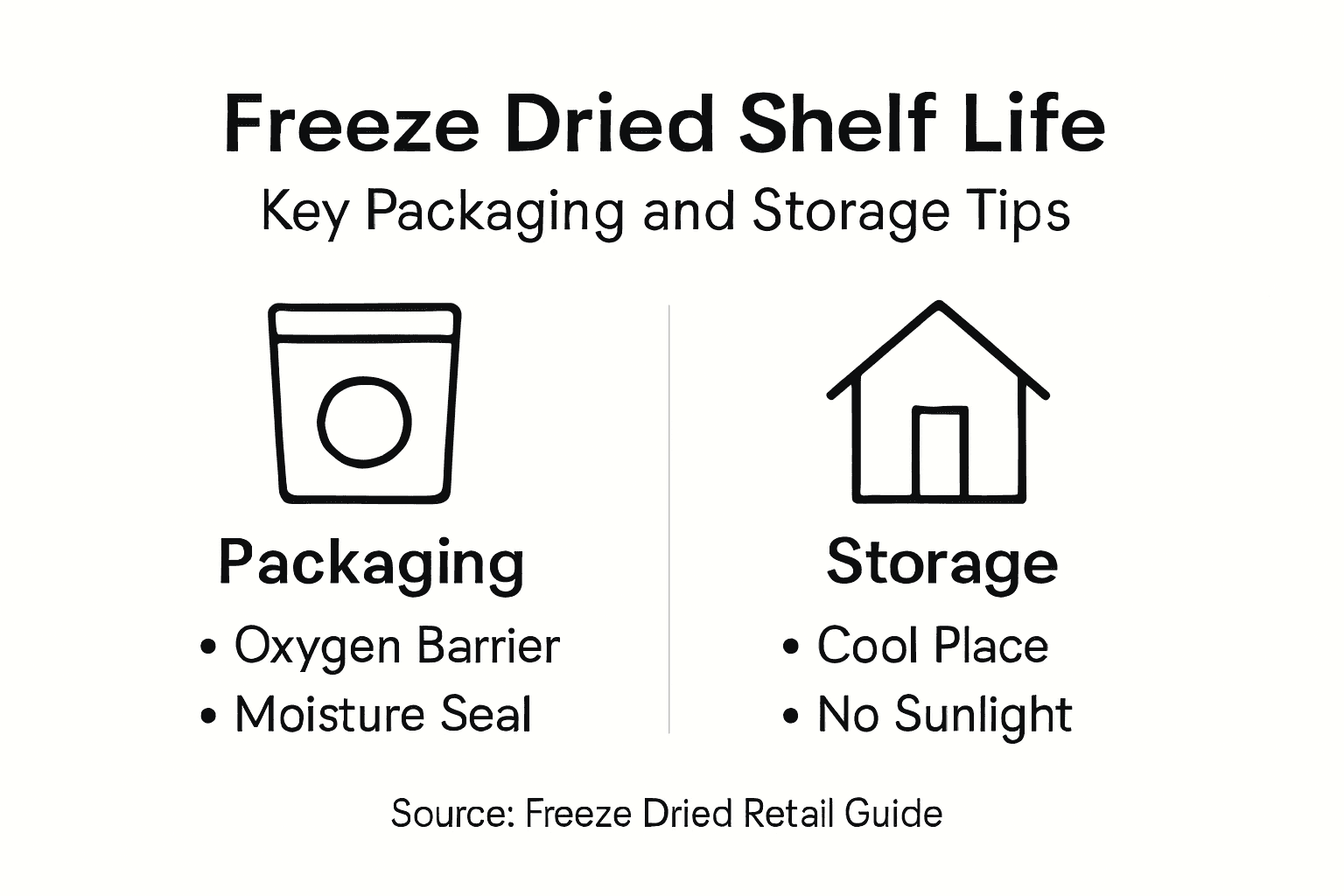
Pro tip: Invest in professional moisture and oxygen barrier packaging with clear labeling to maximize your freeze dried food product’s longevity and market appeal.
Common Risks and Mistakes to Avoid
Freeze dried food preservation involves numerous potential pitfalls that can compromise product quality and safety. Understanding these risks is crucial for retailers seeking to maintain the integrity of their inventory and protect consumer satisfaction.
Moisture represents the most significant threat to freeze dried food stability. Improper setup and maintenance can rapidly deteriorate product quality, with common mistakes including inadequate vacuum sealing, temperature fluctuations, and insufficient preparation techniques. Critical risk areas include packaging warm foods, which introduces condensation, using non-airtight containers, and storing products in environments with high humidity or temperature variations.
Professional freeze dried food management requires vigilant monitoring and proactive prevention strategies. Retailers must implement rigorous inspection protocols, checking for signs of moisture reabsorption, potential insect contamination, and subtle changes in product texture or color. Technical considerations extend beyond initial packaging, demanding consistent environmental control and periodic quality assessments. Different food categories require specialized handling, with protein-based products typically needing more stringent protective measures compared to fruit or vegetable freeze dried items.
Pro tip: Develop a comprehensive quality control checklist that includes moisture content testing, packaging integrity verification, and regular sensory evaluations to minimize potential preservation risks.
Comparing Freeze Dried vs. Other Food Preservation
Preservation techniques vary dramatically in their effectiveness and impact on food quality, with freeze drying emerging as a superior method for long-term food storage. Traditional approaches like standard freezing, canning, and dehydration each come with significant limitations that freeze drying effectively overcomes.
Freezing, while common, only slows microbial growth without eliminating it. Water content remains present, allowing minimal enzymatic activity that gradually degrades food quality. In contrast, freeze drying removes nearly all moisture, creating an environment where bacterial growth and enzymatic reactions are essentially halted. This process not only extends shelf life exponentially but also preserves nutritional content, color, and original food structure far more effectively than alternative preservation methods.
Each preservation technique offers unique advantages and drawbacks. Dehydration typically reduces moisture but can significantly alter food texture and nutritional profile. Canning introduces heat that can destroy delicate nutrients, while traditional freezing requires continuous energy input and risks freezer burn. Freeze drying stands out by maintaining near-original food characteristics, offering lightweight, stable products that can be stored at room temperature for years without quality degradation.
Here’s a side-by-side comparison of major food preservation methods and their practical impact:
| Preservation Method | Shelf Life Potential | Nutritional Retention | Storage Requirements |
|---|---|---|---|
| Freeze Drying | 10-25 years+ | Very high | Room temp, dry, dark |
| Freezing | 6-24 months | High to moderate | Freezer, power needed |
| Dehydration | 6-12 months | Moderate | Cool, dry setting |
| Canning | 1-5 years | Moderate to low | Stable, cool pantry |
Pro tip: Conduct comparative testing of different preservation methods for your specific product line to scientifically validate freeze drying’s superior preservation capabilities.
Maximize Your Freeze Dried Food Shelf Life with Expert Packaging and Manufacturing
Retailers face real challenges maintaining the shelf life and quality of freeze dried foods. Issues like moisture reabsorption, inadequate packaging, and fluctuating storage conditions can quickly reduce product integrity and consumer satisfaction. With critical terms like “vacuum sealing,” “moisture-resistant materials,” and “oxygen barriers” defining success, you need a trusted partner who understands these preservation essentials.
At Space-Man, we specialize in manufacturing and distributing premium freeze dried candy across Canada. We also offer private labeling, co-packing, and advanced bagging and packaging solutions designed specifically to protect freeze dried goods. Our professional-grade packaging safeguards against moisture and oxygen, empowering you to extend product shelf life, preserve flavor and nutrition, and build consumer confidence. Don’t risk your inventory with subpar packaging. Visit Space-Man today to explore our customized solutions and take the next step in securing your freeze dried product success.
Frequently Asked Questions
How long can freeze dried food last?
Freeze dried food can last anywhere from 10 to 25 years or more when stored properly, depending on the product and environmental conditions.
What factors affect the shelf life of freeze dried foods?
Key factors include packaging quality, storage temperature, initial product moisture level, and light exposure, all of which can influence how long the food remains safe and retains its quality.
How does freeze drying compare to other food preservation methods?
Freeze drying offers a significantly longer shelf life and preserves nutritional content, flavor, and texture better than methods like freezing, canning, or dehydration.
What are the best practices for storing freeze dried food?
Store freeze dried food in cool, dry, and dark conditions, using moisture and oxygen barrier packaging to enhance longevity and prevent spoilage.
Recommended
- Freeze Dried Fruit Shelf Life: Maximizing Profits – Spaceman
- Shelf Life of Freeze Dried Fruit – What Retailers Need – Spaceman
- Complete Guide to Benefits of Freeze Dried Fruit – Spaceman
- Dehydrated Food vs Freeze-Dried Food: Impact on Retail – Spaceman
- Reviewing Expiry Dates: Best Practices for 2025 in Canada - Probe IT
- How to Store Freeze-Dried Dog Food for Longevity