

TL;DR:
- Canadian seasonal candy sales are driven by Halloween Christmas Easter and Valentine’s Day.
- Non-chocolate gummies and innovative formats are outperforming traditional chocolate due to pricing and consumer preferences.
- Effective inventory planning and early seasonal display setups boost sales and maximize profit potential.
Candy retail in Canada runs on a predictable rhythm, but getting the timing, product mix, and quantities right is where most retailers either win big or get stuck with clearance bins. The four major seasonal periods — Halloween, Christmas, Easter, and Valentine’s Day — drive enormous demand spikes, but consumer preferences inside those windows are shifting fast. Gummies are gaining on chocolate, health-conscious options are carving out shelf space, and freeze-dried candy is turning heads in impulse sections. This article walks you through the data, the categories, and the practical inventory strategies you need to stock smarter and sell more this season.
Table of Contents
- Understanding the Canadian seasonal candy calendar
- Top seasonal candy categories and consumer preferences
- Inventory strategies for seasonal success
- Adapting to emerging trends and market shifts
- What most retailers miss about seasonal candy trends
- Take your seasonal candy sales to the next level
- Frequently asked questions
Key Takeaways
| Point | Details |
|---|---|
| Seasonality drives success | Aligning inventory with Canada’s candy sales calendar maximizes revenue and minimizes overstock risk. |
| Non-chocolate gains ground | Consumer demand for gummies and sugar confections is rising alongside cocoa price increases. |
| Balanced assortment wins | Assortments spanning impulse, family, and premium products help retailers outperform competitors. |
| Agility matters | Quickly adapting to new trends and pricing shifts gives retailers a competitive advantage each season. |
Understanding the Canadian seasonal candy calendar
Canada’s candy market is built on four anchors, and each one behaves differently. If you treat them all the same way, you’ll either overbuy on slow-moving SKUs or run dry on the items customers actually want. Understanding the distinct demand profile of each holiday gives you the foundation for smarter purchasing decisions.
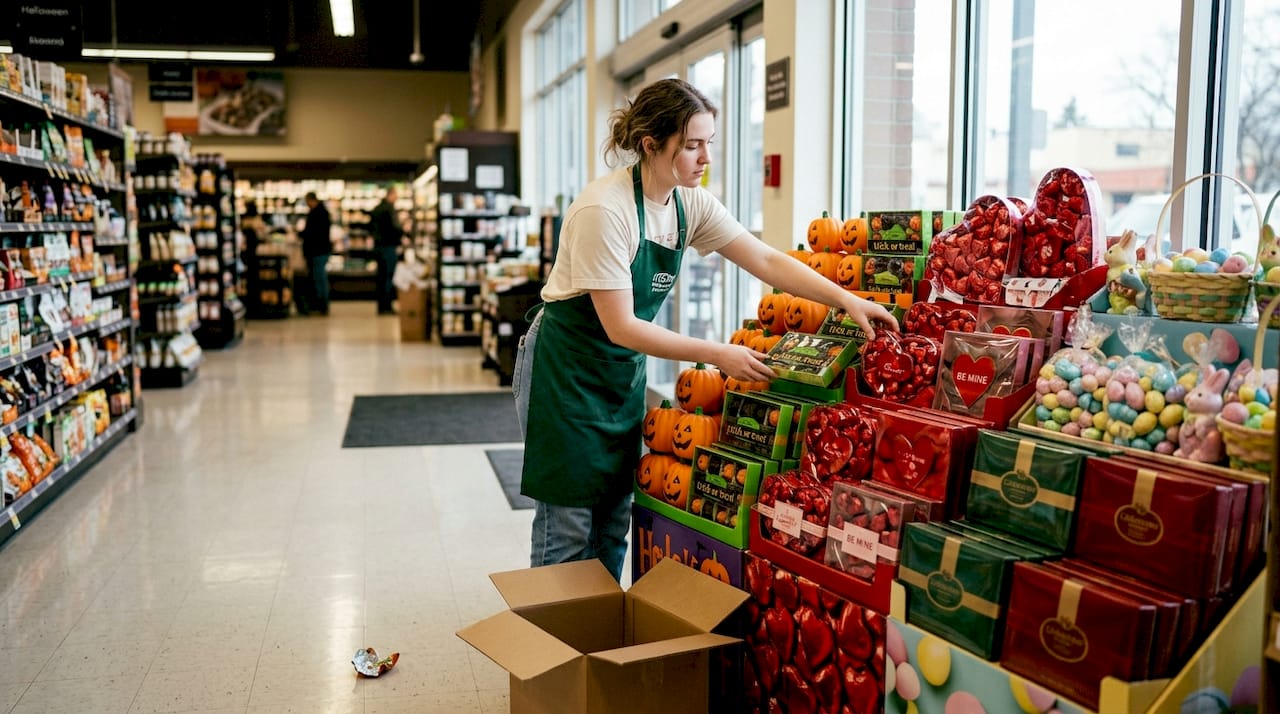
Halloween is the single most operationally intense period for candy retailers. Demand concentrates in a narrow three-week window leading up to October 31, and consumers are shopping for bulk give-away bags, novelty formats, and variety packs. October 2023 retail confectionery and snack sales hit $1.8 billion CAD, making it the second-highest month of the year. The window closes hard on November 1, so overstocking carries real markdown risk.
Christmas is the longest and highest-value season. Sales stretch across six to eight weeks, and December peaks at $2.1 billion CAD in retail confectionery. Gifting formats, premium boxes, and novelty tins drive a different purchase logic than Halloween. Consumers are buying for others, so presentation and perceived value matter more. This season also has more flexibility for retailers because gift-adjacent candy sells even after the holiday in post-Christmas shop traffic.
Valentine’s Day has a narrower but high-margin window. Gifting is central, chocolate leads, and packaging aesthetics drive purchase decisions as much as flavor. It’s also a category where premium positioning works well because consumers are willing to spend more on items that feel special.
Easter is unique because it spans several weeks and blends confectionery with broader grocery shopping. Chocolate penetration remains strong at 88% of Canadian consumers, and sales approach $3 billion industry-wide. Chocolate eggs and seasonal novelties anchor the set, but non-chocolate items are growing their share of the Easter basket too.
Here’s a quick comparison of the four key seasonal windows:
| Season | Peak window | Primary format | Consumer driver |
|---|---|---|---|
| Halloween | Late Sept to Oct 31 | Bulk bags, variety | Give-away, novelty |
| Christmas | Mid-Nov to Dec 25 | Gift boxes, tins | Gifting, premium |
| Valentine’s Day | Late Jan to Feb 14 | Boxed chocolate | Gifting, romance |
| Easter | March to mid-April | Eggs, novelty | Family, tradition |
Key planning points for each period:
- Halloween: Order bulk fill-bag SKUs at least 4 weeks out; plan for sharp selldown by Nov 1
- Christmas: Extend your premium and gift tier; cross-merchandise in seasonal display zones
- Valentine’s Day: Lean into packaging; heart-shaped and red-themed formats sell at a premium
- Easter: Keep allergen-free and non-chocolate options in the mix; parents are buying for kids with dietary needs
Staying current on consumer candy trends within each of these seasons is what separates reactive retailers from ones who consistently outperform.
Top seasonal candy categories and consumer preferences
Now that you know the timing, what should be on the shelves to maximize capture of each seasonal wave?
Chocolate is still the default answer for most retailers, and it’s not wrong. But it’s no longer the complete answer. The category landscape has shifted meaningfully over the last two years, and your assortment needs to reflect where consumer dollars are actually flowing.
Non-chocolate gummies are outpacing chocolate sales growth, largely because cocoa inflation has pushed chocolate prices up while gummies have maintained more accessible price points. For budget-conscious shoppers filling Halloween buckets or Easter baskets, a $3.99 bag of gummies beats a $6.99 chocolate bag every time. This is a real structural shift, not a blip.
The fastest-growing subcategories in non-chocolate include:
- Sour gummies and worms: Consistent top performers across Halloween and Easter
- Novelty and activity formats: Candy that kids interact with (dipping, popping, spraying) drives high impulse purchases
- Allergen-free gummies: Growing in response to nut, dairy, and gluten restrictions in family and school contexts
- Freeze-dried candy: A high-margin, visually distinct format gaining rapid traction in impulse sections
- Hard candy and lollipops: Lower-cost-per-unit option that helps stretch the Halloween fill-bag budget
On the health-conscious side, sugar-free and functional candies are rising but haven’t displaced core demand for regular confections. Consumers still want the real thing, especially during seasonal celebrations. The opportunity is to carry a small but visible health-adjacent section rather than rebuilding your set around it.
“The candy shopper hasn’t abandoned indulgence. They’re just more price-aware and more open to new formats than they were five years ago.”
Pro Tip: Keep classic sweets at the front of your seasonal set and position health-conscious or specialty formats (allergen-free, freeze-dried, sugar-free) as secondary fixtures. You capture both audiences without diluting the impulse trigger that makes candy retail work.
For premium formats, think about the gift occasion. Valentine’s Day and Christmas are where higher price-point items justify their shelf space. Easter and Halloween skew more toward volume and value. Your pricing architecture should follow that logic.
Staying on top of top snacking trends will help you spot emerging categories before they go mainstream and pick up incremental margin before competition catches up.
Inventory strategies for seasonal success
Understanding what to stock is only half the battle. Let’s look at practical ways to build and manage a winning assortment.
The biggest mistake retailers make is treating seasonal candy planning as a one-time buying decision. It’s actually a sequence of decisions spread across weeks, and the ones made earliest have the biggest impact on final results.
Step-by-step seasonal order planning:
- Set your sales target by season based on last year’s actual sellthrough, adjusting for any shelf space changes or new product additions
- Identify lead times by supplier — domestic suppliers may need 2 weeks, while specialty or imported items may need 6 to 8 weeks
- Place a core order 4 to 6 weeks before peak based on your primary assortment (proven sellers, anchor formats)
- Reserve 15 to 20% of your open-to-buy budget for closer-in spot purchases when you can see early sell rates
- Set a markdown trigger date — if inventory hasn’t moved to a defined threshold by a specific date, take the price action early rather than late
Balanced assortments across price tiers consistently outperform single-tier strategies. The framework breaks into three layers:
- Impulse tier (under $3.99): Individual bags, single-serve formats, checkout placement
- Family tier ($4.99 to $9.99): Variety packs, fill bags, shareable formats
- Premium tier ($10 and above): Gift boxes, curated sets, seasonal novelty tins
Here’s a category comparison to help you balance margin and risk:
| Category | Gross margin potential | Shelf life risk | Price sensitivity | Seasonal flexibility |
|---|---|---|---|---|
| Chocolate | Moderate | Higher (heat, bloom) | High (cocoa costs) | Lower |
| Gummies/non-chocolate | Higher | Lower | Lower | Higher |
| Freeze-dried candy | Highest | Low | Low to moderate | Very high |
| Hard candy | Moderate | Lowest | Low | High |
On pricing risk, cocoa price volatility typically hits retail shelves with a 12-month lag, which means the price increases you feel at Easter 2026 were baked in from commodity moves in early 2025. Shifting toward non-chocolate lines during high-cocoa periods isn’t just smart — it protects your margins.
Pro Tip: If cocoa costs are elevated heading into a major holiday, shift 20 to 30% of your planned chocolate buy toward gummies, hard candy, or freeze-dried formats. You’ll likely improve your blended margin while keeping price points accessible for shoppers.
For supply chain efficiency, review the bulk wholesale candy guide to identify where consolidated purchasing can reduce per-unit costs. And if you haven’t already explored ways to boost candy margins through smarter sourcing and pricing architecture, that’s worth a deep read before your next seasonal order.
Adapting to emerging trends and market shifts
Having structured your core inventory and planning process, the real edge comes from adapting swiftly as the market shifts.
Canadian confectionery is growing, but the environment isn’t simple. Confectionery sales rose 7.6% in 2025, driven by a combination of higher prices and resilient consumer demand. The sugar confectionery market specifically is forecast to grow at a CAGR of 4 to 5% through 2030, which is a healthy baseline. But inflation is softening discretionary spending in other categories, and candy retailers need to stay ahead of the signals.
There’s also a structural tailwind worth noting. Post-pandemic snacking behavior has driven a confectionery CAGR of 5.5% from 2023 to 2028, as consumers treat small indulgences as affordable comfort purchases even when bigger expenses get cut. This “lipstick effect” in candy is real, and it means seasonal windows aren’t the only time candy sells.
Agile responses for retailers navigating this environment:
- Expand your non-chocolate mix if cocoa and input costs continue rising; gummies and freeze-dried formats offer better margin resilience
- Introduce value packs and multipacks that give price-conscious consumers perceived savings while maintaining your revenue per transaction
- Trial small quantities of new formats — freeze-dried candy, novelty textures, and functional gummies — in impulse positions to test demand before committing to full shelf space
- Adjust your display fast when a product isn’t moving; don’t wait until post-season to react
- Watch sell-rate data weekly during seasonal peaks, not monthly; a two-week delay in reading the signal can cost you a full reorder cycle
“The retailers who grow their seasonal candy revenue year over year are the ones running their stores on weekly data, not gut feel.”
Visual merchandising plays a bigger role in candy than most categories. Consumers don’t enter a store with a specific candy SKU in mind — they respond to display, color, and placement. Strong seasonal resets using updated display strategies are often worth more per dollar invested than a broader product selection. A sharp, well-signed display of 12 SKUs outperforms a cluttered endcap of 30.
Inflation also affects how consumers read price signage. Clear per-unit pricing, bundle offers, and value comparisons help shoppers rationalize the purchase, especially at the family and premium tiers where sticker shock is highest.
What most retailers miss about seasonal candy trends
Most retailers concentrate almost all of their planning energy on the peak 2 to 3 weeks of each holiday window. That’s the obvious move, and everyone does it. The problem is that this approach leaves a lot of incremental revenue unrealized in what we call shoulder periods — the weeks just before and after peak.
Pre-holiday build periods (the 3 to 4 weeks before the main event) are when engaged shoppers are already buying, decorating, and planning. Retailers who set seasonal displays early capture those early movers and generate selling days that latecomers miss entirely. Post-holiday windows, particularly after Christmas and Easter, are underused. Consumers are still shopping, prices can be adjusted slightly for clearance motivation, and creative bundling can move remaining stock without deep discounting.
The other overlooked lever is small-batch and experimental SKU testing. Many retailers stick to the same proven lineup year after year, but candy supply chain insights suggest that rapid pivots to innovative formats — freeze-dried candy being the best current example — generate disproportionate attention and margin when introduced with smart placement. You don’t need to rebuild your set; a few new items in the right spot can lift average transaction value and give customers a reason to talk about your store.
The real competitive edge isn’t in any single product decision. It’s in the speed and confidence of your display resets. Flexible planograms, reusable seasonal fixtures, and a reliable supplier network let you respond to what’s actually selling rather than committing blindly to a plan made months earlier.
Take your seasonal candy sales to the next level
Ready to put these insights into practice? Spaceman makes it easier for Canadian candy retailers to stay ahead of seasonal demand with ready-to-sell retail packs, flexible display solutions, and innovative freeze-dried candy formats that capture impulse purchases at every holiday.
Whether you’re building out your Halloween bulk display or refreshing your Easter impulse section, Spaceman’s wholesale variety starter pack gives you a low-risk way to test freeze-dried candy in your store. For a fully built-out seasonal fixture, the retail display rack kit includes product and merchandising support to get you selling fast. If you want your own branded seasonal candy lineup, our private label and co-packing services let you put your store’s name on a product that stands out from national brands.
Frequently asked questions
What are the top holiday seasons for candy sales in Canada?
Halloween, Christmas, Easter, and Valentine’s Day drive the highest candy sales volumes with predictable and major demand spikes each year.
Are Canadian consumers buying more non-chocolate candy?
Yes, non-chocolate gummies are growing faster than chocolate sales due to lower prices and the ongoing impact of cocoa price inflation.
How can retailers prepare for seasonal candy trends?
Plan your core orders 4 to 6 weeks before peak, balance assortments across price tiers, and track early sell rates weekly so you can make timely reorder or markdown decisions.
Does inflation affect candy sales in Canada?
Candy demand stays resilient through inflation, with sugar confectionery sales forecast to grow at 4 to 5% CAGR through 2030 despite rising consumer prices overall.