

Many confuse freeze drying with puffing methods, but freeze drying uses a unique sublimation process that preserves candy flavor and texture while reducing weight drastically by up to 90%. This distinction matters for Canadian candy manufacturers and retailers seeking innovative products that stand out. Understanding freeze drying unlocks opportunities for extended shelf life, intensified flavors, and improved logistics. This guide walks you through the process, benefits, and practical applications to help you make informed decisions about integrating freeze dried candy into your product lineup.
Table of Contents
- Introduction To Freeze Dried Candy
- The Freeze Drying Process Explained
- How Freeze Drying Transforms Candy: Flavor And Texture
- Comparison: Freeze Drying Vs Other Drying And Puffing Methods
- Candy Varieties Best Suited For Freeze Drying
- Manufacturing Equipment And Operational Considerations
- Shelf Life, Packaging, And Handling Best Practices
- Business Opportunities And Market Trends In Canada
- Explore Spaceman’s Freeze Drying Solutions For Candy Businesses
Key Takeaways
| Point | Details |
|---|---|
| Moisture Removal | Freeze drying removes up to 90% moisture through sublimation, preserving original shape and flavor compounds. |
| Texture Transformation | Creates a unique crispy, airy texture with intensified flavor concentration. |
| Candy Suitability | Chewy candies like gummies and marshmallows excel; chocolate fails due to fat content. |
| Equipment Requirements | Demands specialized machines with precise temperature and vacuum controls for consistent quality. |
| Shelf Life Extension | Proper packaging maintains crunch and extends shelf life up to 36 months. |
Introduction to Freeze Dried Candy
Freeze dried candy refers to candy with moisture removed via sublimation, a process distinct from heat drying or traditional puffing. Water transitions directly from ice to vapor without passing through a liquid state. This gentle method preserves the candy’s original structure while creating dramatic texture changes.
Freeze drying has emerged in Canada as an innovative candy preservation method reducing moisture significantly and enhancing product attributes. The Canadian market has embraced this technology as consumers seek novel snacking experiences. Retailers benefit from longer shelf stability and reduced shipping costs.
Key benefits include:
- Weight reduction of 80 to 90%, cutting logistics costs
- Shelf life extended from months to years when properly packaged
- Flavor compounds concentrated as moisture evaporates
- Crispy, airy texture that melts quickly in the mouth
- No preservatives needed due to low moisture content
These advantages position freeze dried candy as a strategic product category. Manufacturers can differentiate their offerings while retailers gain margin improvements through reduced waste and shipping efficiency. Our complete guide to freeze dried candies in Canada explores market opportunities in greater depth.
The Freeze Drying Process Explained
Freeze drying uses three stages—freezing, primary drying (sublimation), and secondary drying—to remove moisture without melting or chemical degradation. Each stage requires precise control to achieve optimal results.
-
Rapid Freezing: Candy is frozen to temperatures between negative 40°C and negative 50°C within minutes. Quick freezing forms small ice crystals that preserve cell structure. Slow freezing creates large crystals that damage candy texture.
-
Primary Drying (Sublimation): A vacuum chamber reduces pressure to around 0.1 to 0.3 millibar. At this pressure, ice sublimates directly into vapor without becoming liquid. This stage removes approximately 95% of moisture and takes the longest, often 12 to 24 hours depending on candy thickness.
-
Secondary Drying: Temperature gradually increases to room temperature while maintaining vacuum. This phase removes bound moisture molecules clinging to candy surfaces. Complete drying ensures crispness and prevents spoilage.
Sublimation is the key differentiator. Unlike heat drying, which can caramelize sugars or alter flavors, sublimation preserves candy chemistry. The candy maintains its original color, shape, and nutritional profile. Temperature and vacuum precision prevent melting or collapse during processing.
Pro Tip: Monitor chamber pressure continuously during primary drying. Pressure spikes indicate incomplete freezing or air leaks that compromise batch quality.
Manufacturers investing in freeze dryer machinery details must prioritize equipment with automated controls. Manual adjustments increase risk of batch failures and inconsistent product quality.
How Freeze Drying Transforms Candy: Flavor and Texture
Removing moisture concentrates candy flavors, resulting in a bolder taste compared to the original moist candy. As water evaporates, sugar and flavor compounds become more densely packed. A freeze dried gummy delivers an immediate flavor burst that surprises first time consumers.
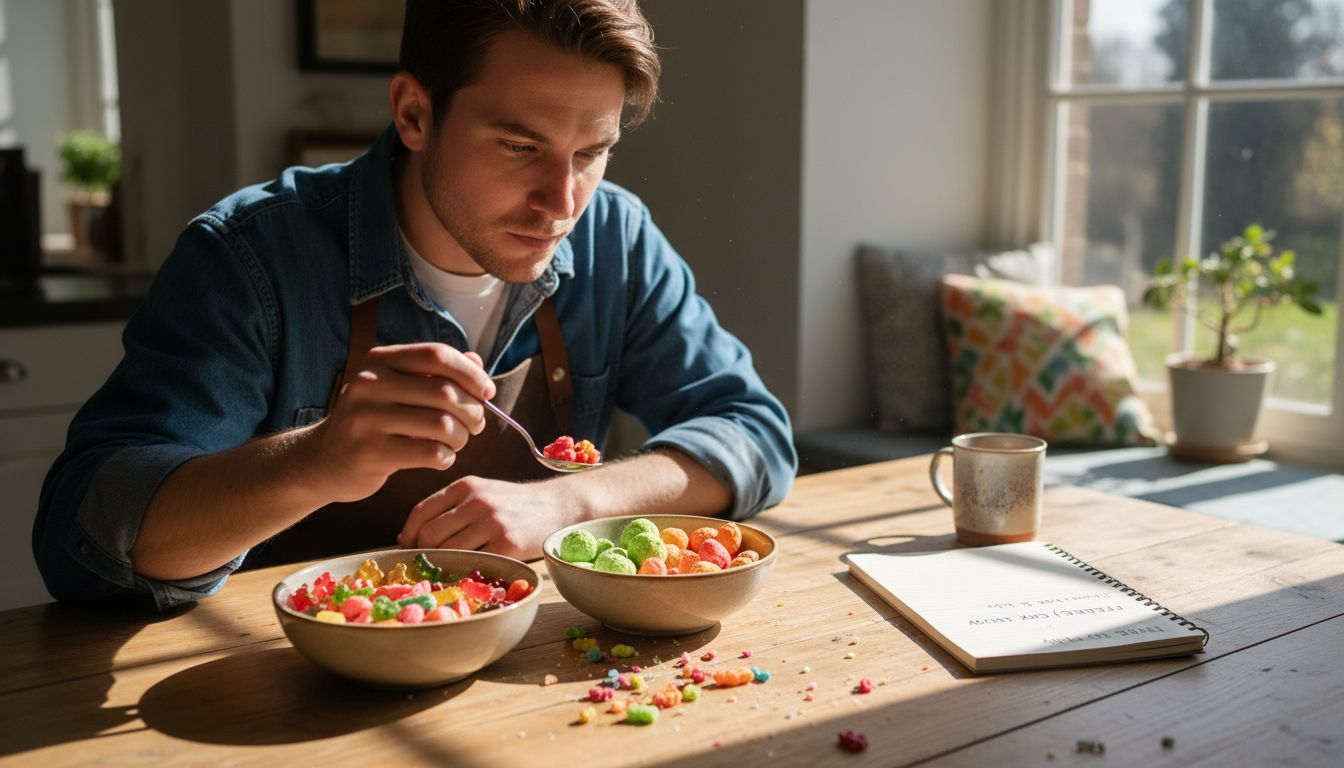
Texture transformation is equally dramatic. Sublimation leaves behind a porous structure filled with air pockets. The candy becomes light and crispy, shattering easily when bitten. This contrasts sharply with the chewy, dense texture of original candy.
Key texture changes include:
- Expansion in size as moisture vacates internal spaces
- Weight drops to 10 to 20% of original mass
- Surface becomes fragile and breaks apart quickly
- Melts instantly on the tongue due to high surface area
A common myth suggests freeze drying diminishes flavor. The opposite holds true. Concentrated sugars and flavor molecules create a more intense sensory experience. Some consumers describe freeze dried candy as delivering the essence of the original in a completely new format.
Pro Tip: Sample freeze dried versions alongside originals during product development. Consumer preference often splits based on texture expectations, so position freeze dried candy as a distinct experience rather than a replacement.
Manufacturers should educate retail partners on these sensory differences. Shoppers unfamiliar with freeze dried candy may need tasting opportunities to appreciate the unique appeal.
Comparison: Freeze Drying vs Other Drying and Puffing Methods
Heat puffing uses high temperatures (150–175°C) softening candy to expand it, altering flavor and nutrients unlike freeze drying’s gentle sublimation. Understanding these differences clarifies why freeze drying commands premium positioning.
| Method | Temperature | Moisture Removal | Flavor Impact | Texture Result |
|---|---|---|---|---|
| Freeze Drying | Negative 40°C to 25°C | Sublimation (95%+) | Preserved and concentrated | Crispy, airy, expands moderately |
| Heat Puffing | 150°C to 175°C | Evaporation (partial) | Caramelized, altered | Puffed, crunchy, can be hard |
| Air Drying | 40°C to 60°C | Evaporation (slow) | Minimal change | Chewy to hard |
Heat puffing applies direct heat, causing candy to soften and expand as internal moisture rapidly vaporizes. This creates a puffed texture but often caramelizes sugars, changing flavor profiles. Nutritional degradation occurs due to heat exposure.
Freeze drying operates at low temperatures, preventing chemical changes. Flavors remain true to the original formulation. The process costs more per batch due to energy requirements and longer cycle times, but the quality difference justifies premium pricing.
Common misconceptions include:
- Believing all expanded candy is freeze dried when much is heat puffed
- Assuming freeze dried candy is dehydrated candy (dehydration uses heat)
- Thinking freeze drying is only for fruits and meals, not candy
Retailers can leverage these differences in marketing. Position freeze dried candy as the premium option for discerning consumers seeking authentic flavor without heat damage.
Candy Varieties Best Suited for Freeze Drying
Chewy candies like gummies and marshmallows freeze dry well due to moisture content and structure, whereas chocolate does not freeze dry effectively. Selecting appropriate candy types ensures production efficiency and consumer satisfaction.
Ideal candidates contain high moisture and minimal fat:
- Gummy candies: Transform into crunchy, flavor packed bites. Popular choices include gummy bears, worms, and fruit slices.
- Marshmallows: Expand significantly and develop an airy, melt in your mouth texture. Both standard and flavored varieties work well.
- Taffy and chews: Become crispy while retaining concentrated flavor. Saltwater taffy and fruit chews are excellent options.
- Hard candies with centers: The outer shell protects inner fillings, creating interesting texture contrasts.
Chocolate fails because cocoa butter melts during freezing and drying, creating an oily mess rather than a crispy texture. The fat content prevents proper sublimation. Candy with chocolate coatings also poses challenges unless the coating is minimal.
Canadian favorites like Swedish Berries, Fuzzy Peaches, and Sour Keys have gained popularity as freeze dried products. These candies already have strong brand recognition, making freeze dried versions easier to introduce. Our guide on candy suitability for freeze drying provides detailed selection criteria.
Test small batches before committing to large production runs. Some candies may require recipe adjustments to optimize freeze drying performance.
Manufacturing Equipment and Operational Considerations
Freeze drying requires precise temperature and vacuum control machines; poor freezing or vacuum leads to texture damage or incomplete drying. Commercial operations demand robust equipment and systematic quality controls.
Key equipment features include:
- Rapid freezing capability: Compressor systems reaching negative 50°C within 30 minutes
- High capacity vacuum pumps: Maintaining 0.1 millibar pressure for extended periods
- Programmable temperature controls: Automated ramp profiles preventing manual errors
- Shelf heating systems: Uniform heat distribution during secondary drying
- Data logging: Recording temperature and pressure for quality assurance documentation
Monitoring prevents common failures. Large ice crystals form when freezing is too slow, damaging candy cell structure. Insufficient vacuum pressure leaves moisture trapped inside, causing spoilage. Overheating during secondary drying melts candy or caramelizes sugars.
Quality assurance protocols include:
- Pre freeze weight measurements
- Post process moisture analysis (target below 2%)
- Texture consistency testing across batch samples
- Visual inspection for melting or collapse
Pro Tip: Calibrate equipment monthly and validate temperature sensors quarterly. Sensor drift causes subtle quality issues that compound over time.
Manufacturers should explore freeze drying equipment options matching their production scale. Entry level machines handle 5 to 10 kilograms per batch, while industrial units process hundreds of kilograms. Understanding shelf life considerations helps justify equipment investments through reduced waste. Implementing operational workflow tips streamlines production efficiency.
Shelf Life, Packaging, and Handling Best Practices
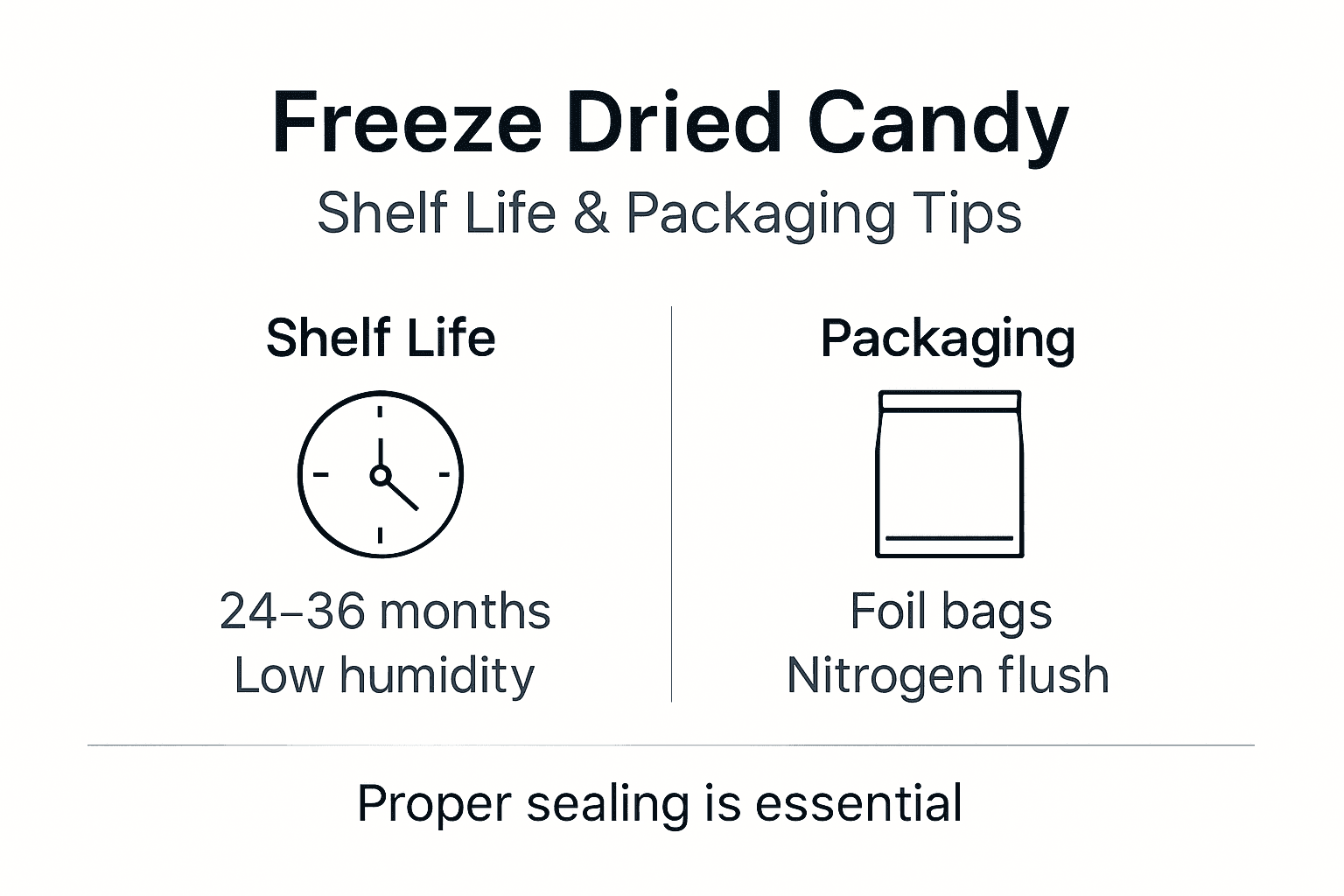
Airtight, resealable bags prevent moisture ingress, maintaining texture and extending shelf life up to 36 months under stable conditions. Proper packaging is essential for preserving the crunch and flavor intensity consumers expect.
Recommended packaging materials include:
- Metallized polyester films blocking oxygen and moisture
- Foil lined bags with zip closures for consumer convenience
- Nitrogen flushing to displace oxygen before sealing
- Desiccant packets absorbing residual moisture
Storage environments significantly impact product longevity. Store freeze dried candy in cool, dry locations away from direct sunlight. Humidity above 60% accelerates moisture absorption, softening the crispy texture within days. Temperature fluctuations cause condensation inside packages, introducing moisture.
Logistics advantages extend beyond shelf life. Lightweight products reduce shipping costs dramatically. A 10 kilogram case of original gummies becomes 1 to 2 kilograms after freeze drying, cutting freight expenses by 80 to 90%. Reduced weight also lowers carbon footprint, appealing to environmentally conscious consumers.
Handling guidelines for retailers:
- Rotate stock using first in, first out principles
- Avoid storing near produce or other high moisture products
- Inspect packages for seal integrity before shelving
- Educate staff on moisture sensitivity to prevent quality complaints
Our shelf life and packaging resource details testing protocols for validating package performance under various conditions.
Business Opportunities and Market Trends in Canada
Freeze dried candy market in Canada is growing at approximately 9.96% CAGR, driven by consumer demand for novel textures and extended shelf life. This growth creates substantial opportunities for manufacturers and retailers prepared to innovate.
Weight reduction benefits directly impact profitability. Shipping costs drop by 80 to 90% when candy loses most of its water weight. A retailer ordering 100 kilograms of freeze dried candy pays freight on 10 to 20 kilograms of actual product weight. These savings improve margins significantly, especially for e-commerce operations shipping individual orders.
Consumer trends favor freeze dried candy:
- Younger demographics seek Instagram worthy snacks with visual appeal
- Health conscious buyers appreciate the absence of added preservatives
- Adventurous eaters enjoy bold, concentrated flavors
- Convenience shoppers value long shelf life reducing waste
Strategic advantages for businesses include:
- Product differentiation in competitive candy markets
- Premium pricing justified by unique processing and quality
- Reduced inventory shrinkage due to extended shelf stability
- Expansion into new channels like specialty stores and subscription boxes
Retailers can test market acceptance with small orders before committing to large inventory. Manufacturers benefit from higher margins compared to traditional candy lines. Our market growth projections analyze regional opportunities, while our guide to boost margins with freeze dried candy provides actionable strategies.
Market Impact: Freeze dried candy weight reduction of 90% cuts shipping costs by the same percentage, directly improving distribution margins.
Explore Spaceman’s Freeze Drying Solutions for Candy Businesses
Spaceman provides commercial freeze drying machines designed specifically for candy production. Our equipment delivers consistent results with automated controls that eliminate guesswork. Whether you are launching a new product line or expanding existing operations, our team helps you select the right capacity and features.
We also offer private label and co-packing services for businesses not ready to invest in equipment. Our experienced team handles production, packaging, and quality control, allowing you to focus on marketing and distribution. Custom formulations and packaging designs help your brand stand out.
Test market demand with our freeze dried candy starter packs wholesale. These curated assortments provide an affordable entry point for retailers exploring freeze dried candy. Contact us to discuss how we can support your business growth.
Frequently Asked Questions
What is the main difference between freeze dried candy and puffed candy?
Freeze dried candy uses sublimation at low temperatures to remove moisture, preserving original flavors and creating an airy, crispy texture. Puffed candy relies on high heat (150 to 175°C) that softens candy and causes rapid expansion, often altering flavor through caramelization. Freeze drying maintains candy chemistry while puffing changes it.
Can chocolate candies be freeze dried successfully?
No, chocolate does not freeze dry well due to high cocoa butter content. Fat melts during the process rather than sublimating like water, resulting in an oily, unpleasant texture. Candies with minimal chocolate coatings may work, but pure chocolate bars or heavily coated items fail consistently.
How long does freeze dried candy usually last on the shelf?
Properly packaged freeze dried candy lasts 24 to 36 months when stored in airtight, moisture resistant packaging. Shelf life depends on packaging quality and storage conditions; humidity and temperature fluctuations shorten longevity. Without proper packaging, moisture absorption degrades texture within weeks.
What packaging methods best maintain freeze dried candy quality?
Metallized polyester or foil lined bags with resealable closures work best. Nitrogen flushing before sealing displaces oxygen, preventing oxidation. Including desiccant packets absorbs any residual moisture. Store packages in cool, dry environments away from humidity sources to maximize shelf stability.
Is freeze drying equipment cost-effective for small candy manufacturers?
Entry level commercial freeze dryers cost 15,000 to 50,000 Canadian dollars, requiring significant upfront investment. Small manufacturers can partner with co-packers offering freeze drying services, eliminating equipment costs while testing market demand. Once sales justify equipment, manufacturers gain better margins and production control.
Does freeze drying candy change its nutritional value?
Freeze drying preserves nutritional content better than heat based methods. Low temperatures prevent vitamin degradation and maintain sugar profiles. The main change is moisture removal, concentrating calories per gram since water weight disappears. Nutritional labels should reflect this concentration.
Recommended
- Freeze Dried Candy Shelf Life: Essential Guide for Retail & Wholesale – Spaceman
- Understanding the Shelf Life of Freeze Dried Candy – Spaceman
- How to Store Freeze Dried Candy for Maximum Freshness – Spaceman
- What Candy Can You Freeze Dry: Complete Guide – Spaceman
- Spring Detox Myths: What Actually Works? 🍋💦 – Lunix