

Finding the right balance between tradition and modern convenience can leave Canadian candy shop owners questioning which preserved treats to stock. The difference between dried foods and dehydrated foods goes beyond method and tradition—it can impact product quality, shelf life, and customer satisfaction. Understanding these core distinctions means you can select inventory that maintains flavor and freshness while also meeting the expectations of health-conscious shoppers.
Table of Contents
- Dried Vs Dehydrated: Core Definitions
- How Drying And Dehydrating Processes Work
- Impacts On Texture, Flavor, And Nutrition
- Shelf Life, Storage, And Food Safety Issues
- Choosing For Inventory And Consumer Appeal
Key Takeaways
| Point | Details |
|---|---|
| Dried vs Dehydrated | Dried foods rely on natural processes, while dehydrated foods utilize controlled mechanical methods for moisture removal. |
| Impact on Quality | Different drying techniques affect texture, flavor, and nutritional value, making method selection critical for product quality. |
| Shelf Life Considerations | Preservation methods greatly influence shelf life; freeze-dried products offer the longest shelf life and food safety. |
| Consumer Preferences | Understanding target market demands is essential for inventory selection, balancing quality, cost, and consumer expectations. |
Dried vs Dehydrated: Core Definitions
In the world of food preservation, dried and dehydrated products might seem identical at first glance, but they represent distinct approaches to removing moisture from food. Understanding the core differences can help Canadian candy retailers make more informed inventory decisions and offer customers higher-quality products.
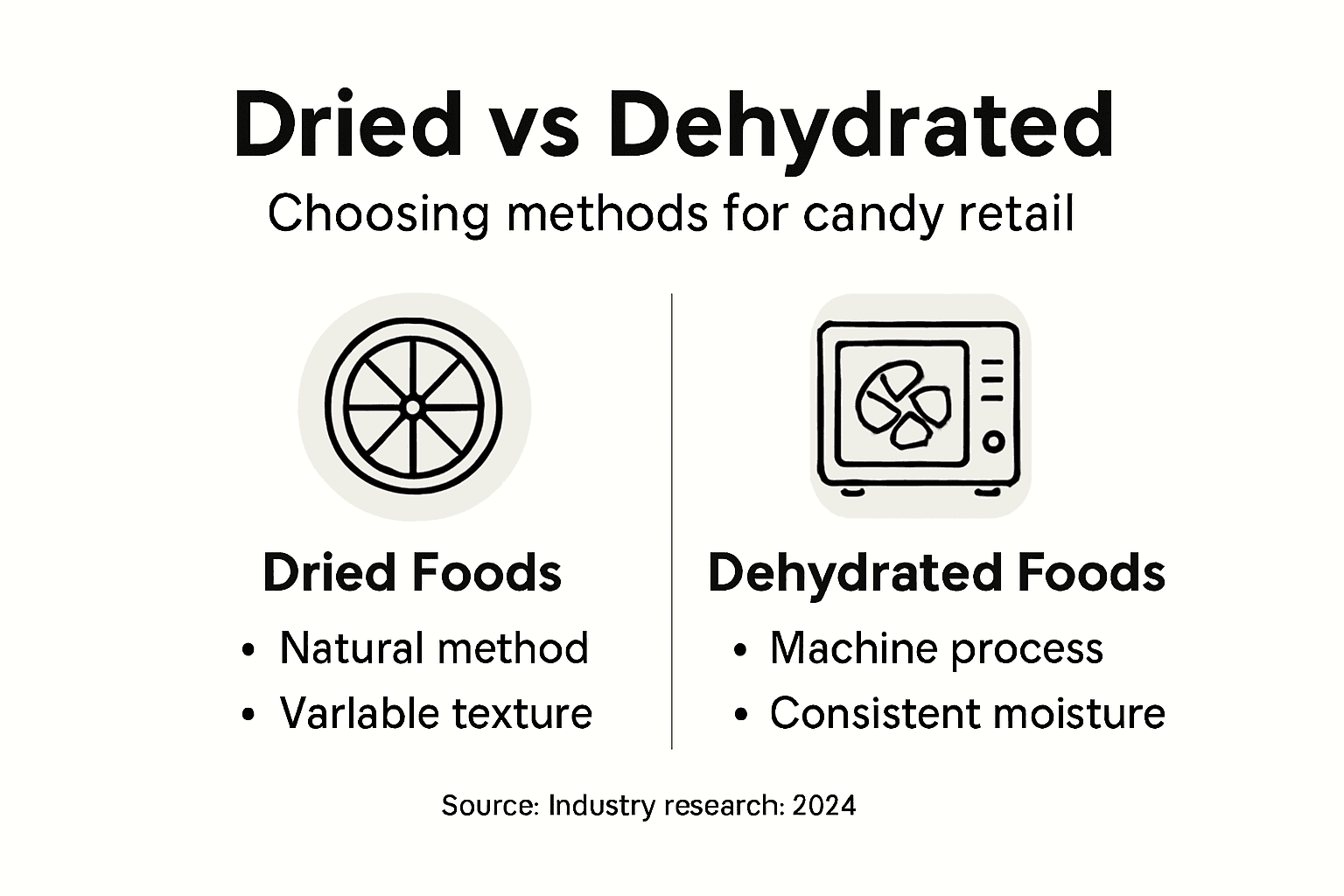
The primary distinction lies in the moisture removal process. Dried foods typically involve natural moisture loss through traditional methods like sun exposure or air drying. Think of fruits left out to dry naturally - grapes becoming raisins or tomatoes slowly losing moisture under direct sunlight. In contrast, dehydrated foods involve deliberate, controlled technological processes using specialized equipment like industrial dehydrators or precisely controlled ovens.
Here are the key characteristics of dried versus dehydrated products:
-
Dried Foods:
- Rely on environmental conditions
- Less predictable moisture content
- Traditional preservation method
- Often more variable in final product quality
-
Dehydrated Foods:
- Use mechanical/technological processes
- Precise moisture reduction
- Modern industrial preservation technique
- Consistent product quality
Technical food preservation research confirms that both methods aim to extend shelf life by reducing water content, which inhibits microbial growth and enzymatic activities. The primary goal remains consistent: preventing spoilage and maintaining food quality.
Here is a quick comparison of preservation methods for candy retailers:
| Method | Consistency of Results | Production Cost | Typical Shelf Life |
|---|---|---|---|
| Natural Drying | Variable | Very low | Weeks to months |
| Industrial Dehydration | Highly consistent | Moderate | 1-5 years |
| Freeze Drying | Extremely consistent | High | Up to 25 years |
Pro tip: When selecting inventory for your candy shop, always request specific moisture content documentation from suppliers to ensure consistent product quality and shelf stability.
How Drying and Dehydrating Processes Work
Understanding the intricate mechanisms behind food preservation requires diving into the nuanced world of moisture removal technologies. Food dehydration processes involve sophisticated techniques that go far beyond simple water elimination, utilizing complex heat and mass transfer principles to transform food products.
At its core, drying and dehydration rely on strategic environmental manipulation. Hot air drying represents the most common method, where food products are exposed to carefully controlled temperature streams that encourage rapid moisture evaporation. Different equipment like cabinet dryers, tunnel dryers, and fluidized bed dryers offer unique advantages depending on the specific product requirements.
Multiple drying technologies exist, each with distinct characteristics:
-
Hot Air Drying:
- Most traditional method
- Uniform heat distribution
- Suitable for many food types
- Relatively low equipment cost
-
Microwave Drying:
- Rapid moisture removal
- Precise temperature control
- Minimal nutrient degradation
- Higher energy efficiency
-
Freeze Drying:
- Preserves original food structure
- Maintains nutritional integrity
- Excellent for delicate products
- Higher processing cost
Technological advances in dehydration continue to push boundaries, focusing on improving efficiency while maintaining food quality. Modern techniques aim to reduce energy consumption and preserve nutritional profiles more effectively than traditional methods.
Effective dehydration isn’t just about removing water - it’s about strategic moisture management that maintains food integrity and extends shelf life.
Pro tip: When selecting a drying method for your candy inventory, consider not just moisture removal, but how each technique impacts flavor, texture, and nutritional value.
Impacts on Texture, Flavor, and Nutrition
Candy manufacturers must understand how different preservation methods fundamentally transform food products. Drying techniques significantly influence the sensory experience of snacks, impacting everything from mouthfeel to flavor intensity and nutritional value.
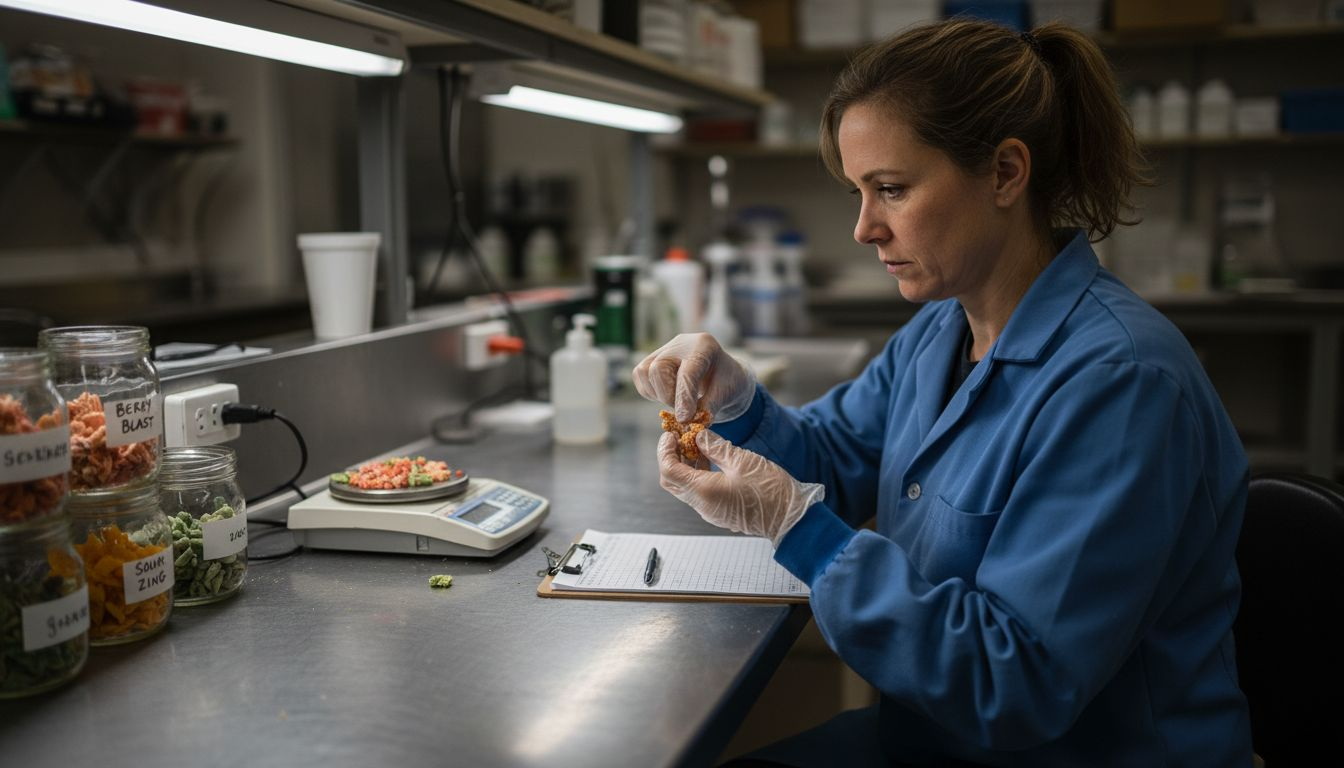
The moisture removal process introduces complex chemical changes that can dramatically alter a product’s characteristics. Texture transformation occurs at the molecular level, where heat and environmental conditions break down cellular structures, potentially creating crunchier or more brittle food products. Careful control of drying parameters becomes critical in maintaining the desired sensory attributes that consumers expect.
Key impacts of different drying methods include:
-
Hot Air Drying:
- Potential nutrient degradation
- Moderate flavor preservation
- Uniform texture development
- Cost-effective processing
-
Freeze Drying:
- Minimal nutrient loss
- Maximum flavor retention
- Lightest, most delicate texture
- Higher processing costs
-
Microwave Drying:
- Rapid moisture removal
- Potential uneven nutrient distribution
- Quick texture modification
- Precise temperature control
Nutritional compound changes during drying are particularly sensitive to heat, light, and oxygen exposure. Vitamins, minerals, and antioxidants can degrade or leach out, fundamentally altering the health profile of the final product.
Effective drying isn’t just about removing moisture - it’s about preserving the essence of the food while creating an appealing sensory experience.
Pro tip: Invest in multiple drying technologies and conduct systematic taste tests to understand how each method uniquely impacts your candy’s final quality and consumer appeal.
Shelf Life, Storage, and Food Safety Issues
Canadian candy retailers must understand the critical differences in preservation techniques that directly impact product safety and longevity. Drying methods fundamentally alter food safety by reducing water activity, which prevents microbial growth and extends product shelf life.
Water activity emerges as the key scientific principle governing food preservation. When moisture levels drop below 0.75, bacterial, yeast, and mold proliferation becomes nearly impossible. This biological mechanism transforms drying from a simple preservation technique into a sophisticated food safety strategy that protects consumer health and product quality.
Shelf life varies dramatically between preservation methods:
-
Freeze Dried Products:
- Up to 25 years shelf life
- Near-total moisture removal
- Minimal nutritional degradation
- Highest food safety preservation
-
Dehydrated Products:
- 1-5 years typical shelf life
- Partial moisture reduction
- More susceptible to environmental conditions
- Moderate food safety protection
Long-term storage solutions depend on strategic packaging and environmental control. Critical storage considerations include protecting products from:
- Direct sunlight exposure
- High humidity environments
- Temperature fluctuations
- Potential cross-contamination
Effective food preservation isn’t just about removing moisture - it’s about creating a controlled environment that maintains product integrity.
Pro tip: Invest in high-quality, moisture-resistant packaging and conduct regular quality control checks to ensure your preserved candy products maintain maximum safety and flavor.
Choosing for Inventory and Consumer Appeal
Canadian candy retailers face nuanced decisions when selecting preservation methods that balance product quality, consumer preferences, and business profitability. Inventory strategies must carefully consider the intricate trade-offs between shelf stability, production costs, and sensory appeal.
Consumer expectations drive inventory selection more than ever. Today’s market demands products that not only taste exceptional but also offer convenience, nutritional value, and extended freshness. Freeze-dried and dehydrated products each present unique value propositions that can attract different customer segments and align with specific retail positioning strategies.
Key considerations for inventory selection include:
-
Freeze Dried Products:
- Maximum nutritional preservation
- Longer shelf life
- Lightweight and compact
- Premium pricing potential
- Ideal for health-conscious consumers
-
Dehydrated Products:
- Lower production costs
- More traditional texture
- Shorter shelf life
- Broader price point range
- Familiar taste profile
Strategic inventory management isn’t just about choosing a preservation method - it’s about understanding your target market’s evolving preferences and expectations.
Retailers should evaluate their specific market segment, storage capabilities, and customer demographic when making preservation method selections. Factors like local climate, target age group, and regional taste preferences play crucial roles in determining the most suitable approach.
Consider these factors when matching preservation methods to customer needs:
| Target Consumer | Preferred Quality | Price Sensitivity | Product Example |
|---|---|---|---|
| Health-focused | Max nutrition/flavor | Will accept premium | Freeze-dried fruit snacks |
| Traditional Taste | Familiar texture | Seeks affordable options | Dehydrated apple rings |
| Bulk buyers | Long-term shelf life | Values cost savings | Freeze-dried bulk mixes |
Pro tip: Conduct periodic customer surveys and taste tests to continuously refine your inventory selection and stay ahead of emerging consumer trends in preserved candy products.
Elevate Your Candy Inventory with Expert Freeze Drying Solutions
Choosing between dried and dehydrated candy products comes with challenges like ensuring consistent moisture content, preserving flavor, and extending shelf life. Many Canadian candy retailers face the tough decision of balancing cost, texture, and nutritional quality while meeting consumer expectations for freshness and taste. Understanding the science behind moisture management is crucial, but partnering with a trusted expert in preservation technology can take your product quality to the next level.
At Space Man, we specialize in premium freeze dried candy manufacturing and distribution across Canada. Our advanced dehydration techniques deliver maximum flavor retention, superior shelf stability, and the nutritional integrity that health-conscious customers demand. Whether you need customized private labeling, co-packing services, or reliable packaging solutions, we provide comprehensive options tailored to your inventory goals.
Discover how our innovative freeze drying processes solve your preservation pain points today. Protect your candy’s texture and taste while extending shelf life beyond traditional methods. Visit https://space-man.ca and explore our services designed to elevate your candy offerings now. Make the move toward premium quality and consistent product excellence.
Frequently Asked Questions
What is the main difference between dried and dehydrated foods?
Dried foods are typically processed through natural methods that involve moisture loss, while dehydrated foods use controlled technological processes to remove moisture, ensuring precise and consistent moisture content.
How do different drying methods impact the flavor and texture of candy?
Different drying methods can significantly affect the flavor and texture of candy. For example, freeze drying helps retain maximum flavor and results in a delicate texture, while hot air drying can lead to moderate flavor preservation and a more uniform texture.
What are the shelf life differences between freeze-dried and dehydrated candy products?
Freeze-dried products can last up to 25 years, offering near-total moisture removal and minimal nutritional degradation. In contrast, dehydrated products typically have a shelf life of 1 to 5 years, with partial moisture removal and moderate nutritional preservation.
How should candy retailers select between dried and dehydrated products for their inventory?
Retailers should consider factors such as consumer expectations, production costs, shelf stability, and the desired sensory qualities of the products. Understanding the target market’s preferences is key to making informed inventory decisions.
Recommended
- Freeze Dryer vs Dehydrator: Impact on Candy Businesses – Spaceman
- Freeze Dryer vs Dehydrator – Impact on Canadian Candy – Spaceman
- Complete Guide to Machines for Freeze Drying Candy – Spaceman
- What Does a Freeze Dryer Look Like in Candy Production – Spaceman
- Organic Sweetened Dried Cranberries – Granavitalis