

More than 90 percent of Canadian candy entrepreneurs report challenges when adapting american food preservation techniques for local markets. As consumer expectations rise across Canada, choosing the right method for extending your confections’ shelf life is vital. Understanding the clear differences between freeze drying and dehydrating can help your business protect product quality, capture new customers, and stay ahead in a competitive industry.
Table of Contents
- Freeze Dryers And Dehydrators Explained
- Key Differences In Drying Technology
- Impact On Candy Texture And Shelf Life
- Comparing Product Quality And Appearance
- Cost, Maintenance, Regulations In Canada
Key Takeaways
| Point | Details |
|---|---|
| Freeze Drying vs. Dehydration | Freeze drying uses sublimation to preserve texture and nutrients, while dehydration involves thermal evaporation and alters food characteristics. |
| Shelf Life & Nutritional Retention | Freeze-dried products can last 15-25 years with up to 97% nutrients retained, unlike dehydrated products which have shorter shelf lives. |
| Market Positioning | Freeze-drying allows for premium pricing due to superior quality, while dehydrators are better suited for value-oriented products. |
| Cost Considerations | Freeze dryers require a higher initial investment and operational costs but offer long-term benefits through improved product quality. |
Freeze dryers and dehydrators explained
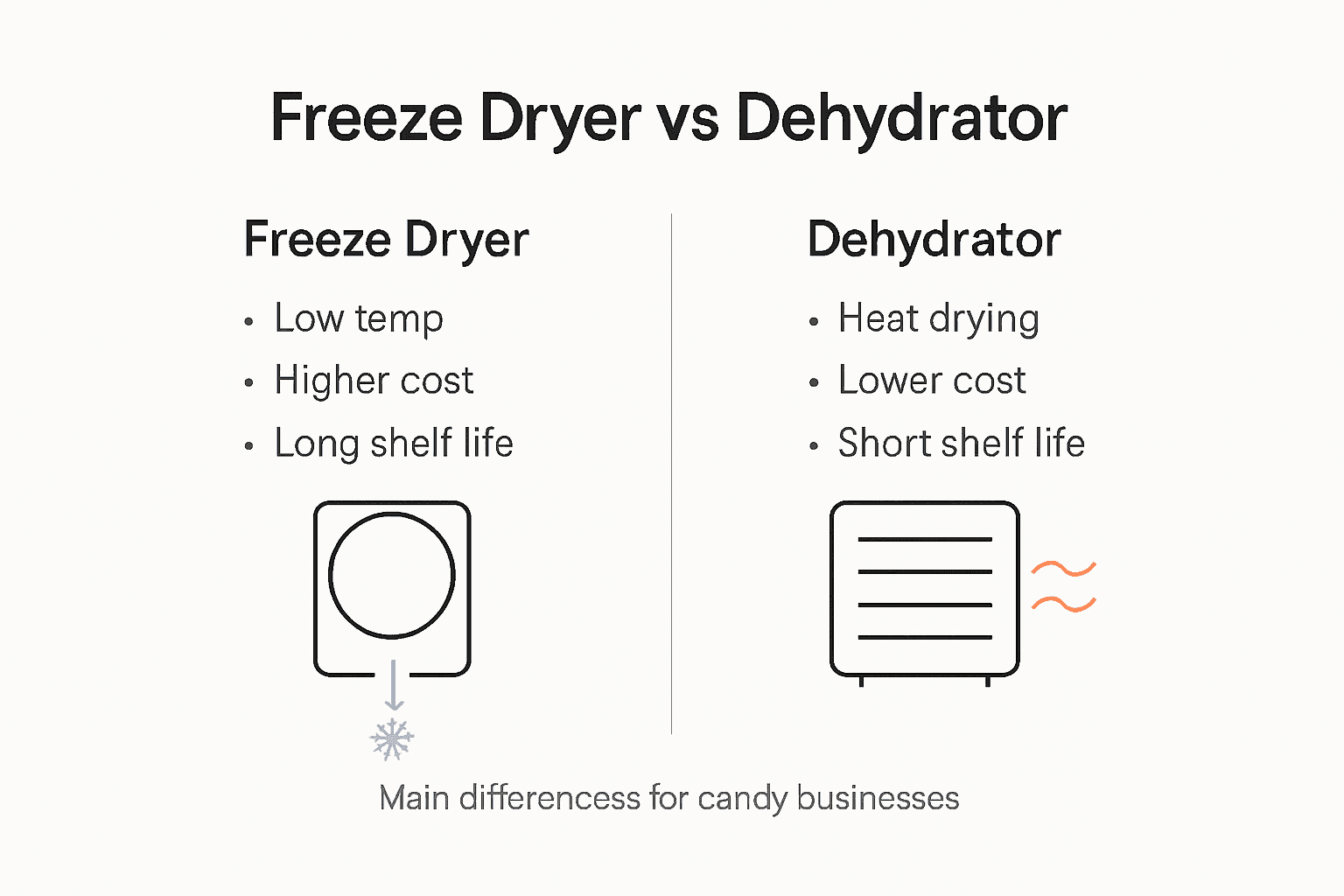
Freeze dryers and dehydrators represent two distinct food preservation technologies critical for Canadian candy businesses seeking to extend product shelf life and maintain quality. While both methods remove moisture from foods, they operate through fundamentally different mechanisms with significant implications for texture, nutritional content, and final product characteristics.
A freeze dryer uses a sophisticated process called sublimation, where water transitions directly from solid ice to vapor without passing through a liquid state. This vacuum-based technique preserves food structure and nutrients at low temperatures by rapidly removing moisture while maintaining the original cellular composition. The result is a lightweight, crisp product that retains up to 97% of its original nutritional profile and can be easily rehydrated.
In contrast, a food dehydrator applies consistent heat and airflow to gradually extract moisture, causing more pronounced changes in food texture and potentially greater nutrient degradation. This method works by slowly evaporating water content through thermal exposure, which can compress and alter the original food’s cellular structure. Dehydrated products typically emerge denser, chewier, and with a more concentrated flavor profile compared to freeze-dried alternatives.
The choice between freeze drying and dehydration depends on specific business goals, target market preferences, and desired product characteristics. Candy manufacturers must carefully evaluate each technique’s impact on taste, texture, shelf stability, and production costs to make an informed decision.
Pro tip: Consider conducting small-batch trials with both technologies to determine which preservation method best complements your specific candy product line and customer expectations.
Key differences in drying technology
Candy businesses must understand the fundamental technological differences between freeze drying and dehydration to optimize product quality, preservation, and manufacturing processes. These two moisture removal techniques represent distinctly different approaches to food processing, each with unique advantages and limitations for commercial applications.
Advanced technological mechanisms distinguish freeze drying from traditional dehydration methods, particularly in how they interact with food’s molecular structure. Freeze drying operates through a sophisticated sublimation process, where materials are first frozen and then placed under vacuum conditions that allow water molecules to transition directly from solid to vapor state without becoming liquid. This intricate process preserves cellular integrity, maintaining original shape, nutritional content, and sensory characteristics.
Conversely, dehydration relies on thermal convection techniques, applying consistent heat and airflow to gradually extract moisture through evaporation. This method fundamentally alters food’s molecular structure, causing more substantial changes in texture, density, and nutritional profile. The heat-based approach compresses cellular structures, resulting in denser, more concentrated products with potentially reduced nutrient retention compared to freeze-dried alternatives.
The technological nuances between these methods significantly impact product development strategies. Factors like processing temperature, vacuum pressure, heat application, and moisture removal rate determine the final product’s quality, shelf stability, and consumer appeal. Candy manufacturers must carefully evaluate these technical distinctions to select the most appropriate preservation technology for their specific product line and market positioning.
Pro tip: Invest in pilot testing equipment that allows side-by-side comparisons of freeze drying and dehydration processes to understand their precise impact on your specific candy formulations.
Impact on candy texture and shelf life
Candy manufacturers face critical decisions when selecting preservation technologies, as the choice between freeze drying and traditional dehydration dramatically influences product texture, consumer perception, and long-term market viability. Understanding the nuanced impacts of these processes is essential for developing competitive and high-quality confectionery products.
Freeze drying fundamentally transforms candy texture by creating an ultralight, crisp structure that dramatically enhances the sensory experience of freeze dried candies. The process maintains the original shape while creating a unique, porous texture that essentially shatters when bitten, offering consumers an entirely novel mouthfeel. This technique preserves the candy’s essential flavor profile while introducing an unexpected textural dimension that can differentiate products in a crowded marketplace.
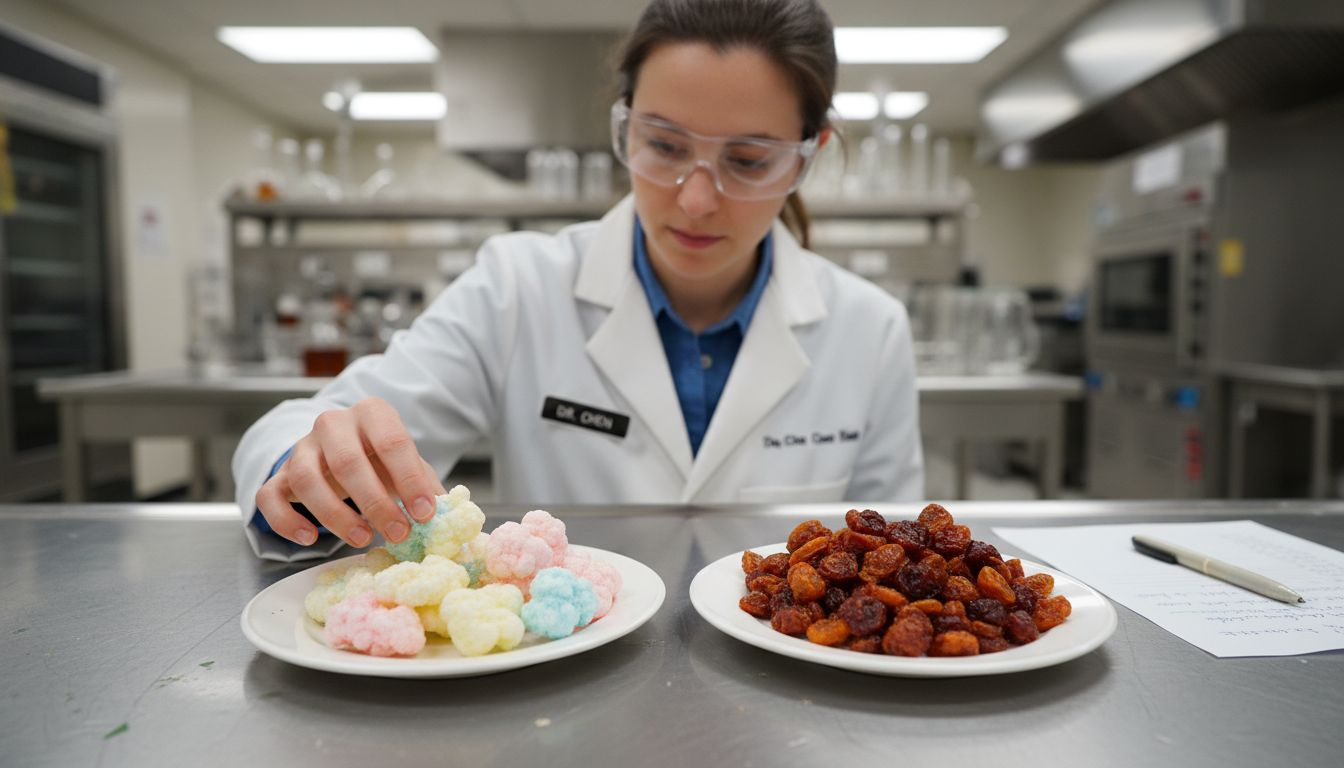
Shelf life represents another critical distinction between these preservation methods. Freeze-dried candies typically demonstrate superior stability, often maintaining quality for 15-25 years when properly sealed, compared to dehydrated products that might degrade within months. The vacuum-based sublimation process removes moisture more comprehensively, preventing microbial growth and oxidation that typically compromise food product longevity. This extended preservation window offers significant advantages for manufacturers seeking to develop stable, long-lasting candy products with minimal quality degradation.
Manufacturers must carefully balance texture, flavor preservation, and shelf stability when selecting their preferred moisture removal technology. The chosen method directly impacts production costs, product positioning, and ultimately, consumer satisfaction. Factors like initial moisture content, sugar composition, and intended market segment all play crucial roles in determining the most appropriate preservation approach.
Pro tip: Conduct comprehensive sensory testing and long-term storage trials to scientifically validate the textural and stability characteristics of your candy products under different preservation methods.
Comparing product quality and appearance
Candy manufacturers must critically evaluate the visual and sensory implications of different preservation technologies, as the chosen method profoundly impacts product quality, consumer perception, and market competitiveness. The nuanced differences between freeze drying and traditional dehydration extend far beyond simple moisture removal techniques.
Global research demonstrates significant variations in food preservation techniques and their impact on product appearance and quality, with freeze drying emerging as a superior method for maintaining original product characteristics. Freeze-dried candies retain their vibrant colors, intricate shapes, and structural integrity, presenting a visually appealing product that closely resembles the original. The process creates a lightweight, translucent appearance with minimal color degradation, allowing manufacturers to preserve the aesthetic appeal of their confectionery creations.
Dehydration, in contrast, introduces more dramatic visual transformations. The heat-based process typically causes significant color darkening, shape compression, and structural collapse. Candies processed through dehydration often appear wrinkled, darker, and more compact, fundamentally altering their original visual presentation. This method can reduce product volume by 50-70%, resulting in a denser, less visually attractive final product that may deviate substantially from the manufacturer’s initial design intention.
Quality preservation extends beyond visual aesthetics to include sensory attributes like color stability, flavor concentration, and overall product integrity. Freeze drying uniquely maintains the candy’s original molecular structure, ensuring that visual and gustatory characteristics remain remarkably consistent with the pre-preservation state. This preservation technique allows manufacturers to create products that not only look identical to their original form but also maintain near-original taste and textural qualities.
Pro tip: Invest in high-resolution photography and systematic documentation to track and compare the visual transformation of your candy products under different preservation methods.
Cost, maintenance, regulations in Canada
Canadian candy manufacturers must navigate a complex landscape of economic considerations, equipment maintenance requirements, and regulatory compliance when selecting between freeze drying and traditional dehydration technologies. The decision involves strategic evaluation of initial investments, ongoing operational expenses, and adherence to national food safety standards.
Economic analyses of food preservation technologies reveal significant variations in cost structures and long-term financial implications for Canadian businesses. Freeze dryers typically demand higher upfront capital investments, often ranging from $20,000 to $150,000 depending on production scale, compared to dehydrators which can be acquired for $500-$5,000. However, the long-term operational efficiency and superior product quality of freeze drying can offset initial expenses through premium pricing and extended product shelf life.
Canadian food processing equipment must comply with stringent national energy efficiency and safety regulations, which impose specific requirements on imported and domestically manufactured preservation technologies. Businesses must ensure their equipment meets Transport Canada, Canadian Food Inspection Agency, and provincial health department standards. Maintenance protocols differ significantly between freeze dryers and dehydrators, with freeze drying equipment requiring more specialized technical expertise and periodic vacuum system calibration, while dehydrators demand more routine cleaning and heating element maintenance.
Operational costs present another critical consideration for Canadian candy businesses. Freeze dryers consume more electricity during the sublimation process, potentially increasing energy expenses by 30-50% compared to traditional dehydration methods. However, the superior product quality, extended shelf life, and potential for premium market positioning can justify these additional operational investments for manufacturers targeting discerning consumers.
Below is a summary of regulatory and operational considerations for Canadian candy producers:
| Factor | Freeze Dryers | Dehydrators |
|---|---|---|
| Maintenance Needs | Specialized technician required | Routine cleaning needed |
| Energy Consumption | High usage; 30-50% more | Lower; standard consumption |
| Regulatory Compliance | Must meet CFIA, Transport Canada standards | Similar regulatory requirements |
| Market Positioning | Enables premium pricing | Suited for value product lines |
Here’s a structured comparison of freeze drying and dehydration technologies for candy manufacturers:
| Aspect | Freeze Drying | Dehydration |
|---|---|---|
| Moisture Removal | Sublimation under vacuum | Thermal evaporation |
| Texture Impact | Creates crisp, airy candy | Results in chewy, dense candy |
| Nutrient Retention | Up to 97% preserved | Moderate to high loss |
| Shelf Life | 15-25 years | Several months |
| Visual Appearance | Maintains color/shape | Causes darkening/compression |
| Equipment Cost Range | $20,000-$150,000 | $500-$5,000 |
Pro tip: Conduct a comprehensive total cost of ownership analysis that includes initial equipment investment, energy consumption, maintenance expenses, and potential revenue from premium product positioning.
Elevate Your Candy Business with Expert Freeze Drying Solutions
Choosing between freeze drying and dehydration is a critical decision that shapes your candy’s texture, shelf life, and market appeal. As the article highlights, freeze drying offers superior nutrient retention, longer preservation, and a unique crisp texture that can set your products apart. But navigating the high costs and technical challenges of freeze drying can feel overwhelming without the right partner.
At Space Man, we understand these challenges and provide Canadian candy manufacturers with end-to-end support. Whether you want to enhance your product line with premium freeze dried candies or need expert private labeling and packaging services, our advanced freeze drying technology and comprehensive solutions help you deliver exceptional quality that meets consumer expectations.
Discover how our freeze drying expertise can transform your candy business today. Visit Space Man to explore our manufacturing, co-packing, and packaging services and take your products to the next level before your competitors do.
Frequently Asked Questions
What is the main difference between freeze drying and dehydrating for candy preservation?
Freeze drying employs sublimation, removing moisture under vacuum while retaining the candy’s structure and nutrients. Dehydrating uses heat and airflow to evaporate moisture, which can lead to changes in texture and nutrient loss.
How does freeze drying impact the texture of candy compared to dehydration?
Freeze drying produces a light, crisp texture that enhances the sensory experience, whereas dehydration results in denser and chewier candies due to the heat application that compresses the food’s structure.
What is the shelf life of freeze-dried candies compared to dehydrated candies?
Freeze-dried candies can maintain quality for 15-25 years under proper sealing, while dehydrated candies usually last only several months before degrading.
Which method, freeze drying or dehydration, retains more nutrients in candy?
Freeze drying preserves up to 97% of the original nutritional profile, whereas dehydration typically results in moderate to high nutrient loss due to the prolonged exposure to heat.