

Most Canadian candy shops face a tough choice when deciding how to preserve sweets for longer shelf life and fresh flavor. American technology has introduced both freeze dryers and dehydrators as two popular options, but their processes lead to very different results. With freeze drying capable of extending shelf life by up to 25 years, understanding these methods can help Canadian owners make informed decisions that improve product quality and profitability.
Table of Contents
- Freeze Dryer And Dehydrator Defined
- Moisture Removal: Processes Compared
- Texture, Flavor, And Shelf Life Impact
- Costs And Operational Requirements For Candy
- Common Mistakes And Choosing The Right Method
Key Takeaways
| Point | Details |
|---|---|
| Preservation Method Impact | Freeze drying maintains better texture and flavor, while dehydration creates a denser, chewier product. |
| Cost Considerations | Freeze dryers have high initial costs and energy use, whereas dehydrators are budget-friendly and faster. |
| Nutritional Maintenance | Freeze drying preserves nutritional content more effectively compared to dehydration, which can cause nutrient loss. |
| Operational Complexity | Freeze dryers require specialized training for operation, while dehydrators are easier to use, requiring minimal training. |
Freeze dryer and dehydrator defined
Food preservation techniques have evolved dramatically, with freeze dryers and dehydrators emerging as two powerful methods for transforming Canadian candies and food products. While both technologies remove moisture, they operate through fundamentally different mechanisms that significantly impact texture, flavor, and nutritional content.
A freeze dryer uses a complex process called sublimation to preserve food, where food is first frozen and then placed in a low-pressure vacuum chamber. During this process, ice transforms directly from solid to vapor without passing through the liquid state. This unique approach allows the food to maintain its original structure, cellular integrity, and nutrient profile while creating an incredibly light, crisp texture that’s particularly appealing for candies.
In contrast, a dehydrator employs heat and consistent airflow to evaporate moisture from food products. This method gradually reduces water content by applying warm air across the food items, resulting in a denser, chewier texture. While dehydrators are generally more affordable and faster than freeze dryers, they typically cause more significant nutrient degradation and structural changes to the original food item. For Canadian candy makers, understanding these fundamental differences can help optimize preservation techniques and product quality.
Pro tip: When selecting between freeze drying and dehydration for candy preservation, consider your specific texture and nutritional preservation goals, as each method offers unique advantages for different product types.
Moisture removal: processes compared
Understanding the intricate moisture removal techniques of freeze dryers and dehydrators reveals critical differences that can dramatically impact food preservation, especially for delicate Canadian candy products. While both methods aim to eliminate water content, their approaches and outcomes diverge significantly.
Freeze drying represents a sophisticated preservation technique that operates through a precise three-stage process. The first stage involves rapidly freezing the food, transforming water molecules into solid ice crystals. During the primary drying phase, a low-pressure vacuum environment causes these ice crystals to sublimate directly from solid to vapor, bypassing the liquid state. This unique mechanism preserves the food’s cellular structure, preventing damage from liquid water or high temperatures. The final secondary drying stage removes residual moisture through desorption, ensuring complete water elimination while maintaining the product’s original shape, color, and nutritional profile.
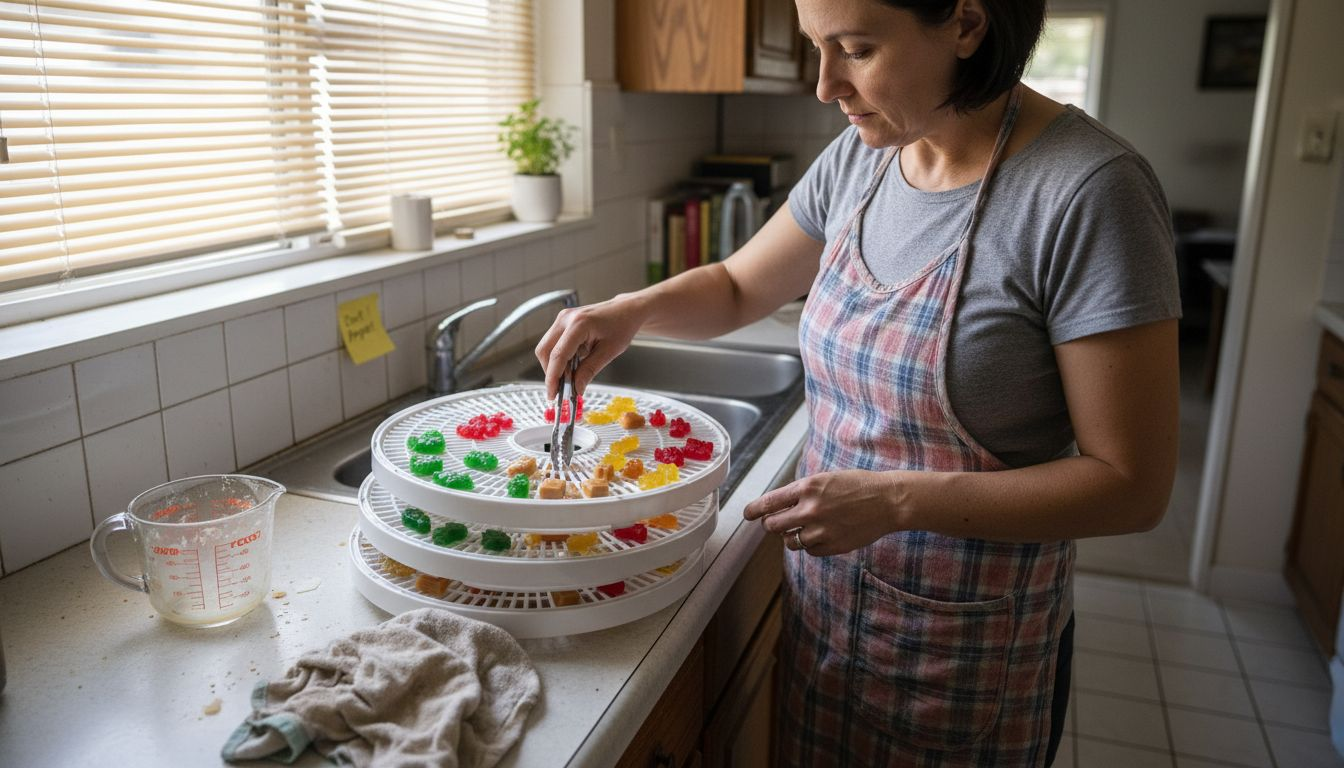
In contrast, dehydrators employ a more straightforward thermal approach to moisture removal. By circulating warm air across food items, these devices gradually evaporate water through consistent heat application. This method is more traditional and works well for heat-stable products but can compromise the delicate structure of more sensitive foods. The continuous heat exposure typically leads to significant changes in texture, causing foods to become denser and chewier. For Canadian candy manufacturers, this means potential alterations in the original product’s mouthfeel, flavor concentration, and overall sensory experience.
Pro tip: Select your moisture removal method based on your specific candy’s composition, desired texture, and nutritional preservation requirements, understanding that freeze drying offers superior structural integrity compared to traditional dehydration techniques.
Texture, flavor, and shelf life impact
The preservation method chosen for Canadian candies dramatically influences their sensory characteristics, with freeze drying and dehydration producing markedly different results in texture, flavor intensity, and overall product longevity. Understanding these nuanced differences becomes crucial for candy manufacturers seeking to maintain product quality and consumer satisfaction.
Texture represents the most immediately noticeable difference between freeze-dried and dehydrated candies. Freeze drying creates an extraordinarily light, crisp structure that almost dissolves on the tongue, maintaining the candy’s original shape while producing an airy, delicate mouthfeel. The innovative packaging techniques used alongside freeze drying further protect this delicate texture, ensuring the candy remains intact during storage and transportation. In contrast, dehydration produces a denser, chewier product with more compressed cellular structure, resulting in a significantly different sensory experience that can alter the candy’s perceived quality.
Flavor concentration emerges as another critical distinction between these preservation methods. Freeze drying uniquely preserves the original flavor profile by minimizing thermal degradation, essentially capturing the candy’s essence at its peak freshness. The low-temperature process prevents flavor molecule breakdown, resulting in a more intense and authentic taste experience. Dehydration, with its heat-based moisture removal, can cause subtle flavor modifications, potentially dulling or transforming the original taste notes through prolonged exposure to thermal energy.
Shelf life represents the final crucial consideration for Canadian candy producers. Freeze-dried products typically demonstrate superior longevity, with moisture removal approaching near-complete levels that inhibit microbial growth and oxidation. This preservation technique can extend product shelf life dramatically, sometimes reaching multiple years without significant quality degradation. Dehydrated candies, while still offering improved preservation compared to fresh products, generally have shorter stable storage periods and remain more susceptible to environmental moisture and potential flavor changes.
Pro tip: Conduct comprehensive sensory testing when transitioning between preservation methods, carefully documenting texture, flavor intensity, and shelf life to optimize your specific candy product’s preservation strategy.
Here’s a side-by-side summary of how freeze dryers and dehydrators affect Canadian candy quality:
| Aspect | Freeze Dryer | Dehydrator |
|---|---|---|
| Texture Preservation | Maintains airy, crisp structure | Results in dense, chewy texture |
| Flavor Intensity | Captures original, vibrant taste | Can dull or alter flavor notes |
| Shelf Life | Extends up to multiple years | Generally shorter, may degrade faster |
| Nutrient Retention | High, minimal nutrient loss | Reduced due to heat exposure |
Costs and operational requirements for candy
For Canadian candy manufacturers, selecting between freeze drying and dehydration involves a complex analysis of initial investment, operational expenses, and long-term production economics. The financial landscape of these preservation technologies reveals significant differences that can dramatically impact a business’s bottom line and strategic capabilities.
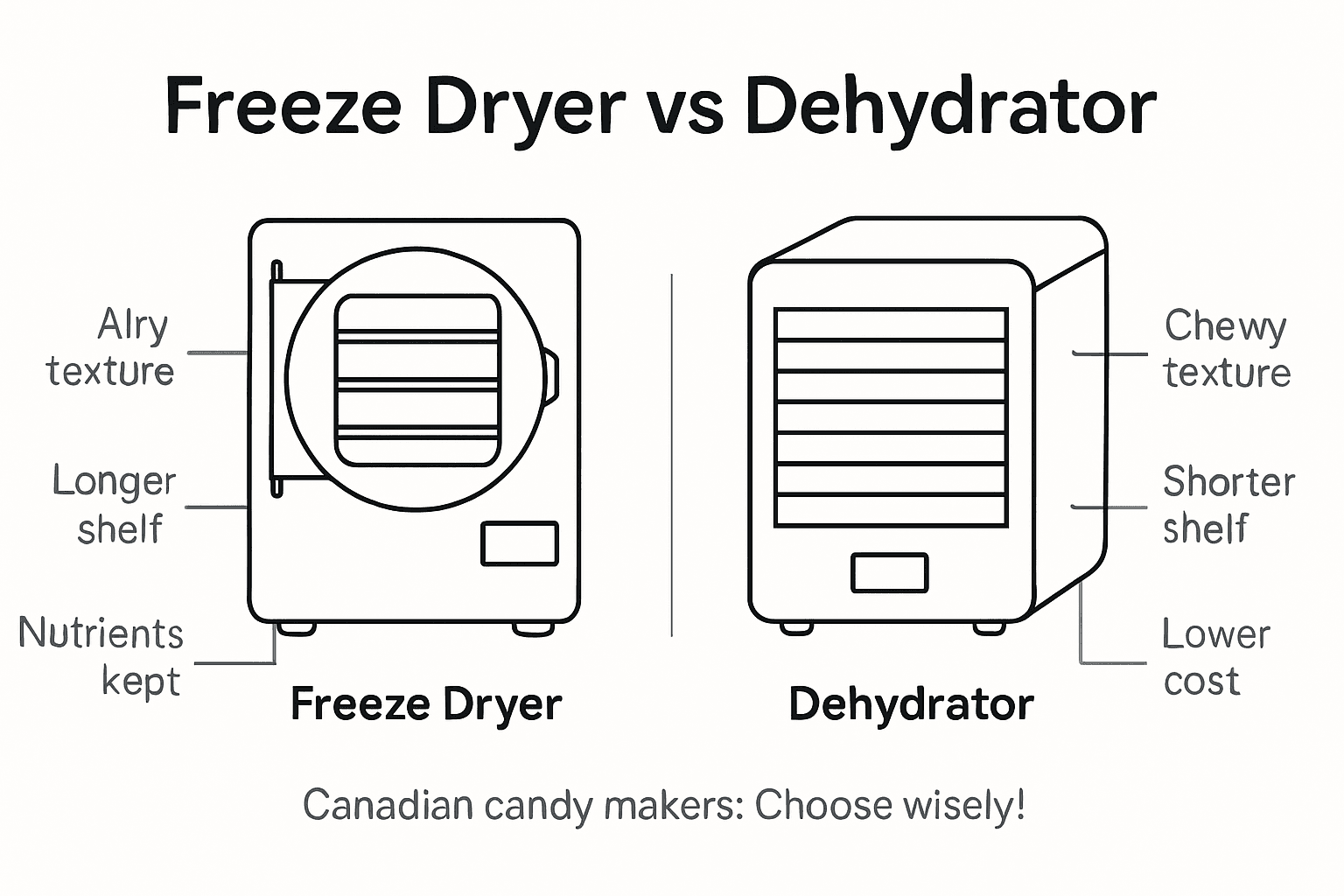
Initial equipment costs represent the first critical financial consideration. Dehydrators typically present a more budget-friendly entry point, with machines ranging from a few hundred to a couple thousand dollars. These units offer modest energy consumption and relatively quick processing times, making them attractive for smaller operations or businesses testing preservation techniques. Freeze dryers, by contrast, demand a substantially higher upfront investment, with professional-grade machines often costing between $5,000 and $25,000, reflecting their advanced technological capabilities and precision engineering.
Operational expenses extend far beyond the initial purchase price, creating nuanced financial implications for candy producers. Freeze dryers consume significantly more energy per cycle and require longer processing times, translating to higher operational costs. A single freeze-drying cycle can cost up to eight times more than a dehydration cycle, though the resulting product offers superior preservation qualities. The extended shelf life—potentially reaching 25 years for freeze-dried candies—can offset these higher initial expenses through reduced waste and extended market potential. Dehydration offers faster processing and lower energy consumption, making it more economically attractive for high-volume, shorter-shelf-life candy production.
The equipment complexity introduces another critical operational consideration. Freeze dryers demand more technical expertise, requiring precise temperature control, vacuum management, and specialized maintenance. Operators need comprehensive training to manage these sophisticated machines effectively. Dehydrators, by comparison, represent a more straightforward technology with simpler operational protocols, making them more accessible for teams with limited specialized technical knowledge. This difference in operational complexity can significantly impact labor costs and training investments.
Pro tip: Conduct a comprehensive cost-benefit analysis that considers not just equipment expenses, but potential product value, shelf life extension, and market positioning when selecting between freeze drying and dehydration technologies.
Compare costs and operational requirements for each preservation method:
| Feature | Freeze Dryer | Dehydrator |
|---|---|---|
| Equipment Cost | $5,000-$25,000 | $200-$2,000 |
| Energy Use | High per cycle | Low per cycle |
| Operator Training | Requires specialized expertise | Minimal training needed |
| Processing Time | Several hours to days | Usually a few hours |
Common mistakes and choosing the right method
Navigation through the complex landscape of food preservation technologies demands a nuanced understanding of each method’s unique characteristics and potential pitfalls. Canadian candy manufacturers must approach freeze drying and dehydration with strategic precision to avoid costly operational errors and suboptimal product outcomes.
Attempting to freeze dry candy using standard dehydration equipment represents a fundamental misconception that can lead to significant product quality degradation. Dehydrators fundamentally lack the critical vacuum and precise temperature control mechanisms essential for true sublimation. The absence of these specialized features means that candies subjected to dehydrator processes will likely experience undesirable texture changes, potential melting, or incomplete moisture removal. Manufacturers must recognize that each preservation technology demands specific equipment designed for its unique operational parameters.
Selecting the appropriate preservation method requires a comprehensive evaluation of multiple factors beyond basic equipment specifications. Candy composition, intended shelf life, target market preferences, and production scale all play crucial roles in determining the most suitable approach. Soft, moisture-rich candies might fare better with freeze drying, which preserves delicate structural integrity, while more robust confections could potentially withstand traditional dehydration techniques. Critical considerations include the candy’s sugar content, initial moisture levels, and desired final texture, as these variables significantly impact preservation outcomes.
Beyond technical considerations, manufacturers must also assess the economic and operational implications of their chosen preservation strategy. Freeze drying typically demands higher initial investment and more sophisticated operational expertise, making it less accessible for smaller Canadian candy producers. Conversely, dehydration offers a more straightforward, cost-effective entry point but may compromise certain sensory and nutritional qualities. Successful implementation requires a balanced approach that weighs technological capabilities against practical business constraints.
Pro tip: Conduct pilot production runs with multiple preservation methods, systematically documenting texture, flavor retention, and shelf stability to empirically determine the optimal approach for your specific candy product line.
Elevate Your Canadian Candy Preservation with Expert Freeze Drying Solutions
The article highlights the challenge Canadian candy makers face in choosing between freeze drying and dehydration. With key pain points such as maintaining texture, preserving vibrant flavor, extending shelf life, and managing operational costs, selecting the right method is crucial. Freeze drying’s ability to maintain an airy crisp structure and nutrient retention sets it apart but requires specialized equipment and expertise.
At Space Man, we specialize in advanced freeze dried candy manufacturing that addresses these exact challenges. Whether you need private labeling, co-packing, or professional packaging services, our solutions guarantee superior product quality and extended shelf life that traditional dehydration methods cannot match.

Discover how our cutting-edge freeze drying can transform your candy products today. Visit Space Man to explore our services and unlock premium preservation techniques designed specifically for Canadian producers. Don’t compromise your candy’s quality and flavor when better options are just a click away.
Frequently Asked Questions
What is the difference between freeze drying and dehydrating?
Freeze drying uses sublimation, where food is frozen and moisture is removed in a vacuum, preserving its structure and nutrients. Dehydrating uses heat and airflow to evaporate moisture, which can alter texture and reduce nutritional content.
How does freeze drying affect the texture of Canadian candies?
Freeze drying produces an extraordinarily light, crisp texture that retains the candy’s original shape, creating an airy mouthfeel. This contrasts with dehydrating, which results in a denser, chewier texture due to moisture removal.
What are the shelf life differences between freeze-dried and dehydrated candies?
Freeze-dried candies typically have a much longer shelf life, potentially lasting several years without significant quality loss. Dehydrated candies have a shorter shelf life and are more susceptible to environmental moisture.
What factors should I consider when choosing between freeze drying and dehydrating for candy production?
Consider candy composition, desired texture, intended shelf life, and production scale. Freeze drying is better for delicate, moisture-rich candies, while dehydration may be suitable for more robust confections.
Recommended
- Freeze Dryer vs Dehydrator: Impact on Candy Businesses – Spaceman
- Complete Guide to Machines for Freeze Drying Candy – Spaceman
- What Does a Freeze Dryer Look Like in Candy Production – Spaceman
- Freeze Dryer vs Dehydrator: What Sets Them Apart – Spaceman
- Top Electrolyte Supplements Reviewed – Expert Comparison 2025 – Nutribliss Inc.