

Consumer packaged goods (CPG) are the everyday items, think food, beverages, personal care, and household products, that people buy often and use up fast enough to buy again soon. The category anchors one of the largest sectors of the economy, contributing roughly $2 trillion or more to the U.S. economy alone. This guide walks through what counts as CPG, how the industry actually runs, and what’s shifting inside it right now.
TL;DR:
- Most CPG products are bought frequently and used up within weeks or months, making packaging and branding crucial for quick shelf recognition.
- Companies depend on high-volume, low-margin sales, with demand remaining stable even during economic downturns, unlike durable goods.
- E-commerce expansion and private label growth are forcing brands to diversify channels, while supply chain issues and inflation pressure margins and pricing strategies.
- Success in retail shelf placement relies heavily on packaging clarity, early demand testing through direct-to-consumer sales, and strategic pricing based on margin analysis.
- Starting with direct sales and validating demand before retail expansion is essential, as the first year aims to prove demand rather than maximize profits.
Table of Contents
- What Counts as a Consumer Packaged Good?
- What Makes CPG Products Different From Other Goods?
- Is CPG the Same Thing as FMCG?
- How Products Actually Get From Factory to Shelf
- How Big Is the CPG Industry, Really?
- What’s Changing in CPG Right Now
- How Brands Actually Win Shelf Space and Margin
- A Founder’s Honest Look at Breaking Into CPG
- Where to Learn More About the CPG Industry
- Sources
What Counts as a Consumer Packaged Good?
Almost anything you restock without thinking twice falls under CPG. The category is defined less by what the product does and more by how often you buy it and how fast it disappears from your shelf.
Here’s how the major categories break down, with examples that make the boundaries clear:
- Food and snacks: cereal, canned soup, chips, freeze dried candy, chocolate bars
- Beverages: bottled water, soda, coffee pods, canned cocktails
- Personal care: shampoo, toothpaste, deodorant, razors
- Household and cleaning: laundry detergent, paper towels, dish soap
- Over the counter health products: pain relievers, allergy medicine, vitamins
- Pet products: dog food, cat litter, chew toys
- Baby products: diapers, formula, wipes
Most of these products share one trait: you use them up and buy them again within weeks or months, not years.
The gray areas are where it gets interesting. A $40 artisanal hot sauce or a small batch marshmallow gift set is still CPG, even though it’s priced like a specialty item, because it’s still a consumable that gets repurchased. Compare that to something like a blender or an air fryer. Those are packaged and sold through the same retail channels, but they’re durable goods, not CPG, because you buy one and keep it for years.
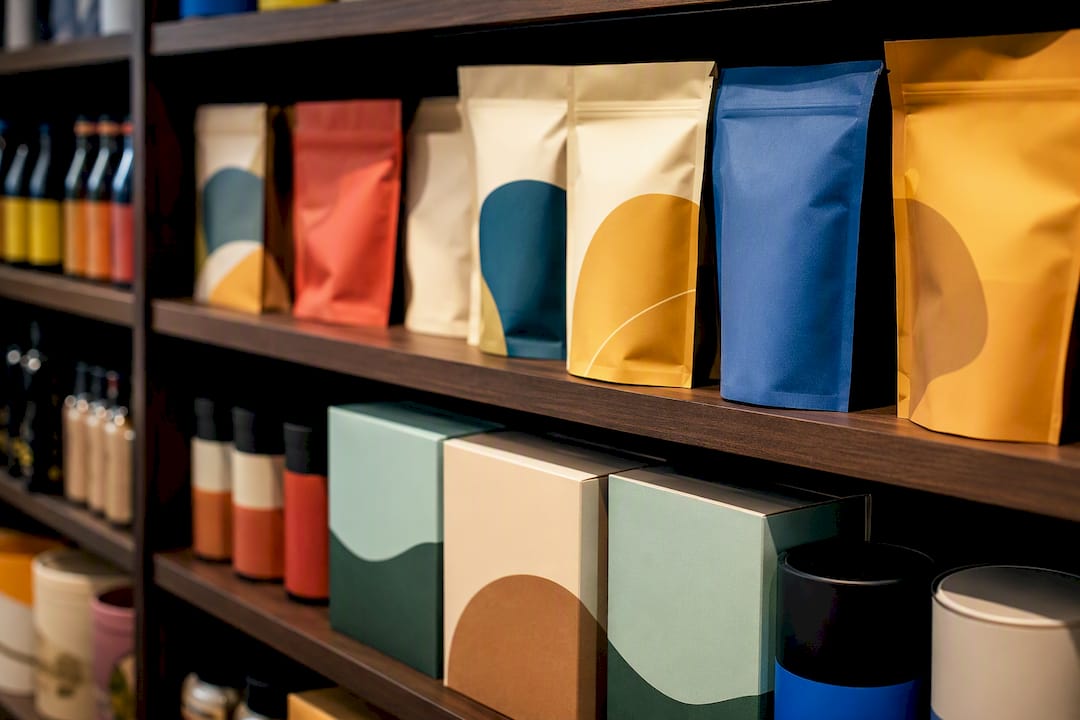
Packaging matters more here than in almost any other retail category. On a shelf crowded with a dozen competitors, the product that communicates its flavor, its value, or its story fastest is the one that gets picked up. That’s true whether you’re selling to a big box retailer or shipping direct to a customer’s door.
What Makes CPG Products Different From Other Goods?
CPG products run on a completely different rhythm than most retail categories, and that rhythm shapes almost every business decision a brand makes. Here’s what defines the category operationally:
- Frequent repurchase cycles. Most CPG items get bought again within days to a few months, which means brands live and die on repeat purchase rates, not one-time sales.
- High-volume, low-margin economics. A single unit might earn a brand a few cents to a few dollars in profit, so the business model depends on moving large quantities consistently.
- Shelf life and perishability constraints. Many CPG products, especially food and beverage, have expiration windows that force tight inventory turnover and forecasting discipline.
- Branding and packaging as competitive weapons. Because products in this space are often functionally similar, packaging design, shelf placement, and brand recognition frequently decide who wins the sale.
- Relative resilience during downturns. People cut back on furniture and electronics before they stop buying toothpaste or bread. That makes many CPG products differ from durable goods in one key way: demand stays comparatively stable even when the broader economy slows, because replacement isn’t optional the way a discretionary purchase is.
That last point is why investors often treat CPG stocks as a defensive play. It’s not that people buy more shampoo in a recession. It’s that they don’t stop buying it.
Is CPG the Same Thing as FMCG?
Not quite, though the two terms get used interchangeably more often than they should. Fast moving consumer goods (FMCG) is really a subset of CPG, one that leans hard on rapid turnover and low unit prices.
FMCG emphasizes speed and cost: think chewing gum, bottled beverages, and basic toiletries that turn over almost daily and rarely cost more than a few dollars. CPG casts a wider net, covering those same fast movers alongside pricier, slower turning items like premium skincare or specialty snack lines that still get repurchased regularly, just not weekly.
Where both categories draw a hard line is against durable goods:
- A bottle of water gets consumed in minutes and repurchased within days. A washing machine gets bought once and used for a decade.
- CPG and FMCG purchases are usually low involvement decisions made quickly. Durable goods purchases involve research, comparison shopping, and financing.
- Shelf life matters enormously for CPG and FMCG. It’s irrelevant for durable goods.
If you’re trying to figure out which bucket a product falls into, ask how often the average buyer replaces it. Weekly or monthly, it’s CPG. Every five to fifteen years, it’s durable.
How Products Actually Get From Factory to Shelf
Getting a product from an idea to a store shelf involves more moving pieces than most people outside the industry realize. Manufacturing is only step one, and for a lot of brands, it’s not even a step they handle themselves.
Plenty of CPG companies, especially smaller and newer ones, don’t own a factory at all. Instead, they use a co-packer, a third party manufacturer that produces and often packages the product under the brand’s label. This matters because building your own production line means major upfront capital, food safety certifications, and equipment that sits idle if demand doesn’t scale fast enough. Co-packing lets a startup skip that capital outlay and get product on shelves months faster than building in-house would allow.
Once a product exists, it has to move. The typical flow looks like this:
- Demand forecasting: estimating how much of a product will sell in a given period, often using historical sales data and seasonal patterns
- Inventory management: balancing enough stock to meet demand without overproducing perishable goods
- Cold chain logistics: for refrigerated or frozen items, maintaining temperature control from factory to store
- Distribution: getting product into brick and mortar retailers, e-commerce marketplaces, or direct to consumer channels
That last point is where the industry has changed the most. A brand used to need a retail deal to reach customers at scale. Now a brand can launch on its own e-commerce site, sell through a marketplace, and pursue big box retail all at once. NetSuite frames this omnichannel capability as a core competitive requirement, not a nice extra, because brands that can’t sync inventory and data across channels end up either overselling or sitting on stock that expires before it sells.
Pro Tip: If you’re testing a new product, start selling direct to consumer before chasing retail shelf space. It’s a lower-risk way to prove demand, gather real purchase data, and refine packaging before you’re locked into a retailer’s terms.
How Big Is the CPG Industry, Really?
Big enough that you probably interacted with a dozen CPG products before finishing breakfast. The Consumer Brands Association reports that the average American uses about 42 CPG products every single day, a figure that captures just how deeply embedded this category is in daily life.
That daily habit adds up to serious economic weight. The same Consumer Brands Association data puts the industry’s U.S. economic contribution at roughly $2 trillion or more, with millions of jobs tied directly to manufacturing, packaging, distribution, and retail. On a global scale, the sector operates as a multitrillion-dollar force, one that has to balance efficient mass production with the constant pressure to innovate fast enough to keep shelf space.
What’s Changing in CPG Right Now
The industry looks different than it did even five years ago, and the shifts are hitting margins, shelf strategy, and pricing all at once.
E-commerce is the biggest structural change. Online buying accelerated hard during the pandemic and never fully reverted, pushing CPG brands into omnichannel strategies that expand reach but also compress margins, since shipping, packaging for transit, and marketplace fees eat into profit in ways a store shelf never did.
A few other forces are reshaping the competitive landscape:
- Premiumization is splitting the market into tiers. Brands are increasingly forced to pick a lane, mass-market value or ultra-premium positioning, because sitting in the middle invites margin erosion from both directions.
- Private label is getting stronger. Retailer-owned brands have improved in quality and perception, and inflation is pushing more shoppers to trade down, putting pressure on mid-tier national brands specifically.
- Supply chains remain fragile. Ingredient shortages, shipping delays, and packaging material costs continue to disrupt planning cycles that used to be predictable a year out.
- Inflation keeps squeezing both sides. Higher input costs push brands toward price increases, but shoppers have a breaking point before they simply switch to a cheaper option or a private label alternative.
Common mitigation tactics include diversifying suppliers, building direct to consumer channels that aren’t dependent on retailer terms, and leaning into premium storytelling that justifies a higher price point. Shifting consumer habits around snacking and convenience are also reshaping what shelf space even looks like, something worth tracking if you’re deciding where a new product should launch. On the hospitality side, the same premiumization pressure is showing up in how chefs and food service operators plan menus and sourcing for 2026, which tells you this isn’t a retail-only trend.
How Brands Actually Win Shelf Space and Margin
Winning in CPG isn’t about having the best product. It’s about winning a shelf war, and that battle is often decided before a single unit ships, based on packaging, retailer relationships, and pricing strategy locked in months earlier.
Here’s how brands actually approach that fight in practice:
- Make packaging do the selling in under two seconds. That’s roughly how long a shopper’s eyes linger on a shelf item before moving on, so clarity on flavor, ingredients, and value beats clever design every time. Packaging choices that improve shelf visibility often matter more than the product recipe itself.
- Decide between in-house production and co-packing based on volume, not ambition. Co-packing makes sense once your forecasted run-rate exceeds a co-packer’s minimums and you can manage certification requirements like SQF or HACCP without building your own facility.
- Set pricing with margin math, not gut feel. Know your shelf price ceiling, understand what private label competitors charge for a similar item, and decide early whether you’re competing on value or premium positioning.
- Run a DTC test before chasing a retail slot. Real sales data from your own site tells you more about demand than any retailer meeting will.
Pro Tip: Before your first retail pitch, nail down your packaging format. A few proven formats for shelf-ready candy and snack packaging can save you a redesign cycle after a buyer says yes but wants changes.
If you’re a food or snack brand weighing whether to build production capacity yourself or hand it to a partner, Space-man’s private label, co-packing, and packaging services exist for exactly that decision point, when you know your product works but you don’t want to sink capital into equipment before you’ve proven demand at scale.
A Founder’s Honest Look at Breaking Into CPG
Most people underestimate how long it takes to go from a good recipe to a stable retail listing. Test direct to consumer first. It’s cheaper feedback than a failed retail pitch. Validate your packaging before you commit to a print run in the thousands, and talk to a co-packer early even if you’re not ready to sign anything, since their minimums and lead times will shape your timeline more than your own ambition will.
Expect the first year to be about proving demand, not maximizing profit. Brands that survive the early stage are usually the ones that stayed patient on pricing and didn’t over-invest in equipment before they had repeat customers.
— Chadi
Where to Learn More About the CPG Industry
For a straightforward industry definition and the economic scale figures referenced above, the Consumer Brands Association’s overview is the clearest starting point. NetSuite’s breakdown digs into the operational and data challenges brands face at scale. For the FMCG versus CPG distinction, IE Business School’s explainer offers useful academic framing, while The Motley Fool’s glossary entry covers the e-commerce shift and private label pressure in plain terms.
Sources
- What is the consumer packaged goods industry? (Consumer Brands Association)
- What Are Consumer Packaged Goods? A Definition (NetSuite)
- FMCG industry and market research (IE Business School)
- Consumer packaged goods (definition) (The Motley Fool)