

TL;DR:
- Sweet pouch packaging protects, displays, and preserves candies while ensuring food safety and extending shelf life.
- Choosing the right format, material, and design influences product perception, shelf impact, and regulatory compliance.
Sweet pouch packaging is defined as custom-designed, food-grade pouches made to protect, display, and preserve sweets and confectionery products while meeting FDA and BRC food safety standards. For food businesses, the right pouch does more than hold candy. It signals quality, extends shelf life, and increasingly determines whether a product gets picked up or passed over. With sustainability expectations rising and material technology advancing fast, choosing the right sweet packaging solution has become one of the most consequential decisions a confectionery brand makes.
What is sweet pouch packaging and which types are available?
Sweet pouch packaging covers several distinct formats, each suited to different products, retail environments, and consumer habits. The four most common styles are stand-up pouches, flat pouches, gusseted bags, and three-side seal pouches. Understanding the differences saves you from expensive mistakes at the production stage.
Stand-up pouches use a bottom gusset to hold their shape on a shelf. They offer excellent product visibility and work well for gummies, hard candies, and freeze-dried treats. Flat pouches are simpler and cheaper to produce, but they cannot stand upright without a display rack. Gusseted bags expand at the sides or bottom to hold larger volumes, making them a strong choice for bulk or gift-sized confectionery. Three-side seal pouches are heat-sealed on three edges, giving a clean, minimal look that suits premium or single-serve products.
Beyond the basic shape, custom pouch features like resealable zippers, clear windows, and die-cut handles add real functional value. Resealable zippers extend freshness after opening, which matters for products like gummies that dry out quickly. Die-cut handles make larger bags easier to carry, a small detail that shoppers notice. Color printing from 1 to 10 colors gives brands full control over shelf presence.
| Pouch type | Best for | Key advantage |
|---|---|---|
| Stand-up pouch | Gummies, freeze-dried candy | Stands on shelf without a rack |
| Flat pouch | Single-serve, premium items | Lower cost, clean aesthetic |
| Gusseted bag | Bulk or gift confectionery | High volume capacity |
| Three-side seal | Portion packs, premium brands | Minimal, upscale appearance |
Wholesale custom pick-and-mix sweet bags typically cost between $0.05 and $0.16 per unit, with minimum order quantities around 3,000 units and production times of 7–15 days. That price range gives small and mid-size brands a realistic entry point into custom packaging without committing to enormous runs.
Which materials and food-safe barriers matter most?
Material choice is the single biggest factor in how well a sweet pouch performs over its shelf life. The main food-grade film options are PET (polyethylene terephthalate), foil laminates, paper-based films, and mono-material structures. Each offers a different balance of barrier performance, sustainability, and cost.
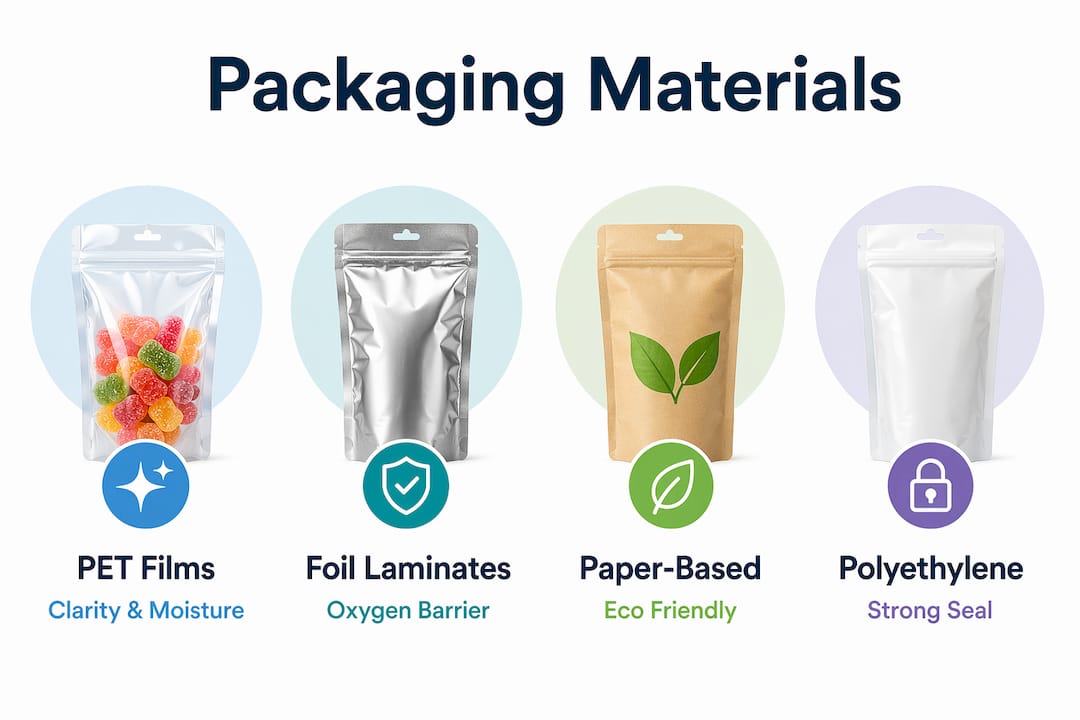
PET films deliver excellent clarity and moisture resistance, making them the standard choice for candy pouch packaging where product visibility is a priority. Foil laminates provide the strongest barrier against oxygen and light, which is critical for chocolate and other fat-rich confectionery that oxidizes quickly. Paper-based films have improved significantly and now offer competitive barrier performance while supporting recyclability claims.
The barriers that matter most for sweets are moisture, grease, and oxygen resistance. Moisture causes gummies to stick together and hard candies to cloud over. Oxygen degrades flavor in chocolate and freeze-dried products. Grease is the sneaky one. Oil migration causes dark spots on the exterior of packaging, which makes products look damaged on the shelf even when they are perfectly fine inside. Standard paperboard does not stop this. Grease-resistant coatings or dedicated barrier layers are required for chocolates, toffees, and gummies with oil-based coatings.
Pro Tip: Always request a grease-resistance test from your supplier before committing to a paper-based pouch for oily or chocolate-coated sweets. A simple oil-wick test on a sample takes minutes and can save an entire production run.
Certified sustainable materials are now widely available. FSC-certified paper, recycled PET, and mono-material polyethylene structures all meet food-contact safety standards when properly certified. The types of packaging materials you choose also affect which recycling stream your pouch enters at end of life, which is increasingly relevant to retail buyers and regulators alike.
How does sustainable sweet pouch packaging meet regulatory demands?
Sustainability in confectionery packaging has moved well past a marketing talking point. EU PPWR legislation requires all packaging to be recyclable by 2030, and brands that wait until the deadline will face a scramble. The smarter move is to treat material circularity as a design requirement today, not a future compliance checkbox.
The good news is that the materials have caught up with the ambition. Here is what the current generation of sustainable pouch materials can deliver:
- Paper-based laminates can reduce packaging weight by up to 61% versus multi-material alternatives while maintaining barrier performance. That weight reduction also cuts shipping costs, which is a concrete financial benefit beyond the sustainability story.
- Certified recycled plastics using mass-balance accounting allow leading brands to use 65%–80% recycled plastic content in food-contact packaging at scale. Advanced recycling technology makes this possible without compromising food safety.
- Mono-material structures use a single polymer type throughout the pouch, which makes them far easier to recycle than traditional multi-layer laminates. They are the closest thing to a circular packaging solution currently available at commercial scale.
- Compostable films offer an alternative end-of-life pathway, though industrial composting infrastructure varies by region and should be verified before making claims on-pack.
One practical concern for businesses switching to sustainable materials is machinery compatibility. Many paper-based packaging solutions run on existing Form-Fill-Seal lines without major equipment changes. That removes one of the biggest adoption barriers for mid-size producers who cannot justify a capital investment just to change a film type.
Eco-friendly pouch bags also carry a perception benefit. Shoppers associate matte finishes, kraft paper textures, and minimal print with quality and responsibility. That perception translates directly into willingness to pay a premium, which offsets the slightly higher material cost of certified sustainable films.
What design and branding choices drive sweet pouch sales?
Packaging design is a frontline sales tool. Visual and tactile cues drive impulse purchases faster than any rational evaluation of ingredients or price. A shopper decides in seconds. The pouch has to do the selling before the product ever gets a chance.
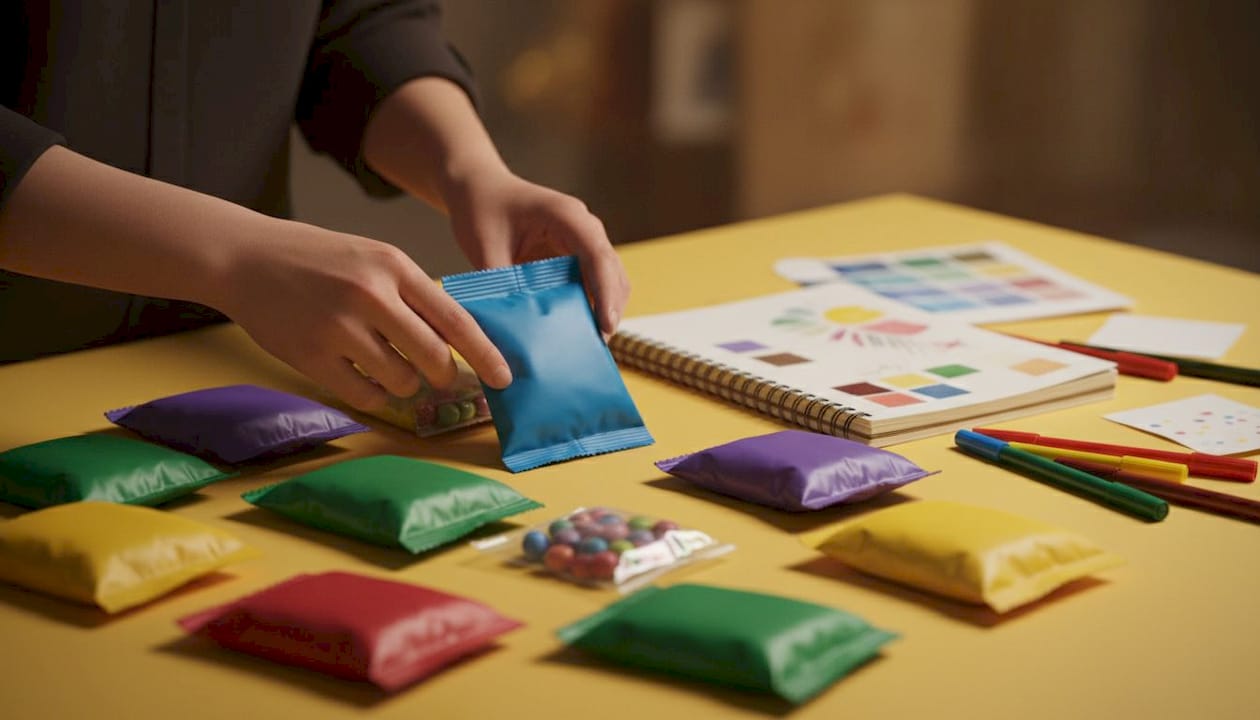
Color is the most immediate signal. Bright, saturated colors communicate fun and indulgence, which works for children’s candy and novelty products. Matte, earth-toned palettes signal premium quality and natural ingredients. Sustainable packaging aesthetics like natural textures and matte finishes consistently enhance premium brand perception, which means the eco choice and the premium choice are often the same choice.
Transparent windows are one of the most effective tools for boosting impulse sales, but they come with a structural trade-off. Clear windows can reduce pouch strength if not designed carefully. The solution is to use die-cut corner shapes rather than large flat panels, and to specify high-clarity PET that resists fogging in cold or humid retail environments. A fogged window defeats the entire purpose.
Surface finishes add another layer of differentiation. Gloss lamination catches light and pops on a bright retail shelf. Soft-touch matte lamination feels premium in the hand and photographs well for e-commerce listings. Spot UV coating lets you highlight a logo or pattern with a glossy accent against a matte background, a detail that signals craft and attention to quality.
Pro Tip: Request physical samples in your actual product before finalizing a design. Colors shift between screen, proof, and printed film. What looks perfect on a monitor can print 15% darker on a foil laminate.
Food packaging branding that combines a clear window, a strong color story, and a resealable zipper consistently outperforms plain bags in retail settings. The zipper alone signals that the product is worth coming back to, which is exactly the message a confectionery brand wants to send.
Key Takeaways
The most effective sweet pouch packaging combines food-safe barrier materials, a stand-up or gusseted format, and design elements that trigger impulse purchases while meeting current recyclability standards.
| Point | Details |
|---|---|
| Format drives shelf performance | Stand-up and gusseted pouches outperform flat bags in self-service retail environments. |
| Barrier material protects product quality | Grease-resistant coatings and oxygen barriers are required for chocolate and fat-rich sweets. |
| Sustainable materials are commercially ready | Paper-based laminates reduce weight by up to 61% and run on existing packaging lines. |
| Design is a sales tool | Windows, matte finishes, and resealable zippers directly influence impulse purchase rates. |
| Regulatory pressure is real and near | EU PPWR requires fully recyclable packaging by 2030, making circular material choices urgent. |
Why I think most brands underestimate their packaging decision
Working in the confectionery space, I have seen brands spend months perfecting a recipe and then rush the packaging decision in two weeks. That is backwards. The pouch is the first thing a customer touches. It is the thing they photograph for social media. It is the thing that either keeps the product fresh for six months or lets it go stale in three.
The sustainability piece is where I see the most hesitation. Brands worry about cost and machinery compatibility, and those are real concerns. But the material gap between conventional and sustainable films has narrowed considerably. The brands that switched to mono-material or paper-based structures two years ago are now ahead of the regulatory curve and paying less per unit than they expected.
My honest advice: do not treat packaging as a commodity purchase. Treat it the way you treat your recipe. Test samples with your actual product inside. Run them through temperature and humidity cycles. Check for oil wicking after two weeks. The types of pouches that look great in a catalog do not always perform in a real distribution environment.
The brands that get this right build loyalty before the customer even opens the bag.
— Chadi
Space-man’s custom packaging services for confectionery brands
Space-man offers private label and co-packing services designed specifically for food businesses that need custom sweet pouch packaging without the complexity of managing multiple suppliers. From material selection and barrier specification to full custom printing and branding, Space-man handles the process end to end.
Whether you are launching a new confectionery line or repackaging an existing product for retail, Space-man’s team works with you on format, finish, and food-safe material choices that match your product and your brand. Canadian businesses can also take advantage of Space-man’s wholesale display kits to get product onto retail shelves fast. Reach out to discuss your packaging requirements and get samples before you commit.
FAQ
What is pouch packaging for sweets?
Sweet pouch packaging refers to food-grade, flexible pouches designed to hold, protect, and display confectionery products. Common formats include stand-up pouches, flat bags, and gusseted bags, each suited to different product types and retail contexts.
What materials are used in food-safe sweet pouches?
The most common materials are PET films, foil laminates, paper-based films, and mono-material polyethylene structures. Each provides different levels of moisture, oxygen, and grease resistance depending on the product inside.
How do I choose a sustainable candy packaging option?
Look for FSC-certified paper films, recycled plastic content with mass-balance certification, or mono-material structures that enter a single recycling stream. Paper-based laminates can reduce packaging weight by up to 61% while running on existing Form-Fill-Seal equipment.
Do clear windows weaken a sweet pouch?
Clear windows can reduce structural strength if the window panel is too large or the film is poorly specified. Using die-cut corner shapes and high-clarity PET that resists fogging maintains both integrity and visibility.
What is the minimum order quantity for custom sweet pouches?
Wholesale custom sweet pouches typically have minimum order quantities around 3,000 units, with production times of 7–15 days and unit costs between $0.05 and $0.16 depending on print complexity and material choice.