

TL;DR:
- Freeze-dried fruit offers concentrated flavor and vibrant color without adding moisture.
- It can be used whole, crushed, or powdered, depending on desired texture and presentation.
- No recipe adjustments are needed; proper storage prevents clumping and preserves quality.
Fresh fruit sounds like a great idea until your cake batter turns soggy, your cookies spread too thin, or that bright strawberry flavor disappears entirely in the heat of the peel. Adding fresh or frozen fruit to baked goods introduces excess moisture that fights against the chemistry you’ve carefully built. no recipe adjustment for moisture is needed with freeze-dried fruit, making it the reliable, flavor-packed alternative that home bakers and professionals across Canada are turning to. This guide walks you through exactly how to use it: which forms to choose, how to prep it, how to fold it into your favorite recipes, and how to troubleshoot the most common pitfalls.
Table of Contents
- What makes freeze-dried fruit ideal for baking
- prepping freeze-dried fruit for baking: forms and tools you need
- Step-by-step: how to incorporate freeze-dried fruit in popular baked goods
- troubleshooting and getting the best results
- Why freeze-dried fruit is the secret weapon of modern bakers
- explore quality freeze-dried fruit for your next bake
- frequently asked questions
Key Takeaways
| Point | Details |
|---|---|
| No extra moisture | Freeze-dried fruit gives flavor and color without changing the texture of baked goods. |
| Forms matter | Use fruit powder for even flavor or whole pieces for visual appeal in your recipes. |
| Simple, powerful prep | Just grind and sift freeze-dried fruit to add intense, reliable fruitiness to any bake. |
| Great for any season | With freeze-dried fruit, you get consistent results year-round—no more worrying about fresh supply. |
What makes freeze-dried fruit ideal for baking
The single biggest enemy of good baking is unexpected moisture. Fresh strawberries, blueberries, or raspberries are roughly 90% water. When you fold them into a batter, that water releases during baking and can collapse the crumb structure, dilute flavor, and create gummy pockets. Even frozen fruit thaws and bleeds, throwing off your flour-to-liquid ratios in ways that are hard to predict.
Freeze-dried fruit solves this at the source. The freeze-drying process removes almost all moisture while locking in flavor, color, and nutrients. What you’re left with is an ingredient that behaves more like a dry spice than a piece of fresh produce. You can add it directly to flour, sugar, or buttercream without touching a single other measurement in your recipe.
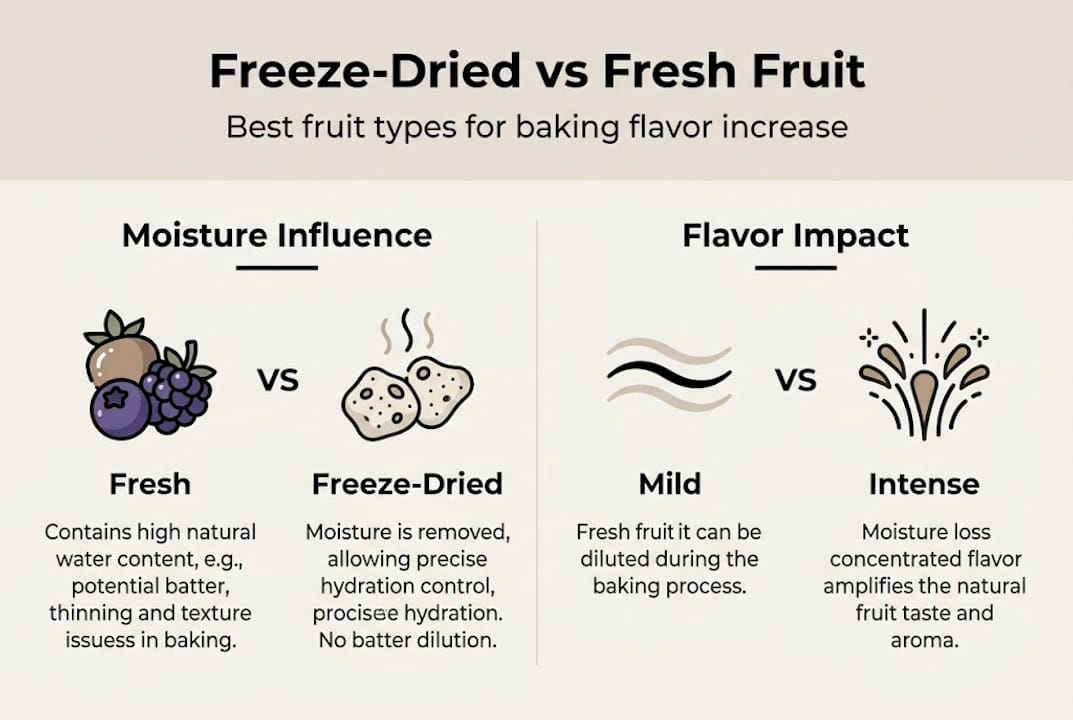
Here’s a quick comparison of how the three fruit forms stack up:
| Property | Fresh fruit | frozen fruit | freeze-dried fruit |
|---|---|---|---|
| moisture content | ~85-92% | ~80-90% | less than 3% |
| recipe adjustment needed | Yes | Yes | No |
| shelf life | 3 to 7 days | 6 to 12 months | 1 to 3 years |
| flavor intensity | moderate | moderate | very high |
| year-round availability | limited | moderate | yes |
| color impact in frosting | low | low | vibrant |
For bakers in Canada, seasonal availability is a real constraint. You’re not always getting fresh raspberries in January, and if you are, they’re expensive and often watery. freeze dried fruit benefits extend well beyond the summer season, giving you access to peak-flavor fruit any time of year.
The flavor concentration alone is worth paying attention to. Because all the water is gone, the taste is intensified dramatically. A tablespoon of freeze-dried strawberry powder delivers a punch that a handful of fresh berries simply cannot match in a baked product.
The benefits of freeze dried fruit also show up in your final presentation. The natural pigments in fruits like blueberry and raspberry survive the freeze-drying process extremely well. That means naturally pink buttercream, deep purple cookie dough, or brilliantly colored glazes without a drop of artificial coloring. powder form excels for color in frostings and subtle flavor integration, while whole pieces deliver visible, texturally interesting appeal.
Key baking advantages at a glance:
- No water added to your recipe
- Bold, consistent fruit flavor in every batch
- Natural color payoff in frostings and batters
- Available year-round regardless of season
- Long shelf life means no waste
- Works as whole pieces, crushed, or finely powdered
prepping freeze-dried fruit for baking: forms and tools you need
How you prep freeze-dried fruit depends entirely on what you want it to do in your bake. There are three main formats: whole, crushed, and powdered. Each has a distinct role, and picking the right one makes a bigger difference than most bakers expect.

Here’s how the formats compare:
| Format | best used for | texture in final bake | visual impact |
|---|---|---|---|
| whole pieces | toppings, mix-ins, decoration | crunchy, chewy after baking | high |
| crushed/broken | cookie dough, muffin batters | small bursts of flavor | medium |
| fine powder | frostings, cake batters, glazes | fully blended, smooth | color payoff |
grind freeze-dried fruit into powder using a high-speed blender or food processor and you get a fine, dry powder that mixes evenly through any dry or wet ingredient without clumping or introducing moisture. This is a game-changer for frostings especially, where you want consistent color and flavor in every single swipe.
For cakes and quick breads, powder integrates directly with flour and other dry ingredients. For cookies, crushed or roughly broken pieces give you those visible pops of fruit flavor. And for decorating, whole freeze-dried pieces pressed onto glazed donuts or the tops of cupcakes add both crunch and color that fresh fruit cannot maintain.
Tools you’ll want to have:
- A high-speed blender or small food processor for powdering
- A fine-mesh sieve for sifting powder (eliminates any fibrous bits)
- A kitchen scale for precise measuring (powder is lightweight, so volume measurements can vary)
- An airtight jar for storing unused powder
Pro tip: If your freeze-dried fruit feels slightly soft or sticky, it may have absorbed some ambient humidity. Pop the bag in a dry pantry for a few hours, or spread the pieces on a parchment-lined sheet pan and let them air out before blending. You’ll get a much finer, drier powder.
Creative freeze-dried fruit uses go well beyond the obvious. You can dust powdered mango over whipped cream, press whole freeze-dried raspberries into the tops of shortbread, or swirl strawberry powder into cream cheese filling. If you’ve ever been curious about freeze drying at home, it’s worth understanding what makes the commercial version so consistent, since home equipment varies widely.
powder form excels for frostings and subtle flavor integration. When the goal is a naturally pink strawberry glaze or a deep purple blueberry buttercream, powder is almost always the right choice.
Step-by-step: how to incorporate freeze-dried fruit in popular baked goods
Once you’ve prepped your fruit, here’s how to put it to work in classic baking scenarios.
For cakes:
- Start with whole freeze-dried fruit and grind it into a fine powder using your blender.
- 3/4 oz of freeze-dried strawberries, which equals about 1 cup whole, yields enough powder for a bold, fruit-forward 8-inch layer cake.
- Add the powder directly to your dry ingredients (flour, sugar, baking powder) and whisk to combine before adding wet ingredients.
- Do not reduce the sugar or flour. The powder replaces nothing. It adds.
- Watch your bake time: naturally pigmented batters may look done slightly earlier than plain ones. Always use a toothpick.
For cookies:
- Use whole or roughly crushed pieces for the most visual and textural impact.
- Add them at the fold-in stage, right after your flour is just incorporated.
- Keep pieces on the larger side if you want visible fruit in the finished cookie.
- Press a few extra pieces on top before baking for a bakery-style finish.
For frostings and glazes:
- Make your powder, then sift it through a fine-mesh sieve.
- Add the sifted powder to softened butter or powdered sugar a tablespoon at a time.
- blueberry powder benefits are especially visible in buttercream, where even one tablespoon turns white frosting a striking lavender-purple.
- For a simple glaze, whisk the powder with powdered sugar and a tiny splash of milk.
For toppings and swirls:
- Press whole freeze-dried pieces into the top of sticky buns, brownies, or glazed loaf cakes while the glaze is still wet.
- Create a swirl effect in no-bake cheesecakes by blending freeze-dried mango or raspberry into one portion of the filling.
- See how adding freeze dried candy follows the same general principle for decoration and topping applications.
Pro tip: Always measure freeze-dried powder by weight rather than volume. One cup of loosely scooped powder and one cup of tapped-down powder can differ significantly in potency.
troubleshooting and getting the best results
With techniques in hand, it’s important to troubleshoot challenges and maximize your results for standout bakes.
The most common issue bakers run into is clumping. When freeze-dried powder is exposed to humidity, it starts to absorb moisture from the air and clumps together. This means uneven pockets of concentrated flavor or color in your finished product. The fix is simple: work quickly, sift your powder, and store any unused portion in a sealed container the moment you’re done measuring.
“The beauty of freeze-dried fruit in baking is that it sidesteps the moisture problem entirely, giving you bold, year-round fruit flavor without a single recipe tweak.”
Common problems and fixes:
- Colors fading in the bake: Use a slightly higher quantity of powder. Natural pigments can lighten at high heat; adding 20% more powder compensates.
- Dense crumb in cakes: Usually caused by overmixing after adding powder to wet ingredients. Mix only until just combined.
- No visible fruit in cookies: Switch to larger crushed pieces instead of powder. They hold their shape better during baking.
- Loss of aroma after baking: This is normal. The aroma blooms while baking. What counts is the final taste, which will be stronger than fresh fruit.
- Short shelf life of stored powder: Always seal in an airtight glass jar with a desiccant packet. no recipe adjustment for moisture is needed during baking, but storage is where moisture becomes the enemy.
When a bake goes right, you’ll know it. The color is vibrant and consistent. The fruit flavor is identifiable in the first bite, not just a vague sweetness. The texture of the crumb or cookie holds exactly as the recipe intended. freeze-dried strawberry benefits include that signature depth of flavor that natural pigments and concentrated sugars create together.
Bright color and a strong fruit aroma coming out of the peel are your green lights. If either is weak, the issue is almost always quantity: use more powder, or switch from whole pieces to ground for the next attempt.
Why freeze-dried fruit is the secret weapon of modern bakers
Here’s what most ingredient guides won’t say directly: the bakers who consistently produce beautiful, intensely flavorful work aren’t just following better recipes. They’re working with better ingredients. freeze dried fruit in baking isn’t a trend. It’s a correction.
For too long, the baking world treated fruit flavor as something that came from extracts, emulsions, or artificially colored frostings. Those shortcuts work, but they taste like shortcuts. Real fruit. Real color. No compromise.
The shift toward freeze-dried ingredients also reflects something broader happening in baking culture. Home bakers want results that look and taste professional. That means using ingredients that behave predictably. Fresh fruit doesn’t behave predictably. Its water content changes with the season, the variety, even the weather during growing season. A freeze-dried strawberry is a freeze-dried strawberry every time.
For Canadian bakers especially, this matters. You’re working with a short growing season and an ingredient supply that gets expensive and inconsistent fast. Building your pantry around shelf-stable, high-quality freeze-dried fruit is just smart baking. It’s not a workaround. It’s the better choice.
explore quality freeze-dried fruit for your next bake
If this guide has you ready to experiment, you don’t need to spend hours hunting down quality ingredients. At Space-Man, we offer a wide range of freeze-dried fruit options sourced and packaged for Canadian bakers who take their craft seriously.

Whether you’re a home baker looking to try a few flavors or a pastry professional needing consistent bulk supply, our freeze dried fruit bundles are a great place to start. For those running a bakery or food production business, we also offer private label solutions including co-packing and custom packaging. Browse our full selection and find exactly what your next bake needs.
frequently asked questions
Do you need to adjust baking recipes for freeze-dried fruit?
No. Since freeze-dried fruit contains less than 3% moisture, it adds no liquid to your recipe and requires zero adjustments to your existing measurements.
How do you make freeze-dried fruit powder for baking?
Blend freeze-dried fruit pieces in a high-speed blender or food processor until fine, then sift for smooth texture to remove any fibrous bits before adding to batters or frostings.
What baked goods work best with freeze-dried fruit?
Cakes, cookies, frostings, and glazes all benefit greatly, and powder excels in frostings for color and flavor while whole pieces shine as crunchy toppings on pastries and breads.
How do you store leftover freeze-dried fruit after baking?
Seal it immediately in an airtight glass container kept in a cool, dry spot. Even brief exposure to humidity can cause clumping and reduce potency faster than you’d expect.