

Bold flavors and vibrant colors set Canadian bakeries apart, yet finding lasting, high-quality fruit ingredients can present a challenge. While American techniques are widely adopted in North America, freeze dried fruit offers Canadian bakery owners a practical edge with its ability to maintain both shelf life and the natural essence of fruit. This guide highlights why more chefs are using freeze dried fruit for consistent flavor, striking visuals, and reliable storage—all critical for modern baking success.
Table of Contents
- What Is Freeze Dried Fruit for Bakeries
- Types of Freeze Dried Fruit Used in Baking
- Key Benefits: Flavor, Color, and Shelf Stability
- How to Incorporate Freeze Dried Fruit Properly
- Common Pitfalls and Mistakes to Avoid
- Comparing Freeze Dried, Fresh, and Dehydrated Fruit
Key Takeaways
| Point | Details |
|---|---|
| Freeze Dried Fruit Advantage | Freeze dried fruit maintains vibrant color, intense flavor, and essential nutrients, making it ideal for Canadian bakeries. |
| Versatile Applications | Bakers can use freeze dried fruit in various forms, such as whole pieces, powders, and as garnishes, enhancing baked goods creatively. |
| Storage and Shelf Stability | These ingredients offer extended shelf life without artificial preservatives, allowing for better inventory management and reduced waste. |
| Incorporation Techniques | Precise measurement and the right hydration techniques are crucial for successful inclusion of freeze dried fruits in baking recipes. |
What Is Freeze Dried Fruit for Bakeries
Freeze dried fruit represents a revolutionary ingredient for Canadian bakeries, offering a unique preservation technique that transforms fresh produce into an incredibly versatile baking component. Lyophilization, or freeze drying, is a sophisticated dehydration process that removes moisture through sublimation, creating a lightweight, shelf-stable product that maintains the fruit’s original flavor, color, and nutritional profile.
Unlike traditional drying methods that rely on heat, freeze drying preserves the fruit’s structural integrity and sensory qualities. The process involves carefully freezing the fruit and then reducing atmospheric pressure, which allows ice to transform directly from solid to vapor without passing through the liquid state. This method ensures that bakery-grade freeze dried fruit retains its vibrant color, intense flavor, and essential nutrients, making it an exceptional ingredient for pastry chefs seeking consistent and high-quality flavor enhancement.
Bakers can utilize freeze dried fruit in numerous applications, from incorporating powder-like fragments into cake batters and frostings to creating garnishes and decorative elements. The Food and Agriculture Organization confirms that these fruits undergo rigorous preparation, including washing, sorting, peeling, and blanching before the freeze drying process. This meticulous approach guarantees a premium ingredient that extends shelf life while maintaining exceptional organoleptic properties essential for creating world-class baked goods.
Pro tip: Store freeze dried fruit in airtight containers away from direct sunlight and moisture to maintain optimal quality and prevent flavor degradation.
Types of Freeze Dried Fruit Used in Baking
Canadian bakeries have a wide array of freeze dried fruits to choose from, each offering unique flavor profiles and baking characteristics. According to the Institute of Food Technologists, the most popular freeze dried fruits for baking include strawberries, blueberries, cranberries, apples, and mangoes. These fruits can be incorporated into baked goods in various forms: whole, chopped, or transformed into a fine powder, providing exceptional flavor intensity without compromising the moisture balance of the recipe.
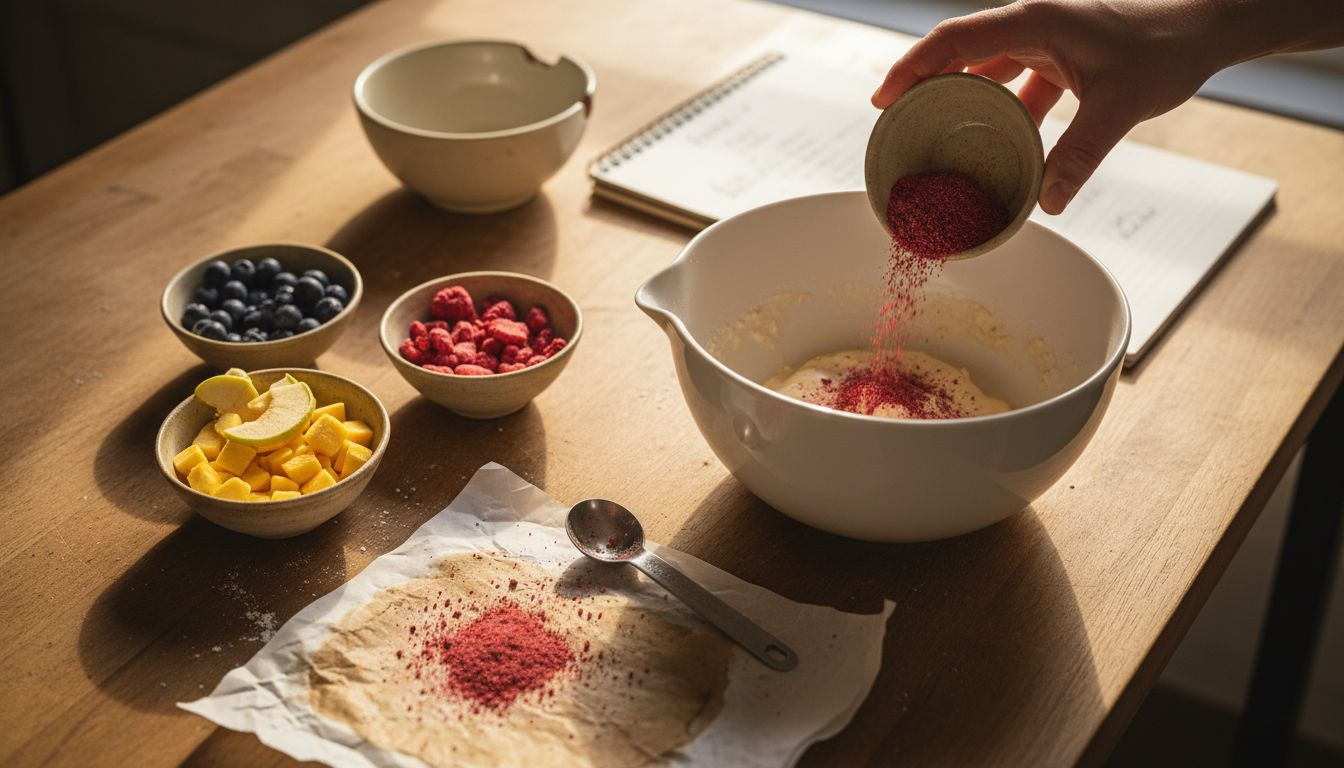
Beyond these standard options, bakers can explore a diverse range of freeze dried fruits that add complexity and depth to their creations. University of Wyoming Extension recommends an expanded selection including raisins (dark, golden, and sultanas), currants, dried apricots, dates, prunes, figs, and even candied ginger. Each fruit brings its own unique characteristics to baked goods, allowing pastry chefs to craft innovative and distinctive recipes that stand out in the competitive Canadian bakery market.
The versatility of freeze dried fruits extends beyond traditional applications. Bakers can use these ingredients in multiple ways: as flavor enhancers in cake batters, decorative elements in pastries, crunchy inclusions in cookies, or as vibrant garnishes that add both visual appeal and concentrated fruit flavor. The key is understanding each fruit’s specific properties and how they interact with different baking techniques and ingredient combinations.
Pro tip: When using freeze dried fruits in baking, consider grinding harder fruits into a powder for more even distribution and intense flavor integration.
Here’s a summary of freeze dried fruits commonly used in Canadian bakeries and their notable baking characteristics:
| Freeze Dried Fruit | Flavor Profile | Texture Benefit | Typical Use in Baking |
|---|---|---|---|
| Strawberry | Sweet-tart | Maintains crunch | Batters, garnishes |
| Blueberry | Mildly sweet | Smooth pieces | Muffins, fillings |
| Cranberry | Tangy | Chewy bits | Cookies, toppings |
| Apple | Subtle, sweet | Crisp slices | Quick breads, pies |
| Mango | Tropical, rich | Powder-ready | Frostings, flavor base |
| Raisin | Intense, sweet | Sticky-chewy | Breads, pastries |
| Candied Ginger | Spicy-sweet | Firm pieces | Cookies, accents |
Key Benefits: Flavor, Color, and Shelf Stability
Freeze dried fruit offers Canadian bakeries an extraordinary ingredient that preserves the essence of fresh fruit while providing remarkable functional advantages. Scientific studies confirm that freeze drying uniquely maintains the nutritional and sensory qualities of fruits like strawberries, ensuring bakers can leverage exceptional flavor concentration without compromising nutritional integrity. This preservation technique allows pastry chefs to integrate vibrant fruit notes into their creations while maintaining consistent taste and appearance.
The color preservation of freeze dried fruits is particularly impressive, enabling bakers to create visually stunning baked goods that retain the natural, vivid hues of original fruit. Unlike traditional dehydration methods that often result in dull, brownish tones, freeze drying maintains the bright, appealing colors that make baked products visually enticing. This characteristic is crucial for bakeries aiming to produce aesthetically pleasing and appetizing desserts that capture customers’ attention through both flavor and appearance.
Shelf stability represents another significant advantage of freeze dried fruits in professional baking environments. By removing moisture through sublimation, these ingredients dramatically extend product longevity without requiring artificial preservatives. Bakeries can store freeze dried fruits for extended periods without worrying about spoilage, color degradation, or flavor loss. This stability translates into reduced waste, more consistent product quality, and increased operational flexibility for Canadian bakery professionals managing complex production schedules and inventory management.
Pro tip: Store freeze dried fruits in vacuum-sealed containers with moisture-absorbing packets to maximize their already impressive shelf life and preserve their vibrant qualities.
How to Incorporate Freeze Dried Fruit Properly
University of Wyoming Extension offers critical guidance for incorporating freeze dried fruit into baking recipes, recommending strategic approaches that preserve flavor and texture. Canadian bakers can integrate these ingredients by adding whole or chopped pieces directly to dry ingredient mixtures, ensuring even distribution and preventing moisture imbalances. Precise measurement is key to maintaining the delicate balance of hydration in baked goods, with most recipes requiring careful portioning of freeze dried fruits.
Rehydration techniques play a crucial role in maximizing the potential of freeze dried fruits. Some fruits, particularly harder varieties like apricots or ginger, benefit from preliminary preparation. Bakers can soften these ingredients by briefly soaking them in liquid or steaming them to enhance texture and prevent excessive dryness in final baked products. The goal is to introduce moisture without compromising the concentrated flavor profile that makes freeze dried fruits so unique in baking applications.
Different baked goods require different incorporation methods. Muffins and quick breads can typically handle freeze dried fruits added directly to the batter, while more delicate pastries might require a more nuanced approach. Grinding freeze dried fruits into a powder can create intense flavor concentrations for frostings, fillings, and delicate cake batters. Professional bakers often experiment with technique variations, such as coating freeze dried fruit pieces in a light dusting of flour to prevent sinking in denser batters or creating flavor-packed garnishes by crushing the fruits into fine, colorful decorative elements.
Pro tip: Create a flavor base by grinding freeze dried fruits into a fine powder and mixing with sugar before incorporating into your recipe for maximum flavor distribution.
Common Pitfalls and Mistakes to Avoid
Research from Indiana’s food safety resources highlights critical mistakes that Canadian bakeries must avoid when working with freeze dried fruits. One of the most significant errors is improper moisture management, which can dramatically impact the texture and quality of baked goods. Bakers often underestimate the importance of precise hydration techniques, leading to overly dry or dense products that fail to meet professional standards.
Microbial contamination and storage issues represent another substantial risk for bakeries using freeze dried fruits. Exposure to moisture, oxygen, or inconsistent temperatures can quickly degrade product quality, reducing shelf life and potentially compromising food safety. Professional bakers must implement rigorous storage protocols, using airtight containers and maintaining controlled environmental conditions to preserve the integrity of freeze dried fruit ingredients.
Recipe adaptation challenges frequently trip up even experienced bakers. Simply substituting freeze dried fruits for fresh or traditionally dried fruits without adjusting moisture content can lead to catastrophic baking failures. Each type of freeze dried fruit requires a unique approach, demanding careful recipe modification. Some fruits may need rehydration, while others work best when ground into powders or added in precise quantities to maintain the delicate balance of moisture and flavor in baked goods.
Pro tip: Create a testing matrix for each freeze dried fruit type, documenting exact moisture adjustments and incorporation techniques to build a reliable reference guide for your bakery.
Comparing Freeze Dried, Fresh, and Dehydrated Fruit
Nutrition research reveals critical differences between fresh, dehydrated, and freeze dried fruits that significantly impact their performance in baking applications. Moisture content emerges as the primary distinguishing factor, with fresh fruits containing maximum water volume, dehydrated fruits losing significant moisture through heat, and freeze dried fruits maintaining structural integrity through advanced sublimation techniques. This fundamental difference dramatically influences flavor concentration, texture, and shelf stability for Canadian bakery professionals.
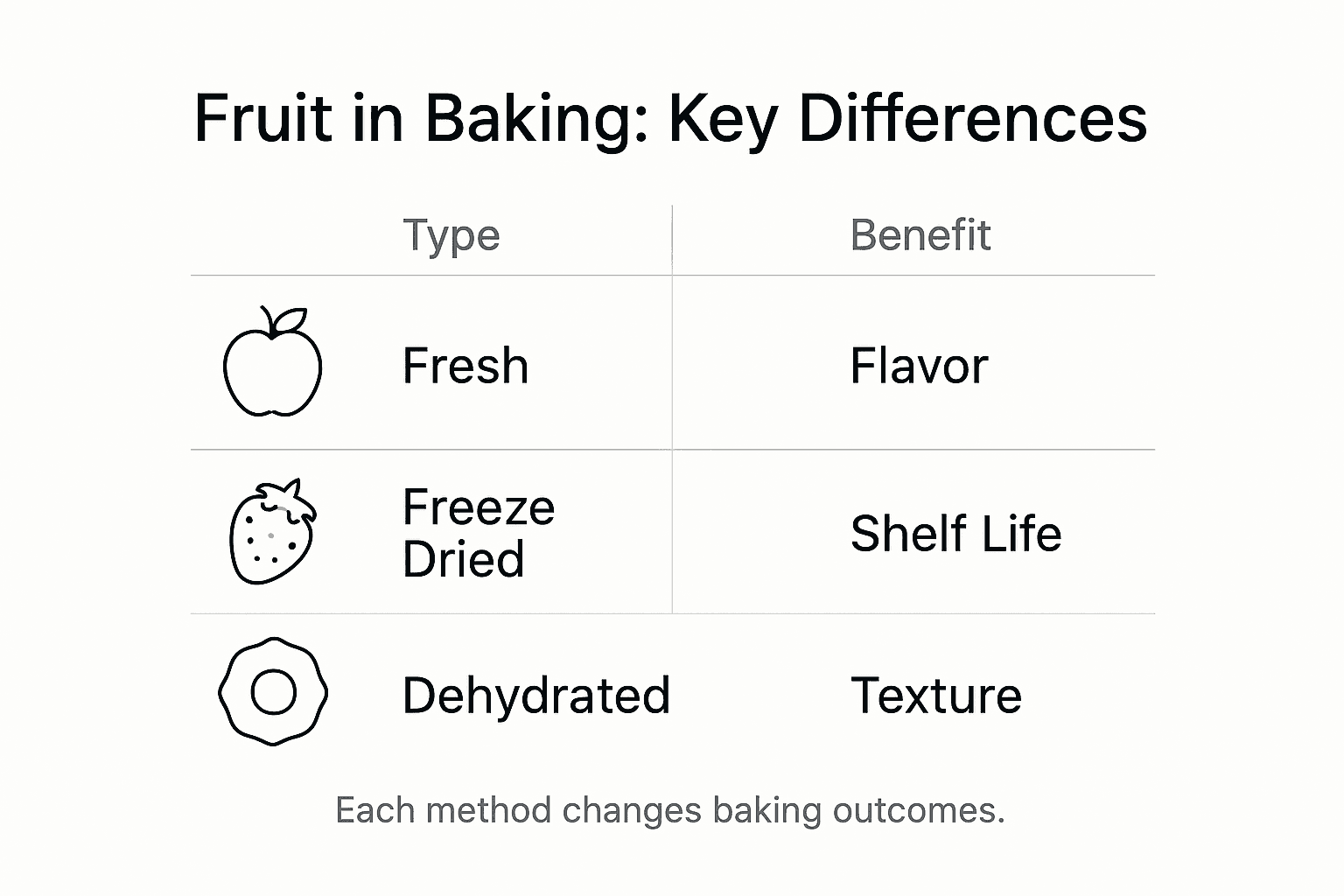
Fresh fruits represent the most perishable option, offering vibrant flavors but requiring immediate use and careful handling. Dehydrated fruits, processed through traditional heat-based methods, often result in chewier textures and diminished color intensity. In contrast, freeze dried fruits emerge as the superior baking ingredient, preserving the fruit’s original shape, color, and nutritional profile while providing exceptional flavor concentration and extended shelf life.
Bakers can leverage these differences strategically in recipe development. Freeze dried fruits offer unique advantages, including lightweight packaging, minimal volume loss, and the ability to be ground into fine powders or used as whole pieces. Their crisp texture and intense flavor make them particularly valuable for creating garnishes, flavor bases, and consistent ingredient experiences across multiple baking applications. The precision of freeze drying allows bakeries to maintain consistent product quality while reducing waste and expanding creative possibilities.
Pro tip: Develop a systematic comparison chart tracking moisture content, flavor intensity, and texture for different fruit preservation methods to inform your baking ingredient selection process.
See how the preservation method affects fruit characteristics in baking applications:
| Preservation Method | Moisture Content | Flavor Intensity | Texture in Baked Goods |
|---|---|---|---|
| Fresh | High | Mild | Soft, juicy |
| Dehydrated | Moderate | Less intense | Chewy, dense |
| Freeze Dried | Very low | Intensified | Crisp, lightweight |
Elevate Your Bakery Creations with Premium Freeze Dried Fruit Solutions
Bakeries in Canada face the challenge of maintaining vibrant flavor, color, and shelf stability while managing moisture content precisely. Freeze dried fruit offers a powerful solution but requires expert sourcing and tailored packaging to keep its unique qualities intact. If you want to avoid common pitfalls like texture imbalances or flavor loss, partnering with a trusted manufacturer can ensure consistent, high-quality results that delight your customers.

Discover how Space-Man supports Canadian bakeries by providing top-tier freeze dried fruit ingredients alongside private labeling and co-packing services designed to preserve flavor and extend shelf life. Don’t let moisture or storage issues compromise your product quality. Visit Space-Man now to learn how specialized bagging and packaging can keep your freeze dried fruits fresh and vibrant. Take control of your baking process and give your customers baked goods bursting with real fruit flavor. Get started today at Space-Man.
Frequently Asked Questions
What is freeze dried fruit and how is it used in baking?
Freeze dried fruit is a dehydrated ingredient created through a process that removes moisture, preserving flavor, color, and nutrients. In baking, it can be used in various forms such as whole pieces, chopped, or powdered, enhancing the flavor and aesthetic of baked goods.
What are the benefits of using freeze dried fruit in baked goods?
Freeze dried fruit offers several benefits, including intense flavor concentration, vibrant color retention, and extended shelf life. This ingredient enhances the sensory qualities of baked goods without compromising moisture balance.
How should freeze dried fruit be incorporated into baking recipes?
Bakers can integrate freeze dried fruit by adding it directly to dry ingredients or soaking harder varieties to enhance texture. Grinding fruits into powder is also effective for creating frostings or fillings, and careful measurement is crucial for maintaining the recipe’s proper moisture balance.
What common mistakes should bakers avoid when using freeze dried fruit?
Common mistakes include improper moisture management, leading to dry or dense products. Additionally, failing to adapt recipes correctly when substituting freeze dried fruit for fresh or dehydrated fruit can result in baking failures. Implementing rigorous storage protocols is also essential to prevent degradation of quality.