

Over 60 percent of American snack businesses are now turning to freeze drying as a way to maintain product quality and cut waste. Freeze dryers promise more than just longer shelf life, yet many owners still have the wrong idea about how the technology works. Understanding what makes freeze drying different from ordinary dehydration is the first step toward choosing the right equipment and avoiding costly mistakes in a fast-paced food industry.
Table of Contents
- Freeze Dryers Defined And Common Misconceptions
- Types Of Freeze Dryers In Food Production
- How Freeze Drying Preserves Flavor And Quality
- Extending Shelf Life And Reducing Waste
- Comparing Freeze Drying To Other Methods
Key Takeaways
| Point | Details |
|---|---|
| Understanding Freeze Drying | Freeze drying is a sophisticated method that preserves food and materials by removing moisture through sublimation, maintaining integrity and nutritional value. |
| Types of Freeze Dryers | Freeze dryers vary from home units to industrial-scale machines, each designed for different production capacities and preservation needs. |
| Flavor and Quality Preservation | The process maintains up to 97% of a food’s original nutritional value and flavor, making it superior to traditional preservation methods. |
| Waste Reduction Benefits | Freeze drying significantly extends shelf life and reduces food waste, offering economic advantages and a sustainable approach to food production. |
Freeze Dryers Defined and Common Misconceptions
A freeze dryer is a sophisticated piece of equipment designed to preserve food, pharmaceuticals, and other sensitive materials by removing moisture through a specialized process called lyophilization. Unlike traditional dehydration methods, freeze drying maintains the structural integrity, nutritional value, and flavor of the original product by extracting water through sublimation - transforming ice directly into vapor without passing through a liquid state.
Freeze drying involves three critical stages: freezing, primary drying, and secondary drying. During freezing, materials are rapidly cooled to extremely low temperatures, which helps preserve their cellular structure. The primary drying phase involves reducing pressure and applying gentle heat, causing frozen water molecules to sublimate. Secondary drying removes any remaining moisture bound within the product’s molecular structure, ensuring complete preservation.
Despite its advanced technology, several misconceptions persist about freeze drying. Many businesses incorrectly assume that all products are equally suitable for this process. However, scientific principles of lyophilization reveal that each material requires carefully tailored protocols. Some key misconceptions include:
- Believing freeze drying works identically for all substances
- Assuming the process is simple and uniform
- Thinking freeze-dried products lose significant nutritional value
- Underestimating the complexity of moisture removal
For snack businesses, understanding these nuances is crucial. Not every product will respond similarly to freeze drying, and success depends on precise temperature control, vacuum settings, and understanding each ingredient’s unique molecular composition. Professional freeze dryers offer precise environmental controls that home equipment cannot match, making them an invaluable tool for businesses seeking consistent, high-quality preserved products.
Types of Freeze Dryers in Food Production
Freeze dryers in food production can be categorized into three primary types based on scale and complexity: home units, commercial systems, and industrial-scale machines. Each category serves distinct purposes and offers unique capabilities for preserving food products with precision and consistency.
Commercial freeze drying systems represent a critical technological solution for snack businesses seeking scalable preservation methods. These systems typically feature larger chamber sizes and more advanced refrigeration capabilities compared to home units, allowing for greater product volumes and more consistent processing. Industrial freeze dryers take this complexity even further, designed to handle massive production quantities with sophisticated temperature and pressure controls.
The fundamental differences between these freeze dryer types lie in their technical specifications and intended applications. Home units are compact, processing small batches suitable for personal use, while commercial systems can handle moderate production volumes for small to medium-sized businesses. Industrial freeze dryers are engineered for large-scale food manufacturers, capable of processing hundreds of pounds of product simultaneously.
Key characteristics that distinguish these freeze dryer types include:
-
Chamber Size:
- Home units: 1-4 square feet
- Commercial systems: 4-20 square feet
- Industrial machines: 20-100+ square feet
-
Processing Capacity:
- Home units: 4-10 pounds per batch
- Commercial systems: 10-50 pounds per batch
- Industrial machines: 50-500+ pounds per batch
-
Temperature Range:
- Home units: -40°F to -50°F
- Commercial systems: -50°F to -80°F
- Industrial machines: -80°F to -130°F
For snack businesses considering freeze drying technology, understanding these distinctions is crucial. The right freeze dryer can transform product preservation, extending shelf life, maintaining nutritional integrity, and creating innovative texture profiles that set products apart in a competitive market.
How Freeze Drying Preserves Flavor and Quality
Freeze drying represents a revolutionary preservation technique that goes far beyond traditional food processing methods. By removing moisture through sublimation, this advanced technology maintains the essential sensory characteristics of food products while dramatically extending their shelf life. The process uniquely preserves the original cellular structure, color, and nutritional profile of ingredients, making it a game-changer for snack businesses seeking premium product quality.
The scientific mechanism behind flavor preservation is intricate and fascinating. When foods are freeze dried, they are rapidly frozen and then placed in a vacuum chamber where ice crystals are transformed directly into vapor, bypassing the liquid state. This minimal thermal stress approach means that volatile flavor compounds remain largely intact, preventing the degradation typically associated with heat-based preservation methods. Remarkably, this process can retain up to 97% of a food’s original nutritional value and sensory characteristics.
Flavor preservation in freeze-dried products involves several critical factors:
- Temperature Control: Maintaining ultra-low temperatures prevents chemical breakdown
- Pressure Manipulation: Vacuum chambers ensure precise moisture extraction
- Rapid Processing: Minimizes exposure to potentially damaging environmental conditions
- Structural Integrity: Maintains original cellular architecture of food products
For snack businesses, the implications are profound. Freeze dried ingredients offer unprecedented consistency, allowing manufacturers to create products with intense, concentrated flavors that remain stable over extended periods. The process transforms ordinary snacks into extraordinary culinary experiences, providing consumers with products that look, taste, and feel remarkably close to their original fresh state. By understanding and leveraging freeze drying technology, businesses can unlock new levels of product innovation and quality that set them apart in a competitive marketplace.
Extending Shelf Life and Reducing Waste
Food waste represents a significant challenge for snack businesses, with traditional preservation methods often falling short of maintaining product quality. Freeze drying emerges as a revolutionary solution that dramatically extends product shelf life while minimizing waste throughout the supply chain. By removing moisture through a sophisticated scientific process, this preservation technique transforms perishable ingredients into stable, long-lasting products that retain their original nutritional value and sensory characteristics.
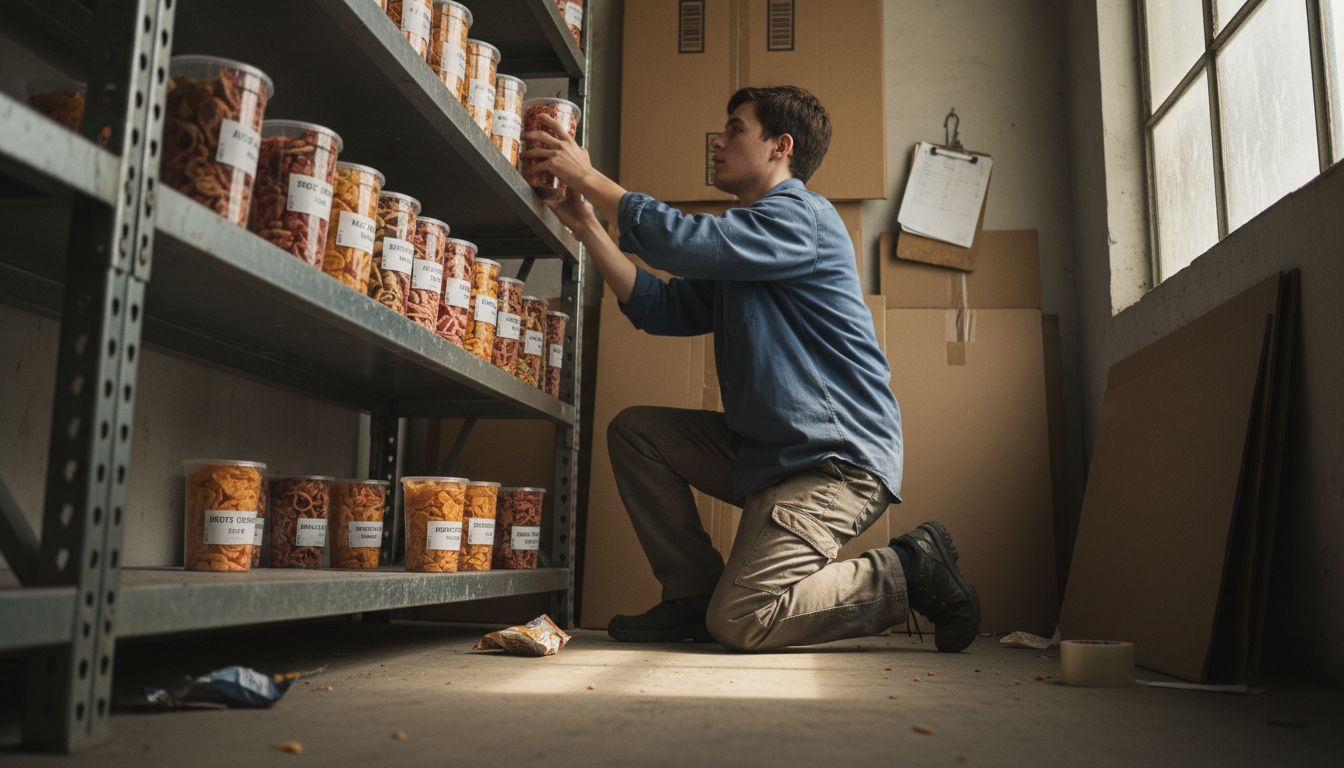
The science behind shelf life extension is remarkably precise. When foods undergo freeze drying, moisture content is reduced to levels that effectively halt microbial growth and enzymatic reactions. This process creates an environment where spoilage becomes virtually impossible, allowing snack businesses to store products for months or even years without compromising quality. Typical shelf life extensions range from 12 to 25 times longer than traditional preservation methods, representing a significant economic advantage for manufacturers and retailers.
Key benefits of freeze drying for waste reduction include:
- Moisture Elimination: Prevents bacterial and fungal growth
- Nutrient Preservation: Maintains up to 97% of original nutritional content
- Reduced Storage Costs: Lighter products require less expensive storage
- Extended Distribution Potential: Enables shipping to broader geographic regions
- Minimal Product Loss: Dramatically reduces spoilage and waste
Long shelf life strategies become increasingly critical in modern food production. By implementing freeze drying technologies, businesses can transform potential waste into valuable, marketable products. The process not only reduces economic losses but also contributes to sustainable food production practices, allowing manufacturers to minimize their environmental footprint while delivering high-quality, stable snack products to consumers.
Comparing Freeze Drying to Other Methods
Preserving food requires careful consideration of various techniques, with each method offering unique advantages and limitations. Freeze drying stands out as a superior preservation technology that fundamentally differs from traditional methods like dehydration, canning, and individual quick freezing. Unlike these alternatives, freeze drying maintains near-perfect product integrity by removing moisture through sublimation, which preserves the original flavor, nutritional profile, and structural composition of ingredients.
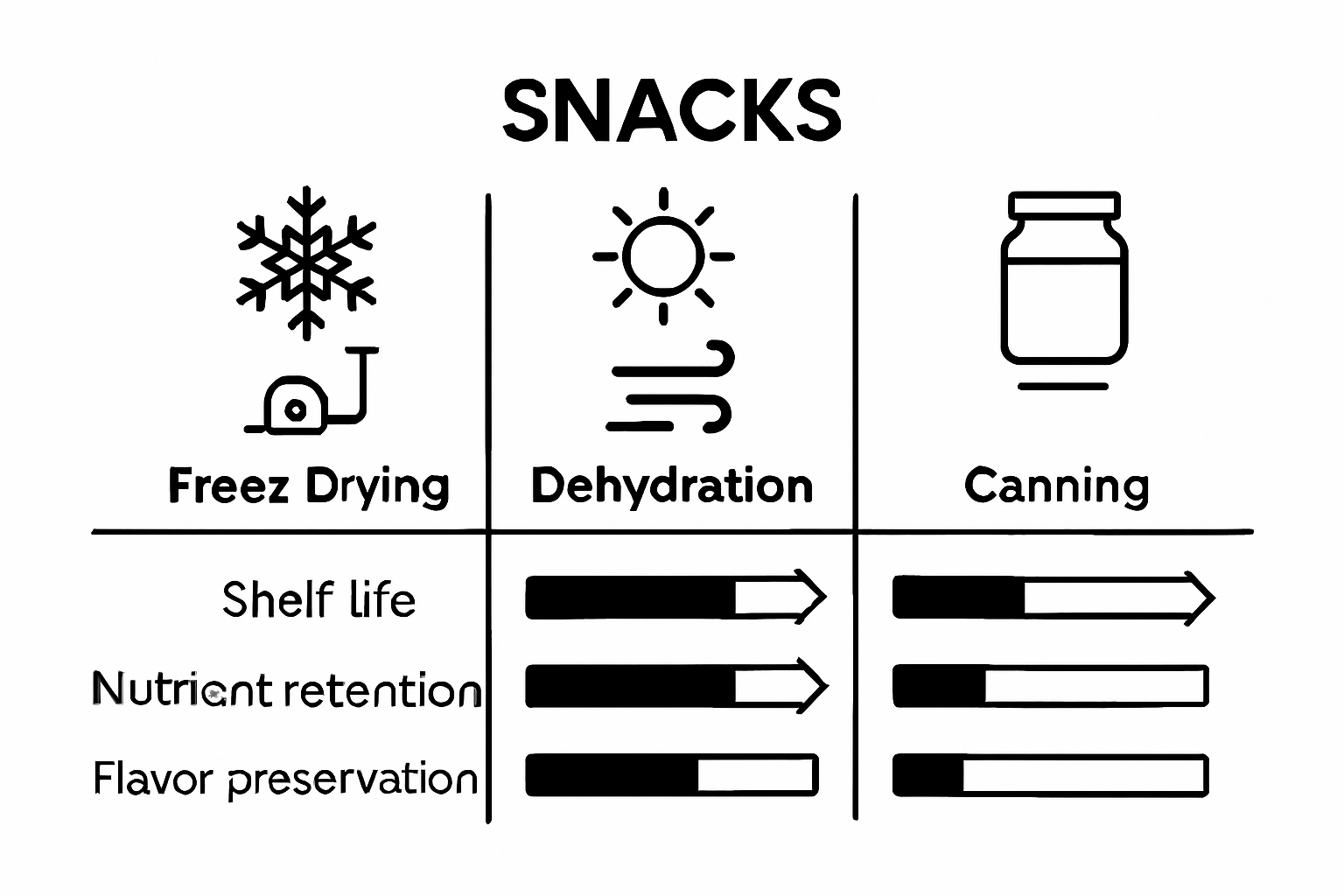
Traditional preservation methods each come with significant drawbacks. Drum drying, for instance, involves spreading pureed ingredients over heated rotating surfaces, which can significantly degrade nutritional content and alter flavor profiles. Dehydration uses heat to remove moisture, often resulting in shrunken, tough products with diminished taste. Individual quick freezing (IQF) prevents large ice crystal formation but does not eliminate moisture, limiting long-term storage potential. In contrast, freeze drying completely removes water content while maintaining the product’s original cellular structure and sensory characteristics.
Key comparative differences between preservation methods include:
-
Nutritional Retention:
- Freeze Drying: Up to 97% nutrient preservation
- Dehydration: 40-60% nutrient loss
- Canning: Variable nutrient degradation
- IQF: Moderate nutrient preservation
-
Flavor Profile:
- Freeze Drying: Original flavor maintained
- Dehydration: Significant flavor alteration
- Canning: Potential flavor modification
- IQF: Partial flavor preservation
-
Shelf Life:
- Freeze Drying: 25+ years
- Dehydration: 1-5 years
- Canning: 2-5 years
- IQF: 6-12 months
For snack businesses seeking optimal preservation, understanding these technological nuances becomes crucial. Freeze drying represents not just a preservation method, but a strategic approach to maintaining product quality, extending market reach, and delivering consistently superior consumer experiences.
Elevate Your Snack Business with Expert Freeze Drying Solutions
Many snack businesses face the challenge of preserving flavor, nutritional value, and shelf life while reducing waste. This article highlights how precise temperature control, moisture removal, and maintaining structural integrity are essential for successful freeze drying. At Space Man, we understand these critical factors and offer advanced freeze drying manufacturing and packaging services tailored specifically for food producers looking to stand out with premium quality products.
Discover how our freeze dried candy manufacturing and distribution services in Canada can help you deliver consistent, long-lasting snacks that retain their original taste and texture. Benefit from our private labeling, co-packing, and custom bagging solutions designed to meet your unique production needs while boosting your brand’s appeal.
Take the first step towards transforming your snack products today. Explore our freeze drying manufacturing options and see how we bring expert knowledge and state-of-the-art technology together to extend shelf life and enhance product quality.
Ready to elevate your snack offerings with reliable freeze drying services that reduce waste and maximize flavor retention? Visit Space Man Online now to learn more and start your journey to superior snack preservation.
Frequently Asked Questions
What are the benefits of using freeze dryers for snack businesses?
Freeze dryers extend shelf life, maintain nutritional integrity, and preserve flavor and texture, allowing snack businesses to offer high-quality products.
How does freeze drying compare to traditional preservation methods?
Freeze drying removes moisture without heat, preserving up to 97% of nutrients, while methods like dehydration and canning often lead to significant nutrient loss and altered flavors.
What types of products can be preserved using freeze dryers?
Freeze dryers can preserve a wide range of foods, including fruits, vegetables, meats, and prepared meals, while retaining their original characteristics and extending shelf life significantly.
How can snack businesses benefit from the long shelf life of freeze-dried products?
The long shelf life of freeze-dried products reduces waste and storage costs, allowing snack businesses to reach broader markets and improve profitability.
Recommended
- Benefits of Freeze Drying: Complete Guide for Canada – Spaceman
- What Is a Freeze Dryer Machine? Complete Overview – Spaceman
- What Can I Freeze Dry: Complete Guide for 2025 – Spaceman
- Complete Guide to Benefits of Freeze Dried Fruit – Spaceman
- 7 Peanut Free Snack Options for Canadian Schools and Cafes - Probe IT