

TL;DR:
- Freeze drying removes moisture through sublimation under vacuum, preserving food structure and nutrients better than dehydration. It offers longer shelf life and retains up to 97% of nutrients, making it ideal for long-term storage of fruits, vegetables, and meats, but at a higher cost. Dehydration is more affordable and suitable for short-term preservation of herbs, snacks, and produce, with a faster and simpler process.
Freeze drying is defined as a preservation method that removes moisture through sublimation, converting ice directly into vapor under vacuum without passing through a liquid phase. The core difference between dehydration and freeze drying comes down to how water leaves the food. Dehydration uses heat at 95–165°F to evaporate moisture, while freeze drying freezes food first, then pulls moisture out under vacuum at around -40°F. That single difference in process drives everything else: shelf life, nutritional value, texture, and cost. Freeze-dried foods retain just 1–3% moisture compared to 5–10% for dehydrated foods, and that gap has major consequences for anyone serious about food preservation.
What is the difference between dehydration and freeze drying?
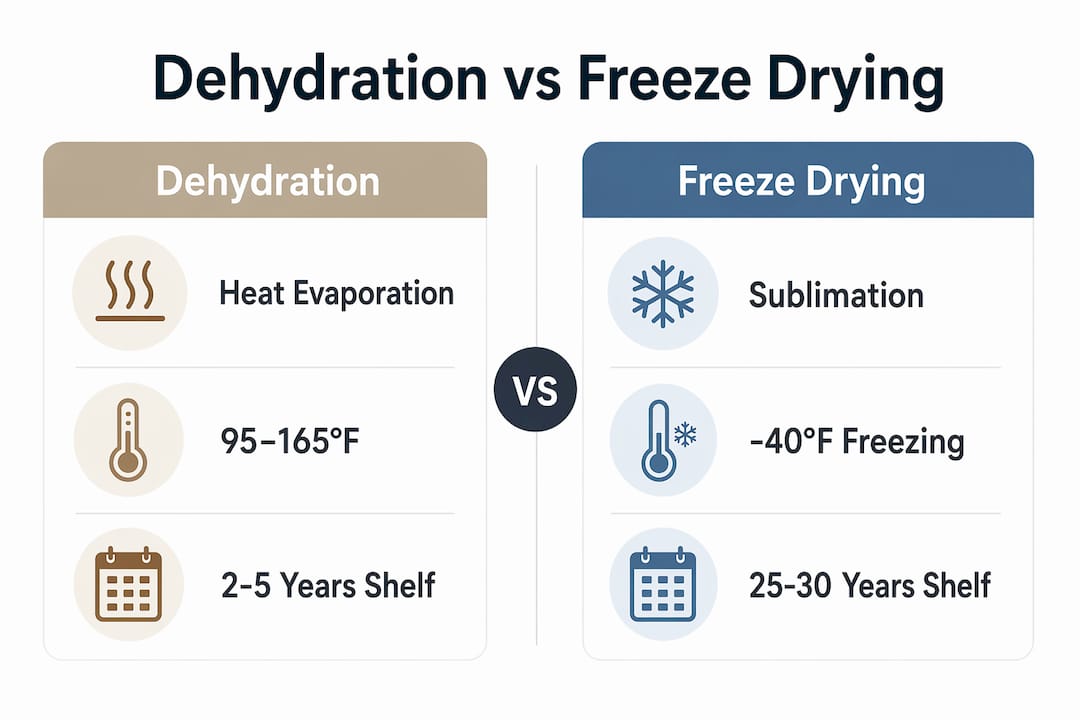
Dehydration is a thermal process. Heat forces moisture out of food through evaporation, which also cooks the food in the process. Temperatures between 95–165°F cause cellular walls to collapse, changing the food’s structure permanently. That structural collapse is why dehydrated jerky is chewy and dehydrated apples turn leathery.
Freeze drying works on a completely different principle called lyophilization. The food is frozen solid, then placed in a vacuum chamber. The vacuum lowers pressure so that ice converts directly to vapor without melting first. This sublimation process preserves the food’s cellular structure intact, which is why freeze-dried strawberries look almost identical to fresh ones, just lighter and crunchier.
The table below shows how the two processes compare at a technical level.
| Parameter | Dehydration | Freeze Drying |
|---|---|---|
| Temperature | 95–165°F | -40°F (freezing phase) |
| Moisture removal method | Heat evaporation | Vacuum sublimation |
| Residual moisture | 5–10% | 1–3% |
| Cellular structure | Collapsed | Intact |
| Processing time | 4–12 hours | 20–40 hours |
Pro Tip: Blanching vegetables before freeze drying can reduce drying time and improve the final product quality. It’s a simple prep step that pays off in both efficiency and taste.
How do shelf life and storage compare?
Shelf life is where freeze drying wins by a wide margin. Freeze-dried foods last 25–30 years when sealed and stored at 60°F. Dehydrated foods typically last 2–5 years under similar conditions. That is not a small gap. It is the difference between a pantry staple and a genuine long-term emergency food supply.
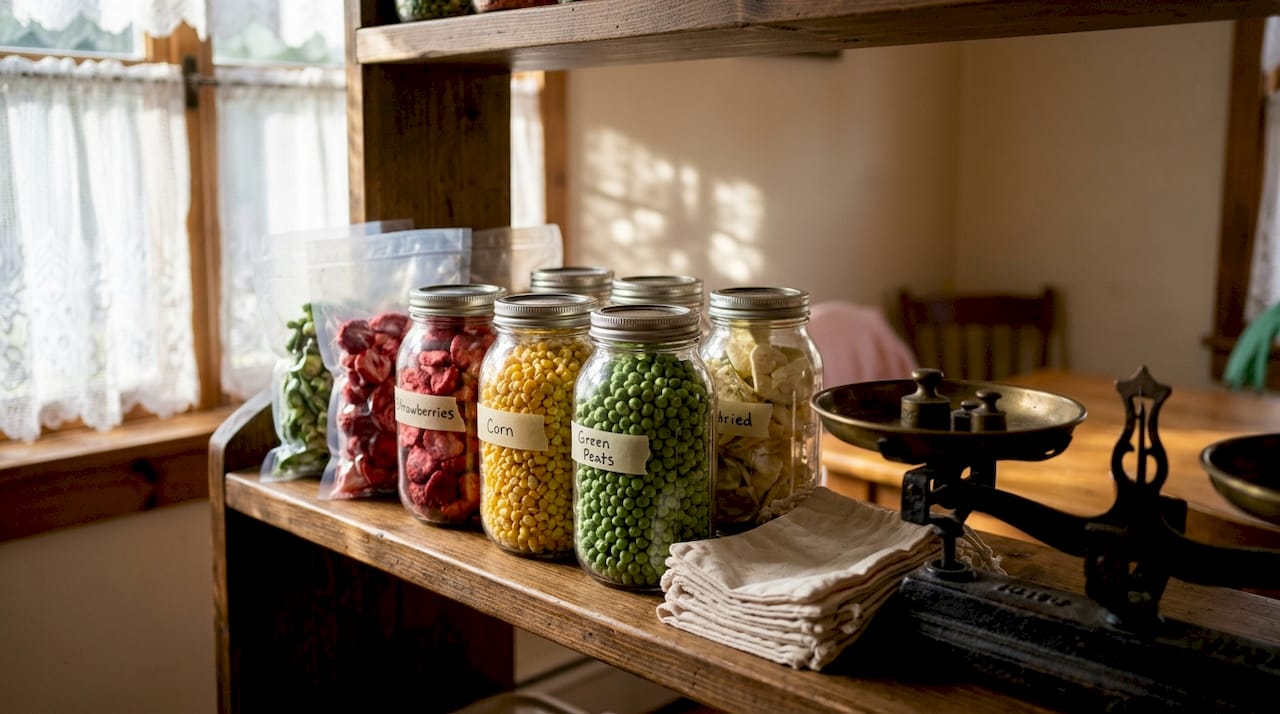
The reason comes down to moisture and structure. Dehydrated foods retain more residual water, which supports enzymatic activity and oxidation over time. The collapsed cell structure in dehydrated foods also exposes more surface area to oxygen, which speeds up spoilage. Freeze-dried foods, with intact cells and near-zero moisture, give bacteria and enzymes almost nothing to work with.
There are exceptions worth knowing. Grains, legumes, and white rice dehydrate well and can last 20–30 years when stored in airtight containers with oxygen absorbers. These foods have naturally low fat and moisture content, which reduces spoilage risk. For most fruits, vegetables, meats, and dairy products, though, freeze drying delivers far better longevity.
Packaging matters for both methods. Mylar bags with oxygen absorbers and sealed buckets extend shelf life significantly for either method. Freeze-dried products are more forgiving of minor packaging imperfections because their moisture content is so low. Dehydrated foods are more sensitive to humidity and oxygen exposure, so airtight packaging is non-negotiable. You can read more about long-term storage effects on the Space-man blog.
How do nutrition and texture compare after preservation?
Nutrition retention is one of the strongest arguments for freeze drying. Dehydration’s heat causes 30–50% loss of heat-sensitive nutrients like vitamin C and B vitamins. Freeze drying retains up to 97% of nutrients because no heat is applied during the moisture removal phase. Vitamin C retention specifically runs around 90% for freeze-dried food versus 50–60% for dehydrated food. For anyone preserving food with nutrition in mind, that difference is significant.
Texture tells a similar story. Heat in dehydration cooks the food, changing its texture permanently. Dehydrated foods tend to be chewy, rubbery, or leathery depending on the food type. Freeze-dried foods are crispy and light, and they rehydrate to near-original form when water is added. A freeze-dried peach slice looks and tastes remarkably close to a fresh one after rehydration. A dehydrated peach slice does not.
Here is a quick breakdown of texture and culinary outcomes by food type:
- Fruits: Freeze-dried versions are crispy and sweet, great for snacking or baking. Dehydrated versions are chewy and concentrated in flavor, better for trail mix.
- Vegetables: Freeze-dried vegetables rehydrate quickly and hold their shape in soups and stews. Dehydrated vegetables take longer to rehydrate and can turn mushy.
- Meats: Freeze-dried meat rehydrates to near-fresh texture. Dehydrated meat (jerky) is intentionally tough and chewy.
- Candy: Freeze drying transforms candy into a puffed, airy, crunchy version with intensified flavor. This is the process behind Space-man’s freeze dried candy products.
Pro Tip: Freeze-dried foods rehydrate fastest in warm water. Most vegetables and fruits fully rehydrate in 5–10 minutes. Cold water works but adds 10–15 minutes to the process.
What are the cost and equipment considerations?
Cost is where dehydration has a clear advantage. A quality food dehydrator runs $60–$350. A home freeze dryer costs $2,500–$4,500. That is a significant upfront difference for home users. Freeze dryers also use more electricity and require more maintenance than dehydrators.
Per-serving costs reflect the same gap. Freeze-dried food costs roughly $8–$18 per serving when you factor in equipment, energy, and time. Dehydrated food runs $1–$5 per serving. For casual home preservation of herbs, fruit, or snacks, dehydration is the practical choice for most budgets.
That said, the cost math changes when you factor in shelf life and nutritional value. A freeze dryer pays for itself over time if you are preserving large quantities of food for long-term storage. The 25-year shelf life means you buy once and store for decades. Dehydrated food replaced every few years adds up.
Here is a practical guide to who benefits most from each method:
- Dehydration suits: Home cooks preserving herbs, jerky, and fruit snacks. Budget-conscious preppers storing grains and legumes. Anyone new to food preservation who wants a low-cost entry point.
- Freeze drying suits: Serious preppers building a multi-decade food supply. Businesses producing premium shelf-stable products. Anyone prioritizing maximum nutrition and texture quality.
Key Takeaways
Freeze drying preserves up to 97% of nutrients and extends shelf life to 25–30 years, making it the superior method for quality and longevity, while dehydration remains the practical, affordable choice for everyday home preservation.
| Point | Details |
|---|---|
| Moisture content gap | Freeze-dried foods retain 1–3% moisture; dehydrated foods retain 5–10%, directly affecting shelf life. |
| Shelf life difference | Freeze-dried foods last 25–30 years sealed; dehydrated foods last 2–5 years under similar conditions. |
| Nutrition retention | Freeze drying retains up to 97% of nutrients; dehydration causes 30–50% loss of heat-sensitive vitamins. |
| Texture outcomes | Freeze-dried foods rehydrate to near-fresh form; dehydrated foods are typically chewy or rubbery. |
| Cost trade-off | Dehydrators cost $60–$350; home freeze dryers cost $2,500–$4,500, but deliver far longer shelf life. |
Why I think most people pick the wrong method for their needs
Most people default to dehydration because it is cheaper and simpler. That makes sense for herbs, jerky, and trail mix. But I see a lot of people invest in a dehydrator expecting it to replace freeze drying for serious long-term storage, and they end up disappointed when their food degrades faster than expected.
The honest truth is that freeze drying is the quality standard for a reason. The science is not subtle. Intact cellular structure, near-zero moisture, and no heat exposure produce a fundamentally better product. If you are preserving food you actually want to eat years from now, and you care about what it tastes and looks like, freeze drying is worth the investment.
That said, I do not think everyone needs a freeze dryer. Dehydration is genuinely great for what it does well. Dried herbs, fruit leather, and jerky are all excellent dehydrated products. The mistake is expecting dehydration to perform like freeze drying when the two processes are not even close in terms of what they do to food.
My advice: be honest about your goals. If you want a 25-year food supply with maximum nutrition, budget for freeze drying or buy from a producer who does it well. If you want affordable, tasty snacks and short-term preservation, a dehydrator is all you need. Mixing up those two goals leads to wasted money and underwhelming results.
— Chadi
Space-man’s freeze drying expertise, at your service
Space-man specializes in freeze dried candy and food products made in Canada, with a full range of private label and co-packing services for businesses that want to bring freeze-dried products to market without building their own production line. Whether you need custom packaging, bagging, or a branded product line, Space-man handles it from start to finish.

For consumers, Space-man’s online store carries freeze dried candy in bulk and bundle options, with free shipping available on select orders. The products showcase exactly what freeze drying does best: intense flavor, satisfying crunch, and a shelf life that puts dehydrated snacks to shame. If you are curious about what quality freeze drying actually tastes like, Space-man is a good place to find out.
FAQ
What is the main difference between dehydration and freeze drying?
Dehydration removes moisture through heat evaporation at 95–165°F, while freeze drying removes moisture through sublimation under vacuum at -40°F. The method of moisture removal determines shelf life, nutritional retention, and texture outcomes.
Is freeze drying better than dehydration for nutrition?
Freeze drying retains up to 97% of nutrients, compared to a 30–50% nutrient loss from heat-based dehydration. For preserving vitamins like vitamin C, freeze drying is significantly more effective.
How long do freeze-dried foods last compared to dehydrated foods?
Freeze-dried foods last 25–30 years when sealed and stored at 60°F. Dehydrated foods typically last 2–5 years under similar storage conditions.
Does freeze drying kill bacteria?
Freeze drying does not kill bacteria. It suspends bacterial growth by removing moisture, but bacteria remain dormant and can reactivate upon rehydration. Foods that were not cooked before freeze drying should be cooked after rehydration.
Can you freeze dry candy at home?
Home freeze dryers in the $2,500–$4,500 range can process candy, but the results depend heavily on candy type and machine quality. For consistent, commercial-grade freeze dried candy, producers like Space-man use professional equipment that delivers reliable texture and flavor every time.