

TL;DR:
- Freeze drying removes nearly all moisture, preserving nutrients, texture, and extending shelf life up to 30 years. Dehydration leaves more residual moisture, results in nutrient loss, and shortens storage time to 1–5 years. The choice depends on budget, intended use, and preservation goals, with freeze drying ideal for long-term, nutritious storage and dehydration for quick, affordable snacks.
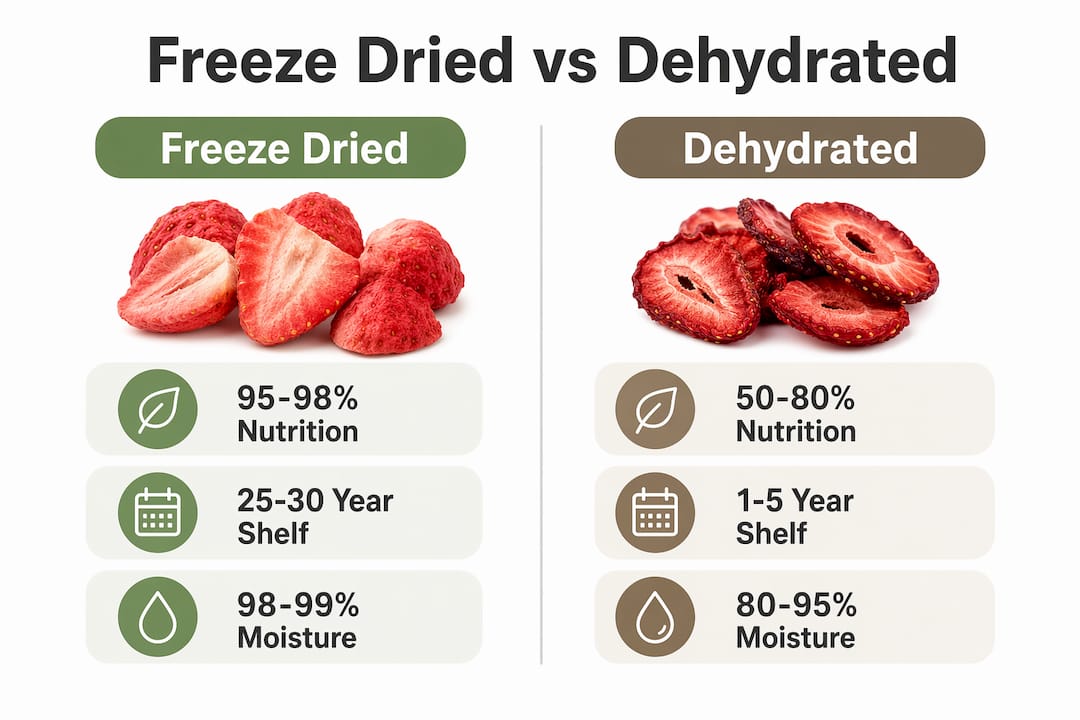
The difference between dehydrated and freeze dried foods comes down to one thing: how moisture is removed. Freeze drying uses sublimation at sub-zero temperatures to pull out 98–99% of water, leaving just 1–3% residual moisture. Dehydration applies heat between 95°F and 165°F to evaporate 80–95% of moisture, leaving 5–10% behind. That gap in moisture removal drives every downstream difference you care about: nutrition, shelf life, texture, and cost. Freeze dried foods can last 25–30 years under proper conditions; dehydrated foods typically last 1–5 years. Knowing which method fits your goals saves you money and keeps your food actually worth eating.
What is the difference between dehydrated and freeze dried foods technically?
The freeze drying process and the dehydration process are fundamentally different in temperature, mechanism, and outcome.
Freeze drying works in three stages:
- Freezing: Food is frozen solid, typically to around -40°F.
- Primary drying: The frozen food goes into a vacuum chamber. Pressure drops so low that ice converts directly to vapor without ever becoming liquid. This is sublimation.
- Secondary drying: Residual bound moisture is pulled out, leaving 1–3% moisture in the final product.
The cellular structure of the food stays intact throughout. No heat, no collapse, no shrinkage. The result is a product that looks almost identical to fresh food, just lighter and crispier.
Dehydration works differently:
- Heat and airflow are applied continuously to the food surface.
- Water evaporates from the outside in.
- Cell walls collapse as moisture leaves, causing the food to shrink and toughen.
- Residual moisture sits at 5–10%, which is meaningfully higher than freeze dried.
Dehydration methods range from simple sun drying and oven drying to electric food dehydrators with temperature controls. The process is faster and cheaper, but the cellular damage is real and affects everything from texture to nutrition.
Pro Tip: If you are dehydrating at home, keep temperatures below 135°F for fruits and vegetables to reduce vitamin loss. Higher heat speeds drying but destroys more nutrients.
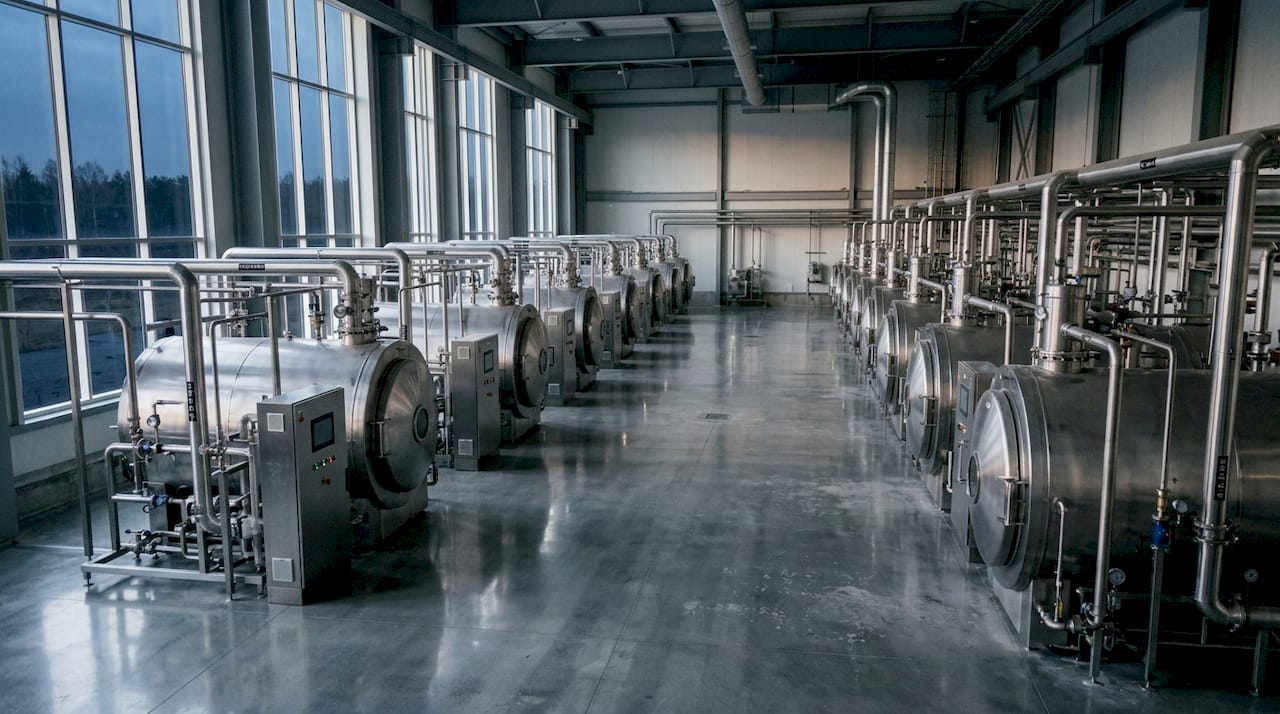
The freeze drying process takes significantly longer, often 20–40 hours per batch, compared to 6–12 hours for most dehydrators. That time difference is one reason freeze drying equipment costs so much more.
What are the nutritional differences between dehydrated and freeze dried foods?
Freeze dried foods retain 95–98% of their nutrient profile, including heat-sensitive vitamins like Vitamin C and the B vitamin group. Dehydrated foods retain 50–80%, with the biggest losses in those same heat-sensitive nutrients. That is not a small gap. If you are storing food for nutrition as much as calories, the method matters a lot.
| Nutrient | Freeze dried retention | Dehydrated retention |
|---|---|---|
| Vitamin C | ~90% | 50–60% |
| B vitamins | High | Moderate to low |
| Minerals (iron, calcium) | Stable | Stable |
| Antioxidants | Well preserved | Partially degraded |
| Overall nutrient profile | 95–98% | 50–80% |
Minerals like iron and calcium survive both processes well because they are not heat-sensitive. The real losses in dehydration come from vitamins that break down under sustained heat exposure. Vitamin C is the most dramatic example, dropping to 50–60% retention compared to roughly 90% in freeze dried food.
This matters most for long-term food storage. If your dehydrated food sits for three years before you eat it, you are starting with lower nutrient levels and losing more over time. Freeze dried food starts higher and degrades more slowly.
Pro Tip: Freeze dried fruits like strawberries and blueberries are among the best options for retaining antioxidants. They also make excellent additions to cereals, yogurt, and trail mixes without any prep work.
The nutritional case for freeze drying extends beyond human food. Even in pet nutrition, the same principle holds: lower processing temperatures preserve more of what makes food nutritious.
How do shelf life and storage requirements differ?
Shelf life is where freeze drying pulls far ahead. Freeze dried foods last 25–30 years when stored with oxygen absorbers in a cool, dark environment. Dehydrated foods typically last 1–5 years under similar conditions. That is a significant difference for anyone building a long-term food supply.
A few factors drive this gap:
- Residual moisture: Lower moisture means less microbial activity and slower oxidation. Freeze dried food’s 1–3% residual moisture is far safer for long storage than dehydrated food’s 5–10%.
- Fat content: Fatty foods oxidize faster regardless of method. Freeze dried fatty items like meats realistically last 10–15 years, not 25–30. Low-fat produce hits the full range.
- Packaging: Both methods benefit from Mylar bags, vacuum sealing, and oxygen absorbers. Without proper packaging, shelf life drops sharply for both.
- Storage conditions: Heat and light accelerate degradation. A cool basement beats a warm pantry every time.
There is one nuance worth knowing about dehydrated foods. Low-fat grains and legumes dehydrated properly can last 8–15 years, which is much longer than the typical 1–5 year estimate. Dried lentils, rice, and wheat berries are good examples. Their low fat content reduces oxidation risk, and their low moisture content after drying keeps microbial growth in check.
For a deeper look at long-term freeze dried storage, the packaging and environment choices matter as much as the preservation method itself.
How do texture, rehydration, and flavor compare?
Freeze drying preserves cellular structure, which means the food keeps its original shape, volume, and color. When you add water back, freeze dried food rehydrates quickly and returns close to its fresh texture. Freeze dried strawberries, for example, are light and crispy straight from the bag, and they plump back up in minutes when rehydrated.
Dehydration collapses cell walls. The result is a chewier, denser product that does not rehydrate as fully. Here is how the sensory experience breaks down:
- Texture: Freeze dried foods are crisp and light. Dehydrated foods are chewy and leathery. Neither is wrong, but they suit different uses.
- Rehydration speed: Freeze dried foods rehydrate in 1–5 minutes. Dehydrated foods often need 15–30 minutes of soaking and may still feel tougher than fresh.
- Flavor: Freeze drying preserves original flavor with minimal change. Dehydration concentrates sugars as water leaves, which makes dehydrated fruits taste sweeter and sometimes more intense than fresh.
- Color: Freeze dried foods hold their original color well. Dehydrated foods often darken or dull during the heat process.
The concentrated sweetness of dehydrated fruit is actually a selling point for snacks like dried mango or apricots. The chewy texture works well for trail mix and on-the-go eating. Freeze dried foods shine in applications where you want the food to look and taste fresh after rehydration, like full meals or premium snack products.
How do cost and equipment requirements compare?
Cost is the clearest advantage dehydration holds. Home dehydrators run $60–$350, making them accessible for most households. Home freeze dryers cost $2,500–$4,500, which is a serious investment for personal use.
The gap does not stop at equipment:
- Energy use: Freeze dryers run for 20–40 hours per batch and require vacuum pumps, compressors, and heating elements. Energy and maintenance costs are significantly higher than for dehydrators.
- Processing time: Dehydrators finish most batches in 6–12 hours. Freeze dryers need 20–40 hours for the same volume.
- Commercial pricing: At retail, freeze dried products cost more per serving than dehydrated equivalents. That cost reflects the equipment, energy, and time involved in production.
- Maintenance: Freeze dryers require regular oil changes for vacuum pumps and careful monitoring. Dehydrators need little more than a wipe-down.
For most home users, dehydration is the practical starting point. The equipment cost difference alone makes freeze drying a commercial or serious prepper investment rather than a casual weekend project.
Key Takeaways
Freeze drying outperforms dehydration on nutrition, shelf life, and texture, but dehydration wins on cost and accessibility.
| Point | Details |
|---|---|
| Moisture removal gap | Freeze drying removes 98–99% of moisture; dehydration removes 80–95%, leaving more residual water. |
| Nutrition retention | Freeze dried foods retain 95–98% of nutrients; dehydrated foods retain 50–80%, with major vitamin losses. |
| Shelf life difference | Freeze dried foods last 25–30 years; dehydrated foods last 1–5 years under similar storage conditions. |
| Texture and rehydration | Freeze dried foods rehydrate quickly to near-fresh texture; dehydrated foods stay chewy and rehydrate slowly. |
| Cost and access | Home dehydrators cost $60–$350; home freeze dryers cost $2,500–$4,500, making dehydration far more accessible. |
Which method should you actually choose?
Here is my honest take after working closely with freeze dried food production: most people ask the wrong question. They want to know which method is “better,” but the real question is what you are trying to do with the food.
If you are making trail mix, dried herbs, or quick snacks for the next year or two, dehydration is the right call. It is affordable, fast, and the chewy texture works perfectly for those applications. Dried mango, jerky, and herb blends are genuinely better as dehydrated products. Trying to freeze dry them adds cost without adding value.
If you are building a long-term food supply, preserving full meals, or creating premium snack products where texture and nutrition matter, freeze drying is the clear choice. The shelf life advantage alone justifies the cost for serious preppers and commercial producers. And the nutrition retention is not a minor detail. Eating food that has retained 95% of its vitamins after 20 years of storage is meaningfully different from eating food that started at 60% retention.
The trend I find most interesting is the growth of home freeze drying. Prices for home units have dropped over the past decade, and more people are treating freeze drying as a realistic option rather than a commercial-only process. That shift is changing what consumers expect from preserved food, both in quality and in shelf life. The choice between methods will always depend on budget and goals, but the gap in accessibility is narrowing faster than most people realize.
— Chadi
Space-man’s freeze dried products and private label services
Space-man specializes in freeze dried candy manufacturing and distribution across Canada, with a full suite of private label and co-packing services for brands and retailers looking to bring freeze dried products to market.

Whether you are scaling an existing product line or launching something new, Space-man handles processing, bagging, and packaging with food safety and quality at the center of every run. The same freeze drying expertise that goes into Space-man’s own products is available to your brand. If you want to explore what a co-packing or private label partnership looks like, Space-man’s team is ready to talk specifics.
FAQ
What is the main difference between dehydrated and freeze dried foods?
Freeze drying removes 98–99% of moisture through sublimation at sub-zero temperatures, while dehydration removes 80–95% using heat. That difference drives better nutrition retention, longer shelf life, and superior texture in freeze dried products.
How long does freeze dried food last compared to dehydrated?
Freeze dried foods last 25–30 years with oxygen absorbers and proper storage. Dehydrated foods typically last 1–5 years, though low-fat grains and legumes can reach 8–15 years under ideal conditions.
Does freeze drying preserve more nutrients than dehydrating?
Freeze drying retains 95–98% of nutrients, including heat-sensitive vitamins like Vitamin C. Dehydration retains 50–80%, with the largest losses in vitamins that break down under sustained heat exposure.
Is freeze drying worth the cost for home use?
Home freeze dryers cost $2,500–$4,500 compared to $60–$350 for dehydrators. For most home users, dehydration is the practical choice unless long-term storage or maximum nutrition retention is the primary goal.
Can freeze dried and dehydrated foods be stored the same way?
Both benefit from Mylar bags, vacuum sealing, and oxygen absorbers in a cool, dark location. Freeze dried foods are more forgiving due to their lower residual moisture, but proper packaging extends the shelf life of both methods significantly.