

TL;DR:
- Freeze-drying removes almost all moisture from food, greatly extending shelf life and preserving nutrients and flavor. Dehydration is a simpler, more affordable method that results in shorter shelf life and lower nutrient retention but is practical for everyday use. Freeze-dried foods last up to 30 years, while dehydrated foods last only 1–5 years, making each method suitable for different preservation goals.
Freeze-drying and dehydration are defined by how they remove moisture from food, and that single difference determines shelf life, nutrition, texture, and cost. Dehydration uses heat and circulating air to evaporate water, leaving behind 5–10% residual moisture and a shelf life of 1–5 years. Freeze-drying removes 98–99% of moisture through sublimation at low temperatures, pushing shelf life to 25–30 years when sealed properly. If you have ever wondered what is the difference between dehydrated and freeze dried food and why it matters for your pantry or your cooking, the answer starts with those two numbers.
How do dehydration and freeze-drying work differently?
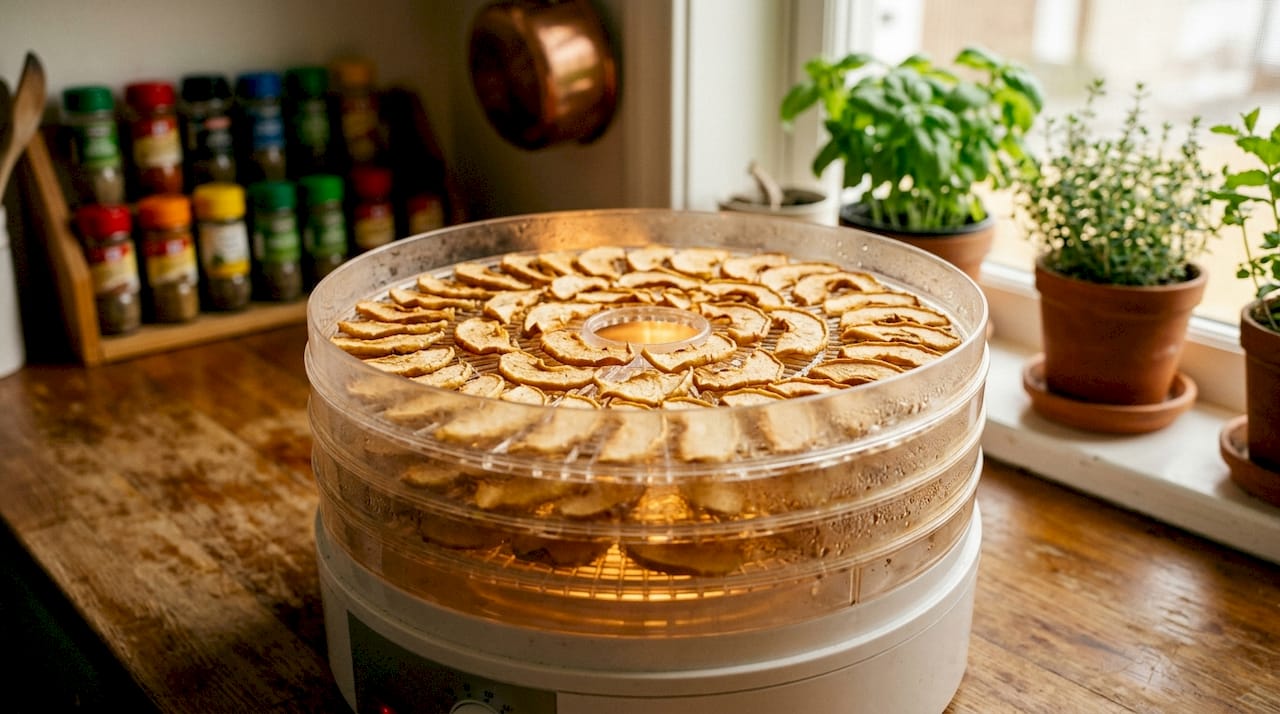
Dehydration is the older and simpler of the two methods. A dehydrator or conventional oven blows warm air across food at temperatures typically between 130°F and 160°F. That heat causes water molecules to evaporate from the surface outward. The process is slow, usually taking 6–12 hours, and the heat is what makes it accessible at home with a $60–$350 countertop dehydrator.
Freeze-drying is a three-phase industrial process: freezing, primary drying, and secondary drying. Food is first flash-frozen to very low temperatures, then placed in a vacuum chamber. In that vacuum, ice converts directly to vapor without passing through a liquid state. That conversion is called sublimation, and it is what makes freeze-drying so effective at preserving cellular structure, color, and flavor. Home freeze-dryers exist but cost $2,500–$4,500, which puts them out of reach for most casual cooks.
| Feature | Dehydration | Freeze-drying |
|---|---|---|
| Moisture removed | 80–95% | 98–99% |
| Residual moisture | 5–10% | 1–3% |
| Temperature used | 130°F–160°F | Sub-zero (freezing phase) |
| Home equipment cost | $60–$350 | $2,500–$4,500 |
| Typical processing time | 6–12 hours | 20–40 hours |
| Shelf life (sealed) | 1–5 years | 25–30 years |
Pro Tip: If you are dehydrating at home, slice food uniformly thin. Uneven slices dry at different rates, and thicker pieces can harbor enough residual moisture to cause mold even when the surface feels dry.
How do these methods affect shelf life, nutrition, and texture?
Shelf life is where the gap between the two methods becomes impossible to ignore. Dehydrated foods stored in airtight containers last 1–5 years. Freeze-dried foods sealed with oxygen absorbers can last 25–30 years. That difference is not just about moisture. Oxygen exposure also degrades food over time, which is why proper packaging matters as much as the drying method itself.
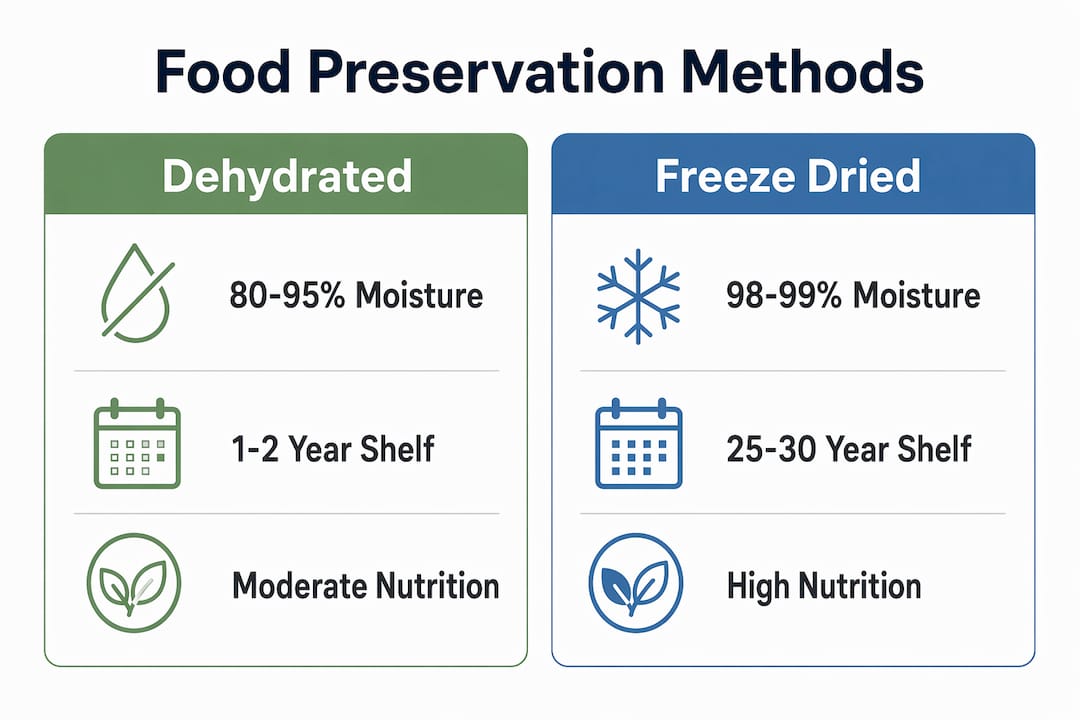
Nutrition tells a similar story. Freeze-drying preserves 90–98% of original vitamins and minerals, including heat-sensitive nutrients like vitamin C and vitamin A. Dehydration retains roughly 50–80% of those nutrients because heat degrades them during processing. For vitamin C specifically, freeze-dried food retains around 90% while dehydrated food retains closer to 50–60%. That gap matters most if you are relying on preserved food as a meaningful part of your diet.
Texture is the most noticeable difference in everyday use. Freeze-drying preserves cellular structure through sublimation, so food rehydrates close to its original form in just a few minutes. Dehydration collapses cell walls with heat, producing a denser, chewier result that never quite returns to its original texture even after soaking. Freeze-dried strawberries, for example, rehydrate into something that looks and tastes like a fresh strawberry. Dehydrated strawberries rehydrate into something that tastes good but chews more like leather.
Here is a quick breakdown of how the two methods compare across key quality factors:
- Vitamin C retention: ~90% freeze-dried vs. ~50–60% dehydrated
- Rehydration time: 2–5 minutes (freeze-dried) vs. 15–30 minutes (dehydrated)
- Texture after rehydration: Near-original (freeze-dried) vs. denser and chewier (dehydrated)
- Flavor intensity: Brighter and closer to fresh (freeze-dried) vs. concentrated and slightly altered (dehydrated)
- Color preservation: Minimal change (freeze-dried) vs. noticeable darkening (dehydrated)
Pro Tip: For freeze-dried foods, always store in sealed mylar bags with oxygen absorbers. Even a small amount of oxygen exposure can shorten shelf life significantly and cause fat oxidation in products that contain any dairy or oils.
What are the cost and practical trade-offs for each method?
Cost is the most practical reason most home preservers stick with dehydration. Commercially, freeze-dried food runs $8–$18 per serving while dehydrated food costs $1–$5 per serving. At home, the equipment gap is even more striking. A quality dehydrator costs under $350. A home freeze-dryer costs $2,500–$4,500 and requires more maintenance, more space, and significantly more energy per batch.
Freeze-drying also takes longer per cycle, typically 20–40 hours per batch, and the machines are loud and large. For someone preserving garden herbs or making beef jerky on weekends, a dehydrator is the practical choice. For someone building a 25-year emergency food supply or running a food business that needs maximum nutrient retention, freeze-drying is worth the investment.
Here is a side-by-side look at the pros and cons of each method:
Dehydration pros:
- Affordable equipment ($60–$350)
- Simple to operate with minimal learning curve
- Great for herbs, jerky, fruit leathers, and dried vegetables
- Lower energy consumption per batch
Dehydration cons:
- Shorter shelf life (1–5 years)
- Lower nutrient retention due to heat
- Texture changes significantly after rehydration
- Not suitable for dairy, eggs, or full cooked meals
Freeze-drying pros:
- Exceptional shelf life (25–30 years sealed)
- Superior nutrient retention (90–98%)
- Rehydrates close to original texture and flavor
- Handles dairy, eggs, and full meals well
Freeze-drying cons:
- High equipment cost ($2,500–$4,500 for home units)
- Long processing cycles (20–40 hours)
- Higher energy use and maintenance requirements
- Commercial freeze-dried products cost significantly more per serving
Which foods work better with each method?
Not every food responds the same way to each preservation technique. High-fat foods are the trickiest for both methods because fat oxidizes over time and causes rancidity. Freeze-drying handles dairy and eggs better than dehydration because the low-temperature process slows oxidation. Dehydration struggles with high-fat foods and is not recommended for cheese, butter, or whole eggs.
Foods that work best with dehydration:
- Herbs and spices: Basil, oregano, and rosemary dehydrate beautifully and retain strong flavor
- Jerky: Beef, turkey, and salmon jerky are classic dehydration products
- Fruit leathers: Pureed fruit spreads dry into a chewy, shelf-stable snack
- Sliced vegetables: Zucchini, mushrooms, and tomatoes dehydrate well for soups and stews
Foods that work best with freeze-drying:
- Full cooked meals: Soups, stews, and casseroles retain flavor and texture far better
- Dairy products: Milk, cheese, and yogurt freeze-dry without the fat oxidation issues
- Delicate fruits: Raspberries, blueberries, and strawberries keep their shape and taste
- Eggs: Scrambled eggs freeze-dry well and rehydrate into something genuinely edible
One food safety note worth flagging: freeze-drying places bacteria in suspended animation but does not kill them. Meats and eggs must be cooked before or after freeze-drying to prevent foodborne illness. This is a common misconception among first-time home freeze-dryers.
Key Takeaways
Freeze-drying outperforms dehydration on shelf life, nutrition, and texture, but dehydration wins on cost and everyday practicality for most home cooks.
| Point | Details |
|---|---|
| Moisture removal gap | Freeze-drying removes 98–99% moisture; dehydration removes 80–95%, leaving more residual water. |
| Shelf life difference | Freeze-dried food lasts 25–30 years sealed; dehydrated food lasts 1–5 years in ideal conditions. |
| Nutrient retention | Freeze-drying preserves 90–98% of vitamins; dehydration retains 50–80% due to heat degradation. |
| Cost reality | Home dehydrators cost $60–$350; home freeze-dryers cost $2,500–$4,500 with higher energy use. |
| Best food matches | Use dehydration for jerky, herbs, and fruit leathers; use freeze-drying for dairy, eggs, and full meals. |
My honest take on the dehydrated vs. freeze dried debate
I have spent a lot of time around both methods, and the honest truth is that most people overcomplicate this decision. The internet makes freeze-drying sound like the only serious option, and dehydration sounds like something your grandmother did with apple slices. Neither framing is accurate.
Freeze-drying is genuinely superior on the metrics that matter most: nutrition, shelf life, and texture after rehydration. But superior does not mean necessary for every situation. If you are making trail mix, drying herbs from your garden, or producing jerky for the next few months, a dehydrator does the job well and costs a fraction of the price. The dehydrated vs freeze dried question only has one right answer when you define your actual goal first.
What I see people get wrong most often is assuming freeze-dried food is automatically safe to eat without any preparation. Freeze-drying preserves food. It does not sanitize it. Raw meat and eggs still need to be cooked. That is a food safety fundamental that gets lost in the excitement over 25-year shelf life claims.
My practical advice: use dehydration for everyday preservation and budget-conscious projects. Use freeze-drying, or buy professionally freeze-dried products, when you need maximum nutrition, long-term storage, or high-quality rehydration. The two methods are not competitors. They are tools for different jobs.
— Chadi
Space-man’s freeze-dried products and private label services
Space-man specializes in freeze-dried products made with the quality and consistency that home methods rarely match. Whether you are a culinary enthusiast looking to stock up or a business exploring private label co-packing services, Space-man offers professional-grade freeze-dried options built for both retail and wholesale.

The freeze-drying process Space-man uses preserves the cellular structure, flavor, and nutrition that dehydration simply cannot replicate at scale. From freeze-dried candy to full packaging and distribution support across Canada, Space-man handles the complexity so you do not have to. If you want to experience what properly freeze-dried food actually tastes like, the 10-pack candy bundle is a great place to start.
FAQ
What is the main difference between dehydrated and freeze-dried food?
Dehydration uses heat to remove 80–95% of moisture, while freeze-drying uses sublimation at low temperatures to remove 98–99%. That difference drives every other quality gap, including shelf life, nutrition, and texture.
Does freeze-dried food taste better than dehydrated food?
Freeze-dried food generally tastes closer to fresh because sublimation preserves cellular structure, flavor compounds, and color. Dehydrated food develops a more concentrated, chewier profile that works well for some products like jerky but not for delicate fruits or full meals.
How long does freeze-dried food last compared to dehydrated food?
Freeze-dried food sealed with oxygen absorbers lasts 25–30 years. Dehydrated food stored in airtight containers lasts 1–5 years. Proper packaging is critical for both methods to reach their maximum shelf life.
Is freeze-dried food safer than dehydrated food?
Neither method kills bacteria on its own. Freeze-drying places bacteria in suspended animation, so meats and eggs must be cooked before or after the process. Dehydration at proper temperatures can reduce some pathogens in jerky, but food safety practices apply to both methods equally.
Can you freeze-dry food at home?
Home freeze-dryers are available but cost $2,500–$4,500 and require significant space and maintenance. Home dehydrators cost $60–$350 and are far more practical for regular use. Most home cooks find that buying commercially freeze-dried products is more cost-effective than running a home freeze-dryer.