

TL;DR:
- A candy store business guide provides a detailed roadmap from planning to marketing, emphasizing the importance of a solid business plan and budget. Startup costs range from $75,000 to $250,000, with crucial focus on location, licensing, supplier relationships, and staged launch strategies. Success depends on thorough planning, operational readiness, effective store design, regulatory compliance, and building customer loyalty through marketing.
A candy store business guide is a step-by-step roadmap for launching a sweet-focused retail shop that attracts steady customers and generates real revenue. Opening a candy store is more structured than most people expect. ZenBusiness outlines 10 steps covering everything from concept development to hiring, and skipping any one of them tends to cost you later. This guide walks you through each phase: business planning, budgeting, location, licensing, supplier sourcing, and marketing. Whether you are starting a candy shop from scratch or converting an existing space, every decision you make before opening day shapes your odds of success.
What are the critical components of a candy store business plan?
A business plan is the document that turns a vague idea into a concrete set of decisions. Toast POS emphasizes that a strong candy store plan must define your concept, identify your target customer, map your product mix, and project revenue before you spend a single dollar on build-out. Without it, you are guessing on every major call.
Your plan should answer five core questions clearly:
- Concept and brand identity: What kind of candy store are you? Nostalgic bulk candy, premium artisan chocolates, specialty freeze-dried treats, or a mix?
- Target customer: Families with kids, teens, tourists, corporate gift buyers? Each group requires a different product mix and price point.
- Product selection: Which categories will anchor your shelves? Which seasonal items will rotate in and out?
- Store ambiance: Bright and playful? Sophisticated and gift-focused? Your design should match your brand promise.
- Revenue projections: Estimate average transaction size, daily foot traffic, and monthly sales targets based on your location research.
The plan also serves a second audience: lenders and investors. A well-structured plan with realistic numbers signals that you understand the business, not just the candy. If you are building a candy brand in Canada, the plan is also where you document your competitive positioning against existing local shops.
Pro Tip: Write your business plan before you sign any lease. Location costs are your biggest fixed expense, and your plan should tell you what revenue you need to cover them before you commit.
How to budget and fund your candy store startup
Startup costs for a candy store are higher than most first-time owners anticipate. DojoBusiness benchmarks typical startup capital at $75,000 to $250,000, excluding property purchase. That range reflects real variation in store size, location, and build-out complexity.
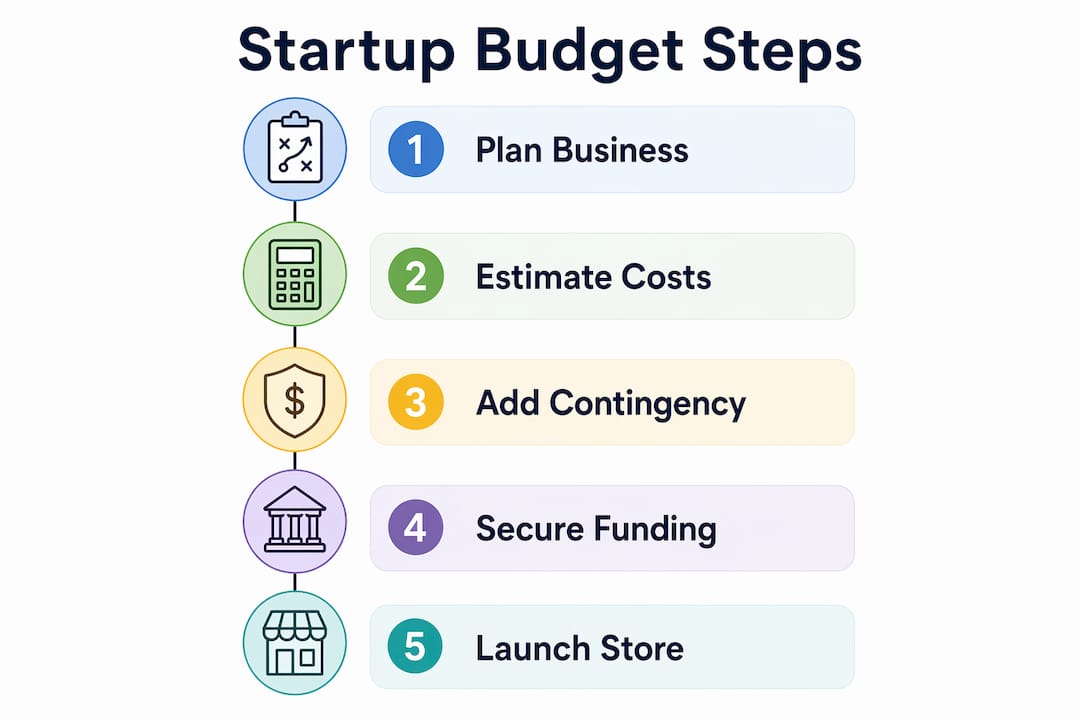
Here is a breakdown of the major expense categories you need to plan for:
| Expense Category | Estimated Range |
|---|---|
| Store build-out and fixtures | $20,000–$80,000 |
| Initial inventory | $10,000–$30,000 |
| Equipment (display cases, POS) | $5,000–$20,000 |
| Legal, permits, and licenses | $1,000–$5,000 |
| Marketing and signage | $2,000–$10,000 |
| Working capital (2–4 months) | $15,000–$50,000 |
Working capital is the line item most new owners underestimate. WebstaurantStore advises budgeting a 2–4 month operational runway after opening to cover rent, payroll, and reorder cycles before you hit break-even. That buffer is not optional. It is what keeps you open when sales in month one are slower than projected.
Funding options worth exploring include:
- Small business loans through your bank or a credit union
- Canada Small Business Financing Program (CSBFP) for eligible Canadian entrepreneurs
- Personal savings combined with a line of credit
- Friends and family investment with a formal written agreement
Pro Tip: Add a 15% contingency buffer on top of your total projected costs. Build-outs almost always run over, and inventory minimums from suppliers are often higher than the catalog suggests.
What factors influence choosing the right location and store design?
Location is the single biggest driver of foot traffic for a candy store, and foot traffic is your primary sales engine. Candy is largely an impulse purchase. Shoppers do not plan a trip to a candy store the way they plan a grocery run. They walk past, see something appealing, and walk in.
High-performing candy store locations share a few common traits:
- High pedestrian volume: Shopping malls, tourist districts, downtown retail corridors, and near schools or movie theaters all generate the walk-by traffic candy stores depend on.
- Visibility from the street: A store that is hard to see from the sidewalk loses impulse shoppers before they even notice you exist.
- Proximity to complementary businesses: Toy stores, gift shops, and family entertainment venues attract the same customer profile.
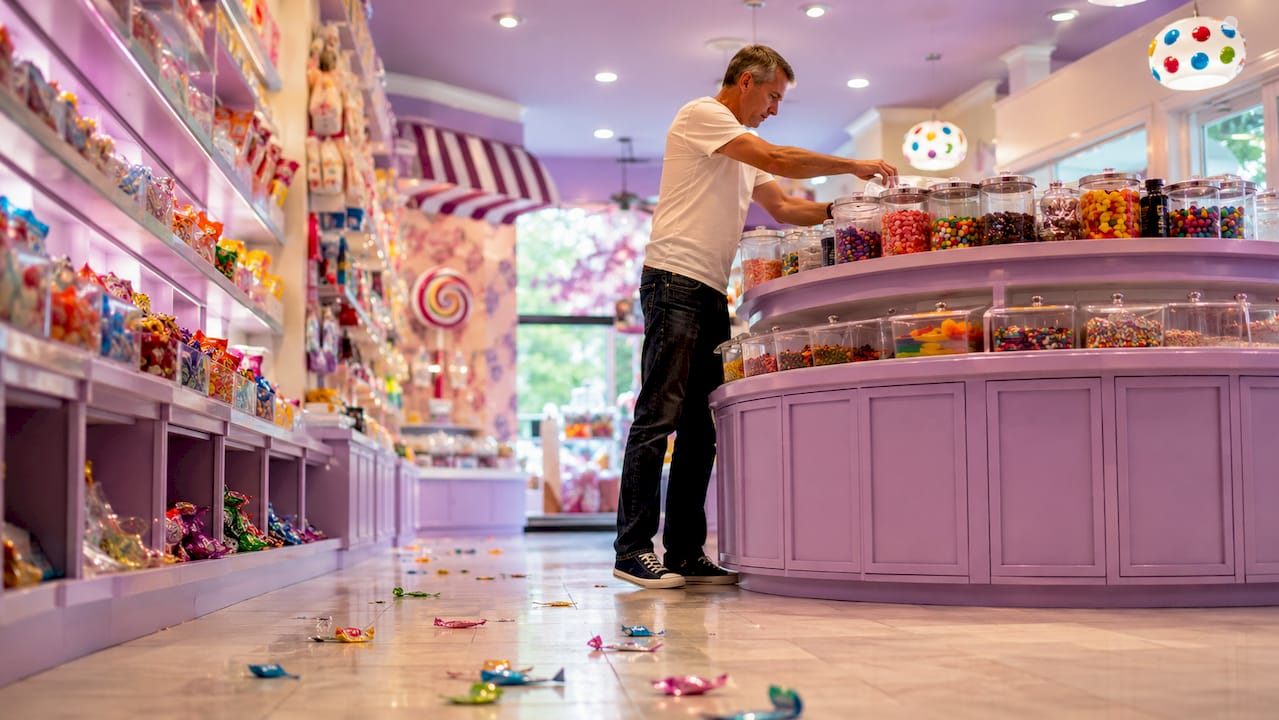
Store design is equally important once customers are inside. ZenBusiness highlights that bright, accessible impulse displays near checkout significantly increase conversion rates. Place your most visually striking products at eye level and near the register. Use clear bins, colorful signage, and good lighting to make the store feel like an experience rather than a transaction.
The experiential element matters more than most new owners realize. Stores that let customers scoop their own candy, smell fresh products, or interact with displays generate longer dwell times. Longer dwell times mean larger average purchases.
What legal permits and licenses must candy stores follow?
Regulatory compliance is not the exciting part of opening a candy store, but it is the part that can shut you down if you ignore it. Every candy store needs a baseline set of permits and licenses before opening day.
The core requirements include:
- Business license: Required by your city or municipality to operate legally.
- Food handler’s permit: Required for any business selling consumable products. Staff may need individual food safety certifications.
- Retail food establishment permit: Issued by your local health authority after an inspection of your store premises.
- GST/HST registration: Required in Canada once your revenue exceeds $30,000 annually.
Canadian candy stores face an additional layer of compliance around product labeling. Canadian food labeling regulations effective january 1, 2026 require priority allergen declarations, nutrition facts panels, and front-of-package warning symbols for products high in saturated fat, sugar, or sodium. These rules apply to packaged goods you sell under your own brand or private label.
Treat labeling as a compliance project, not a design task. The candy packaging regulations in Canada are detailed and specific. Getting them wrong can result in product recalls or fines. Build your label review process into your pre-launch checklist, not as an afterthought.
How to build supplier relationships and manage candy inventory
Choosing the right suppliers is one of the most consequential decisions you make when starting a candy shop. A reliable supplier keeps your shelves full, delivers on time, and gives you competitive pricing as your volume grows. An unreliable one creates stockouts, customer complaints, and margin problems.
The table below compares two common supplier approaches for new candy stores:
| Supplier Type | Advantages | Considerations |
|---|---|---|
| Wholesale distributor | Wide product range, single invoice | Less flexibility on minimums, less direct relationship |
| Direct manufacturer | Better pricing at volume, private label options | Higher minimums, longer lead times |
The smartest approach for most new stores is to start with one or two wholesale distributors for your core product range, then build direct manufacturer relationships for your specialty or private label items as volume grows. Space-man, for example, offers bulk candy sourcing options alongside private label and co-packing services, which gives new retailers a single source for both branded and custom-labeled freeze-dried candy products.
Inventory management is the other half of this equation. Overstock ties up cash and creates waste, especially with seasonal items. Understock loses sales and frustrates customers. Track your sell-through rate by product category from week one. Reorder based on data, not gut feel. For selecting candy suppliers that fit your store’s product mix, prioritize suppliers who offer flexible minimums and consistent lead times over those with the lowest unit price.
How to market and successfully launch your candy store
Marketing a new candy store is a two-phase process: build awareness before you open, then convert that awareness into loyal customers after you do.
- Pre-launch social media: Post behind-the-scenes content of your build-out, product arrivals, and store setup on Instagram and TikTok. Candy is visually compelling content. Use it.
- Local partnerships: Connect with nearby businesses, schools, and event organizers. Offer to provide candy for local events in exchange for promotion.
- Soft opening: Run a limited opening with friends, family, and a small invited audience before your public launch. This tests your operations, trains your staff, and surfaces problems before they happen in front of a crowd.
- Grand opening event: WebstaurantStore recommends a staged launch where the soft opening builds operational readiness and the grand opening generates marketing impact through special deals, events, and promotions.
- Loyalty program: Set up a simple points-based reward system from day one. Repeat customers are significantly more profitable than one-time visitors.
Effective launch marketing combines local events, social media presence, and promotions to drive early sales and build a customer base that returns. The grand opening is not just a party. It is your first major revenue day and your first impression on the neighborhood.
Pro Tip: Do not announce your grand opening date until your permits are confirmed, your staff is trained, and your shelves are fully stocked. Operational readiness must come before marketing hype.
Key takeaways
A successful candy store launch requires a written business plan, realistic startup budgeting of $75,000–$250,000, regulatory compliance, reliable suppliers, and a staged marketing launch.
| Point | Details |
|---|---|
| Business plan first | Define your concept, target customer, and revenue projections before signing a lease. |
| Budget for the full runway | Plan for $75,000–$250,000 in startup costs plus 2–4 months of working capital. |
| Compliance is non-negotiable | Secure all permits and meet 2026 Canadian labeling requirements before opening. |
| Supplier relationships drive margins | Start with distributors, then build direct manufacturer relationships as volume grows. |
| Stage your launch | Use a soft opening to fix operations, then a grand opening to generate buzz and sales. |
What i have learned about opening a candy store the right way
Most people who want to open a candy store underestimate the business plan. They treat it as a formality to satisfy a bank, write something generic, and move on. That is a mistake I have seen play out repeatedly. The business plan is where you discover whether your concept actually makes financial sense before you spend $100,000 finding out the hard way.
The soft opening phase is the other thing I feel strongly about. New store owners are eager to go big immediately. The grand opening feels like the moment. But the soft opening is where you learn whether your checkout flow works, whether your staff can handle a rush, and whether your display placement actually drives impulse purchases the way you planned. Those lessons are worth more than any opening-day promotion.
Store design also gets underestimated as a revenue driver. Bright displays near the register are not just aesthetic choices. They are sales tools. The stores that get this right from day one consistently outperform those that treat layout as an afterthought. If you are adding freeze-dried candy to your product mix, which is a smart move given current consumer interest in novelty textures, make sure it has prominent placement. It photographs well, it generates social media content organically, and it commands a higher price point than traditional bulk candy.
The entrepreneurs who succeed in this space are the ones who plan thoroughly, launch carefully, and treat customer experience as their primary competitive advantage.
— Chadi
How Space-man can help you stock and brand your candy store
Opening a candy store means solving two problems at once: finding products that sell and getting them packaged in a way that looks professional on your shelves. Space-man handles both.

Space-man is a Canadian freeze-dried candy manufacturer and distributor offering private label and co-packing services designed specifically for retailers and entrepreneurs launching new candy lines. Whether you want to carry Space-man’s branded freeze-dried candy or create your own labeled product, the production and packaging infrastructure is already in place. For new stores ready to outfit their shelves quickly, the freeze-dried candy starter pack offers 40 bags of variety product with no complex minimums. It is a practical first step for any candy retailer looking to add a high-margin specialty category from day one.
FAQ
What does a candy store business guide cover?
A candy store business guide covers the full launch process including business planning, budgeting, location selection, licensing, supplier sourcing, and marketing. It gives aspiring owners a structured path from concept to opening day.
How much does it cost to open a candy store?
Startup costs typically range from $75,000 to $250,000 excluding property purchase, plus 2–4 months of working capital to cover operations until break-even.
What licenses do i need to open a candy store in canada?
You need a municipal business license, a retail food establishment permit, a food handler’s certification, and GST/HST registration once revenue exceeds $30,000. Canadian stores selling packaged goods must also meet 2026 labeling requirements.
What are the best suppliers for a candy shop?
The best suppliers for a candy shop depend on your product mix. Start with wholesale distributors for variety and volume, then add direct manufacturer relationships for specialty or private label candy products as your store grows.
What is the difference between a soft opening and a grand opening?
A soft opening tests your operations with a limited audience before your public launch. A grand opening is a marketing event designed to attract large crowds through promotions and special deals, and it works best after operations are already running smoothly.