

A white label company manufactures a product and hands it over to another business to sell under its own brand name, with no mention of who actually made it. Think of the store-brand cereal that tastes suspiciously like the national brand, the “smart” gadgets sold under a dozen different logos, or the payment processing card your bank slaps its name on when another company runs the actual transactions behind the scenes. Wikipedia’s entry on white label products frames it simply: one company produces, another company markets.
A few everyday examples make this click fast:
- Grocery store brands (the manufacturer stays invisible, the retailer’s logo goes on the box)
- White-label software that agencies resell as their own “proprietary” platform
- Co-branded credit cards issued by a partner bank you’ve never heard of
TL;DR:
- Profitability with white-label products relies heavily on branding, packaging, and customer perception, since the base product is easily replicable across competitors.
- Reordering terms, quality certifications, and ownership of formulations should be clarified upfront to prevent hidden costs and legal disputes.
- Speed to market is a clear advantage of white labeling, but long-term exclusivity and margin control favor private labeling with custom formulations.
- Ongoing manufacturer relationship management and active quality control are essential for maintaining product consistency and brand reputation.
- Effective white-label brands focus on premium packaging, targeted niche marketing, and strong customer engagement to differentiate in a crowded space.
Table of Contents
- What Is White Labeling and How Does the Process Actually Work?
- Concrete Examples and Industries That Lean on White-Label Companies
- White Label vs. Private Label: Which Fits Your Goal?
- The Real Trade-Offs: Benefits and Drawbacks of White Labeling
- How to Vet a White-Label Manufacturer Before You Sign Anything
- How to Start Selling a White-Label Product: An Action Plan
- Legal Considerations and Contracts in White Label Agreements
- Does White Labeling Hurt or Help Your Brand Identity?
- Common Marketing Strategies for White Label Products
- How to Scale a White-Label Business Without Losing Control
- What Successful White-Label Brands Have in Common
- Key Takeaways
- Sources
What Is White Labeling and How Does the Process Actually Work?
White labeling runs on a fairly predictable rhythm, and once you’ve seen it once, you’ll spot it everywhere. A manufacturer already has a product built, tested, and ready to produce at scale. A brand comes along, picks a version of that product, slaps its own name and packaging on it, and sells it as if it built the thing from scratch. Nobody’s lying to anyone here. It’s just a division of labor that’s been standard practice in consumer goods for decades.
Here’s the typical flow from first contact to store shelf:
- Browse the manufacturer’s catalog and pick a SKU (or a few) that fits your brand.
- Request samples to check taste, quality, texture, or function against your standards.
- Negotiate MOQ and pricing — minimum order quantity, unit cost, and lead time all get locked in here.
- Handle branding and packaging — you design the label, box, or bag; the manufacturer usually handles the print run once you approve art files.
- Launch and reorder under agreed terms, often with pricing that improves as your order volume grows.
The manufacturer owns production, quality control at the factory level, and usually the base recipe or formulation. You own the brand story, the marketing, the customer relationship, and increasingly, the packaging design. Customization tends to stop at labels, packaging, and sometimes minor tweaks (a flavor variant, a color change). Full research and development, exclusive formulas, or proprietary tweaks usually require moving into private label or contract manufacturing territory instead, according to Who Makes’ breakdown of white label manufacturing.
Pro Tip: Ask about reorder terms before you sign anything. A great price on your initial order means nothing if the price jumps significantly on the next order.
Concrete Examples and Industries That Lean on White-Label Companies
You’ve bought white-label products more times than you realize. The category spans nearly every industry that values speed over ownership of the factory floor.
- Grocery store brands — identical formulas to name brands, sold cheaper because there’s no marketing budget baked into the price
- Consumer electronics — the same charger or Bluetooth speaker showing up under five different logos at five different price points
- White-label SaaS — agencies rebrand existing software platforms and resell them as their own tools
- Co-branded financial products — banks issue cards and even some loan products through partner institutions, a pattern Investopedia documents in detail
- Supplements and packaged food — co-packers handle formulation and production so brands can focus entirely on customer acquisition
Each industry picks white labeling for a different reason. Grocery chains want margin. Software agencies want speed. Financial institutions want compliance without building new infrastructure from zero.
White Label vs. Private Label: Which Fits Your Goal?
The distinction comes down to one word: exclusivity. A white-label product is generic and available to anyone who wants to buy it under their own name. A private-label product is built specifically for one brand, often with custom specs that no competitor can access, as The Motley Fool explains in its breakdown of private label products.
That difference cascades into everything else. With white label, you’re often competing against other brands selling the literal same item, which puts pressure on price rather than product. With private label, you control the formulation (within limits), and nobody else can undercut you on an identical SKU, because there isn’t one.
Here’s how the two stack up on the decisions that actually matter:
- Speed to market: White label wins, since the product already exists.
- Price competition: Private label offers more protection, because your SKU is exclusive.
- Upfront cost: White label is cheaper to start; private label usually requires higher minimums and development time.
- Legal/IP control: Private label gives you more ownership over formulation and recipe; white label rarely does.
If you want to test a market fast and cheap, white label makes sense. If you’re building a long-term brand around a specific product identity, private labeling usually serves you better.
The Real Trade-Offs: Benefits and Drawbacks of White Labeling
The pitch for white labeling is genuinely strong: lower startup costs, faster launch timelines, and access to manufacturing capacity you’d never afford to build yourself. Shopify’s guide to white label products points out that businesses can get to market fast precisely because they’re leaning on a manufacturer’s existing infrastructure instead of building a factory from scratch.
But the same features that make white labeling attractive also create its biggest risks:
- Identical competition — the exact product you’re selling might sit on a competitor’s shelf tomorrow, at a lower price
- Quality control depends on someone else — you’re trusting another company’s factory floor with your brand’s reputation
- Margins compress fast — when everyone’s selling the same base product, price becomes the only lever left, unless you differentiate
That last point deserves emphasis. Faster time-to-market is real, but so is the margin dependence that comes with it — profitability hinges far more on how you market and package the product than on the product itself, a pattern Shopify’s research on white label economics backs up directly. Brands that treat packaging, storytelling, and customer service as afterthoughts tend to get squeezed hardest, because there’s nothing stopping a rival from selling the identical item for a dollar less.
How to Vet a White-Label Manufacturer Before You Sign Anything
Choosing a manufacturer is where most new brand owners either set themselves up for a smooth five years or a painful six months. Ask these questions before you commit to anything:
- What’s your sample policy? Request a prototype, a production-line sample, and ideally a blind sample pulled at random, so you know what customers actually receive.
- What certifications can you show me? Food safety, quality audits, and third-party lab testing all matter, especially for anything ingestible — understanding food quality standards helps you know what to ask for.
- Will you allow a facility audit or provide transparency reports? A manufacturer that stonewalls this question is a red flag.
- What’s your MOQ, and does pricing improve with volume? Get this in writing before you assume anything.
- Do you offer packaging and co-packing services, or just raw product? Some manufacturers handle bagging and retail-ready packaging in-house, which saves you a separate vendor relationship.
- Who owns the recipe or formulation if we ever part ways? This question alone can save you a legal headache later.
Requesting a three-sample set and audit documentation isn’t paranoia. It’s standard due diligence that Who Makes recommends for anyone entering a manufacturing relationship, particularly in food or supplements.
Pro Tip: Treat your manufacturer like a member of your team, not a vendor you never talk to. The brands that get burned are usually the ones that went hands-off the moment the contract was signed.
A common mistake newer business owners make is assuming white labeling means “set it and forget it.” The brands that succeed treat quality control and manufacturer relationships as an active, ongoing job, not a one-time transaction.
Spaceman, as a Canadian freeze-dried candy manufacturer, handles this relationship for partners directly, offering private-label, co-packing, and bagging services so business owners aren’t left guessing about production standards.
How to Start Selling a White-Label Product: An Action Plan
- Pick your category and set a margin target before you even browse suppliers.
- Request samples from two or three manufacturers and test them against your standards.
- Order a small pilot run rather than committing to a full pallet on day one.
- Design packaging and set up your sales channel — a landing page, marketplace listing, or storefront.
- Launch, gather feedback, and iterate on packaging or positioning within your first 60 to 90 days.
Budget for samples, a modest pilot order, and packaging design as your three main upfront cost buckets. Most of that can be worked through in a few weeks if you move deliberately.
Legal Considerations and Contracts in White Label Agreements
A white label agreement isn’t just a purchase order with extra steps. It’s a contract that determines who owns what, who’s liable when something goes wrong, and how the relationship ends if it needs to.
At minimum, look for these terms spelled out clearly: product specifications (so quality doesn’t drift order to order), liability and indemnification clauses (who’s on the hook if a customer gets hurt or a product fails), intellectual property terms (you typically own your brand and packaging design, the manufacturer usually owns the base formulation), and exclusivity clauses, if any exist at all. Many white label deals are explicitly nonexclusive, meaning your manufacturer can sell that same base product to a dozen other brands simultaneously, and there’s often nothing in the contract stopping that.
Pay close attention to termination terms. What happens to existing inventory if you switch suppliers? Can you take your packaging design and formulation notes with you, or does the manufacturer retain rights? Confidentiality clauses matter too, particularly if you’re sharing sales data or customer insights during the relationship.
Certification and compliance responsibilities also need explicit assignment. If you’re selling food, supplements, or anything regulated, the contract should state clearly who handles labeling compliance, allergen disclosures, and safety testing. Assuming the manufacturer “handles all that” without it being written down is how brands end up blindsided by a recall they didn’t see coming.
None of this requires a legal team the size of a Fortune 500 company. It requires reading the contract before you sign it, and asking your manufacturer to clarify anything vague in writing.
Does White Labeling Hurt or Help Your Brand Identity?
Here’s the honest answer: it depends entirely on what you do after the product arrives at your door. A white-label product carries zero brand identity on its own.
Customers generally don’t care whether you manufactured a product yourself or sourced it from a specialist producer. What they care about is whether the product does what you promised, whether the unboxing feels premium, and whether your brand voice makes them trust you enough to buy again. A well-executed white-label brand can feel every bit as authentic and trustworthy as one that owns its own factory. A poorly executed one feels hollow fast, especially once a customer spots the identical item on a competitor’s shelf at half the price.
This is where a lot of new brand owners get nervous, worrying that “using someone else’s factory” makes them feel like a fraud. That worry is misplaced. Nearly every major consumer brand you trust uses contract manufacturers somewhere in its supply chain. The differentiator was never who ran the factory. It’s whether the brand built something customers actually want to associate with, through packaging, tone, and consistency. Get those right, and your customers will never think twice about where the product physically came from.
Common Marketing Strategies for White Label Products
Since the underlying product often isn’t unique, your marketing has to do the heavy lifting that R&D would normally handle. A few strategies consistently separate brands that thrive from brands that get squeezed on price.
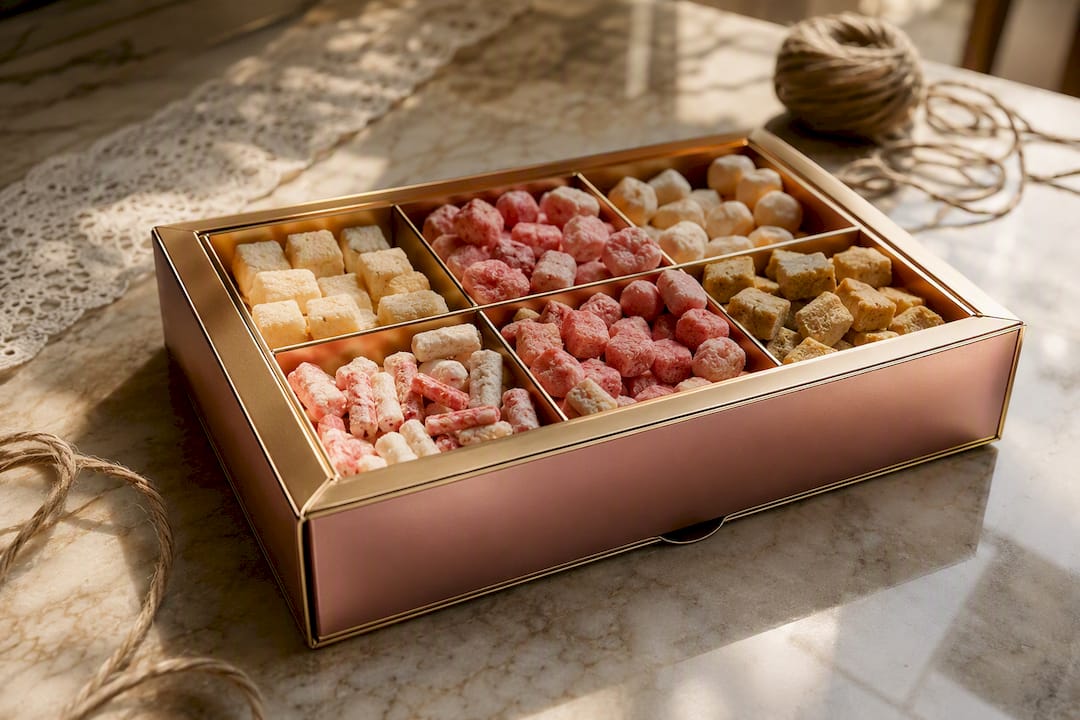
Brand-layering works well: combine a curated product selection, premium packaging, and a distinct brand story so customers see your version as meaningfully different, even when the base SKU is shared with competitors. This approach avoids the trap of pure price competition entirely.
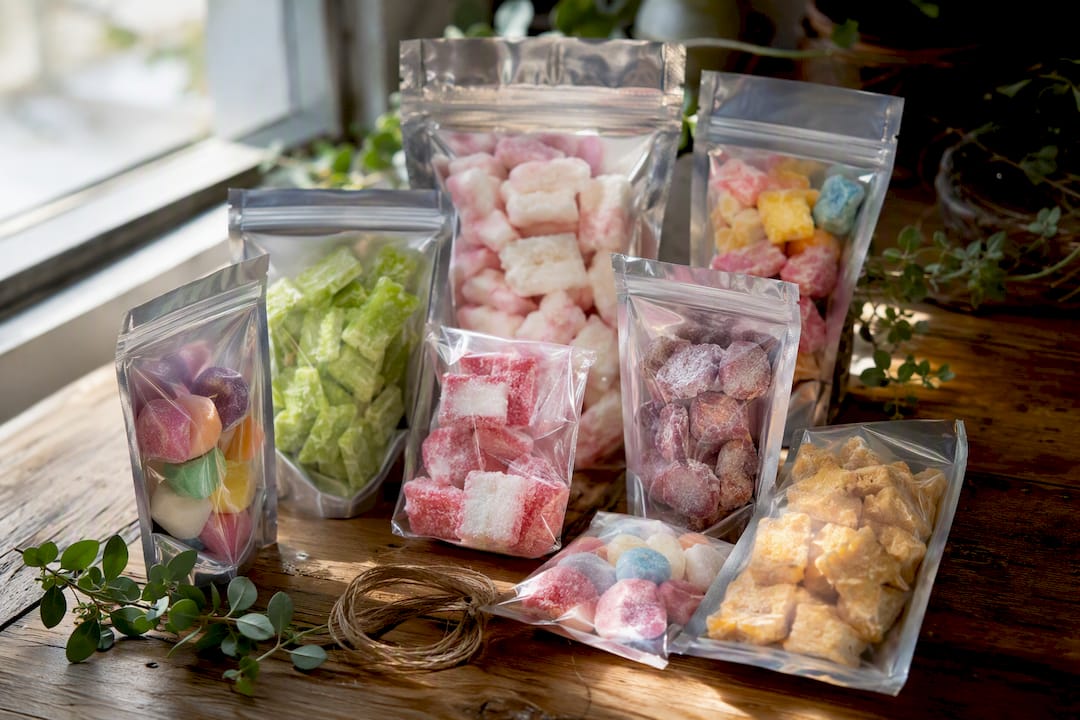
Niche targeting helps too. Instead of marketing a white-label supplement to “everyone who wants more energy,” a smart brand narrows in on a specific audience (competitive cyclists, new parents, night-shift workers) and builds messaging that speaks directly to that group’s actual problem.
Bundling and subscription models add perceived value without touching the product itself. A subscription box, a starter bundle, or a multi-pack deal changes the purchase decision from “is this the cheapest option” to “is this the most convenient option,” which sidesteps direct price comparison.
Content and storytelling consistently outperform generic product descriptions. Customers respond to founder stories, behind-the-scenes sourcing details, and clear “why we exist” messaging far more than a spec sheet ever converts them.
How to Scale a White-Label Business Without Losing Control
Scaling a white-label brand looks different from scaling a manufacturer, because your bottleneck usually isn’t production capacity. It’s brand consistency and cash flow.
Start by locking in your reorder terms early. As volume climbs, negotiate better per-unit pricing and longer production lead times so you’re not scrambling every time inventory runs low. Diversify slightly across product lines once your core SKU proves itself, since relying on a single item leaves you exposed if a competitor undercuts you or a supplier issue disrupts supply.
Build redundancy into your supplier relationships once volume justifies it. Having a backup manufacturer, even one you rarely use, protects you from a single point of failure that could otherwise stall your entire business overnight.
Reinvest in the parts of your brand that a competitor can’t easily copy: customer service quality, packaging upgrades, loyalty programs, and community building. These are the levers that keep customers loyal even as more white-label competitors enter your category.
What Successful White-Label Brands Have in Common
The brands that make white labeling work rarely have a secret ingredient or a proprietary formula. What they share is disciplined execution on the parts of the business they actually control.
Successful white-label operators typically invest early in packaging design that feels premium rather than generic, even when the product inside is available from other sellers. They build a specific audience rather than trying to appeal to everyone, and they treat customer service and post-purchase communication as a real differentiator rather than an afterthought. Several also diversify their manufacturer relationships early, avoiding total dependence on one factory before they’ve proven demand.
The common thread across brands that scale well: they never confuse the product with the business. The product is often interchangeable. The brand, the story, and the customer relationship are not, and that’s exactly where sustainable margin gets built.
A Quick Lesson From Working With Private-Label Clients
The biggest mistake we’ve seen isn’t picking the wrong manufacturer. It’s assuming quality control is someone else’s job entirely once the contract’s signed. The brands that thrive stay involved, ask questions, and treat their manufacturer like a partner worth checking in on regularly. Read more on the Spaceman blog.
— Chadi
Ready to Launch Your Own Private-Label Product?
Building a white-label or private-label snack brand usually means juggling three separate vendors: one for manufacturing, one for co-packing, and one for design. Spaceman collapses that into one relationship. As a Canadian freeze-dried candy, chocolate, and marshmallow manufacturer, we handle private labeling, co-packing, and bagging under one roof, so you’re not coordinating between three companies to get a finished product on shelves.
If you’re testing the waters, our 10-pack freeze-dried candy bundle shows exactly what our production quality looks like before you commit to a private-label run. When you’re ready to talk private labeling, co-packing, or retail-ready packaging, reach out through our private-label services page and get a quote for your pilot order.
Key Takeaways
A white-label company manufactures a product that another brand sells under its own name, and profitability depends on packaging, marketing, and differentiation, not the underlying product.
| Point | Details |
|---|---|
| Definition matters | A white-label company produces goods that another business brands and sells as its own. |
| Customization has limits | Expect label and packaging changes; full formulation control usually requires private labeling instead. |
| Differentiation drives margin | Since competitors can sell the same SKU, packaging and brand story determine your actual profit. |
| Vet manufacturers thoroughly | Request samples, certifications, and audit transparency before signing any contract. |
| Spaceman offers a direct path | Spaceman provides private-label, co-packing, and packaging services for brands ready to launch or scale. |
Sources
- White-label product - Wikipedia
- What Are White Label Products? - Shopify
- What Is a White Label Product, and How Does It Work? - Investopedia
- What Is White Label Manufacturing? - Who Makes