

Finding efficient ways to stand out in the Canadian snack market can feel like a challenge, especially as consumer demand for unique and shelf-stable foods continues to grow. With American trends showing that freeze dried snacks have doubled in popularity in recent years, Canadian small business owners are exploring this innovative method to add appeal and extend shelf life. In the following guide, you will discover how the right freeze drying process can help you produce premium snacks and achieve consistent quality for your customers.
Table of Contents
- Step 1: Select The Right Freeze Dryer For Your Needs
- Step 2: Prepare Foods Correctly For Optimal Results
- Step 3: Set Up And Operate The Freeze Dryer Safely
- Step 4: Monitor Progress And Adjust Settings As Needed
- Step 5: Verify Quality And Store Freeze Dried Foods Properly
Quick Summary
| Key Point | Explanation |
|---|---|
| 1. Assess Production Volume | Analyze your food production needs to determine the suitable freeze dryer size and capacity for your business. |
| 2. Ensure Proper Food Prep | Thoroughly wash, cut, and possibly blanch foods to maintain texture, flavor, and nutrition during freeze drying. |
| 3. Monitor Equipment Carefully | Track machine settings, temperature, and pressure to ensure optimal freeze drying conditions and results. |
| 4. Verify Quality Consistently | Check each batch for moisture levels and texture to assure high-quality final products before storage. |
| 5. Use Proper Storage Techniques | Employ high barrier packaging and store in cool, dark locations to extend the shelf life of freeze dried foods. |
Step 1: Select the Right Freeze Dryer for Your Needs
Choosing the right freeze dryer for your Canadian food business requires strategic planning and careful evaluation of your specific production needs. Understanding the key features and capabilities that match your operational scale will help you make an informed investment.
When selecting a freeze dryer, start by assessing your production volume and product characteristics. Freeze dryer technical specifications play a critical role in determining machine performance. Consider factors like total capacity, tray configuration, temperature range, and vacuum system efficiency. Smaller businesses might opt for compact units with 4-6 trays, while larger operations need industrial models capable of processing multiple batches simultaneously.
Electrical requirements and operational costs are equally important considerations. Some freeze dryers demand specialized electrical connections or three-phase power, which could impact installation expenses. Research models that offer energy efficiency and consistent performance to maximize your return on investment. Look for machines with robust warranties, reliable customer support, and proven track records in food processing applications.
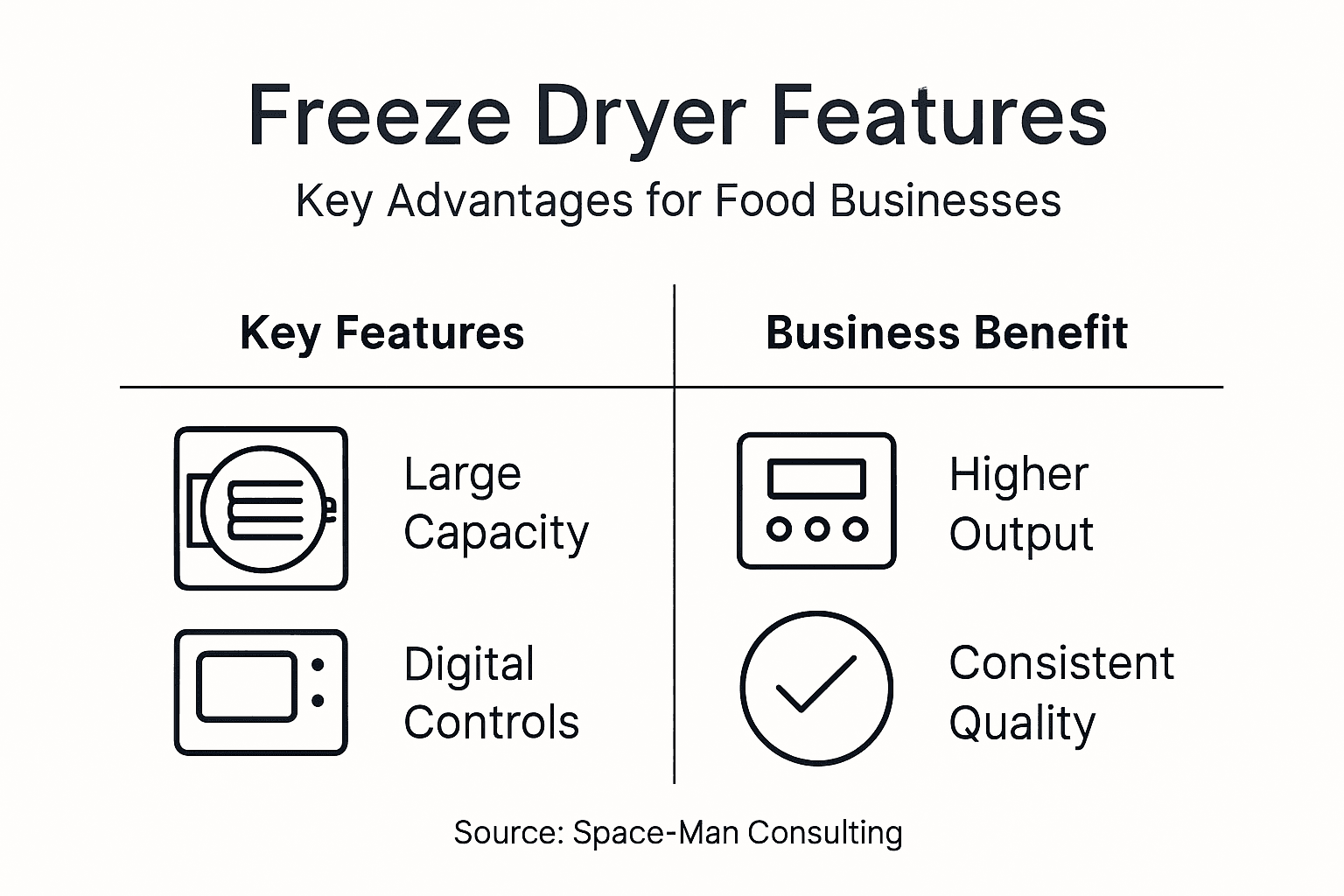
Here’s a summary of freeze dryer features and their practical impact on a food business:
| Feature | Description | Business Benefit |
|---|---|---|
| Tray Configuration | Number and size of trays per unit | Enables greater batch flexibility |
| Temperature Range | Minimum and maximum shelf temperatures | Supports a wider range of products |
| Vacuum System | Type and efficiency of vacuum pump | Lowers moisture levels faster |
| Power Requirements | Single or three-phase electrical setup | Impacts installation cost and safety |
| Warranty & Support | Length and quality of coverage | Reduces downtime and risk |
Pro Tip: Always request a demonstration or trial run with potential freeze dryers to assess real-world performance and compatibility with your specific food products.
Step 2: Prepare Foods Correctly for Optimal Results
Preparing foods for freeze drying is a critical step that directly impacts the quality and shelf life of your final product. Your preparation techniques will determine how well your foods maintain nutritional value, flavor, and texture during the preservation process.
Food preparation techniques are essential for successful freeze drying. Begin by thoroughly washing all produce to remove dirt and potential contaminants. For most fruits and vegetables, cutting them into uniform pieces approximately half an inch thick ensures consistent drying and helps prevent uneven moisture removal. Blanching certain vegetables like broccoli, cauliflower, and green beans before freeze drying can help preserve color, texture, and nutritional content by stopping enzyme activity that might degrade quality during storage.

Meat and protein products require special attention to food safety and preparation. Trim visible fat from meats and cut them into thin, consistent slices to facilitate efficient moisture extraction. Lean meats work best for freeze drying, as excess fat can become rancid during storage. Always start with fresh, high quality ingredients and avoid using previously frozen or damaged foods that might compromise your final product’s integrity.
This table compares preparation needs for different food categories:
| Food Type | Prep Requirement | Freeze Drying Challenge |
|---|---|---|
| Fruits & Veggies | Wash, cut uniformly, blanch some | Maintaining color and texture |
| Meat & Proteins | Trim fat, slice thin, hygienic prep | Avoiding spoilage, food safety |
| Herbs & Spices | Dry thoroughly, remove stems | Preserving aroma and potency |
Pro Tip: Use a sharp knife and cutting board dedicated exclusively to food preparation to maintain hygiene and prevent cross contamination during your freeze drying process.
Step 3: Set Up and Operate the Freeze Dryer Safely
Setting up and operating your freeze dryer safely is crucial for protecting your equipment, maintaining product quality, and ensuring a smooth production process. Proper setup will help you prevent potential accidents and maximize the efficiency of your freeze drying operations.
Freeze dryer safety protocols require careful consideration of your workspace and electrical requirements. Choose a dedicated area with stable temperature, good ventilation, and sufficient electrical supply. Avoid using extension cords and ensure the outlet can handle the machine’s power demands. Position your freeze dryer on a level, sturdy surface away from high traffic areas to minimize vibration and potential accidental damage.
The vacuum pump is a critical component that demands careful handling and maintenance. Always follow the manufacturer’s specific instructions for oil changes and maintenance schedules. Keep the area around the vacuum pump clean and well ventilated, and monitor noise levels to ensure the equipment is functioning correctly. Regularly inspect electrical connections, seals, and components for signs of wear or potential issues that could compromise safety or performance.
Pro Tip: Create a dedicated maintenance log to track your freeze dryer’s performance, oil changes, and any potential issues to proactively manage equipment health and prevent unexpected breakdowns.
Step 4: Monitor Progress and Adjust Settings as Needed
Successful freeze drying requires constant attention and strategic monitoring of your equipment and product throughout the entire process. Understanding how to track and adjust your machine settings will help you achieve consistent and high quality results every time.
Freeze drying process parameters demand careful observation across multiple stages. Pay close attention to shelf temperature, chamber pressure, and overall drying time. During the initial freezing phase, ensure your product reaches the appropriate temperature to create stable ice crystals. As you transition into primary drying, monitor vacuum pressure and gradually adjust shelf temperatures to facilitate efficient sublimation. The secondary drying phase requires precise temperature control to remove residual moisture without compromising product structure.
Different food types will require unique monitoring approaches. Fruits might need lower temperatures and shorter drying times compared to meat products. Develop a systematic tracking method that allows you to record temperature changes, pressure readings, and drying duration for each batch. This documentation will help you refine your process over time and create repeatable results that meet your business quality standards.
Pro Tip: Create a standardized tracking spreadsheet with columns for product type, initial settings, observed changes, and final outcomes to build a comprehensive reference guide for future freeze drying runs.
Step 5: Verify Quality and Store Freeze Dried Foods Properly
Ensuring the quality of your freeze dried products is crucial for maintaining customer satisfaction and building a reputable food preservation business. Thorough quality verification and proper storage will help you preserve the nutritional value and flavor of your products while extending their shelf life.
Food preservation techniques require meticulous attention to detail during the final inspection stage. Check each batch for consistent texture by gently pressing the freeze dried items. They should be crisp and brittle without any signs of softness or moisture. Evaluate the color and confirm that no discoloration or browning has occurred during the drying process. Perform moisture content testing using specialized equipment to ensure the products meet your established dryness standards.
Storage is equally critical for maintaining product quality. Select high barrier packaging like vacuum sealed Mylar bags with oxygen absorbers to prevent moisture and air exposure. Store your freeze dried foods in cool dark locations with temperatures below 75 degrees Fahrenheit and humidity levels under 15 percent. Label each package with production date and recommended consumption timeline. Proper packaging and storage will help your freeze dried products maintain optimal quality for 25 years or more.
Pro Tip: Invest in a small batch tracking system that allows you to record precise drying conditions and quality metrics for each production run to continuously improve your freeze drying process.
Elevate Your Freeze Drying Business with Expert Candy Manufacturing and Packaging
Navigating the complexities of selecting the right freeze dryer and perfecting food preparation can be overwhelming. This article breaks down the challenges of optimizing freeze drying—from machine setup to quality control—to help your Canadian food business thrive. If you aim to overcome operational hurdles like precise temperature management or maintaining product quality during storage, partnering with a specialist can transform your process and propel your success.

At Space-Man, we specialize in freeze dried candy manufacturing and distribution across Canada offering private labeling, co-packing, and packaging services tailored exactly to your product needs. Our experienced team ensures your goods meet the highest quality standards with the consistency and shelf life your customers expect. Don’t let technical obstacles slow you down. Visit us now at https://space-man.ca and discover how our solutions bring your freeze drying vision to life.
Explore how our services enhance your production efficiency and product appeal today by visiting Space-Man Services and making your freeze dried food business future ready.
Frequently Asked Questions
What factors should I consider when selecting a freeze dryer for my food business?
Choosing the right freeze dryer involves evaluating your production volume, product characteristics, and key technical specifications. Assess features like tray configuration and vacuum system efficiency to ensure the machine aligns with your operational needs.
How can I prepare foods correctly for freeze drying to ensure quality?
To prepare foods effectively for freeze drying, wash all produce, cut them into uniform pieces, and consider blanching some vegetables. This process helps maintain color and texture, which are crucial for high-quality freeze-dried products.
What safety measures should I take when setting up my freeze dryer?
Ensure your freeze dryer is placed in a dedicated area with stable temperature and good ventilation. Use a sturdy surface, avoid extension cords, and regularly inspect electrical connections to maintain safe operation and prevent accidents.
How do I monitor the freeze drying process to achieve consistent results?
Track parameters such as shelf temperature, chamber pressure, and drying time throughout the freeze drying stages. Develop a systematic method to document these settings, which will help ensure consistent quality and identify areas for improvement.
What steps should I follow to verify the quality of freeze-dried products?
Check each batch for a crisp texture and consistent color, confirming that there are no signs of moisture or discoloration. Perform moisture content testing to ensure the products meet your established dryness standards before packaging.
How should I store freeze-dried foods to maximize shelf life?
Use high barrier packaging like vacuum-sealed bags with oxygen absorbers and store them in a cool, dark location. Aim for temperatures below 75 degrees Fahrenheit and humidity levels under 15 percent to preserve quality for up to 25 years or more.