

TL;DR:
- The freeze-dried snack market has expanded rapidly, offering visually appealing, flavorful, and lightweight products. Not all foods are suitable for freeze-drying, especially high-fat, oily, or high-sugar items, which can compromise quality and safety. Proper packaging, presentation, and product selection are essential for retail success and long-term customer loyalty.
If you think freeze-dried foods are just astronaut fruit pouches and emergency rations, you’re leaving serious shelf space and margin on the table. The freeze-dried snack and candy category has exploded across North American retail in the past few years, drawing in curious shoppers who want crunch, intensity, and novelty all in one bite. For Canadian store owners looking to freshen up their snack aisle or online catalog, understanding exactly which products work and which ones flop is the difference between a fast-moving best-seller and a sticky, disappointing mess nobody buys twice.
Table of Contents
- Freeze-drying basics: How it works and why it matters for retail
- What products can be freeze-dried? A category-by-category guide
- Foods that should NOT be freeze-dried: Pitfalls to avoid
- Packaging and shelf life: How to keep freeze-dried products fresh and safe
- What most retailers get wrong about freeze-dried snacks and how to stand out
- Ready to add freeze-dried snacks to your retail lineup?
- Frequently asked questions
Key Takeaways
| Point | Details |
|---|---|
| Freeze-drying expands options | Retailers can offer a wide range of snacks, from fruits to candies, by freeze-drying. |
| Not everything works | Foods high in fat or with unsafe ingredients should not be freeze-dried for retail. |
| Packaging is critical | Moisture-proof packaging is essential to maintain quality and shelf-life of freeze-dried goods. |
| Consumer education sells | Retailers who educate customers about freeze-dried treats stand out and sell more. |
Freeze-drying basics: How it works and why it matters for retail
With the surprising popularity of freeze-dried snacks, let’s break down what freeze-drying really means for your inventory.
Freeze-drying is a four-stage process: freeze the product solid, place it in a vacuum chamber, allow the ice inside the food to sublimate directly into vapor (skipping the liquid stage entirely), and then finish with a secondary drying phase that drives residual moisture down to near zero. As freeze-drying explained in detail, this process preserves flavor compounds and structure far better than conventional drying methods.
The result is remarkable from a retail standpoint. Freeze-dried treats are:
- Lightweight for low shipping costs, especially for e-commerce orders
- Shelf-stable for months or even years when properly packaged
- Crunchy and airy with a texture customers genuinely cannot stop talking about
- Visually distinctive, often puffed up and larger than the original product
- Intensely flavored because the water is removed but the flavor molecules stay
That dramatic transformation is what makes freeze-dried candy such a strong impulse buy. Customers pick it up because it looks weird and interesting. They buy it again because the crunch and flavor concentration are genuinely surprising.
From a processing standpoint, a standard freeze-drying cycle can take anywhere from 20 to 40 hours depending on the product’s density and moisture content. That’s a significant production commitment, which is why sourcing from an established manufacturer often makes more sense for retailers than trying to process in-house.
Freeze-dried candy and snacks are produced by freezing the product and then removing water under vacuum via sublimation, where ice transitions directly to vapor, followed by finishing steps to reach very low residual moisture levels.
Pro Tip: Not all “dried” snacks are created equal. Dehydrated products still retain some moisture and have a chewy texture. Freeze-dried products are bone-dry and crunchy. When you’re educating your customers or writing product descriptions, that distinction matters enormously for setting expectations and driving repeat purchases. You can find a deeper breakdown in our freeze-dried candy basics guide.
What products can be freeze-dried? A category-by-category guide
Now that you know the process, let’s look at the foods and treats you can actually freeze-dry and profit from.
The good news for retailers is that many foods can be freeze-dried, including fruits, vegetables, dairy products, meats, and juices or other prepared foods. The better news is that the snack and candy segment of that list is the most exciting from a consumer impulse and margin perspective.
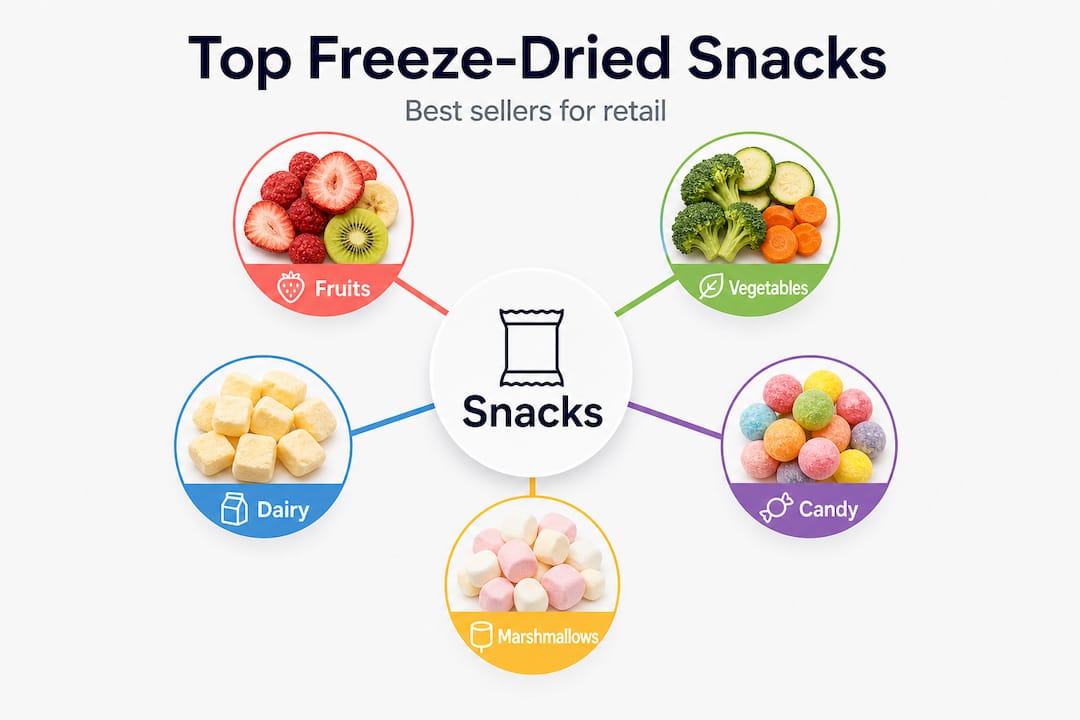
Here’s a practical category breakdown:
Fruits: Strawberries, raspberries, blueberries, apples, mangoes, and bananas all freeze-dry exceptionally well. They come out crunchy, sweet, and bright in color. These are reliable sellers in both health food stores and convenience formats.
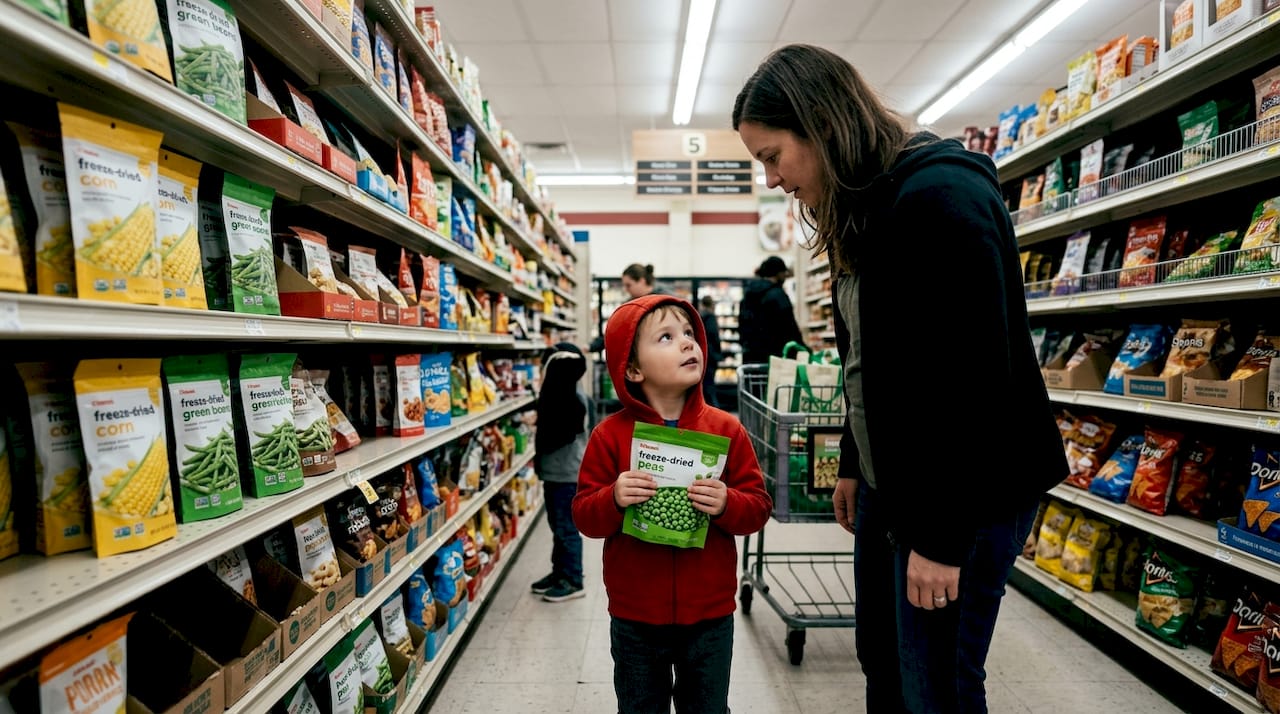
Vegetables: Corn, peas, green beans, and even broccoli freeze-dry well. These appeal to parents shopping for kids’ snacks or health-conscious buyers looking for vegetable crisps without oil or additives.
Dairy: Yogurt drops, cheese bites, and even ice cream freeze-dry into popular novelty snacks. Cheese bites in particular have strong retail traction because of their savory crunch.
Candies: This is the breakout category right now. Retail snacks and candies including certain fruit-based confections are among the most in-demand freeze-dried products. Soft candy pieces that contain fruit pectin or sugar-based structures transform dramatically in the freeze-dryer, puffing up and developing a totally new texture and concentrated flavor.
Marshmallows: These have been a crowd favorite since the camping cereal days. Freeze-dried marshmallows are light, melt-in-your-mouth, and sell well both on their own and as mix-ins.
| Food category | Freeze-dryer suitable? | Retail appeal | Key considerations |
|---|---|---|---|
| Berries and fruit | Yes | Very high | Color and flavor retention excellent |
| Vegetables | Yes | Moderate to high | Health-focused positioning |
| Dairy (cheese, yogurt) | Yes | High | Keep sealed, moisture-sensitive |
| Fruit-based candy | Yes | Very high | Big novelty factor, strong repeat |
| Marshmallows | Yes | High | Great visual, kid-friendly |
| Meat (cooked, lean) | Yes with conditions | Moderate | Food safety protocols critical |
| Juices and smoothies | Yes | Moderate | Powdered format, niche use |
| Whole eggs (pasteurized) | Yes | Lower retail | More foodservice-focused |
Pro Tip: When bringing new freeze-dried treats into your store or online catalog, start with smaller batch orders to test local demand before committing to bulk inventory. Regional preferences vary more than you’d expect. A candy that flies off shelves in one city might sit in another. Our freeze-dried snack options guide walks through how to evaluate shelf life and velocity together.
Foods that should NOT be freeze-dried: Pitfalls to avoid
While many foods are freeze-dryer friendly, there are important exceptions that can impact reputation and safety.
Understanding the limits of freeze-drying is just as valuable as knowing what works. Ordering or stocking products that don’t freeze-dry properly leads to customer complaints, returns, and damaged brand trust. Here are the main categories to watch out for.
High-fat and oily foods are the biggest problem. Peanut butter, chocolate bars, fatty sausage, and similar products don’t freeze-dry well because fat does not sublimate. The result is often a greasy, rancid product with an unpleasant texture and shortened shelf life. Even products with hidden fat content, like certain nut-based snack mixes, can develop off-flavors over time.
Dense, high-sugar items can also cause issues. Very concentrated sugar syrups or extremely sticky confections may collapse during the freeze-drying cycle rather than holding their structure. The end result is an uneven, gummy texture that customers won’t enjoy and won’t buy again.
Raw and potentially hazardous proteins are a serious concern. High-fat and oily foods and some very high-sugar items are problematic for quality or safety, and it’s critical to understand that freeze-drying is not a microbial kill step.
Freeze-drying does not kill bacteria, mold, or pathogens. It only removes water. Any microbes present before freeze-drying will still be present after. Raw meats, unpasteurized products, and any food that would normally require cooking or specific temperature controls to be safe should never be sold as ready-to-eat freeze-dried snacks.
Specific products to avoid stocking or sourcing as freeze-dried snacks include:
- Chocolate-covered candies or bars (fat content causes rancidity)
- Peanut butter-based products
- High-fat salami or processed meats
- Syrup-heavy candies that won’t hold structure
- Any raw or under-processed protein products
- Whole nuts or nut clusters (oil content causes quality issues)
If a supplier offers you freeze-dried products from these categories at suspiciously low prices, that’s a signal to ask harder questions about quality control and processing standards before your store’s reputation gets attached to the product.
Packaging and shelf life: How to keep freeze-dried products fresh and safe
Even with the right products, your freeze-dried snacks are only as good as your packaging and handling protocols.
Here’s the thing about freeze-dried products that catches many new retailers off guard: they are extremely hygroscopic. That means they absorb moisture from the surrounding air almost instantly when exposed. A bag of perfectly freeze-dried candy left open on a counter for 20 minutes in a humid environment can become soft, sticky, and completely different from what a customer expected. Freeze-dried products are extremely low in water activity and hygroscopic, so packaging to prevent moisture uptake is not optional. It’s the foundation of a viable retail product.
Water activity (Aw) is the measurement that food scientists use to assess microbial safety and shelf stability. Freeze-dried products should have a water activity at or below 0.60 for long-term quality, and food safety guidelines require non-potentially hazardous foods to stay at 0.85 or below. Properly processed freeze-dried snacks typically hit Aw levels well under 0.10 when freshly sealed.
Here’s how different packaging formats compare for retail use:
| Packaging type | Moisture barrier | Best for | Shelf life potential |
|---|---|---|---|
| Mylar bag with oxygen absorber | Excellent | Long-term storage, bulk retail | 12 to 25 years sealed |
| Stand-up pouch with zip seal | Good | Retail shelf, online orders | 6 to 18 months |
| Glass jar with metal lid | Good | Boutique or gift retail | 6 to 12 months |
| Kraft paper bag | Poor | Not recommended for freeze-dried | Weeks only |
| Resealable foil pouch | Very good | E-commerce, subscription boxes | 12 to 24 months |
Tips for keeping your freeze-dried inventory in peak condition:
- Store sealed products in a cool, dry location away from direct sunlight
- Never display products near refrigeration units where condensation is present
- Rotate stock using first-in, first-out inventory management
- Train staff not to leave display bags open during sampling events
- For online orders, use heat-sealed inner packaging even if your outer shipping box looks premium
Pro Tip: Always use moisture-barrier packaging and seal products immediately after processing or receiving. For retail displays, consider keeping a small reserve stock sealed in the back and only putting out what you expect to sell within the week, especially in humid summer months. Our guides on how to store freeze-dried goods and the best packaging for freeze-dried snacks cover this in much more depth if you want to build out your display and fulfillment protocols properly.
What most retailers get wrong about freeze-dried snacks and how to stand out
The most common mistake we see from retailers entering the freeze-dried snack space is choosing products based purely on what’s trending on social media rather than what their specific customers actually want to eat. That sounds obvious when you say it out loud, but it happens constantly. A store owner watches a freeze-dried candy video go viral and immediately orders a dozen SKUs based on hype, without thinking about whether their customer base skews toward kids, adults, health-focused shoppers, or candy lovers.
Novelty alone does not drive repeat sales. The first purchase is easy because curiosity does the selling. The second purchase requires the product to actually deliver on taste, texture, and value. This is where a lot of freeze-dried snack programs fall apart at the retail level.
Another underrated mistake is poor shelf presentation. Freeze-dried products look different from conventional snacks, and that difference is their biggest asset. But if they’re crammed onto a cluttered shelf with no labeling, no tasting notes, and no explanation of what they are, customers walk past. The best-performing freeze-dried retail programs we’ve seen combine clear shelf messaging, smart product placement at eye level or near checkout, and occasional sampling to convert curious browsers into committed buyers.
Understanding freeze-drying flavor secrets and sharing that story with your customers through shelf tags or social posts builds the kind of category knowledge that turns your store into the destination for this product type instead of just one of many places people happen to find it.
The retailers who win in this category long-term are not chasing every new freeze-dried trend. They pick three to five core products that resonate with their audience, nail the presentation and freshness, and let word of mouth do the rest. Taste, data, and presentation drive repeat sales. Novelty alone is just a traffic driver.
Ready to add freeze-dried snacks to your retail lineup?
We work with retail and online store owners across Canada to source, brand, and display freeze-dried candy and snacks that move. Whether you’re testing the category for the first time or looking to scale an existing program, we can help you get there faster.
Our private label freeze-dried snacks service lets you put your store’s brand on premium freeze-dried products without the overhead of running your own production. If you want to start selling right away, our starter packs for retailers give you a tested variety mix ready to merchandise. And if you need a complete retail display solution, our wholesale display solutions include a full display rack with 72 bags to create a high-impact in-store setup with zero guesswork.
Frequently asked questions
What is the difference between freeze-drying and dehydrating snacks?
Freeze-drying removes water via sublimation under vacuum at very low temperatures, preserving the food’s original shape, color, and flavor profile, while dehydrating uses heat that shrinks the product and can significantly alter both texture and taste.
Are freeze-dried snacks safe to sell at room temperature?
Yes, as long as they are non-potentially hazardous foods kept at water activity 0.85 or below and sealed in moisture-resistant packaging immediately after processing to prevent reabsorption.
What common freeze-dried candies and snacks are best-sellers for stores?
Popular best-sellers include freeze-dried fruit-based candies commonly produced as novelty treats, along with strawberries, apples, marshmallows, and cheese bites, all of which offer strong visual appeal and repeat purchase potential.
Can freeze-drying make any food shelf stable?
No. High-fat, oily foods and some very high-sugar items are not suitable candidates, and freeze-drying does not eliminate microbes in unsafe foods, so it cannot be treated as a food safety solution for hazardous products.