

TL;DR:
- Freeze drying removes 98 to 99 percent of moisture from food, offering the longest shelf life and best nutrient retention. It involves freezing food, then sublimating ice in a vacuum chamber, which preserves bioactive compounds, flavor, and texture without heat damage. Although costly upfront, home freeze drying benefits frequent users within 8 to 18 months, especially for long-term storage of lean meats, fruits, vegetables, and cooked meals.
Freeze drying, technically called lyophilization, is the most effective food preservation method available for retaining nutrients, flavor, and texture over the long term. The process removes 98–99% of moisture from food, which is why freeze dried products can last up to 25–30 years when stored correctly. No other common preservation method comes close to that combination of shelf life and quality retention. Whether you’re building an emergency pantry, preserving a garden harvest, or just curious about the science, understanding how freeze drying actually works will help you decide if it fits your family’s needs.
How does freeze drying work to preserve food effectively?
Freeze drying works by first freezing food solid, then placing it in a vacuum chamber. Inside that chamber, the pressure drops so low that ice converts directly to vapor without ever becoming liquid water. That process is called sublimation, and it’s the key reason freeze drying outperforms heat-based drying methods.
Traditional dehydrators use heat to evaporate moisture. Heat degrades vitamins, breaks down enzymes, and changes the cellular structure of food. Freeze drying skips the heat entirely. The result is that freeze drying preserves bioactive compounds, color, and texture far better than any heat-based alternative. When you rehydrate a freeze dried strawberry, it looks and tastes almost identical to a fresh one.
Each cycle takes 24–48 hours and uses roughly $2.40–$3.20 in electricity. That’s not a quick process, but the machine runs unattended for most of it.
Here’s what the process looks like step by step:
- Freeze: Food is frozen to around -40°F, locking moisture in place as ice crystals.
- Primary drying: The vacuum chamber removes roughly 95% of moisture through sublimation.
- Secondary drying: Remaining bound moisture is pulled out under continued low pressure.
- Packaging: Food goes immediately into airtight containers to prevent moisture from re-entering.
Pro Tip: Cut food into uniform, small pieces before loading the trays. Uniform sizing speeds up sublimation and produces a more consistent final product.
Packaging is not optional. The moment freeze dried food contacts air, it starts absorbing moisture. Mylar bags with oxygen absorbers are the standard for long-term storage. Space-man covers this in detail in their guide on how to store freeze dried foods.
What are the benefits and downsides of freeze drying?
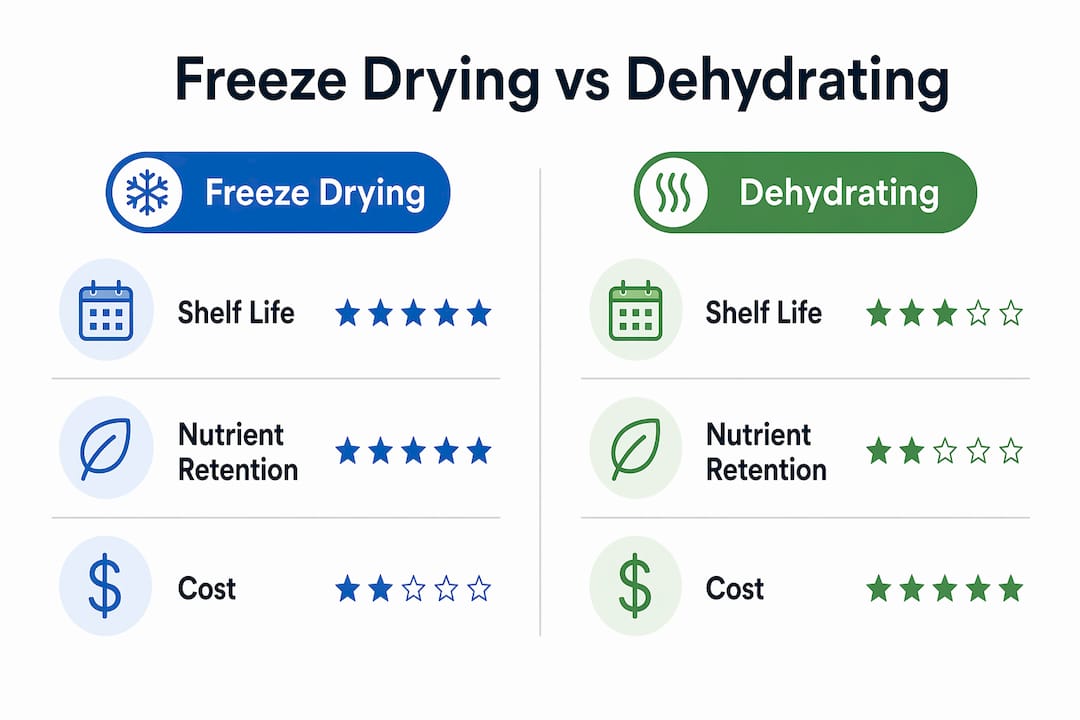
Freeze drying is the gold standard for food preservation, but it’s not perfect for every situation. Here’s an honest look at how it stacks up against other common methods.
| Method | Shelf life | Nutrient retention | Cost to start | Rehydration quality |
|---|---|---|---|---|
| Freeze drying | 25–30 years | Excellent | High | Excellent |
| Dehydrating | 1–5 years | Moderate | Low | Fair |
| Canning | 2–5 years | Moderate | Low to moderate | Good |
| Freezing | 1–2 years | Good | Moderate | Good |
The shelf life gap is significant. Freeze dried food lasts 25–30 years compared to 1–5 years for dehydrated food. That’s not a small difference. It means a single batch of freeze dried chicken or berries could outlast a decade of grocery shopping.
Nutrient retention is where freeze drying really separates itself. Heat-based methods destroy heat-sensitive vitamins like vitamin C and folate. Freeze drying preserves them because the food never gets warm during processing.
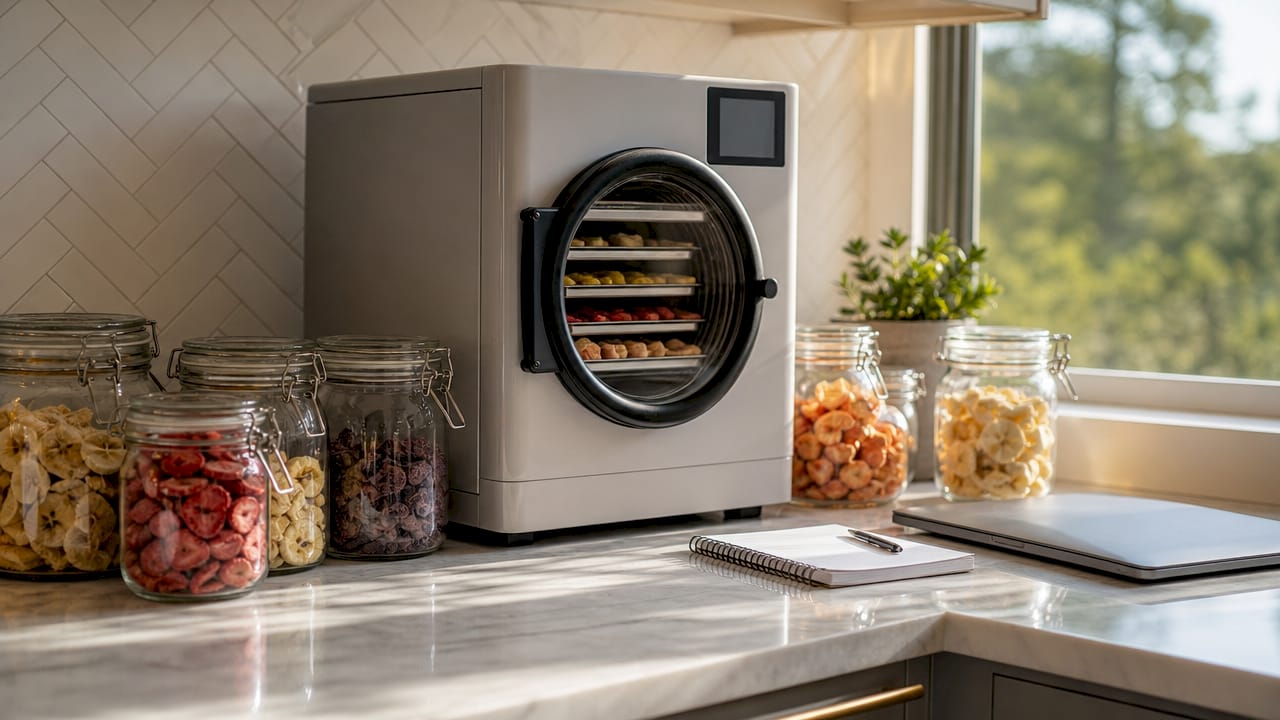
The downside is cost. Home freeze dryers typically run $2,000–$5,000 upfront. Home freeze drying costs $5–$9 per pound when you factor in equipment and electricity, which is still cheaper than commercial freeze dried food priced at $15–$40 per pound. Families who use the machine consistently can recover that investment within 18–24 months.
Pro Tip: If you’re on the fence about buying a machine, compare the cost of commercial freeze dried food you’d buy over two years against the machine price. For most families who preserve regularly, the math favors owning.
Dehydrating is cheaper to start and works fine for jerky, dried fruit, and herbs. But if your goal is preserving full meals or maintaining near-fresh quality, dehydrating falls short. Freeze drying vs dehydrating is not really a close contest when shelf life and nutrition are the priorities.
What are the best foods for freeze drying?
Not every food responds equally well to freeze drying. Food composition, specifically water content and fat content, determines how well the process works.
Foods that freeze dry exceptionally well include:
- Fruits: Strawberries, blueberries, bananas, apples, and raspberries rehydrate beautifully and retain their natural sweetness.
- Vegetables: Peas, corn, broccoli, and spinach freeze dry well and reconstitute quickly in soups or stews.
- Cooked meats: Chicken, ground beef, and turkey work well when cooked first. Space-man’s guide on freeze drying meat at home walks through the preparation steps.
- Eggs: Scrambled or raw beaten eggs freeze dry into a powder that reconstitutes easily for cooking.
- Dairy: Cheese, yogurt, and sour cream freeze dry well, though high-fat cheeses may have shorter shelf lives.
- Full meals: Soups, stews, casseroles, and pasta dishes are excellent candidates.
- Candy: Space-man specializes in freeze dried candy, which takes on a light, crunchy texture that’s become a popular snack category on its own.
Foods that do not freeze dry well include:
- High-fat items: Butter, peanut butter, and cooking oils resist sublimation. Fatty foods inhibit moisture removal and go rancid faster during storage.
- Honey and jams: Their sugar concentration prevents proper drying.
- Whole citrus or juices: High liquid content without structure makes them difficult to process cleanly.
- Chocolate: The fat content causes problems similar to butter.
The rule of thumb is simple. If a food is mostly water and lean protein or carbohydrate, it will freeze dry well. If it’s mostly fat, skip it or expect a much shorter shelf life.
How safe is freeze drying for food preservation?
Freeze drying is safe when done correctly, but it does not kill bacteria. Bacteria survive the freeze drying process in a dormant state and can reactivate when the food is rehydrated. This is the most common misconception about freeze drying safety.
Food safety specialists at Utah State University emphasize that freeze drying does not replace cooking. Raw chicken, pork, and ground beef must be cooked to safe internal temperatures before freeze drying, or cooked thoroughly after rehydration. Treating freeze drying as a sterilization step is a mistake.
Safe freeze drying practices follow these steps:
- Cook raw animal proteins first. Bring all meat, poultry, and eggs to their USDA-recommended safe internal temperatures before loading the freeze dryer.
- Sanitize all equipment. Trays, the drum, and any prep surfaces should be cleaned before and after each batch.
- Avoid cross-contamination. Keep raw and cooked foods separate throughout the entire process.
- Package immediately. Once the cycle ends, seal food into Mylar bags with oxygen absorbers right away. Packaging immediately after drying prevents moisture from re-entering and stops any dormant microbes from reactivating.
- Label with date and contents. Rotate stock and use older batches first.
Pro Tip: If you’re freeze drying for children, elderly family members, or anyone immunocompromised, always cook animal products before drying. There’s no safe shortcut here.
The good news is that fruits, vegetables, and fully cooked meals carry much lower risk. Following standard kitchen hygiene practices is enough for those foods.
What are the practical considerations for home freeze drying?
Home freeze drying is genuinely worth it for families who use the machine regularly. The economics only work at volume. Families who dry consistently can see a return on investment within 8–18 months, but infrequent users end up paying more per pound than they would buying commercial freeze dried food.
Here’s what to budget for realistically:
- Machine cost: $2,000–$5,000 depending on size and brand.
- Electricity per cycle: $2.40–$3.20 per 24–48 hour cycle.
- Active labor: 30–60 minutes per batch for loading, unloading, and packaging.
- Packaging materials: Mylar bags and oxygen absorbers add $0.50–$1.50 per pound depending on bag size.
- Maintenance: Vacuum pump oil changes and occasional seal replacements.
The hidden cost most people underestimate is labor. Thirty to sixty minutes per batch sounds manageable until you’re running three batches a week during harvest season. That time adds up fast.
For families who grow their own produce or buy in bulk during peak season, the math is very favorable. Buying 40 pounds of strawberries at peak season prices and freeze drying them for a 25-year shelf life is a genuinely smart financial move. For occasional users who run the machine twice a year, buying commercial freeze dried food is probably more practical.
Space-man’s detailed guide on freeze drying at home safely covers preparation and handling tips that help families get the most out of each batch.
Key Takeaways
Freeze drying is the most effective food preservation method for long-term storage, delivering unmatched shelf life and nutrition retention when used correctly and consistently.
| Point | Details |
|---|---|
| Moisture removal rate | Freeze drying removes 98–99% of moisture, far exceeding dehydration and canning. |
| Shelf life advantage | Properly packaged freeze dried food lasts up to 25–30 years. |
| Best food choices | Lean meats, fruits, vegetables, eggs, and cooked meals produce the best results. |
| Safety requirement | Freeze drying does not kill bacteria; cook raw animal proteins before or after drying. |
| Cost-effectiveness | Home freeze drying pays off within 8–18 months for families who use the machine regularly. |
Freeze drying is worth it, but only if you’re honest with yourself
I’ve spent a lot of time looking at the real economics and practical realities of home freeze drying, and my honest take is this: the technology is genuinely impressive, but it rewards commitment.
The families who get the most out of a home freeze dryer are the ones who treat it like a kitchen appliance they use every week, not a novelty they pull out twice a year. The value of home freeze drying is directly tied to volume and routine. If you’re a homesteader, a serious gardener, or a family that buys produce in bulk, the math works strongly in your favor. If you’re a casual user, the upfront cost and time commitment may not be worth it.
What I find most underappreciated is the quality gap. Freeze dried food genuinely tastes better than dehydrated food when rehydrated. That’s not marketing. It’s the direct result of skipping heat during processing. For families building long-term food storage, that quality difference matters a lot when you’re actually eating the food years later.
My recommendation: be realistic about how often you’ll use the machine before buying. If the answer is “at least once a week during peak season,” go for it. If the answer is “occasionally,” buying commercial freeze dried food from a trusted source is the smarter call.
— Chadi
Space-man’s packaging and co-packing services
Freeze drying produces great food, but the packaging determines whether it stays that way for 25 years or goes stale in six months. Space-man offers private label and co-packing services designed for exactly this kind of long-term preservation need, including Mylar bag packaging and oxygen absorber integration.

Whether you’re preserving your own harvest or scaling up a freeze dried food product for retail, Space-man’s Canadian-based team handles the packaging side with the precision that long-term storage demands. The same expertise that goes into Space-man’s freeze dried candy line applies directly to food preservation packaging. If you want your freeze dried food to actually last as long as the science promises, the packaging has to match the process.
FAQ
How effective is freeze drying compared to dehydrating?
Freeze drying is significantly more effective than dehydrating. It removes 98–99% of moisture without heat, preserving nutrients, texture, and flavor far better, and extends shelf life to 25–30 years versus 1–5 years for dehydrated food.
What are the best foods for freeze drying at home?
Fruits, vegetables, cooked meats, eggs, dairy, and full meals like soups and stews freeze dry exceptionally well. High-fat foods like butter, oils, and chocolate do not freeze dry effectively and spoil faster in storage.
Does freeze drying kill bacteria?
No. Freeze drying puts bacteria into a dormant state but does not kill them. Raw animal products must be cooked to safe internal temperatures before freeze drying, or cooked thoroughly after rehydration.
Is freeze drying worth it for a family?
Home freeze drying pays off within 8–18 months for families who use the machine consistently. Families who dry infrequently will likely find commercial freeze dried food more cost-effective.
How long does a freeze drying cycle take?
A standard freeze drying cycle takes 24–48 hours and costs approximately $2.40–$3.20 in electricity. Active preparation and packaging time adds 30–60 minutes per batch.