

Importing snacks into Canada might seem straightforward, but it involves layers of regulatory requirements that catch many business owners off guard. From mandatory licensing and bilingual labeling to tariff classifications and exotic product certificates, the process demands careful attention to detail. One misstep can result in costly customs delays, rejected shipments, or compliance penalties. This guide walks you through the essential legal steps, documentation requirements, and practical strategies to import snacks efficiently while staying compliant with Canadian Food Inspection Agency (CFIA) and Canada Border Services Agency (CBSA) regulations.
Table of Contents
- Key takeaways
- Understanding licensing and registration requirements
- Complying with labeling and safety standards for imported snacks
- Tariffs, duties, and import documentation details
- Special considerations for exotic and unique snack imports
- How Spaceman can help your imported snack business
- Frequently asked questions
Key Takeaways
| Point | Details |
|---|---|
| Licensing is essential | Importers must obtain a Safe Food for Canadians license from CFIA to legally sell snacks in Canada. |
| Bilingual labeling required | All packaging must include English and French labeling with product name, net quantity, ingredients, priority allergens, and nutrition facts. |
| Tariffs and HS classification | Customs brokers assist with correct HS classification and duty estimates to prevent cost surprises. |
| Exotic snack certificates | Exotic products may require additional certificates and checks verified through the AIRS system. |
| Audits and controls | Regular supplier audits and preventive controls reduce detention risk and penalties. |
Understanding licensing and registration requirements
Before you can legally bring snacks across the Canadian border for commercial sale, you need proper authorization from federal authorities. Businesses importing snacks for commercial purposes require a Safe Food for Canadians licence from CFIA. This applies to manufactured snack foods like chips, cookies, candy, dried fruits, and nuts intended for resale or distribution.
The licensing process involves several steps. First, register your business with the Canada Revenue Agency to obtain a Business Number with an import/export account designation. This account links your company to customs declarations and tax obligations. Next, apply for your SFC licence through the My CFIA portal, an online platform that streamlines applications and renewals. Processing typically takes 5 to 10 business days, and licenses remain valid for one to two years depending on your business type. Application fees range from free for small operations to approximately $100 for larger commercial importers.
Key licensing requirements include:
- Proof of business registration and import/export account with CRA
- Detailed description of snack products you plan to import
- Evidence of safe food for Canadians standards compliance procedures
- Preventive Control Plan documentation for your operations
When clearing customs, you must submit an Integrated Import Declaration that references your SFC licence number and details. CBSA officers verify this information electronically, and missing or incorrect licence data triggers immediate holds on your shipment. Understanding food safety regulations Canada helps you anticipate what inspectors look for during clearance.
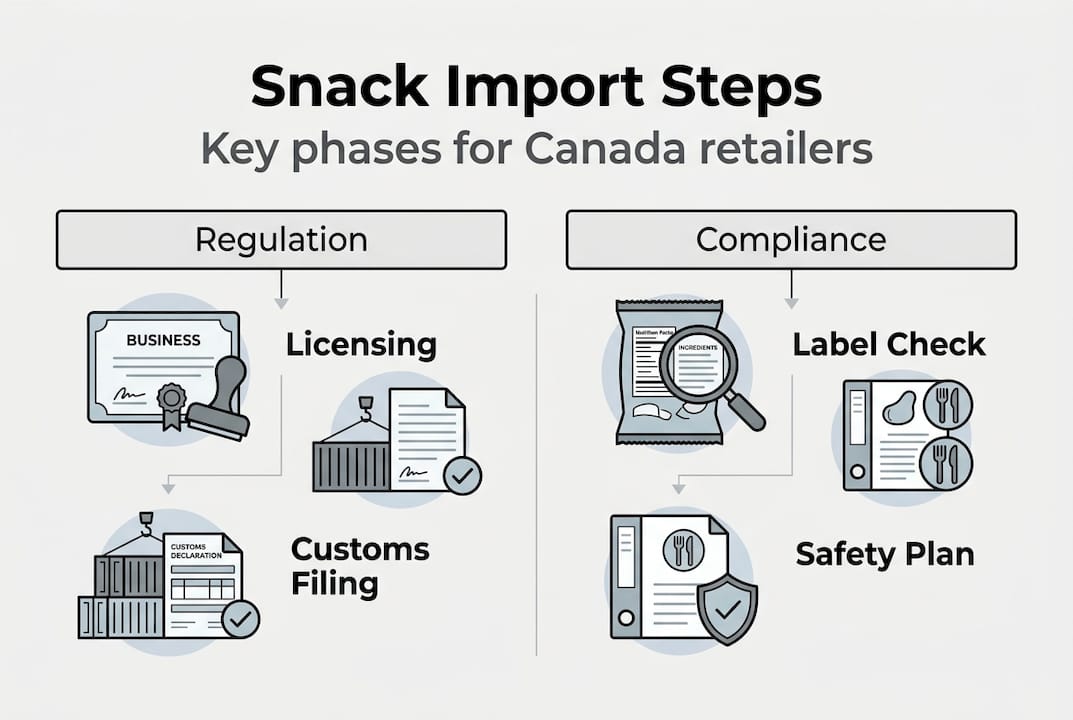
Pro Tip: Set calendar reminders six weeks before your SFC licence expires. Renewal applications submitted early prevent gaps in authorization that could halt shipments at the border.
Maintaining active licensing status requires ongoing compliance. CFIA conducts periodic audits of licensed importers, reviewing documentation, traceability systems, and preventive controls. Businesses that fail audits face licence suspension or revocation, effectively ending their ability to import until they remedy deficiencies. Staying current with CFIA import licensing requirements ensures you avoid these disruptions.
Complying with labeling and safety standards for imported snacks
Canadian law mandates strict labeling standards for all pre-packaged food products, and imported snacks require bilingual labels including allergen declarations and nutrition facts. Every package must display information in both English and French, covering the common name of the product, net quantity in metric units, complete ingredient list in descending order by weight, priority allergen warnings, and a standard nutrition facts table.

Labeling errors represent the most common cause of customs detentions for snack imports. Missing French translations can delay clearance by 4 to 24 hours while you arrange compliant labels. More serious violations, like absent allergen declarations or incorrect nutrition information, can extend detentions to three days or longer. CBSA may refuse entry entirely for products with misleading health claims or unapproved additives.
Critical labeling elements that trip up importers:
- Allergen statements must appear separate from ingredients in bold or contrasting type
- Net quantity requires metric measurements; imperial units alone violate regulations
- Country of origin must identify where the product was manufactured or produced
- Lot codes and best before dates need clear, legible formatting
Beyond labeling, you must implement a Preventive Control Plan covering your import operations. This written plan identifies potential food safety hazards, establishes control measures to prevent contamination, and documents monitoring procedures. Your PCP should address biological hazards like pathogens, chemical risks including pesticide residues, and physical dangers such as foreign objects. Understanding food labeling requirements Canada helps you design labels that pass inspection consistently.
Supplier management forms a crucial component of safety compliance. You need documented evidence that foreign manufacturers follow food safety protocols equivalent to Canadian standards. This includes obtaining supplier audit reports, certificates of analysis for each shipment, and HACCP plans from production facilities. CFIA expects importers to verify supplier credentials before initial orders and conduct periodic re-evaluations. Maintaining these records demonstrates due diligence if authorities question product safety.
Pro Tip: Create a pre-import checklist that verifies label compliance and documentation completeness before ordering shipments. Catching errors at the supplier stage costs far less than fixing problems at the Canadian border.
Traceability requirements demand that you track products from supplier through to your customers. You must maintain records showing where products originated, when they arrived, and where you distributed them for at least two years. This enables rapid recalls if safety issues emerge. Businesses that cannot trace products face severe penalties including licence suspension and prosecution. Familiarity with snack food certifications Canada requirements helps you understand what documentation authorities expect during inspections.
Tariffs, duties, and import documentation details
Financial obligations for importing snacks extend beyond product costs to include duties, taxes, and brokerage fees. Duties range from 0 to 26% based on HS code, with GST or HST applying to the combined value of goods, duties, and shipping. Accurate classification under the Harmonized System determines your exact duty rate, making this step critical for budgeting.
Canada maintains supply management systems for dairy, poultry, and eggs that impose prohibitive tariffs on imports exceeding quota allocations. Snacks containing dairy ingredients face scrutiny, with duties potentially exceeding 200% for products classified as dairy goods rather than prepared foods. CBSA targets dairy and meat snacks for tariff reclassification, as seen in recent enforcement actions against cheese-based dog treats. Similar reclassifications can dramatically increase costs for human snack products containing substantial dairy content.
Steps to determine and manage import costs:
- Obtain the complete ingredient list and manufacturing process details from your supplier
- Research the appropriate HS code using CBSA’s Customs Tariff database or consult a licensed customs broker
- Calculate estimated duties by applying the tariff rate to your product’s customs value
- Add GST or HST based on the province where goods will be released from customs
- Factor in brokerage fees if using a customs broker to handle clearance
The Integrated Import Declaration serves as your primary customs document. This electronic filing includes your SFC licence number, CRA import account details, HS classification, declared value, and country of origin. Errors or inconsistencies trigger examinations that delay release and may result in penalties. CBSA compares your declarations against intelligence databases and previous import patterns, flagging anomalies for review.
| Snack category | Typical HS code range | Average duty rate | Special considerations |
|---|---|---|---|
| Potato chips | 2004.10 to 2005.20 | 6% to 11% | Prepared potato products face moderate duties |
| Chocolate candy | 1806.31 to 1806.90 | 0% to 6% | Sugar content affects classification |
| Dried fruit | 0813.10 to 0813.50 | 0% to 6% | May require phytosanitary certificates |
| Cheese snacks | 0406.10 to 1905.90 | 0% to 245% | Dairy content triggers supply management tariffs |
| Nuts | 0801.11 to 0802.90 | 0% to 8% | Country of origin affects rates due to trade agreements |
Customs brokers provide valuable expertise in classification and documentation. Licensed brokers understand tariff nuances and can challenge incorrect CBSA assessments through formal review processes. They handle electronic filings, pay duties on your behalf, and coordinate with carriers to expedite release. For businesses importing regularly or dealing with complex products, broker fees represent worthwhile investments that prevent costly errors. Exploring resources on starting a candy shop in Canada can provide additional context for retail-focused importers.
Pro Tip: Request advance rulings from CBSA for novel or ambiguous snack products. These binding decisions clarify classification before you commit to large orders, eliminating uncertainty about duty costs.
Keep detailed records of all import transactions including commercial invoices, bills of lading, packing lists, and payment documentation. CBSA can audit imports up to six years after entry, and incomplete records result in penalties or duty reassessments. Understanding CFIA import tariffs and duties and staying informed about CBSA dairy snack tariff updates helps you anticipate regulatory changes that affect costs.
Special considerations for exotic and unique snack imports
Exotic snacks including tropical dried fruits, rare nuts, or products containing unusual ingredients face additional regulatory scrutiny beyond standard requirements. Exotic snacks may require phytosanitary certificates and country-specific approvals verified through CFIA’s Automated Import Reference System. This online tool allows you to input product details, country of origin, and HS codes to determine specific import conditions before ordering.
Phytosanitary certificates confirm that plant-based products meet Canadian standards for pest and disease control. Exporting countries issue these documents through their agriculture departments, certifying that items were inspected and found free of quarantine concerns. Fresh or minimally processed snacks like dried mango, coconut chips, or raw cacao require these certificates more often than heavily processed products. Processing methods that eliminate biological risks, such as roasting or freeze drying, may exempt products from phytosanitary requirements.
Country-specific restrictions affect imports from regions with known agricultural diseases or pest issues. CFIA maintains lists of prohibited and restricted items by country, updated regularly as conditions change. Products from countries experiencing outbreaks of fruit flies, fungal diseases, or other threats face temporary import bans until authorities declare areas safe. Checking AIRS before finalizing supplier agreements prevents situations where you cannot legally import ordered goods.
| Exotic snack type | Common extra requirements | Processing time impact |
|---|---|---|
| Dried tropical fruits | Phytosanitary certificate, pest-free certification | Adds 1 to 3 days for document verification |
| Rare nuts from new suppliers | Supplier facility approval, aflatoxin testing | Initial approval takes 2 to 4 weeks |
| Products with novel ingredients | Pre-market safety assessment, ingredient approval | Can require 3 to 6 months for novel foods |
| Organic certified snacks | Canadian organic equivalency recognition | Certification verification adds 1 to 2 days |
| Snacks from restricted countries | Enhanced inspection, additional sampling | Doubles typical clearance time |
Supplier verification becomes especially important for exotic products. You must confirm that foreign facilities hold necessary approvals to export to Canada and maintain food safety standards. Request copies of facility registrations, export licenses, and recent inspection reports. CFIA may require that suppliers appear on approved establishment lists for certain high-risk products. Conducting virtual or in-person facility audits provides additional assurance and documentation for your due diligence records.
Pro Tip: Build relationships with suppliers who already export successfully to Canada. Experienced exporters understand documentation requirements and can provide compliant certificates quickly, reducing delays.
Novel food regulations apply when snacks contain ingredients without a history of safe use in Canada. This includes new sources of traditional ingredients, genetically modified organisms not previously approved, or foods produced through novel processes. Importing novel foods requires pre-market authorization from Health Canada, a process involving safety assessments and scientific evidence reviews. Planning for this timeline, which can extend six months or longer, is essential when introducing innovative exotic snacks. Resources on sourcing Canadian candy can help you understand domestic alternatives while navigating exotic import challenges.
Staying current with CFIA exotic snack import rules requires monitoring regulatory updates and subscribing to CFIA notifications. Rules change as new scientific information emerges or international situations evolve. Importers who fail to adapt face shipment refusals and financial losses from non-compliant inventory.
How Spaceman can help your imported snack business
Navigating the complexities of snack importing becomes significantly easier when you partner with experienced industry specialists. Spaceman offers private labeling and co-packing services specifically designed for businesses importing unique snacks into Canada. Our team understands CFIA labeling requirements and can design bilingual packaging that meets all regulatory standards, eliminating the compliance headaches that delay customs clearance.

Whether you need help reformulating labels for Canadian regulations, creating retail-ready packaging, or developing branded displays for your imported products, Spaceman provides turnkey solutions. Our freeze dried candy bundles and retail display systems demonstrate how proper packaging and presentation drive sales. We apply this expertise to help importers position exotic and specialty snacks for maximum market impact.
Pro Tip: Leverage Spaceman’s regulatory knowledge during product development to ensure imported snacks meet Canadian standards before you place large orders with overseas suppliers.
Frequently asked questions
What food products require a Safe Food for Canadians licence for importing?
Commercial imports of manufactured snack foods including chips, cookies, candy, dried fruits, and nuts require an SFC licence. The licence applies when you import for resale, distribution, or further processing rather than personal consumption. Businesses must obtain licensing before their first commercial shipment to avoid border rejections and compliance violations.
Can I import shelf-stable snacks without a permit?
Lower-risk shelf-stable snacks like canned goods and candy generally do not require import permits but must comply with food safety, labeling, and documentation requirements. You still need an SFC licence for commercial importing even if specific permits are not required. Proper documentation prevents delays despite the absence of permit requirements for these product categories.
How do I determine the tariffs and duties applicable to my imported snacks?
Correct HS code classification is essential for determining applicable duties ranging from 0 to 26% plus GST or HST. CBSA targets certain snacks for reclassification, which can dramatically increase costs, particularly for dairy-based products. Hiring licensed customs brokers prevents costly misclassifications and ensures you calculate total landed costs accurately before committing to orders.
What special documentation is needed for exotic or unique snack imports?
Exotic snacks may require phytosanitary certificates and country-specific import approvals verified through CFIA’s Automated Import Reference System. Products from certain countries face additional restrictions based on pest and disease risks. Using AIRS before ordering helps identify exact documentation requirements based on origin and product composition, preventing surprises at customs.
How long does customs clearance typically take for snack imports?
Compliant shipments with complete documentation clear customs in 4 to 24 hours under normal circumstances. Labeling errors, missing certificates, or inspection holds extend this to three days or longer. Exotic products requiring enhanced inspection or laboratory testing may take one to two weeks for full clearance. Proper preparation and documentation dramatically reduce clearance times and associated storage fees.
What happens if my imported snacks fail inspection at the border?
CBSA or CFIA may detain non-compliant shipments pending correction of violations. Minor labeling issues can sometimes be fixed at the border with re-labeling services. Serious safety violations result in shipment refusal and return to origin at your expense. Repeated violations trigger increased scrutiny of future shipments and potential licence suspension, making prevention through proper planning essential.